Used Clothing Distributor Scams: 7 Red Flags to Avoid in 2026
The used clothing export business is growing fast, and unfortunately, so are used clothing distributor scams. Every year, importers lose thousands of dollars to fraudulent suppliers who promise high-quality used clothing bales but deliver poor-quality goods — or nothing at all.
⏱ 8 min read · For importers, wholesalers & trade buyers
In this guide you will learn:
- Key industry insights and practical sourcing knowledge
- How to evaluate suppliers and avoid common mistakes
- Pricing benchmarks and quality standards
- Actionable steps for your import business
This guide covers the 7 most common red flags when dealing with used clothing distributors and provides a step-by-step verification system to help you avoid scams when sourcing from China, the US, or Europe in 2026.
Why Scams Exist in the Used Clothing Trade
The used clothing industry is particularly vulnerable to scams for several reasons:
- Low barrier to entry — Anyone can claim to be a used clothing distributor with a simple website
- Quality is subjective — “Grade A” means different things to different suppliers, making it easy to misrepresent products
- Cross-border transactions — International buyers have limited legal recourse when dealing with overseas suppliers
- No standardized certification — Unlike many industries, used clothing has no universal quality certification system
🔥 Real example: In 2025, a buyer from Tanzania reported paying $15,000 for a container of “Grade A” used clothing from an unverified distributor. Upon arrival, over 60% of the bales contained low-grade rags and unsellable items. The distributor had disappeared by the time the container landed.
Red Flag #1: Prices Significantly Below Market Average
If a deal sounds too good to be true, it probably is. Legitimate used clothing distributors operate on thin margins. A price that is 30-40% below market average is a major warning sign.
2026 benchmark prices for reference:
| Category | Fair Price Range (FOB) | Suspiciously Low |
|---|---|---|
| Grade A mixed bales | competitive pricing within the A Grade market range | Below $1.50/kg |
| Grade B mixed bales | $1.20–$1.80/kg | Below $0.80/kg |
| Shoes bales | premium pricing reflecting the higher branded content of this origin | Below $1.80/kg |
| Brand overruns | $3.00–$8.00/kg | Below $2.00/kg |
For current pricing from verified distributors, see our complete mitumba bales price guide.
Red Flag #2: No Physical Address or Factory Visit Possible
A legitimate used clothing distributor operates from a real warehouse, sorting facility, or office. Be suspicious if:
- The supplier cannot provide a verifiable physical address
- Video calls are consistently declined or “not possible”
- The address provided is a residential building or virtual office
- Google Maps shows no matching business at the address
⚡ Verification tip: Ask for a live video walkthrough of their warehouse showing their sorting line, baling area, and inventory. A legitimate distributor will be happy to oblige.
Red Flag #3: Demanding 100% Upfront Payment
Industry standard payment terms for used clothing distributors are:
- New buyers: 30% deposit, 70% after inspection before shipment
- Established relationships: L/C (Letter of Credit) or similar terms
A distributor demanding 100% payment upfront — especially via wire transfer to a personal bank account — is a major red flag. Legitimate companies have business accounts and offer flexible payment terms.
Red Flag #4: Vague or Inconsistent Grading System
Reputable used clothing distributors have clear, documented grading criteria. Watch out for:
- No written description of what “Grade A” or “Grade B” means
- Inconsistent quality across sample bales
- Reluctance to let you hand-pick and inspect samples
- Claims that “all bales are the same” — they are not
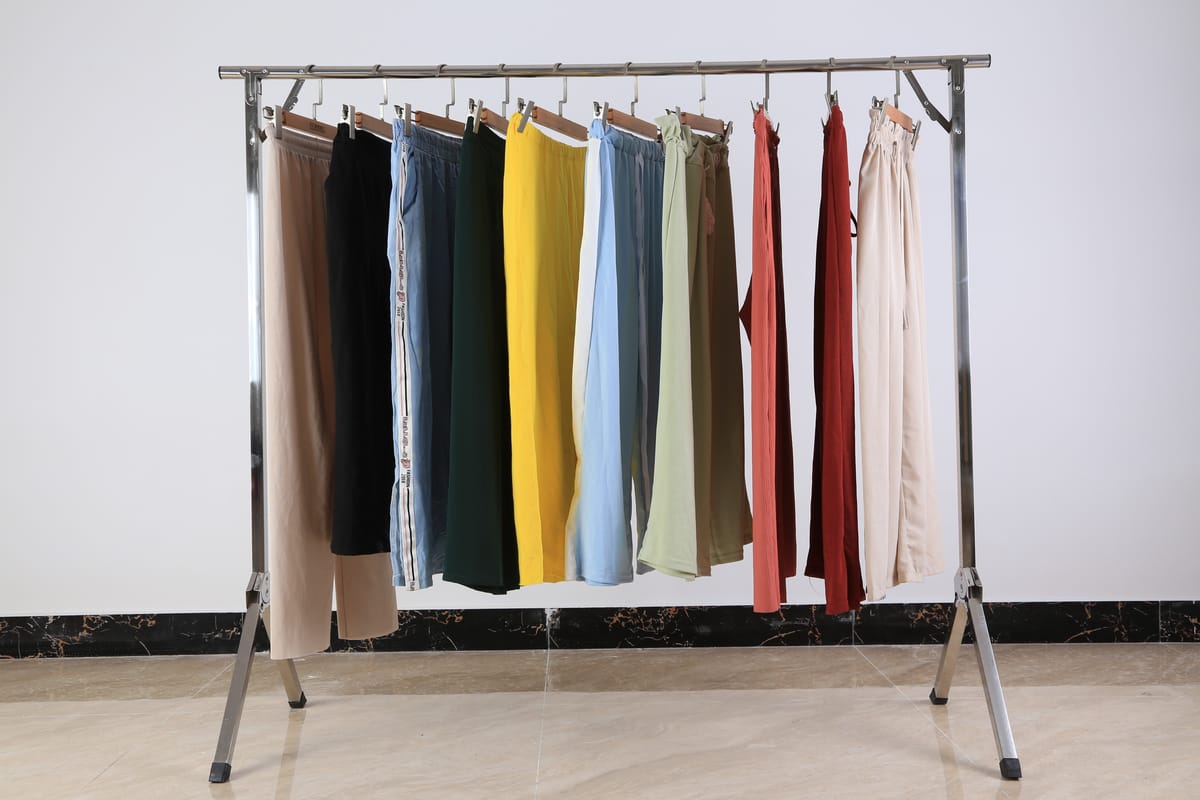
For a detailed breakdown of grading standards, see our Grade A vs Grade B comparison guide.
Red Flag #5: No Export Documentation Experience
Professional used clothing distributors handle export documentation regularly. Red flags include:
- Cannot provide a proforma invoice professionally
- Unfamiliar with fumigation certificates or Certificate of Origin
- No experience with your destination port’s requirements
- Ask you to “handle documentation yourself”
Legitimate distributors like Hissen Global provide complete export documentation including Bill of Lading, packing list, commercial invoice, and fumigation certificate.
Red Flag #6: Poor Communication and Unprofessional Behavior
Communication quality tells you a lot about a distributor’s professionalism:
- Slow or inconsistent responses (takes days to reply)
- Vague answers to specific questions about products
- No product photos or videos available
- Pressure tactics: “This price is only valid today”
- No clear company email — using only WhatsApp or personal Gmail
Red Flag #7: Reluctance to Provide Samples
A trustworthy used clothing distributor will always allow sample orders. Be wary if:
- The supplier refuses to send samples
- Samples are “not representative” of bulk orders
- The supplier charges excessive sample fees
- Samples received are clearly higher quality than what is described for bulk orders (bait-and-switch)
How to Verify a Used Clothing Distributor Before Buying
| Verification Method | What to Check |
|---|---|
| Business license | Verify registration through government databases (e.g., China’s National Enterprise Credit Information System) |
| Alibaba/Gold Supplier status | Check transaction history, buyer reviews, and Trade Assurance coverage |
| Third-party inspection | Use SGS, Bureau Veritas, or QIMA to inspect goods before shipment |
| Sample order | Order and inspect samples before committing to full container orders |
| Video tour | Request a live video walkthrough of the warehouse and sorting facility |
| Past buyer references | Ask for contact information of 2-3 past clients in similar markets |
| Export records | Request copies of previous Bills of Lading (with commercial details redacted) |
The Real Cost of Falling for a Scam
Beyond the immediate financial loss, falling victim to a used clothing distributor scam has cascading consequences for importers:
- Lost inventory investment — You pay for goods that never arrive or are worthless upon arrival
- Missed market opportunity — While dealing with the failed transaction, competitors capture your customers
- Storage and demurrage fees — If containers are held at port due to documentation issues, daily penalties add up fast
- Damaged business reputation — Your customers expect consistent supply; a failed shipment can mean lost wholesale contracts
- Legal costs — Attempting to recover funds through international legal channels is expensive and rarely successful
This is precisely why taking the time to properly verify a used clothing distributor before committing is not an expense — it is an investment in your business’s continuity.
Why Hissen Global Is a Trusted Used Clothing Distributor
We understand the skepticism. After reading about used clothing distributor scams, you should be asking — how do we know Hissen Global is different? Here is how we address each of the 7 red flags above:
| Red Flag | How Hissen Global Addresses It |
|---|---|
| #1: Below-market prices | Our Grade A pricing is competitive A Grade pricing (see our pricing guide for current rates) — competitive but realistic. We do not promise unrealistic prices because quality sorting has real costs. |
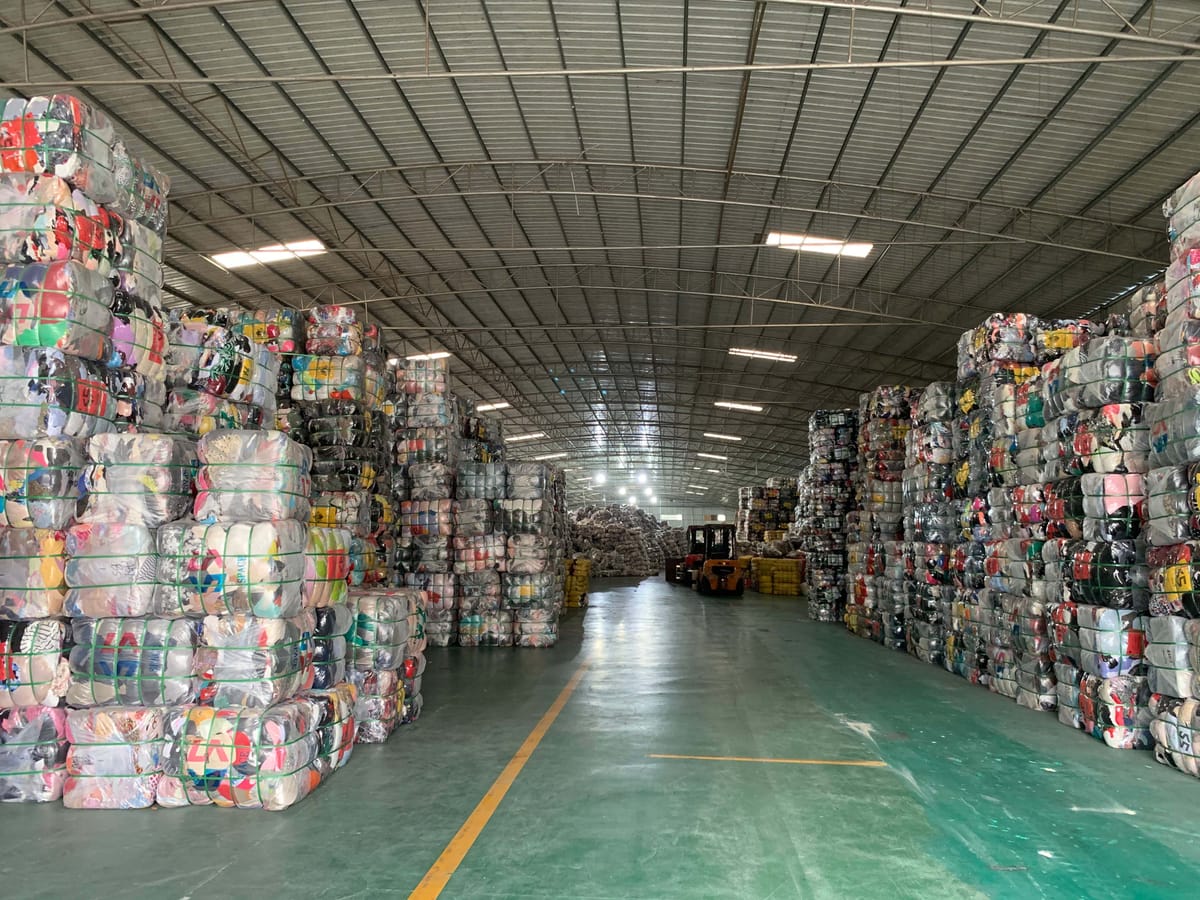
| #2: No physical address | We operate 3 factories in China (Guangzhou, Dongguan, Huadu) totaling 20,000 m². China Credit Code: 91440101MA9W4PK77K. Video tours available on request. |
| #3: 100% upfront payment | Standard terms: 30% deposit, 70% after inspection before shipment. We do not demand full payment upfront. |
| #4: Vague grading | We publish clear Grade A vs Grade B criteria with photos. See our detailed grade comparison guide. |
| #5: No export documentation | We provide complete documentation: Bill of Lading, packing list, commercial invoice, fumigation certificate, and Certificate of Origin when required. |
| #6: Poor communication | English-speaking sales team responds within 24 hours. We provide regular order updates and shipment tracking. |
| #7: No samples | Sample orders are welcome. Pay only shipping costs. We also welcome factory visits — see our sorting and baling process in person. |
With 12 years of experience, 7,000+ containers shipped to 110+ countries, and 400+ employees across 3 factories, Hissen Global has built a track record that speaks for itself. We are not a fly-by-night operation.
Still skeptical? Contact us and we will set up a video call walkthrough of our facility. See the sorting lines, the baling process, and the inventory ready for export — all in real time.
💡 Key Takeaways
- Choose suppliers who offer live video verification — not just photos
- Compare total landed cost, not just FOB price per kg
- A Grade standards vary by supplier — always get written definitions
- Start with a small order to evaluate quality before scaling
- Build long-term relationships with consistent suppliers for better pricing
Frequently Asked Questions
How can I avoid used clothing distributor scams?
What is a fair price for Grade A used clothing bales in 2026?
Is it safe to buy used clothing from Chinese distributors?
What payment terms are standard for used clothing distributors?
Can I visit a used clothing distributor in Guangzhou?
What documents should a used clothing distributor provide?
Verify Us Before You Buy — Schedule a Factory Video Tour
Not ready to order yet? That is fine. Contact Hissen Global and we will schedule a live video walkthrough of our Guangzhou facility. See the warehouse, the sorting lines, and the inventory — no obligation, no pressure. Or order a sample bale shipped to your country to evaluate quality firsthand.
For more information, explore our complete guide to used clothing suppliers in China and our guide to importing from China to Kenya.