Simple Guide to Buying Used Clothes from USA for Nigerian Importers (2026)
Let’s Start Here
Nigeria’s Okrika market is still one of the busiest secondhand clothing markets in Africa. If you’re looking for used clothes USA, the biggest problem isn’t finding clothes—it’s finding sellers you can trust. Hissen Global has helped hundreds of African buyers who search for buy fairly used clothes from USA and used clothes for sale in USA. Many of them lost money because of scams, surprise costs, or bad quality products. This simple guide will show you how to buy used USA clothes safely and make good profit, no matter if you sell in Lagos, Onitsha, Aba, or Kano.^3
What Does “Buy Used Clothes from USA” Actually Mean?
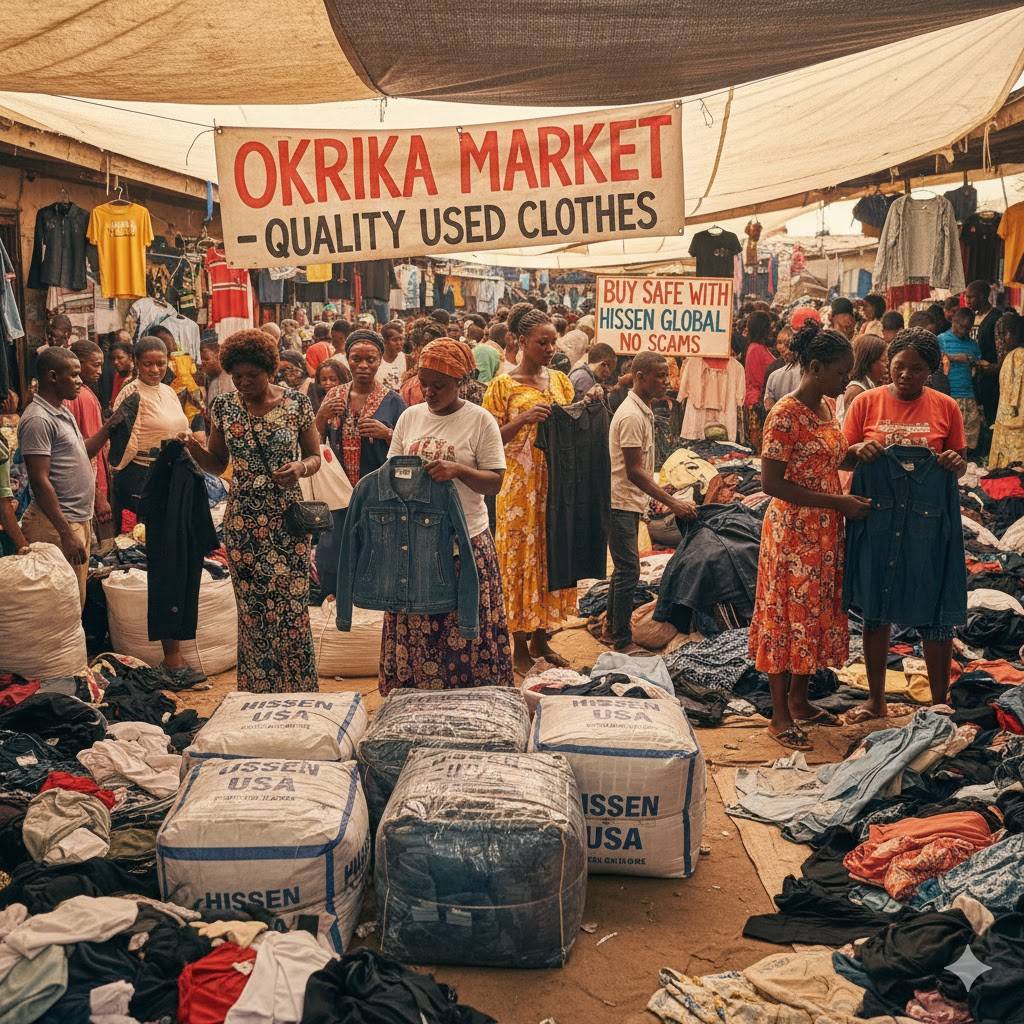
When Nigerian buyers talk about buying used clothes from USA, they mean buying big compressed packages (called “bales”) of sorted secondhand clothing. These aren’t just random old clothes from thrift stores. These bales are organized by quality (Grade A/B/C), labeled clearly, and packed into shipping containers that go to West African ports like Lagos or Cotonou.^2
When people search for buying used clothes from USA, fairly used cloth in USA, and fairly used clothes in USA, they all want the same thing: honest quality descriptions and no surprises. Good exporters don’t just send random charity donations. They sort everything by type, remove damaged items, and prepare clean clothes that you can sell right away—perfect for cheap used men clothes sales in USA, women’s fashion, and buy used children’s clothe from USA categories.^2
Think of the US secondhand business like a big sorting factory: messy “donations” come in one side, and high-quality, well-organized used clothes USA bales come out the other side for global buyers like you.^4
Why Do Nigerian Importers Choose US Used Clothing?
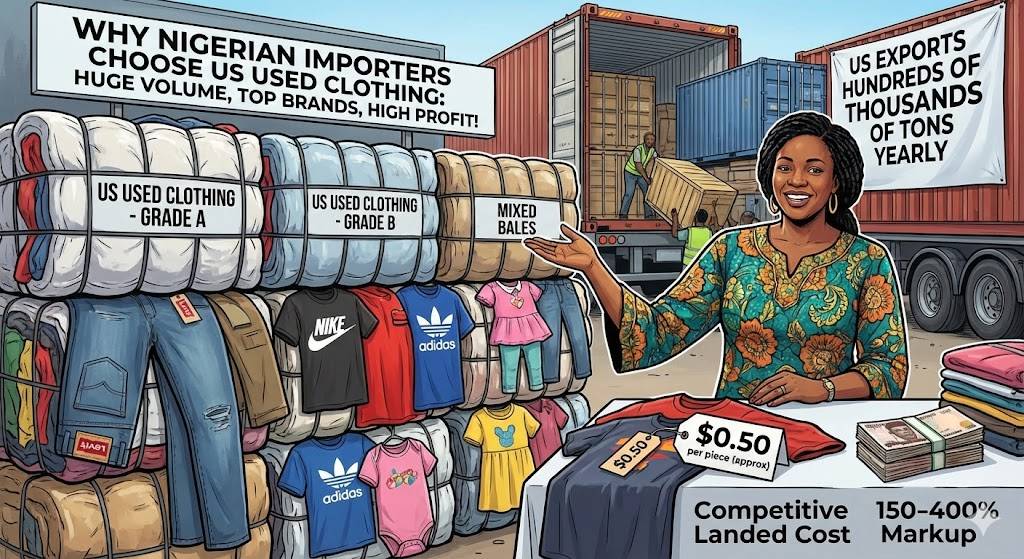
The US is one of Africa’s biggest suppliers of secondhand items. In 2023 alone, the US sent almost one billion dollars of used merchandise to Africa. For Nigerian Okrika traders, buying used clothes for sale in USA has five big benefits:^5
| Advantage | What It Means for You | Why It Matters in Nigeria |
|---|---|---|
| Consistent grading | Clear Grade A/B/C standards, fewer surprises | Less waste, fewer complaints from your buyers |
| Brand variety | US donations include global brands like Nike, Levi’s, Adidas | Higher resale prices and faster turnover |
| Huge volume | America exports hundreds of thousands of tons of used clothing every year^4 | You can scale from one container to multiple per month |
| Category flexibility | You can target men, women, kids, or mixed bales | Perfect for niche markets or broad retail |
| Competitive landed cost | Even after freight, per‑piece cost often stays below $0.50 in a well‑planned container^2 | Room for 150–400% markup in Nigerian markets |
What Types of Clothes Should Nigerian Buyers Focus On?
Instead of buying random mixed clothes, it’s smarter to order by category. This helps you get exactly what your customers want (from cheap used men clothes salesin USA to buy used children’s clothe from USA).
Men’s Used Clothing (Very Popular in Street Markets)
Men’s bales from used clothes USA sellers usually have:
- Jeans and pants (Levi’s, Wrangler, Lee, and other brands)
- Branded T‑shirts and polo shirts
- Shirts (both office and casual)
- Hoodies, sweatshirts, and track jackets
- Light jackets and sports clothes
These are perfect if your customers want cheap used men clothes salesin USA style items—good brands with nice fabrics and popular designs.
Women’s and Children’s Clothing
Women’s bales usually sell fast in city markets:
- Fashion tops and blouses
- Dresses (casual and party styles)
- Skirts, pants, and leggings
- Light jackets and sweaters
Children’s bales (important for buyers who search buy used children’s clothe from USA) usually have:
- Baby clothes and onesies
- T‑shirts, shorts, and joggers
- School clothes and everyday wear
- Seasonal jackets and hoodies
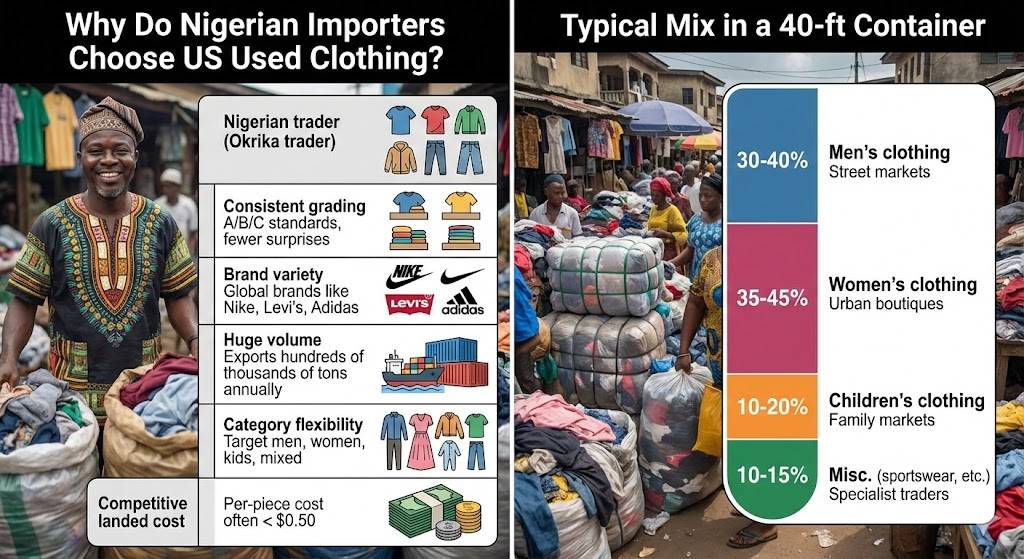
Typical Mix in a 40-ft Container
| Category | Approx. Share | Best Target Customers |
|---|---|---|
| Men’s clothing | 30–40% | Street markets, male‑focused stalls |
| Women’s clothing | 35–45% | Urban boutiques, Instagram sellers |
| Children’s clothing | 10–20% | Family markets, school‑area shops |
| Misc. (sportswear, workwear, plus‑size) | 10–15% | Specialist traders and wholesalers |
Understanding Quality Grades: What Does “Fairly Used Clothes in USA” Mean?
Many Nigerian buyers type fairly used clothes in USA or fairly used cloth in USA, hoping for medium-to-high quality. In US grading terms, that usually means Grade A or good Grade B.
| Grade | Typical Description | Condition | Ideal Use |
|---|---|---|---|
| Grade A | “Like new” or gently used | No stains, rips or heavy fading | Premium boutiques, online resale |
| Grade B | What Nigerians call “fairly used” | Light wear; 1–2 minor issues max | Standard Okrika markets |
| Grade C | Heavy wear, stains, repairs needed | Noticeable defects | Very low‑budget markets, recycling |
For most Nigerian importers starting with used USA clothes, a Grade A/B mix works best: it matches what your customers expect when they hear “fairly used,” without paying full Grade A prices.
How Do Americans Pack Used Clothes for Shipping?
One keyword asks: what do they use to pack travelling clothing in USA. This question covers two things for importers:
- How sellers pack used clothes for export
- How American travelers pack clothes in suitcases (shows packing standards)
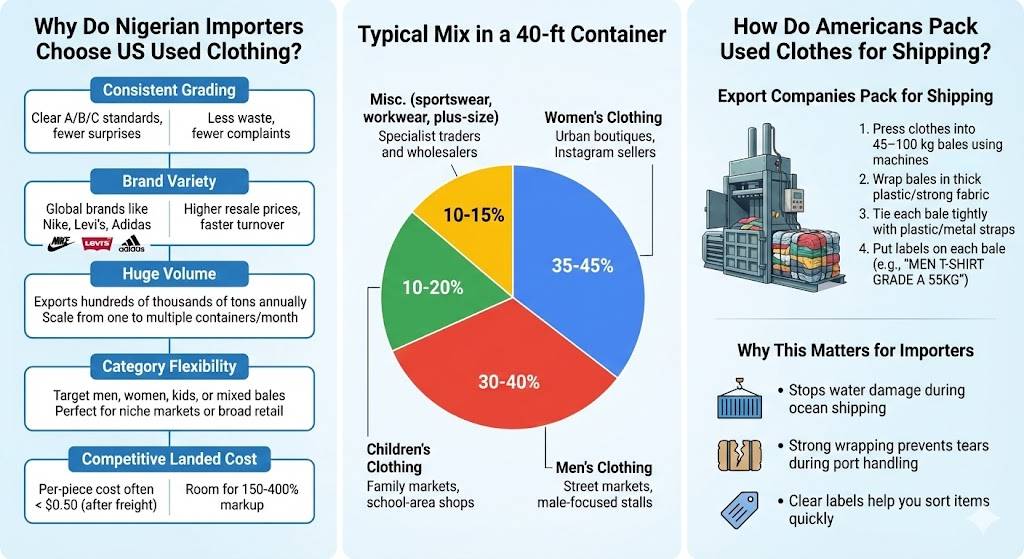
How Export Companies Pack Used Clothing
Professional sellers in the USA usually:
- Press clothes into 45–100 kg bales using big pressing machines^6
- Wrap the bales in thick plastic and/or strong fabric covers
- Tie each bale tightly with plastic or metal straps
- Put labels on each bale showing type and grade (like “MEN T‑SHIRT GRADE A 55KG”)
This is different from how regular people pack travelling clothing in USA (they use suitcases, bags, and packing cubes)—but the goal is the same: keep clothes tight, protected, and easy to move.
Why This Matters for Nigerian Importers
- Good bale packing stops water damage during ocean shipping
- Strong outer wrapping prevents tears when port workers move the load
- Clear labels help you sort items quickly when you open the container
When talking with a seller about used clothes for sale in USA, always ask for photos or video of how they pack their bales.
Price Guide: What to Expect When Buying Used Clothes USA
Knowing realistic prices is key if you want to make profit while staying competitive in markets like Balogun, Aba, or Onitsha.
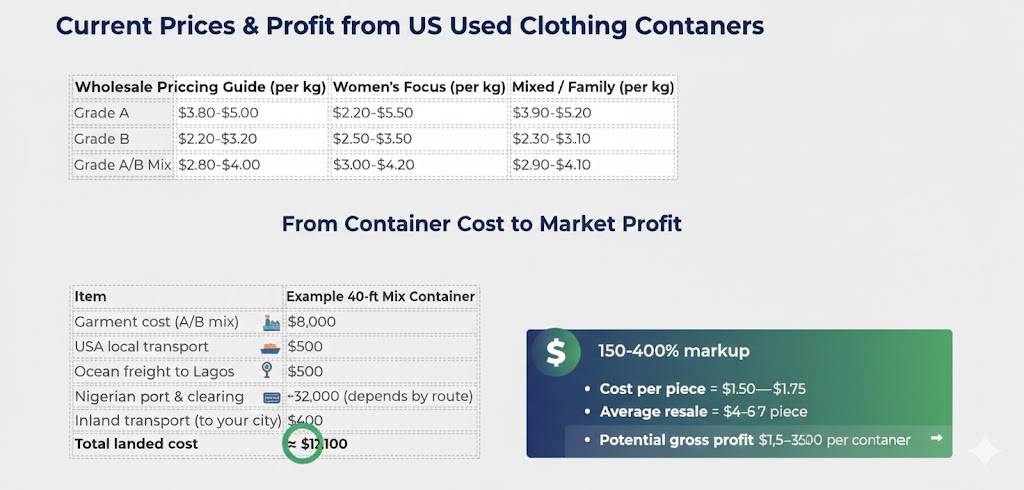
Typical Starting Prices (USA Warehouse)
| Grade / Mix | Men’s Focus (per kg) | Women’s Focus (per kg) | Mixed / Family (per kg) |
|---|---|---|---|
| Grade A | $3.80–$5.00 | $4.20–$5.50 | $3.90–$5.20 |
| Grade B | $2.20–$3.20 | $2.50–$3.50 | $2.30–$3.30 |
| Grade A/B Mix | $2.80–$4.00 | $3.00–$4.20 | $2.90–$4.10 |
Note: These are sample ranges based on public wholesale listings for bundle used clothing USA on platforms like Alibaba.^2
From Container Cost to Market Profit
| Item | Example 40‑ft Mix Container |
|---|---|
| Garment cost (A/B mix) | $8,000 |
| USA local transport | $500 |
| Ocean freight to Lagos | ~$2,200 (depends on route) |
| Nigerian port & clearing | ~$1,000 (varies by agent) |
| Inland transport (to your city) | $400 |
| Total landed cost | ≈ $12,100 |
If your container holds roughly 7,000–8,000 pieces:
- Cost per piece = $1.50–$1.75
- Average resale (mixed retail + wholesale) = $4–$7 per piece
- Potential gross profit = $17,500–$35,000 per container (after all costs)
These numbers assume good quality control and smart selling. Your actual results depend on your market, selling speed, and negotiation skills.
Step-by-Step: How to Source Used Clothes from USA the Right Way
Step 1: Know Your Market First
Before ordering, answer these questions:
- Are you targeting budget street markets or higher-end boutiques?
- Do you want men’s clothes, or do you focus on cheap used men clothes salesin USA?
- Or do you specialize in kids, and want to buy used children’s clothe from USA?
- Will you market as premium “London/American selection” or mass Okrika?
Your answers will help you decide on quality grade mix, brand expectations, and pricing.
Step 2: Find Serious Suppliers
Look for:
- Companies that focus on used clothing exports (not random traders)
- Real factories or warehouses with photos/videos
- Clear information about grading and categories
- Willingness to show sample videos or send small trial orders
You can check typical offers on B2B websites like Alibaba’s bundle used clothing USA page.^2
Step 3: Ask for Details and Samples
For each supplier, ask for:
- Full product list (men’s, women’s, kids, shoes, bags)
- Grade definitions in writing (A/B/C)
- Sample photos or a short video for each category
- Option to try a small order before buying a full container
A trustworthy partner like Hissen Global will gladly discuss all your target keywords—used clothes for sale in USA, used USA clothes, men’s, kids, etc.—and show you how they collect and pack each type.
Step 4: Compare Total Cost, Not Just Starting Price
Make sure you include:
- Starting clothing price
- Local trucking to port
- Sea freight to Nigeria
- Clearing fees, duty, and port charges
- Transport to your warehouse
Even if Supplier A has slightly higher used clothes USA prices than Supplier B, your total cost might be lower if they have better shipping or less waste.
Step 5: Lock in Contract and Payment Terms
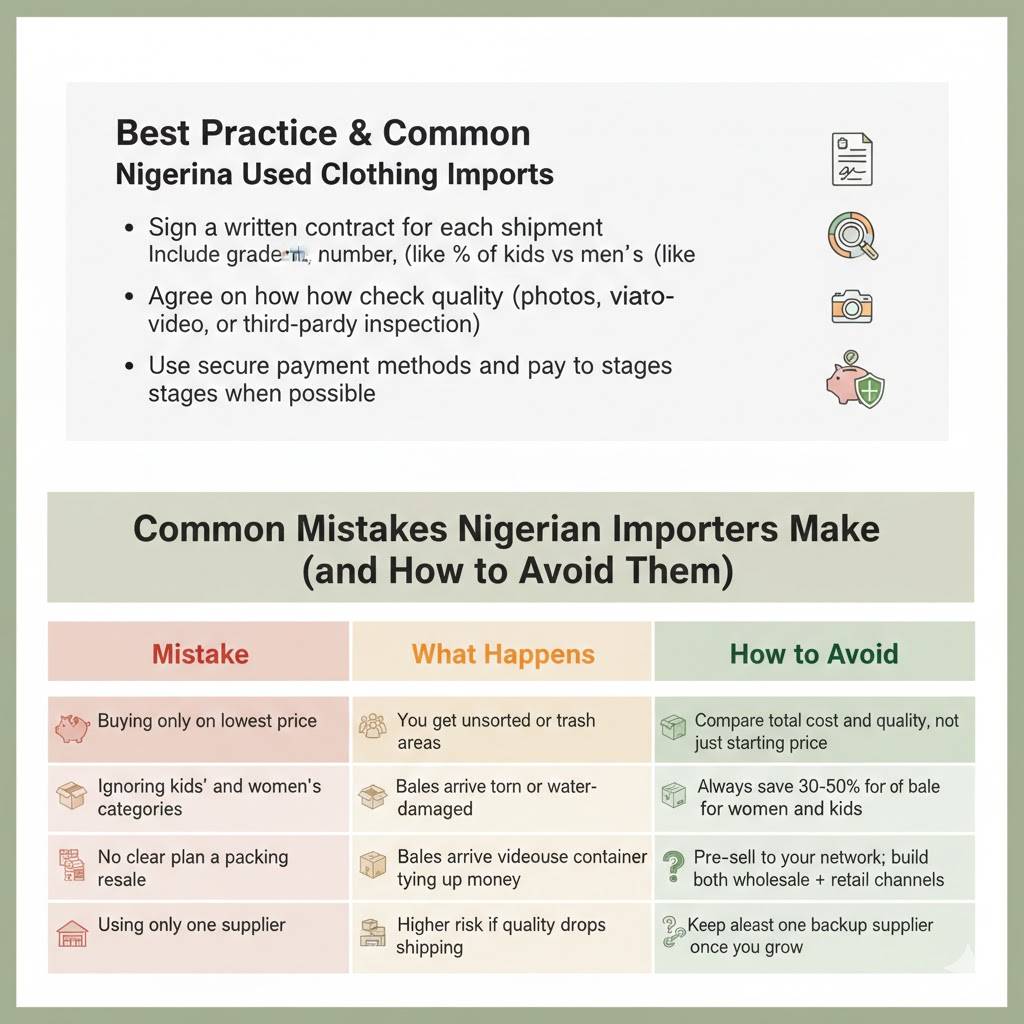
Best practice:
- Sign a written contract for each shipment
- Include grade mix, number of bales, categories (like % of kids vs men’s)
- Agree on how to check quality (photos, video, or third‑party inspection)
- Use secure payment methods and pay in stages when possible
Common Mistakes Nigerian Importers Make (and How to Avoid Them)
| Mistake | What Happens | How to Avoid |
|---|---|---|
| Buying only on lowest price | You get unsorted or trash items; profit disappears | Compare total cost and quality, not just starting price |
| Ignoring kids’ and women’s categories | You miss strong demand areas | Always save 30–50% of a container for women and kids |
| Not checking packing | Bales arrive torn or water‑damaged | Request packing videos and bale photos before shipping |
| No clear plan for resale | Items sit in warehouse, tying up money | Pre‑sell to your network; build both wholesale + retail channels |
| Using only one supplier | Higher risk if quality drops | Keep at least one backup supplier once you grow |
The Big Picture: How Big Is the African Used Clothing Trade?
To understand the opportunity behind used clothes USA, it helps to see the full African context:
- Africa gets over 70% of the world’s donated clothing; used clothing imports into East Africa alone are over $150 million per year.^4
- A recent study says that the secondhand clothing business supports over 1.28 million jobs across Africa and brings in millions in tax money.^7
- In 2023, the US sent nearly $993 million of used or secondhand items to African markets, showing how strong demand is.^5
Nigeria’s official import value for worn clothing was about $70–80 million in 2024, with imports going up and down as policies and customs rules change. For smart importers, this change is also a chance—people who know how to buy and sell professionally can grab market share when others give up.^1
How Hissen Global Helps You Win with Used USA Clothes
If you’re searching “used clothes USA supplier” or “used clothes for sale in USA for Nigeria,” you don’t just need bales. You need a partner who understands your market.
At Hissen Global we:
- Buy directly from US charities, collection centers, and sorting facilities
- Offer clear grade structures for men, women, and children
- Help you create custom mixes that match your Nigerian customers
- Provide photos and videos of used USA clothes packing and loading
- Support your first order step‑by‑step, from price quote to clearing
Take Action: Start Your Next Container the Smart Way
Ready to turn Google searches like buy fairly used clothes from USA and used clothes for sale in USA into real, steady profit?
- Visit hissenglobal.com to see our full used clothing catalog and download the latest Nigeria‑focused price list.
- Use our free Import Cost Calculator to estimate your cost per piece before you commit.
- Book a 1‑on‑1 consultation with our team to design the perfect mix of men’s, women’s, and children’s bales for your next container.
Suggested External Links (Authority Sources)
You can keep or adjust these three outbound links in the published article:
- Nigeria’s official imports of worn clothing and textile articles (UN COMTRADE via Trading Economics)^1
- Overview of used clothing exports to Africa and traditional exporting countries^4
- Statistics on US secondhand merchandise exports to Africa (Statista)^5