Korea vs China Used Clothes: Which Source is Right for Your Market? (2026)
If you are deciding between Korean and Chinese used clothes for your import business, this comparison guide will help you make an informed decision. Both countries are major Asian sources of second hand clothing, but they serve different market needs, price points, and quality expectations.
⏱ 8 min read · For importers, wholesalers & trade buyers
In this guide you will learn:
- Key industry insights and practical sourcing knowledge
- How to evaluate suppliers and avoid common mistakes
- Pricing benchmarks and quality standards
- Actionable steps for your import business
South Korea exported $36 million in used clothing in April 2024 (up 19.3% YoY), while China’s used clothing exports are estimated at roughly 3–4 times that volume. The right choice depends on your target market, budget, and quality requirements.
First time exploring these options? Start with our Korea used clothes guide and our China used clothing suppliers guide for market context.
Korea vs China: At a Glance
| Factor | South Korea | China |
|---|---|---|
| Monthly export volume | ~$36 million | ~$135 million (est.) |
| Active exporters | ~50+ | 200+ |
| A Grade price (FOB/kg) | market-competitive pricing | market-competitive pricing |
| B Grade price (FOB/kg) | market-competitive pricing | market-competitive pricing |
| Fashion value | High — K-fashion styles | Mixed — basics to luxury |
| Branded content | 20–35% | 20–35% |
| English communication | Generally good | Variable by supplier |
| Shipping to Africa | 14–25 days (Busan) | 18–28 days (various ports) |
| Supply consistency | Good — limited by population (51M) | Excellent — very high volume |
| Established industry | Well-developed (20+ years) | Well-developed (20+ years) |
Quality and Style Comparison
Korean Used Clothes: Fashion-Forward and Consistent
Korean used clothing has built a reputation for fashion-forward styles — trendy cuts, contemporary colors, and items influenced by K-pop and Korean drama fashion. This is the single biggest differentiator. Korean bales tend to contain a higher proportion of items that end consumers perceive as “desirable” rather than “just wearable.”
The Korean grading system (A/B/C) is consistent across major exporters, making it easier to know what you are getting. A Grade items are near-new with no defects; B Grade shows light wear.
Korean bales are particularly strong in categories where style matters most: ladies’ tops and dresses, fashion outerwear, and seasonal items. If your end customers care about whether a garment looks “current” rather than just “functional,” Korean sourcing has a genuine advantage.
Chinese Used Clothes: Volume and Variety
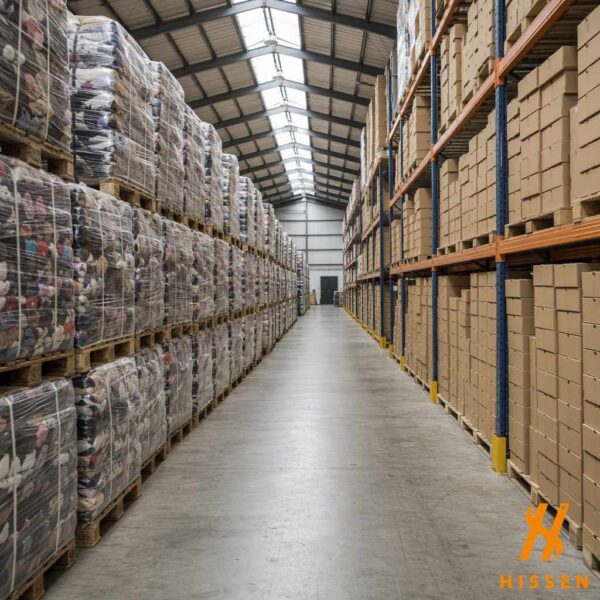
Chinese used clothing offers unmatched variety. Bales from major Chinese suppliers contain items ranging from basic everyday wear to luxury brand pieces (Gucci, LV, etc.) collected from first-tier cities like Shanghai, Beijing, and Guangzhou. The sheer volume — roughly 3–4 times Korea’s — means Chinese suppliers can offer more consistent inventory across more categories.
Chinese A Grade sorting meets the same no-stain/no-tear/no-hole standard as Korean A Grade. The main difference is style profile, not condition.
Chinese bales draw from a much larger and more diverse donor base — from affluent urban professionals in Shanghai who discard luxury-brand items after limited use, to middle-class households contributing everyday basics. This diversity means Chinese bales can contain everything from high-end brands to practical basics, all within the same container. For a more detailed explanation of grading standards that apply to bales from any origin, see our Grade A vs Grade B comparison.
Price Comparison: Real Numbers
| Grade | Korea (FOB/kg) | China (FOB/kg) |
|---|---|---|
| A Grade — Ladies fashion | market-competitive pricing | market-competitive pricing |
| A Grade — Mixed | market-competitive pricing | market-competitive pricing |
| B Grade — Mixed | market-competitive pricing | market-competitive pricing |
| Container discount (vs single bale) | ~market-competitive pricing | ~market-competitive pricing |
Key insight: At the low end, Korean A Grade (competitive per-kg pricing) can be cheaper than Chinese A Grade (competitive per-kg pricing). However, Chinese suppliers offer greater pricing consistency at scale and more flexible packaging. The total landed cost calculation should include freight, insurance, import duties, and any intermediary fees — not just the FOB price.
For detailed Chinese pricing, see our current mitumba bale pricing guide and Grade A vs Grade B comparison.
Supply Volume and Consistency
This is where the structural difference between the two origins is most apparent:
| Factor | South Korea | China |
|---|---|---|
| Population base | 51 million | 1.4 billion |
| Major collection zone | Seoul Capital Area (25M) | Multiple mega-cities (Shanghai 25M, Guangzhou 19M, Beijing 22M) |
| Estimated monthly raw material | ~15,000–20,000 tons | ~60,000–80,000 tons |
| Seasonal supply fluctuation | Moderate | Low (inventory buffers are larger) |
| Lead time for large orders | 2–4 weeks | 1–3 weeks |
For importers who need consistent, large-volume supply month after month, Chinese suppliers have a structural advantage. For smaller, fashion-focused orders, Korean suppliers are an excellent fit.
This difference becomes critical for importers serving large markets like Kenya, Nigeria, or Ghana where demand is steady year-round. A Chinese supplier with multi-month inventory buffers can maintain consistent shipments even during collection lulls. Korean suppliers, working from a smaller population base, may face tighter supply during winter months or holiday periods.
For a practical perspective on supply reliability from China, see our guide to Chinese used clothing suppliers.
Supplier Selection
China offers 4x more supplier options than Korea. This means:
- More competition between suppliers, which keeps pricing competitive
- Greater specialization — some Chinese suppliers focus on specific grades, categories, or destination markets
- More flexibility — many Chinese suppliers accept custom bale compositions and packaging
- More reviews and references to evaluate before committing
However, more options also means more variation in quality. Thorough vetting is important regardless of which origin you choose.
Shipping and Logistics
| Route | From Korea (Busan) | From China (Guangzhou/Shenzhen) |
|---|---|---|
| To East Africa | 14–18 days | 18–25 days |
| To West Africa | 18–25 days | 20–28 days |
| To Southeast Asia | 7–12 days | 5–10 days |
| Typical 20ft freight (East Africa) | $2,500–$4,000 | $2,000–$3,500 |
| Container capacity (20ft) | ~8–10 tons | ~8–10 tons |
Korean shipping to Africa is slightly faster (by 4–7 days) due to Busan’s proximity to major shipping routes. Freight costs are broadly comparable, though Chinese ports sometimes offer more competitive rates due to higher container volume.
See our mitumba bales shipping cost guide for detailed freight comparisons.
Market Fit: Which Source for Which Buyer?
| If Your Market… | Choose | Why |
|---|---|---|
| Values trendy, fashionable inventory | Korea | K-fashion appeal drives resale value |
| Needs consistent monthly container volume | China | More suppliers, larger volumes, more reliable supply |
| Is price-sensitive (lower-income consumers) | China | Better value at scale, more grade options |
| Serves boutique or retail customers | Korea | Higher perceived quality and style premium |
| Is new to used clothing importing | China | More suppliers, easier to find one that fits your needs |
| Wants both fashion and volume | Both | Many successful importers maintain dual sourcing |
Can You Source from Both?
Many experienced importers use both Korean and Chinese suppliers strategically:
- Korean bales for their boutique and retail customers who appreciate fashion-forward styles
- Chinese bales for volume markets where price sensitivity drives purchasing decisions
- This dual approach diversifies supply risk and lets the importer serve a wider range of customers
If you are considering Chinese sourcing as part of your strategy, Hissen Global is a China-based supplier with 12 years of export experience, 3 factories (20,000 m²), 25 sorting lines, and shipments to 110+ countries. We provide Grade A, Grade B, and mixed bales with complete export documentation. Contact us for current pricing and a direct comparison with Korean options for your market.
For more details on Chinese sourcing, explore our complete guide to used clothing suppliers in China and our current pricing guide.
💡 Key Takeaways
- Choose suppliers who offer live video verification — not just photos
- Compare total landed cost, not just FOB price per kg
- A Grade standards vary by supplier — always get written definitions
- Start with a small order to evaluate quality before scaling
- Build long-term relationships with consistent suppliers for better pricing
Frequently Asked Questions
Which country has better quality used clothes — Korea or China?
Is Korean used clothing cheaper than Chinese?
How many Korean used clothing exporters are there?
Can I combine Korean and Chinese sourcing?
Which origin ships faster to Africa?
What is better for a first-time used clothing importer — Korea or China?
Make Your Choice with Confidence
Korea and China both offer reliable used clothing sourcing, but they serve different market positions. Choose Korea for fashion-forward inventory with a style premium. Choose China for volume, variety, and supplier flexibility — or choose both for a diversified sourcing strategy.
Explore our full Korea used clothes guide, our Korean supplier directory, and our Korea import guide for Korean sourcing. For Chinese sourcing, visit our suppliers in China guide, pricing guide, and grade comparison. Contact Hissen Global for personalized advice on which sourcing origin fits your market.