Korea Second Hand Clothes: Complete Sourcing Guide for Importers (2026)
South Korea has emerged as one of the most reliable sources of quality second hand clothes in Asia. In April 2024 alone, Korea exported USD $36.2 million worth of used clothing — a 19.3% increase year-over-year. For importers across Africa, Asia, and the Middle East, Korean used clothes offer a distinct combination of fashion-forward styles, consistent grading, and dependable export infrastructure.
⏱ 10 min read · For importers, wholesalers & trade buyers
In this guide you will learn:
- Key industry insights and practical sourcing knowledge
- How to evaluate suppliers and avoid common mistakes
- Pricing benchmarks and quality standards
- Actionable steps for your import business
This guide covers everything you need to know about sourcing second hand clothes from Korea: market overview, grading standards, pricing, top exporters, and how Korea compares to other sourcing origins like China.
Whether you are an experienced importer looking to diversify your supply chain or a first-time buyer exploring Korean used clothes for the first time, this guide provides the practical information you need to make an informed sourcing decision.
Why South Korea for Second Hand Clothes?
South Korea’s second hand clothing export industry has grown steadily over the past decade. Here is why Korean used clothes command attention in global markets:
- Fast fashion cycle: Korean consumers refresh their wardrobes rapidly, generating a steady stream of high-turnover clothing in good condition. Items are often discarded after minimal wear.
- Fashion-forward designs: Korean fashion (K-fashion) is recognized globally for its trendy cuts, quality fabrics, and distinctive styling — driven in part by K-pop and Korean drama influence across Asia and Africa.
- Professional sorting infrastructure: Major Korean exporters operate large-scale sorting facilities with A/B/C grading systems, ensuring consistent quality.
- Proven export volumes: Korea ships used clothing to 30+ countries, with major buyers in Malaysia, India, Thailand, the Philippines, and Chile.
Korea Used Clothes Market Overview
The Korean used clothing export market is substantial and growing. Here are the key numbers:
| Metric | Value |
|---|---|
| Monthly used clothing exports | ~USD $36 million (April 2024) |
| Year-over-year growth | +19.3% |
| Broader category (clothes + textiles) | ~USD $52 million/month (Nov 2024) |
| Top export destination | Malaysia ($11.2M/month) |
| Other major buyers | India, Thailand, Philippines, Chile, China, USA, Japan |
| Estimated number of exporters | 50+ active B2B suppliers |
Source: Korea Customs Service via OEC.world.
Why Korean Used Clothing Is Popular in Africa and Asia
The appeal of Korean second hand clothes extends beyond basic quality. Several factors drive demand specifically for Korean-origin bales:
K-Fashion and Hallyu (Korean Wave) Influence
The global popularity of K-pop (BTS, BLACKPINK, etc.) and Korean dramas has created strong demand for Korean-style clothing in African and Asian markets. End consumers recognize and actively seek out the Korean aesthetic — fitted cuts, contemporary designs, and colors that reflect current Seoul street fashion.
Urban Collection Sources
Korean used clothes are predominantly collected from the Seoul Capital Area (including Incheon and Gyeonggi Province), home to over 25 million people — half of Korea’s population. This urban concentration means the clothing collected tends to be from younger, fashion-conscious donors compared to rural collection programs in other countries.
Fast Fashion Turnover
South Korea has one of the fastest fashion turnover rates in Asia. Items are often donated or discarded after only a few wears, meaning Korean bales typically contain clothing in better initial condition compared to sources where clothing is worn until worn out.
Korean Used Clothing Grading System
Korean exporters typically grade used clothes into three tiers:
| Grade | Description | Typical Price (FOB/kg) |
|---|---|---|
| A Grade | Near-new condition. No stains, tears, holes, or fading. Fashionable and current styles. | competitive pricing reflecting the Korean market position |
| B Grade | Light wear. Minor fading or pilling. Still wearable and sellable. | entry-level pricing for budget-conscious buyers |
| C Grade | Heavily worn or flawed. Often sold as rags or recycling material. | $0.30–$0.60/kg |
Most international buyers target A Grade Korean bales for retail resale, while B Grade works for wholesale markets where price sensitivity is higher. Some Korean exporters also offer mixed-grade bales (A + B blend) at a discounted rate — a practical option for importers who plan to sort locally.
Category Breakdown in Korean Bales
Korean used clothing bales typically contain a mix of categories, with approximate proportions:
- Ladies wear (35–40%): Tops, blouses, dresses, skirts, pants, jackets — the largest category due to faster turnover in women’s fashion
- Men’s wear (20–25%): Shirts, pants, suits, jackets — more conservative styles but consistent quality
- Children’s wear (10–15%): School uniforms, casual wear, outerwear
- Mixed accessories (5–10%): Scarves, belts, handbags, shoes
- Seasonal items (variable): Winter coats, summer dresses depending on collection timing
Category ratios can be customized for regular buyers. This is a question to ask your potential supplier early in the negotiation.
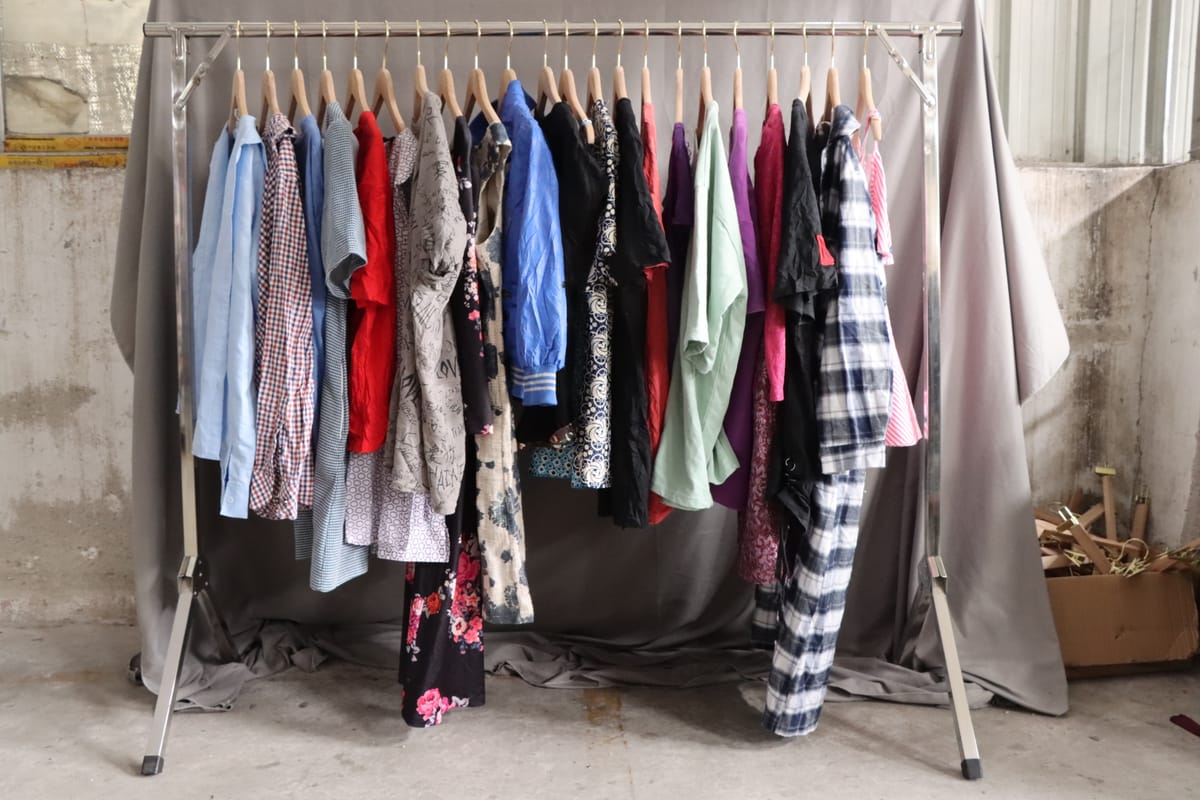
Top Korean Used Clothing Exporters
If you are looking for korea used clothes companies or a used clothes korea supplier, here are the major players verified through B2B platforms:
| Company | Est. | Volume | Key Markets |
|---|---|---|---|
| K-FOREIGNER Trading | — | 40–50 containers/month (12,000 tons/year) | 30+ countries |
| KISUK TRADING | 2000 | 40–50 containers/month | 20+ countries (Africa, Middle East, SE Asia) |
| GNL Company | 2002 | $25–50M annual sales | 100% export, global |
| DHY Co., Ltd. (HKT Korea) | — | Specializes in A-grade | Africa, East Asia |
| JUNGWON TRADING | — | Manufacturer/supplier | Global |
These companies can be contacted through B2B platforms: TradeKorea (tradekorea.com), GOBIZKOREA (gobizkorea.com), Alibaba, and TradeKey.
How to Find a Reliable Used Clothes Korea Supplier
Whether you are a first-time importer or expanding your sourcing network, here is a step-by-step approach:
Step 1: Research on B2B Platforms
Start with TradeKorea and GOBIZKOREA — these are Korea-specific platforms with verified listings. Alibaba also lists Korean suppliers, though some may be intermediaries rather than direct exporters.
Step 2: Verify Company Credentials
Request: Business registration number, export license, photos/video of sorting facility, and references from buyers in similar markets. Korean companies are generally responsive to professional inquiries.
Step 3: Compare Pricing
Korean A Grade used clothing typically ranges from $1.10 to $2.00/kg FOB. Compare this with your target market’s willingness to pay. For comparison, Chinese A Grade bales from verified suppliers start around $2.00/kg FOB.
Step 4: Request Documentation
Confirm that the supplier provides: Commercial invoice, packing list, Bill of Lading, fumigation certificate, and certificate of origin. Korean exporters are experienced with international documentation requirements.
Step 5: Start with a Small First Order
Most Korean suppliers accept small first orders starting from one bale. Use this to assess quality, sorting accuracy, and communication before committing to container quantities.
Korea vs China: Detailed Comparison for Used Clothing Sourcing
Importers often ask how Korea compares with China as a source for used clothes. Here is a straightforward comparison:
| Factor | South Korea | China |
|---|---|---|
| Price (A Grade FOB) | competitive pricing reflecting the Korean market position | competitive pricing within the A Grade market range |
| Style/Fashion | Trendy, K-fashion influenced | Mixed, more basics |
| Branded content | 20–35% branded | 20–35% branded |
| Supply volume | ~$36M/month | ~$135M/month (much larger) |
| Number of exporters | ~50+ | 200+ |
| Sourcing languages | Korean, English | Chinese, English |
| Shipping to Africa | 14–21 days (Busan) | 18–28 days (various ports) |
| Documentation | Well-established | Well-established |
Bottom line: Korean used clothes offer better fashion value and competitive pricing at the higher end, while Chinese used clothes provide unmatched volume and variety. Many experienced importers maintain both sourcing channels — Korean bales for their boutique/retail customers and Chinese bales for volume markets.
Quality Comparison: What Actually Arrives in Your Container?
The quality of used clothing from both Korea and China depends more on the specific exporter than the country of origin. A well-sorted A Grade bale from either country should contain items free of stains, tears, and excessive wear. The main difference is in the style profile:
- Korean bales tend to contain a higher proportion of contemporary, fashion-forward items — think trendy cuts, seasonal colors, and items influenced by current K-fashion trends. This makes Korean bales particularly appealing for markets where fashion matters to the end consumer.
- Chinese bales from major exporters contain a broader mix — from basic everyday wear to luxury brand items discarded in first-tier cities like Shanghai, Beijing, and Guangzhou. The volume and variety are unmatched, but the fashion premium of Korean sourcing is generally absent.
Supply Volume: A Structural Difference
China’s used clothing export volume is roughly 3-4 times larger than Korea’s. This structural difference matters for importers who need consistent supply:
- Korea (~$36M/month): Limited by population size (51 million). Supply is sufficient for regular buyers but may face seasonal fluctuations.
- China (~$135M/month): Processing over 6,000 tons of raw material monthly from major urban centers. Larger suppliers maintain year-round inventory across multiple grades and categories.
Pricing: Not as Simple as “Korea Cheaper”
The price ranges overlap significantly. Korean A Grade can be found at $1.10/kg at the low end, while Chinese A Grade starts around $2.00/kg. However, Chinese suppliers offer greater consistency at scale and more flexible packaging options (45kg, 55kg, 80kg, 100kg bales). The total landed cost calculation should include freight, insurance, and import duties — not just the FOB price.
For a detailed look at Chinese sourcing options, see our complete guide to used clothing suppliers in China and current mitumba bale pricing.
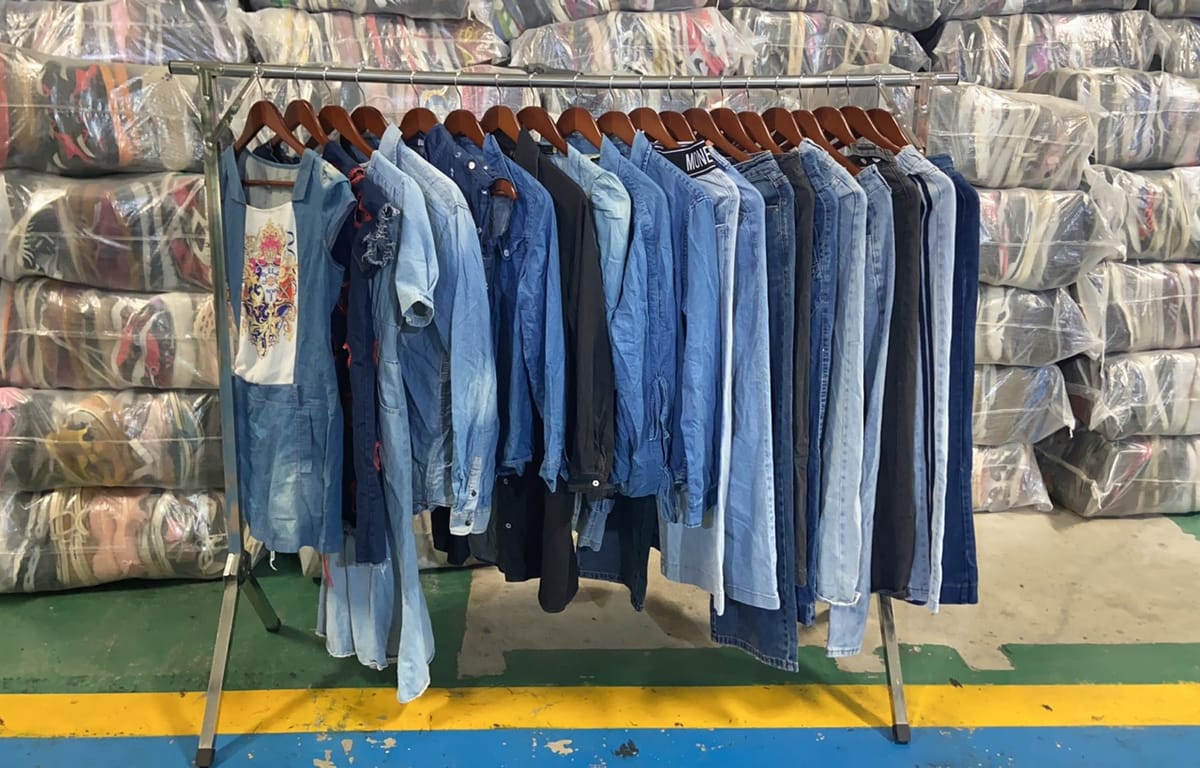
Shipping and Logistics: Importing Used Clothes from South Korea
Used clothes from Korea are typically shipped from the port of Busan — one of the busiest container ports in the world. Key shipping considerations:
- Sea freight to East Africa (Mombasa, Dar es Salaam): 14–18 days
- Sea freight to West Africa (Tema, Lagos, Abidjan): 18–25 days
- Sea freight to Southeast Asia (Jakarta, Manila, Bangkok): 7–12 days
- Container types: 20ft (holds ~8–10 tons) and 40ft HQ (holds ~18–22 tons)
- Free time: Typically 14–21 days at destination port
- Documents: Commercial invoice, packing list, BL, fumigation certificate, certificate of origin
See our mitumba bales shipping cost guide for detailed freight comparisons between China and other origins.
💡 Key Takeaways
- Choose suppliers who offer live video verification — not just photos
- Compare total landed cost, not just FOB price per kg
- A Grade standards vary by supplier — always get written definitions
- Start with a small order to evaluate quality before scaling
- Build long-term relationships with consistent suppliers for better pricing
Frequently Asked Questions
Is Korean used clothing better quality than Chinese used clothing?
How much does Korean used clothing cost per kg?
What is the minimum order quantity for Korean used clothing suppliers?
Which countries import the most used clothing from South Korea?
How do I find a reliable used clothes supplier in Korea?
Is it cheaper to import used clothes from Korea or China?
Do Korean used clothing suppliers accept video verification?
Start Sourcing with Confidence
South Korea offers a mature, reliable used clothing export industry with fashion-forward inventory and professional suppliers. Whether you choose Korean bales for their style advantage or Chinese bales for their volume, the key is to verify suppliers thoroughly and match the source to your market’s specific demands.
For a comprehensive look at Chinese sourcing options including pricing, grades, and verified suppliers, explore our mitumba bales suppliers in China guide, Grade A vs Grade B comparison, and current bale pricing.
Contact Hissen Global for a direct comparison of Chinese Grade A bales with Korean sourcing options — we help importers make informed decisions based on their target market and budget.