Published July 1, 2026 · Market analysis for importers
Korean Used Clothing Companies: Complete Guide for Importers in Africa & South America (2026)
If you are searching for korean used clothing suppliers or korean used clothing companies, you already know that South Korea offers something unique in the global used clothing trade: fashion-forward styles at competitive pricing.
From our perspective as a Chinese exporter serving 110+ countries across Africa and South America, we have watched the Korean used clothing industry grow to monthly exports of approximately $36 million, serving markets from Kenya to Chile, Nigeria to the Philippines.
This guide covers the Korean used clothing market — the top companies, pricing structure, quality standards, and how Korean sourcing compares with Chinese alternatives for importers in Africa and South America.
Why Korean Used Clothing Is Gaining Traction
The global secondhand apparel market is projected to reach 86 billion by 2031, growing at 16% annually. South Korea is positioned to capture a significant share of this growth due to three unique advantages: the global influence of K-fashion, a well-organized textile collection infrastructure, and government support for the used clothing export industry through platforms like TradeKorea and GOBIZKOREA.
For importers in emerging markets, the Korean used clothing industry offers a middle path between the high-branded-content European bales (expensive) and the volume-driven Chinese bales (lower branded content). Korean bales offer relatively affordable pricing with fashion-forward inventory that resonates with younger consumers across Africa and South America.
⏱ 10 min read · For importers evaluating Korean sourcing
In this guide:
- Overview of the Korean used clothing market — size, growth, and trends
- Profiles of top Korean used clothing companies
- Korean vs China: pricing, quality, and supply comparison
- Why Korean fashion appeals to African and South American consumers
- How to evaluate and verify Korean suppliers
- Practical advice for choosing between Korean and Chinese sourcing
🇰🇷 Korean Used Clothing Market Overview
South Korea has emerged as a significant player in the global used clothing trade. With monthly exports of approximately $36 million (2024 data, growing 19% year-over-year), Korea now serves over 30 countries across Africa, Asia, and the Middle East.
| Metric | Value |
|---|---|
| Monthly export volume | ~$36 million |
| Year-over-year growth | +19.3% |
| Active exporters | 50+ |
| A Grade FOB/kg | $1.10-2.00 |
| B Grade FOB/kg | $0.60-1.20 |
| Key advantage | Fashion-forward styles, professional grading |
| Major markets | Malaysia, India, Thailand, Philippines, Chile, Kenya, Nigeria |
The Korean advantage is clear: fashion. South Korea generates some of the most trend-driven used clothing in the world, thanks to the global influence of K-pop and Korean fashion. For importers in Africa and South America, Korean bales offer styles that end consumers actively seek out — and are often willing to pay a premium for.
🏢 Top Korean Used Clothing Companies
When researching korean used clothing companies, these are the major players verified through B2B platforms and trade data:
| Company | Volume | Key Details | Markets |
|---|---|---|---|
| K-FOREIGNER Trading | 40-50 containers/month | 130 workers, 160+ categories, CEO Eric Han | 30+ countries |
| KISUK TRADING | 40-50 containers/month | Est. 2000, 25+ years experience | 20+ countries (Africa, Middle East, SE Asia) |
| GNL Company | $25-50M annual sales | Est. 2002, 5,000-10,000 sqm facility, 100% export | Global |
| DHY Co., Ltd. (HKT Korea) | Specialized | A-grade specialist, shoes, bags, wipers | Africa, East Asia |
| JUNGWON TRADING | Established supplier | Gimhae-si based, multi-B2B platform presence | Global |
These companies can be contacted through TradeKorea (tradekorea.com) and GOBIZKOREA (gobizkorea.com) — government-supported B2B platforms that verify Korean suppliers. For a detailed profile of each company, see our complete Korean exporters directory.
💰 Korean vs Chinese Used Clothing: A Practical Comparison
Real-World Pricing Example
To make the comparison concrete, here is a realistic scenario for an importer in Nairobi, Kenya considering a 20ft container from both origins:
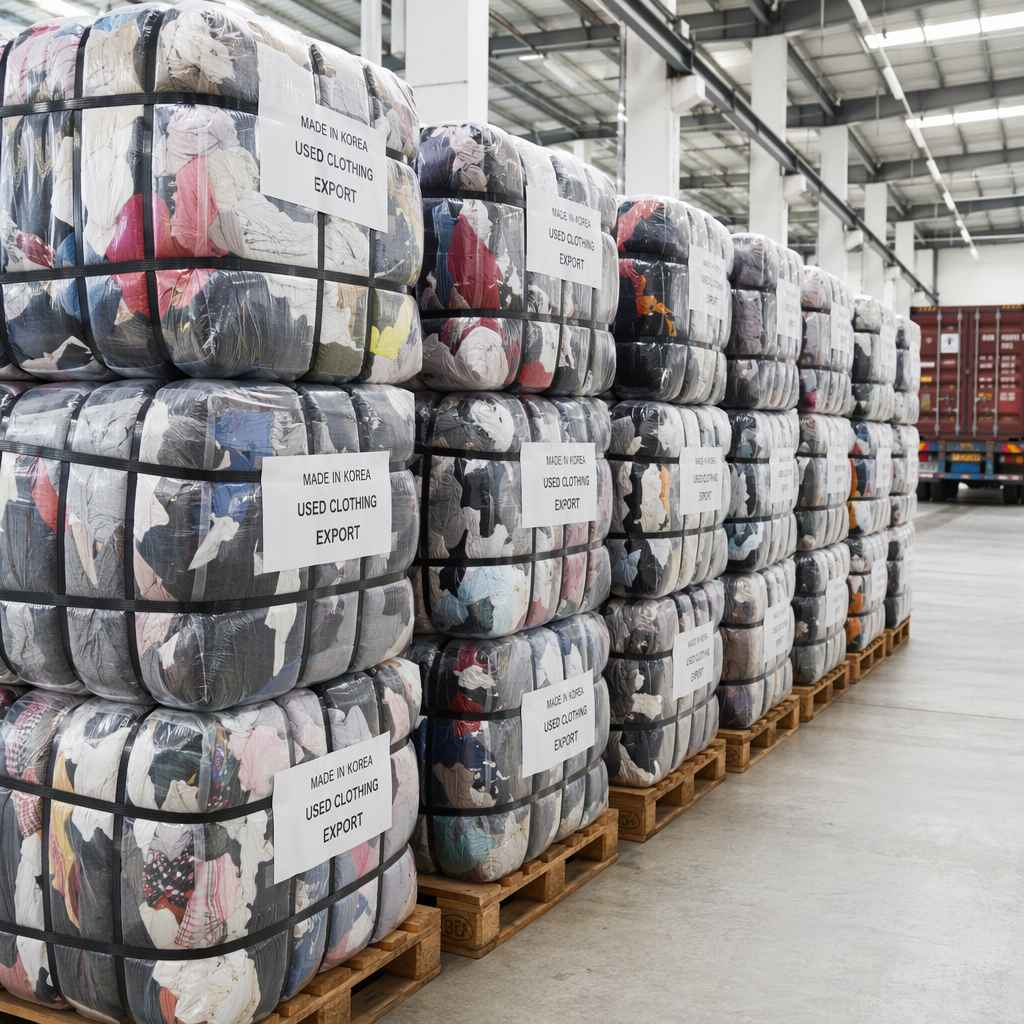
- Korean A Grade bales: .50/kg FOB + ,500 freight = approximately 7,500 total for 10 tons. At 48-50 pairs per bale for shoes or 250-400 pieces per bale for clothing, the per-item cost is competitive.
- Chinese A Grade bales: .50/kg FOB + ,500 freight = approximately 8,500 total for 10 tons. Higher FOB and freight, but significantly more supplier options and the ability to custom-order specific category mixes.
The Korean option saves approximately 1,000 per container upfront — but with fewer supplier options and less flexibility on bale composition. The Chinese option costs more but offers greater long-term supply stability and customization.
For importers in Africa and South America, the choice between Korean and Chinese sourcing often comes down to three factors: price, style, and volume.
| Factor | South Korea | China |
|---|---|---|
| A Grade FOB price | $1.10-2.00/kg | $2.00-3.00/kg |
| B Grade FOB price | $0.60-1.20/kg | $1.00-1.80/kg |
| Fashion content | High — K-fashion influence | Moderate — mixed basics to luxury |
| Branded content | 20-35% | 20-35% |
| Supplier options | ~50+ exporters | 200+ exporters |
| Monthly supply volume | ~$36M | ~$135M |
| Minimum order | From 1 bale | From 1 bale |
| English communication | Good | Good (major exporters) |
| Video verification | Available from major exporters | Common practice |
| Shipping to Africa | 14-21 days (Busan) | 18-28 days (various ports) |
| Shipping to South America | 18-25 days (Busan) | 25-35 days (Chinese ports) |
Korean pricing is notably competitive — A Grade at $1.10-2.00/kg often undercuts Chinese A Grade at $2.00-3.00/kg. However, Chinese suppliers offer four times the supplier base and significantly larger monthly volumes. If your market needs fashion-forward styles, Korea offers excellent value. If you need maximum volume, variety, and supplier choice, China has the advantage.
🌍 Why Korean Used Clothing Works for Africa & South America
The demand for korean used clothing in African and South American markets is driven by specific factors that importers should understand:
K-Fashion Appeal
The global popularity of K-pop (BTS, BLACKPINK) and Korean dramas has created strong demand for Korean-style clothing in both Africa and South America. End consumers recognize and actively seek out the Korean aesthetic — fitted cuts, contemporary designs, and colors that reflect current Seoul street fashion. This cultural pull translates directly into higher resale prices for Korean-sourced bales.
Quality Perception
Korean used clothing has built a reputation for quality. The A/B/C grading system is applied consistently across major Korean exporters, giving importers confidence in what they are buying. In markets like Kenya and Nigeria, “Korea mitumba” carries a premium positioning that allows traders to charge higher prices.
Korean Grading System
One area where Korean suppliers excel is their consistent grading system. Korean A Grade bales are reliably sorted — no stains, no tears, no holes, current styles. The grading standard is applied consistently across major Korean exporters, which reduces the risk of receiving lower quality than expected. This consistency is one reason why importers who value predictability often prefer Korean suppliers despite the smaller supplier base.
Competitive Shipping Times
From Busan to Mombasa is approximately 14-18 days — 4-7 days faster than from Chinese ports. For South American buyers, Busan to Chile or Colombia is 18-25 days. This faster transit reduces working capital requirements and allows quicker inventory turnover.
✅ How to Evaluate Korean Used Clothing Suppliers
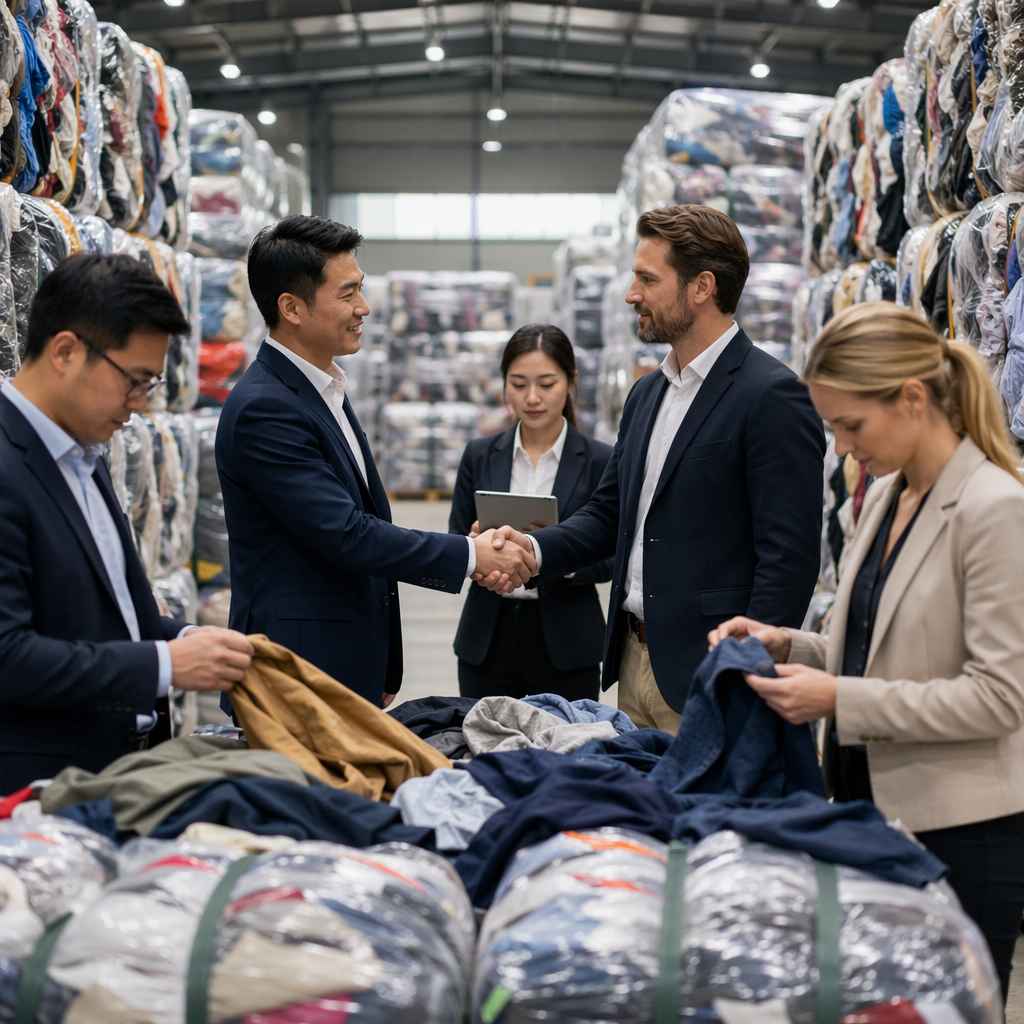
Whether you choose a Korean company or a Chinese supplier, the verification process is similar. Use this checklist:
- 📹 Live video tour — Request a live tour of the sorting facility. Korean exporters are generally responsive to this.
- 📋 Grading standards in writing — Ask for documented A/B/C grade definitions with photos of actual bale contents.
- 🔍 Verify business registration — Korean companies have publicly verifiable business registration numbers.
- 👥 Market references — Ask for buyers in your region or similar markets.
- 📦 Start small — Order 1-5 bales before scaling to container orders.
🇨🇳 A Chinese Exporter’s Perspective on Korean Sourcing
We are often asked: “Should I buy from Korea or China?” Here is our honest perspective:
Korean used clothing offers genuine advantages — competitive pricing, fashion-forward styles, and good English communication. For importers serving fashion-conscious markets, Korean bales are an excellent choice. The $1.10-2.00/kg pricing for A Grade is competitive, and the shipping time advantage to Africa is real.
However, Korean supply is limited by the size of the country. With a population of 51 million, Korea produces roughly one-quarter of the used clothing volume that China does. This means fewer supplier options, less flexibility on custom bale compositions, and potential supply constraints during peak demand periods.
China offers what Korea cannot: scale. With 200+ suppliers, $135M monthly exports, and 1.4 billion population generating collection materials, Chinese suppliers can offer consistent volume, a wider range of grades and categories, and greater flexibility on bale composition.
Our recommendation: Many successful importers use both origins. Korean bales for fashion-conscious customers who will pay a premium for K-style clothing. Chinese bales for volume, variety, and price-sensitive segments. If you can manage two supply chains, the dual-origin approach gives you the best of both worlds.
📋 Practical Advice for First-Time Korean Sourcing
If you are importing from Korea for the first time, here is a practical step-by-step approach:
- Research suppliers — Start with TradeKorea and GOBIZKOREA. Look for suppliers with active listings and recent export activity.
- Request quotes from 3-5 suppliers — Compare A Grade pricing, bale compositions, and shipping terms. Korean suppliers typically respond within 24-48 hours to professional inquiries.
- Verify with video. — Ask for a live WhatsApp call showing the sorting floor. This confirms the supplier has actual operations, not just a trading desk.
- Start with 1-5 bales. — Evaluate quality, grading consistency, and communication before committing to container orders.
- Compare with Chinese options. — Get a quote from a Chinese supplier for the same grade and category. Compare total landed cost, not just FOB price. This is where we can help — we provide transparent pricing with live video verification.
❓ Frequently Asked Questions
What are the top Korean used clothing companies?
Is Korean used clothing cheaper than Chinese?
How do I find Korean used clothing suppliers?
Which is better for African importers — Korea or China?
Can I combine Korean and Chinese used clothing sourcing?
🌍 Find the Right Sourcing Mix for Your Market
Whether you choose Korean sourcing for fashion-forward inventory, Chinese sourcing for volume and value, or a combination of both, the key is working with transparent suppliers who deliver consistent quality.
Related reading:
- Korea Second Hand Clothes — Complete Sourcing Guide
- South Korea Used Clothing Companies — Top Exporters
- Used Clothing Suppliers in China — Complete Guide
📩 Get a Free Comparison: Korea vs China Pricing for Your Market →