Can I Get Quotations from Multiple Used Clothing Suppliers? A Complete Guide for Importers (2026)
⏱ 12 min read · For used clothing importers & wholesalers
In this guide you will learn:
- Why getting quotations from multiple used clothing suppliers is essential for smart importing
- How to request effective quotations that allow fair comparison between suppliers
- What to look for in a quotation beyond just the per-kg price
- How to compare quotations accurately across different suppliers and countries
- How Hissen Global provides transparent, detailed quotations for informed decision-making
The short answer is yes — you can and absolutely should get quotations from multiple used clothing suppliers. In fact, sourcing quotations from 3-5 different suppliers before making a decision is one of the most important steps in building a profitable used clothing import business. Whether you are in Africa, South America, or Southeast Asia, comparing quotations helps you understand market pricing, evaluate supplier professionalism, and avoid overpaying.
But there is a right way and a wrong way to request and compare quotations. In this guide, written from the perspective of a Chinese exporter who responds to quotation requests daily, we show you how to get useful quotes, what to look for, and how to make an informed decision.

Why You Should Get Multiple Quotations
Requesting quotations from multiple used clothing suppliers gives you several advantages:
- 💰 Price Benchmarking — Understanding the market range for your desired grade and category helps you identify both overpriced offers and suspiciously low ones.
- 📊 Supplier Comparison — Quotations reveal a lot about a supplier’s professionalism. Detailed, clear quotes indicate organized operations. Vague quotes suggest inexperience or disorganization.
- 🎯 Specification Clarity — The process of requesting quotes forces you to clarify your own requirements — grade, categories, seasonal mix, packaging, and delivery terms.
- 🤝 Relationship Building — The quotation process is the first step in building a supplier relationship. How a supplier handles your inquiry tells you a lot about how they will handle your order.
💡 Best practice: Contact 3-5 suppliers with the same detailed specification request. This gives you enough data points to identify the market range without creating an unmanageable number of responses.
How to Request Effective Quotations
To get useful, comparable quotations, provide each supplier with the same detailed specifications:
| Specification Field | Example | Why It Matters |
|---|---|---|
| Grade | Grade B mixed used clothing | Ensures all quotes are for the same quality level |
| Container size | 1 x 40HQ container | Pricing varies by volume — standardize for comparison |
| Destination port | FOB Guangzhou or CIF Dar es Salaam | Enables accurate total cost comparison |
| Category preference | 40% T-shirts, 20% jeans, 20% dresses, 20% other | Customization may affect pricing |
| Seasonal sorting | Mixed-season or summer-sorted | Seasonal sorting adds cost but adds value |
| Packaging | Compressed bales, 45-50 kg each | Standardizes shipping calculations |
📌 Template tip: Write your inquiry once and send the same specification to all suppliers. This ensures the quotations you receive are comparable on an apples-to-apples basis.

What to Look for in a Quotation
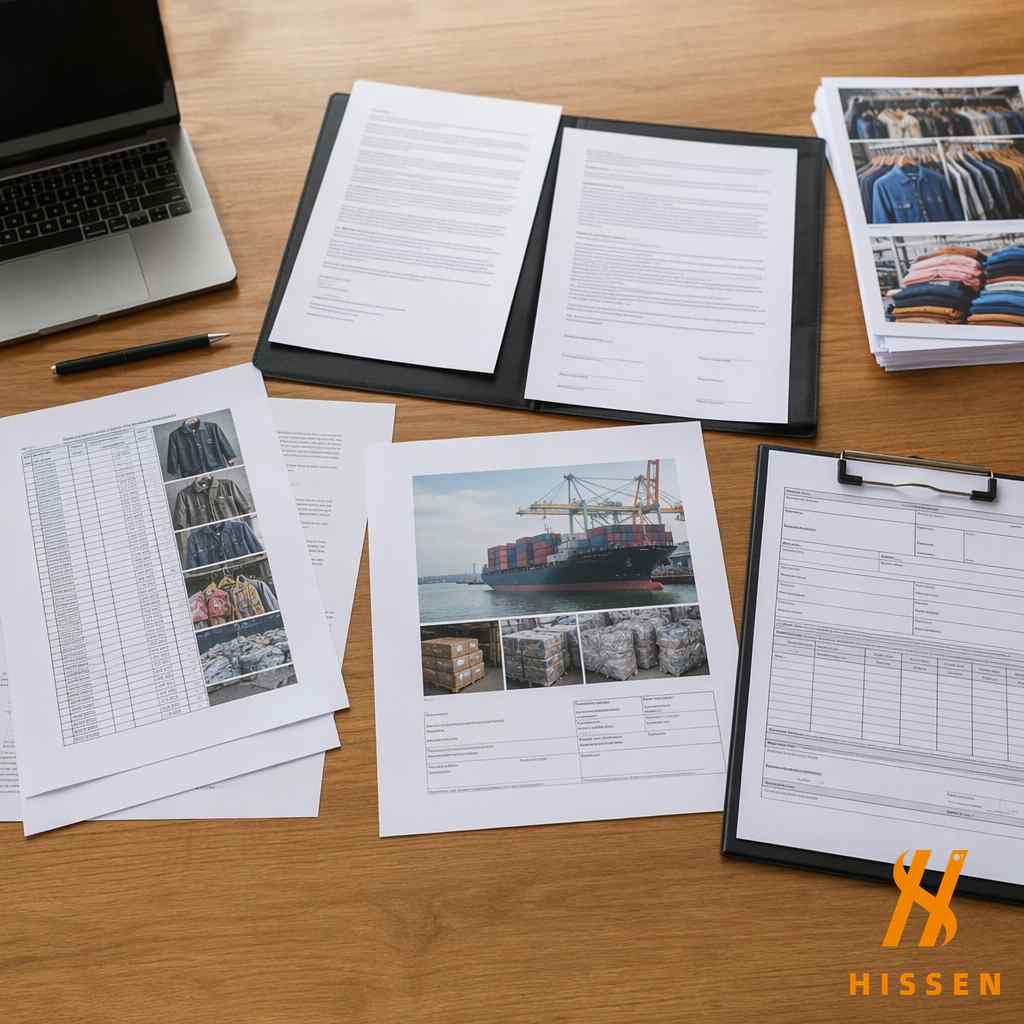
A professional quotation from a used clothing supplier should include these elements:
1. Clear Product Description
The quote should specify the grade, category breakdown, bale weight, and seasonal composition. Vague descriptions like "good quality mixed bales" are a red flag.
2. Transparent Pricing Structure
A detailed quote shows: per-kg price, total container value, and what is included (FOB: product + loading; CIF: product + loading + freight + insurance).
3. Payment Terms
Standard terms are 30% deposit, 70% before shipment. Be cautious of suppliers demanding 50%+ deposit or full payment upfront.
4. Loading Timeline
A professional quote includes estimated loading time — typically 7-14 days from deposit for standard orders.
5. Validity Period
Quotations should specify how long the pricing is valid (typically 7-15 days). Used clothing prices fluctuate with source material costs.
How to Compare Quotations: 5-Step Framework
Step 1: Compare on the Same Basis
Convert all quotes to the same terms for fair comparison. If Supplier A quotes FOB Guangzhou and Supplier B quotes CIF your port, add estimated freight to Supplier A’s quote for comparison.
Step 2: Look Beyond the Per-Kg Price
A lower per-kg price may hide costs: lower quality grades, poor sorting, or excluded services. Compare total value, not just unit price.
Step 3: Evaluate Responsiveness and Detail
A supplier who provides a detailed, accurate, and prompt quotation is likely to be the same in their operations. Responsiveness during quotation is a leading indicator of overall service quality.
Step 4: Cross-Reference Pricing Benchmarks
Use these 2026 benchmarks to evaluate whether quotes are in the right range:
| Grade | Fair Range (FOB/kg) | Suspiciously Low | Overpriced |
|---|---|---|---|
| Grade A Mixed | $2.50 – $3.50/kg | Below $2.00/kg | Above $4.50/kg |
| Grade B Mixed | $1.40 – $2.00/kg | Below $1.00/kg | Above $2.80/kg |
| Grade A Sorted Seasonal | $3.00 – $4.50/kg | Below $2.50/kg | Above $5.50/kg |
| Shoes Bales | $2.00 – $4.00/kg | Below $1.50/kg | Above $5.00/kg |
Step 5: Shortlist and Verify
From your 3-5 quotations, shortlist the top 2-3 based on value, not just price. Contact these suppliers for video verification before making your final decision.
Common Mistakes When Getting Quotations
- ❌ Only asking one supplier — Even if your first quote seems reasonable, getting 3-5 quotes gives you market context and negotiation leverage.
- ❌ Focusing only on the lowest price — The cheapest quote often comes with hidden compromises: lower quality, slower delivery, or poor communication.
- ❌ Not providing clear specifications — Vague inquiries get vague responses. The more specific you are, the more useful the quotation will be.
- ❌ Ignoring the validity period — Prices change. If you delay your decision too long, the quoted price may no longer be valid.
- ❌ Not asking questions — If a quotation is unclear, ask. A good supplier will happily clarify every line item.
Why Hissen Global Provides Transparent Quotations
At Hissen Global, we believe that transparent quotations are the foundation of a successful importer-exporter relationship. When you request a quote from us, you receive:
- 📋 Detailed Product Specifications — Grade, category breakdown, bale weight, seasonal composition, and packaging details.
- 💰 Clear Pricing Structure — Per-kg price, total container value, and exactly what is included (FOB or CIF).
- 📅 Loading Timeline — Realistic, commitment-ready loading schedules based on current inventory.
- 📸 Verification Available — We back our quotations with live video tours of actual inventory.
- 💬 Prompt Responses — Quotations provided within 24 hours, with answers to all your questions.
- 🤝 No Pressure — We provide the information you need to make an informed decision, without aggressive sales tactics.
💡 Key Takeaways
- Always get quotations from 3-5 used clothing suppliers before making a decision — it is the most important step in smart sourcing
- Send the same detailed specifications to all suppliers for apples-to-apples comparison
- Compare total value, not just per-kg price — a detailed, responsive supplier is worth more than a cheap, vague one
- Use pricing benchmarks to identify quotes that are suspiciously low or overpriced
- Shortlist 2-3 suppliers and verify with video tours before deciding
- Hissen Global provides detailed, transparent quotations with clear specifications and responsive support
Frequently Asked Questions
1. How many quotations should I get for used clothing bales?
Request quotations from 3-5 suppliers. This gives you enough data to understand the market range and identify outliers, without creating an unmanageable number of responses. More than 5 becomes difficult to compare effectively.
2. What information should I include in my quotation request?
Include: grade required, container size, preferred categories, seasonal sorting preference, destination port, and payment terms you are comfortable with. The more specific you are, the more accurate and comparable the quotations will be.
3. How long are used clothing quotations typically valid?
Most Chinese used clothing exporters provide quotations valid for 7-15 days. Prices can fluctuate based on source material costs, shipping rates, and demand. If you need longer validity, discuss it with the supplier during the quotation process.
4. Should I choose the cheapest quotation?
Not necessarily. The cheapest quote may come with compromises in quality, service, or reliability. Evaluate quotations based on total value — including the supplier’s responsiveness, transparency, and willingness to verify their product.
5. How do I compare FOB vs CIF quotations?
Convert all quotations to the same basis for fair comparison. To compare CIF with FOB: add estimated freight and insurance to the FOB price. A good freight forwarder can help you estimate these costs for different suppliers’ locations.
Get a Transparent Quotation from Hissen Global
Whether you are comparing suppliers for the first time or adding a new sourcing partner to your network, getting a clear, detailed quotation is the first step. We encourage you to request quotations from multiple used clothing suppliers — including us — so you can make the most informed decision for your business.
At Hissen Global, our quotations are designed to give you the clarity you need to decide with confidence.
📦 Ready to compare quotations? We invite you to compare before you decide.
Hissen Global is a China-based used clothing exporter serving importers in Africa, South America, and Asia. We provide detailed, transparent quotations with clear specifications, competitive pricing, and responsive support — so you can compare with confidence.
📞 Request Your Detailed Quotation →
✅ Prefer to learn more? Browse our industry guides for used clothing importing tips and supplier evaluation insights.