The Ultimate Guide to Wholesale Used Clothing Export in 2026: Trends, Quality, and Logistics for Africa & SE Asia
If you are in the used clothing business in 2026, one thing is clear: this is no longer a side market. It is a fast-moving global trade built on quality, speed, pricing, and trust.
For importers and distributors across Africa, Southeast Asia, and the Middle East, wholesale used clothing is no longer just about cheap garments. It is about smart sourcing, strong resale margins, and reliable supply chains.
🌍 1. Why the Used Clothing Business Is Bigger Than Ever
The global secondhand apparel market has grown far beyond a niche resale segment. Industry forecasts suggest it could surpass $485 billion by 2031, reflecting how rapidly demand for affordable and sustainable fashion is expanding worldwide.
In 2026, buyers are not simply looking for “old clothes.” They want value, wearable quality, recognizable brands, and faster inventory turnover. That is exactly why wholesale used clothing exports continue to gain momentum in Africa, Southeast Asia, and other price-sensitive but style-conscious markets.
📈 2. Why the Market Is Booming in 2026
💰 2.1 Smart Consumption Is Replacing Cheap Consumption
In many markets, buyers still care about price — but they care even more about value for money. Inflation and tighter household budgets have made consumers more selective, especially in countries where the middle class is growing but spending habits are becoming more cautious.
That is why A-Grade and Cream-Grade used clothing are performing so well. Buyers want clothing that looks stylish, feels wearable, and costs far less than retail. For local sellers, this creates room for better margins without pushing customers away.
♻️ 2.2 Sustainability Has Become a Selling Point
Second-hand fashion is no longer just practical. It has become part of a broader lifestyle shift. Younger consumers in urban markets are increasingly attracted to clothing that feels both affordable and environmentally responsible.
For wholesalers, this creates a powerful message: used clothing is not only economical — it is also a smarter and more sustainable choice.
🧭 3. Key Export Markets to Watch
Not all markets want the same inventory. The best wholesalers do not just sell bales — they match products to local demand.
🌍 3.1 Africa: The Largest and Most Established Market
Africa remains one of the most important destinations for wholesale used clothing. Countries such as Nigeria, Kenya, and Ghana support large and deeply rooted second-hand markets, and buyers are becoming more strategic about grade, category, and resale speed.
👗 Nigeria: Fashion, Volume, and Fast Rotation
In Nigeria, there is strong demand for ladies’ fashion, children’s clothing, and trend-driven items. Buyers want products that move quickly in urban markets while still appealing to price-conscious households.
👞 Kenya: Durability Matters
Kenyan buyers often put more emphasis on workwear, strong fabrics, and quality used shoes. In this market, durability matters just as much as appearance.
🧥 Seasonal Flexibility Still Matters
While much of Sub-Saharan Africa is warm, not every region stays hot all year. Ethiopia, South Africa, and parts of East Africa still create demand for jackets, sweaters, and heavier garments during cooler seasons.
🌴 3.2 Southeast Asia: Brand and Style Win
In Southeast Asia, especially in markets like Thailand and the Philippines, buyers often hunt for recognizable labels, vintage pieces, sportswear, and trendy accessories. Style matters. Brand matters. Presentation matters.
Used shoes, bags, denim, and branded streetwear perform especially well in these markets. If the items look fashionable and photograph well, they usually sell fast.
🚀 3.3 Rising Hubs: Ethiopia and Vietnam
🏙️ Ethiopia: A Stronger Urban Retail Mix
Ethiopia is becoming a more interesting destination because of urban growth and changing wardrobe habits. Office wear, modern casualwear, and cleaner Western-style fashion are becoming more attractive in cities like Addis Ababa.
👖 Vietnam: Precision Beats Volume
Vietnam has become a more curated market. Buyers in Ho Chi Minh City and Hanoi increasingly value branded denim, vintage jackets, and cleaner A-Grade fashion over random mixed stock. This is no longer just a volume market — it is a sorting market.
🏷️ 4. Understanding Quality: From A-Grade to Cream Grade
One of the biggest mistakes new importers make is assuming that all “good” used clothing is the same. It is not. Grading is the language of trust in this business.
✅ 4.1 What A-Grade Really Means
A-Grade is the core standard for profitable resale. These items should be in clean, wearable, attractive condition and suitable for immediate retail sale.
🧵 Fabric and Color Quality
A true A-Grade item should have:
- No major fading
- No fabric pilling
- No thinning material
- Strong color retention
- A fresh overall appearance
🔒 Functional Details Matter
A garment may look good at first glance, but if the zipper is broken or a button is missing, resale value drops quickly. A-Grade means the practical details still work:
- Zippers should run smoothly
- Buttons should be intact
- Elastic should still hold
- Snaps and closures should function properly
💎 4.2 Why Cream Grade Commands Higher Margins
Cream Grade sits above standard A-Grade. These are often premium branded items, near-new pieces, or garments with almost no visible wear. Because resale presentation is so strong, local retailers can often market them as boutique-quality inventory.
That is why Cream Grade may cost more per bale but still deliver better returns in image-driven markets like Bangkok, Manila, or Ho Chi Minh City.
🏭 5. How to Source High-Quality Used Clothing from China
China remains a major sourcing base because of its large supply chain, strong sorting capacity, and access to high-volume collections from large urban populations. Buyers also value Chinese exporters for their variety, speed, and scalable fulfillment.
🔍 5.1 What to Look for in a Factory
Not every exporter offers the same level of quality control. Before placing an order, serious buyers should focus on three things: sorting transparency, supply reliability, and bale consistency.
👀 Transparent Sorting Process
A reliable supplier should be willing to show how goods are sorted, graded, packed, and loaded. Live video inspections, factory walkthroughs, and random bale checks are all strong signs of credibility.
📦 Stable Supply Capacity
Can the supplier handle repeated shipments without quality dropping? That matters more than a cheap first quote. A factory that can supply multiple containers per month with stable grading is far more valuable than one that only looks affordable on paper.
💵 5.2 Price Lists and MOQ
In 2026, pricing is shaped by raw material quality, category mix, labor, and shipping pressure. Always ask for a detailed quotation by product type, and make sure the MOQ (Minimum Order Quantity) matches your current business stage.
For many first-time importers, a 20ft container is the usual starting point.
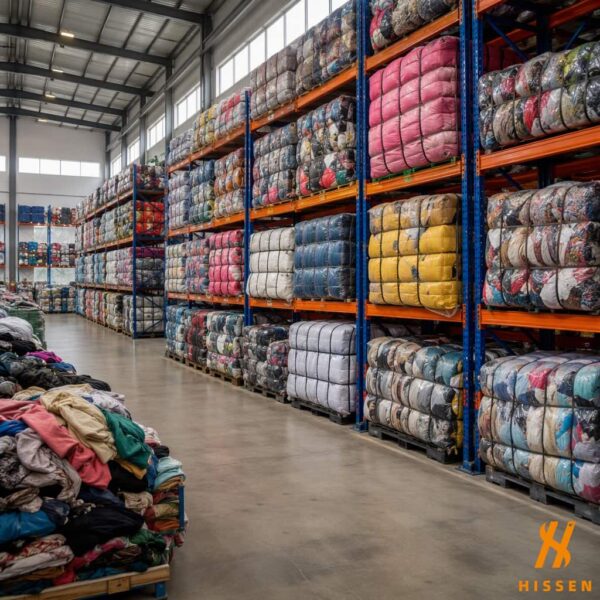
📦 5.3 Bale Packaging and Security
Good packaging is not a small detail. It affects freight efficiency, protection in transit, and buyer confidence.
🟡 Clear Wrap vs. Colored Wrap
Different markets have different preferences. Some buyers prefer clear wrapping because it allows visual inspection. Others associate yellow, white, or custom-colored wrap with certain grades or supplier identity.
🔐 Tamper-Proof Protection
Every bale should be packed with:
- Strong outer wrapping
- Heavy-duty straps
- Consistent weight
- Tracking ID or bale code
This helps reduce the risk of tampering, theft, or quality substitution during transport.
🚢 6. Logistics and Shipping: From China to Your Warehouse
In wholesale used clothing, logistics can make or break the deal. A smart buying strategy means very little if the shipment is delayed, overpriced, or blocked at the port.
🚛 6.1 20ft vs. 40ft Container Strategy
A 20ft container is usually better for new buyers who want to test categories and control risk. A 40ft High Cube container is more efficient for experienced importers because it reduces shipping cost per kilogram and gives more room for organized loading.
📄 6.2 Documentation and Customs
Every destination market has its own rules. Customs clearance depends on document accuracy, declared value, local inspection requirements, and the experience of the freight team.
Mistakes in documentation can lead to:
- Port delays
- Unexpected fees
- Storage charges
- Cash flow pressure
🧾 6.3 Duty Management and Customs Valuation
In many African ports, customs may not rely only on invoice value. They may use reference pricing or internal valuation systems, especially for used goods. That is why working with an experienced freight forwarder is essential in places like Lagos, Mombasa, or Tema.
🤝 6.4 Regional Trade Advantages
Trade frameworks in Africa are gradually making regional redistribution easier. As regional systems improve, importers based in stronger hubs may find it easier to resell into neighboring inland markets with fewer barriers.
📣 7. How to Sell Faster After the Container Arrives
A container arriving at your warehouse is not the end of the job. It is the point where the real business starts.
📱 7.1 Use Social Commerce Aggressively
Even traditional wholesale markets are digital now. Smart wholesalers use:
- Facebook Marketplace
- Telegram groups
These channels help showcase fresh arrivals, opened bales, premium pieces, and fast-moving categories.
🤝 7.2 Trust Is Built Through Consistency
Retailers come back when your grading stays stable. If you promise A-Grade and deliver mixed-quality disappointment, your network disappears. If you deliver exactly what you promised, buyers return container after container.
📊 7.3 Track What Actually Sells
The best wholesalers in 2026 are using simple digital systems to monitor inventory movement.
🏷️ Barcode Every Bale
Assigning a code or barcode to each bale helps you understand what sells fastest. That means your next order can be shaped by data instead of guesswork.
📲 Real-Time Sales Reporting
When sales staff can update inventory live, you reduce overselling and improve communication with repeat buyers. Fast information is now part of good wholesale service.
📚 8. A Practical Growth Example
Many successful importers start small. One container becomes two. Two becomes a warehouse. A warehouse becomes a distribution network.
That kind of growth usually does not come from luck. It comes from three repeatable habits:
- Buying stable grades
- Learning what the local market really wants
- Reordering based on sell-through, not emotion
In this business, consistency often beats ambition. The importers who scale are usually the ones who stop gambling on random suppliers.
🏙️ 9. The Middle East: A Premium Opportunity
The Middle East is becoming an increasingly attractive market for higher-end second-hand fashion, especially in categories that overlap with modest wear and premium lifestyle retail.
Long dresses, elegant scarves, branded accessories, and cleaner premium items are drawing more attention in markets such as Jordan, Lebanon, and the UAE. In these places, second-hand is often framed less as “cheap clothing” and more as pre-loved fashion with value.
🛠️ 10. The 2026 Roadmap for Success
To win in 2026, wholesalers need more than product. They need a system.
✅ Focus on These Priorities
- Source for the market, not your personal taste
- Prioritize grading consistency over the lowest price
- Use digital channels to pre-sell and move inventory faster
- Track your best-selling categories
- Build relationships with repeat retailers
- Work with freight partners who understand used-clothing customs issues
🌐 Build More Than One Sales Channel
Do not depend on a single market stall. Build a broader network that includes:
- Street-market retailers
- Boutique resellers
- Instagram sellers
- WhatsApp-based micro-wholesalers
- Regional sub-distributors
A wider sales structure helps inventory move faster and reduces the risk of slow stock.
✨ 11. Final Thoughts
Wholesale used clothing is one of the most resilient and practical businesses in global apparel trade. Demand for affordable, wearable, quality fashion is not disappearing. If anything, it is becoming more selective, more data-driven, and more brand-aware.
The winners in 2026 will not be the traders who buy the cheapest bales. They will be the ones who build trust, quality control, logistics discipline, and market fit into every shipment.
If the supply chain is stable, the grading is honest, and the product matches the market, this business can scale much faster than many newcomers expect.
❓ 12. FAQs About Wholesale Used Clothing
Q1: How many pieces are usually in a 100kg bale?
That depends on the category. A bale of lightweight T-shirts may contain far more pieces than a bale of winter jackets.
Q2: Can the container mix be customized?
Yes. Many factories offer customized packing lists based on category, season, or target market.
Q3: Is the clothing washed before export?
Factories usually remove dirty or unusable items during sorting, but end consumers should still wash garments before wear, which is standard practice.
Q4: How long does shipping from China to Africa usually take?
Transit time often falls within the 30–45 day range, depending on destination port, shipping line, and customs handling.
Q5: What sells best in Southeast Asia?
Branded shoes, trend-driven women’s wear, vintage denim, and visually attractive accessories tend to perform strongly.
📩 Ready to Grow Your Wholesale Business?
If you want to build a more reliable supply chain in 2026, start with one rule: buy consistency, not just price.
>Contact Hissen Global today for the latest wholesale price list and market guide.