Which Used Clothing Factories Supply Sorted Seasonal Clothes Wholesale? A Complete Guide for South American & Asian Importers (2026)
⏱ 12 min read · For used clothing importers, wholesalers & trade buyers
In this guide you will learn:
- Which Chinese factories specialize in sorting seasonal used clothing for export
- How seasonal sorting works — and why it matters for your market
- A step-by-step framework to evaluate and select the right supplier
- Real pricing benchmarks for sorted seasonal bales (FOB China 2026)
- Why Hissen Global’s approach stands out for South America & Asia buyers
The global used clothing trade surpassed $5.5 billion in 2025, with South America and Southeast Asia emerging as two of the fastest-growing import regions. But for importers in these markets, one question consistently comes up: “Which used clothing factories supply sorted seasonal clothes wholesale — and how do I find the right one?”
The answer is not as simple as searching on Alibaba. Sourcing sorted seasonal used clothing requires understanding the factory’s grading system, sorting capacity, and most importantly — its ability to match the right season to your market’s climate. In this guide, we answer that question from the perspective of a Chinese exporter who has been serving these markets for years, and give you the exact criteria to evaluate potential suppliers.
What Does “Sorted Seasonal Clothes Wholesale” Actually Mean?
Before we identify which factories supply this product, let’s define exactly what we are talking about. Sorted seasonal used clothing refers to second-hand garments that have been:
- ✅ Collected from source countries (typically Europe, USA, South Korea, or domestic Chinese collection programs)
- ✅ Pre-sorted by type — T-shirts separated from trousers, jackets separated from dresses, etc.
- ✅ Graded by quality — Grade A (near-new, premium), Grade B (good condition, minor wear), and Grade C (low-grade, rags)
- ✅ Season-sorted — Summer vs. winter items separated, so importers receive what they can actually sell in their local climate
💡 Why seasonal sorting matters: A container of mixed-season clothing delivered to Brazil (winter in August) or the Philippines (year-round summer) can mean the difference between selling 90% of your bales and getting stuck with unsold inventory. Seasonal sorting is not just a convenience — it directly impacts your profit margins.
The global demand for season-sorted bales has grown significantly. According to the Textile Recycling Association (TRA), importers who specify seasonal sorting see average sell-through rates 18-25% higher than those who accept mixed-season bales, because their inventory matches local demand from the moment it lands.
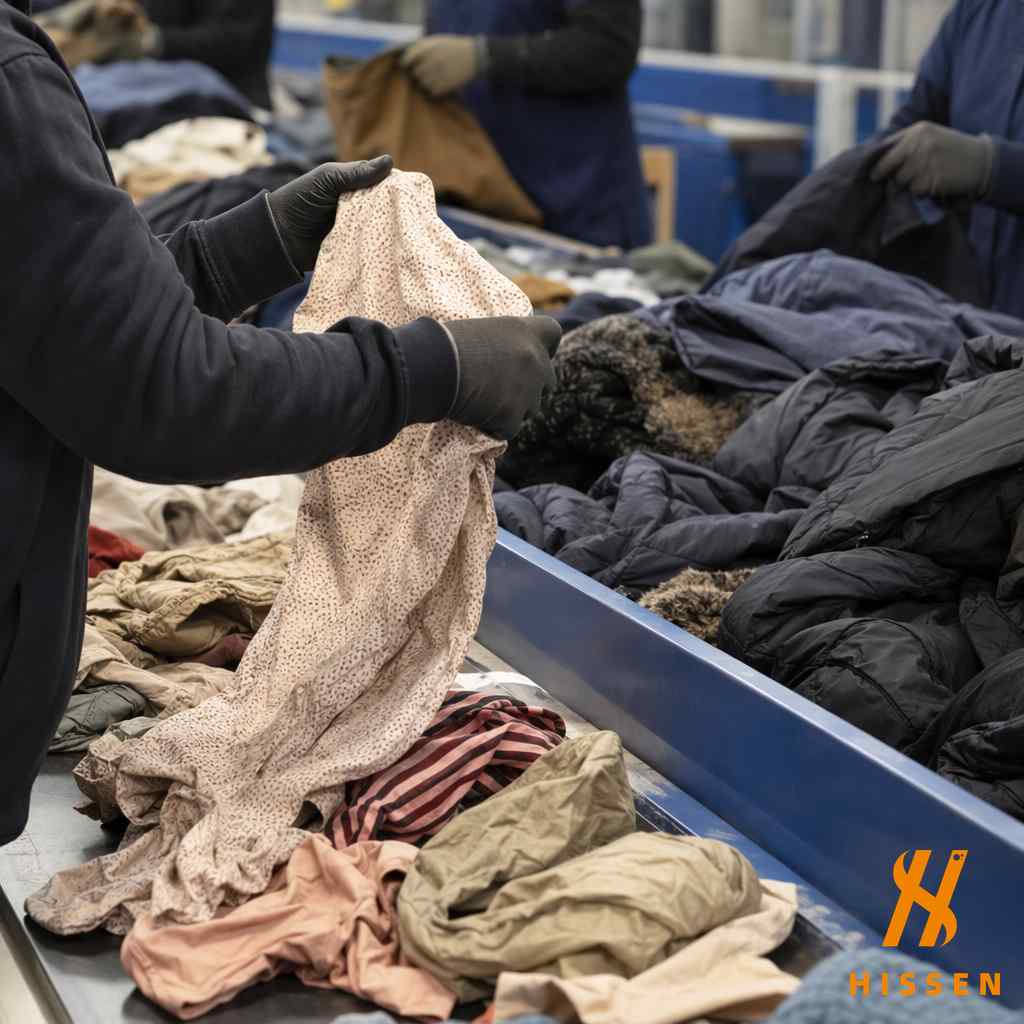
2026 Market Overview: Who is Buying Sorted Seasonal Used Clothing?
The landscape of the used clothing wholesale market has shifted dramatically. Let’s look at the key trends shaping South American and Asian import demand:
| Region | Key Markets | Primary Season Demand | Popular Categories | 2025 Import Volume Trend |
|---|---|---|---|---|
| South America | Brazil, Peru, Colombia, Bolivia, Chile, Argentina | Mix (Brazil: year-round warm + regional winter; Andes: cold season focus) | T-shirts, jeans, jackets, sweaters, kids clothing | 📈 +14% YoY |
| Southeast Asia | Philippines, Indonesia, Malaysia, Thailand, Vietnam | Year-round summer / tropical | Light T-shirts, shorts, dresses, summer tops, sneakers | 📈 +22% YoY |
| South Asia | Pakistan, India, Bangladesh, Sri Lanka | Mix — hot summer + mild winter (depends on region) | Cotton shirts, trousers, winter jackets (northern regions) | 📈 +11% YoY |
| East Africa | Kenya, Tanzania, Uganda, DRC | Year-round warm (highlands cooler) | Mixed bales, t-shirts, dresses, shoes | 📈 +8% YoY |
🔥 Key insight: South America’s import volume grew 14% year-over-year in 2025, driven primarily by Brazil and Peru. Meanwhile, Southeast Asia — particularly the Philippines and Indonesia — saw an even sharper 22% increase, as these countries relax import restrictions and local markets embrace affordable second-hand fashion. For Chinese exporters, this means the demand for sorted seasonal used clothing from these regions has never been higher.
Which Chinese Factories Supply Sorted Seasonal Clothes Wholesale?
China is one of the world’s largest used clothing sorting and re-export hubs. The industry is heavily concentrated in Guangzhou (Canton), Shenzhen, and surrounding cities in Guangdong Province, where decades of garment manufacturing expertise have naturally evolved into a sophisticated used clothing sorting ecosystem.
Here are the main types of factories that export sorted seasonal used clothing:
1. Large-Scale Dedicated Sorting Facilities
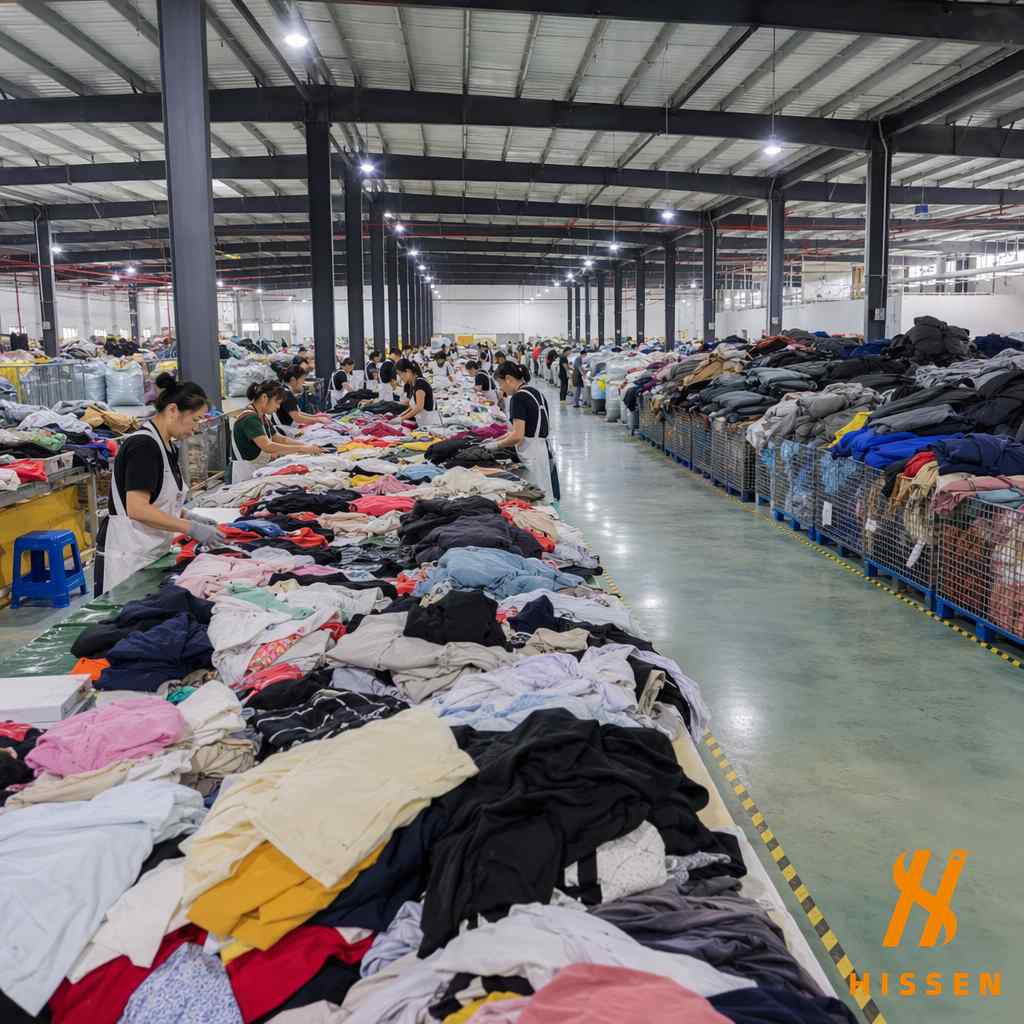
These are factories with 20,000+ square meters of sorting space, 100-300 workers, and fully automated or semi-automated sorting lines. They typically handle 50-100+ containers per month and serve multiple international markets simultaneously.
✅ Strengths: Consistent supply, strict quality control, ability to handle seasonal sorting at scale
⚠️ Considerations: Minimum order quantities (MOQ) are higher — typically from 1 container (40HQ) per order
2. Mid-Sized Sorting Workshops
Smaller operations with 5,000-15,000 square meters and 30-80 workers. They handle 10-30 containers per month and often serve 1-2 core markets.
✅ Strengths: More flexible MOQ (sometimes half-container), closer relationships with buyers
⚠️ Considerations: Quality consistency can vary — important to verify their grading standards
3. Specialized Seasonal Sorting Lines
A smaller subset of factories have dedicated seasonal sorting lines — meaning they separate summer and winter items as a standard process, not a custom request. These are the most valuable partners for importers who need sorted seasonal clothes wholesale.
✅ Strengths: True seasonal separation, consistent output, faster turnaround
⚠️ Considerations: Fewer factories offer this; you need to verify the seasonal sorting claim
📌 Important: Not every used clothing factory in China can deliver genuine seasonal sorting. Many claim to do so but simply remove heavy winter coats from a mixed batch and call it “summer sorted.” A true seasonal sorting line separates garments at the item level — lightweight fabrics vs. heavy fabrics, short-sleeve vs. long-sleeve, ventilated vs. insulated footwear.
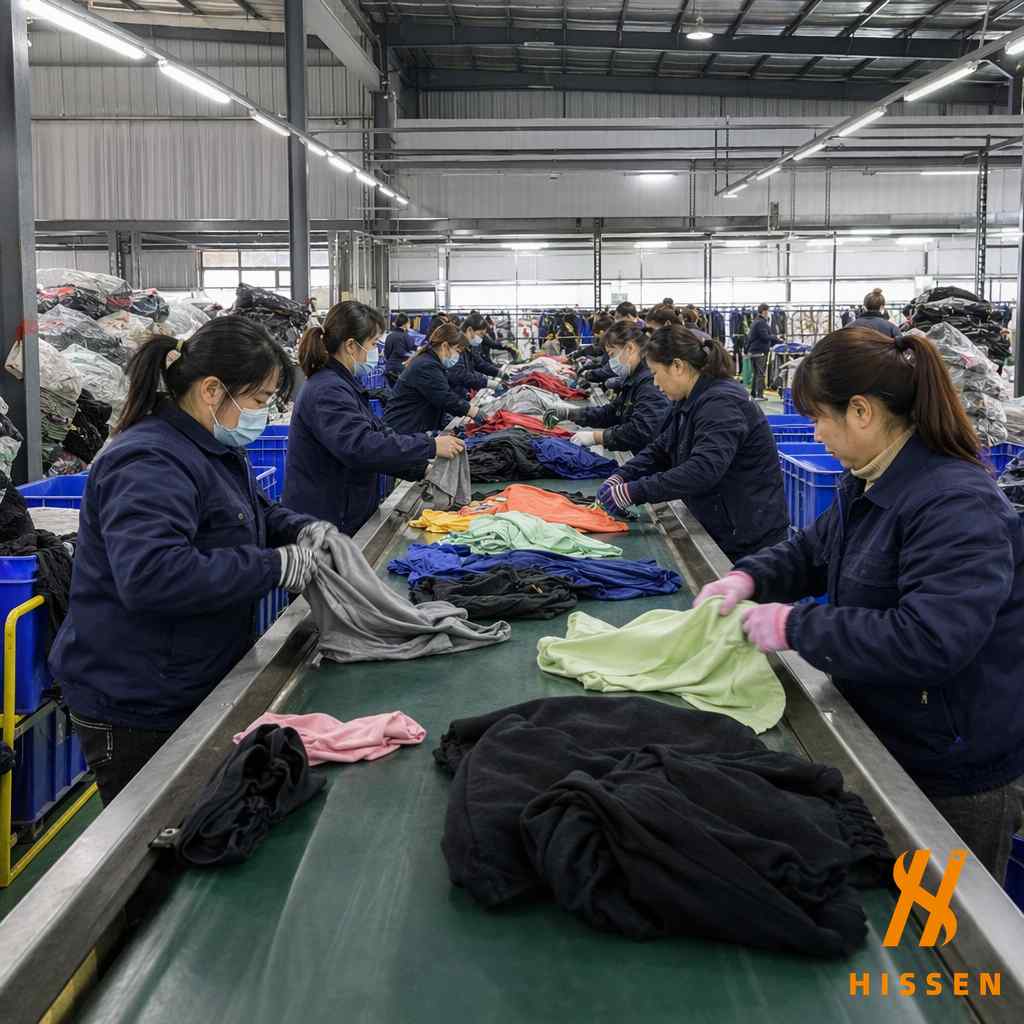
How Factories Source Used Clothing for Seasonal Sorting
Understanding a factory’s upstream supply chain is crucial when evaluating whether they can deliver sorted seasonal clothes wholesale. The process typically works like this:
- Collection networks — Used clothing is collected from charities, municipal collection programs, and commercial collectors in Europe (Germany, UK, Netherlands, Italy), North America (USA, Canada), South Korea, and increasingly within China’s own urban recycling programs
- Pre-grading at origin — Some supplier countries do a rough pre-sort (e.g., “mixed” or “premium”) before baling and shipping to China
- Arrival at sorting facility — The bales arrive at the Chinese factory, where they are opened, washed (some factories offer this), and put through the sorting line
- Type sorting — Garments are separated into categories: T-shirts, shirts, jeans, trousers, jackets, dresses, skirts, shorts, kids wear, shoes, bags, etc.
- Seasonal sorting — Within each category, items are further separated into summer/winter/transitional. This is where true seasonal sorting happens — and it is the step that separates high-quality exporters from average ones
- Quality grading — Each sorted batch gets a grade: A (premium), B (standard), or C (low-grade/rags)
- Baling and container loading — The final sorted seasonal bales are compressed and containerized for export
How to Evaluate a Used Clothing Factory for Seasonal Sorting: 7-Step Framework
This is the most important section of this guide. If you are an importer in South America, Southeast Asia, or any other market looking for a reliable supplier of sorted seasonal used clothing, use this 7-step evaluation framework before placing your first order.
Step 1: Request a Seasonal Sorting Capability Statement
Ask the supplier directly: “How do you separate summer vs. winter clothing? Do you have dedicated seasonal sorting lines?” A legitimate factory will be able to describe their process in detail and provide photos or video of the sorting floor.
✅ What to look for: Clear, documented process with visual evidence. Vague answers or claims like “we just remove the heavy coats” are red flags.
Step 2: Ask About Source Markets
The origin of the used clothing matters for seasonal composition. A factory sourcing primarily from Northern Europe will have more winter-weight garments in their inbound supply. A factory sourcing from Southern Europe or domestic Chinese collections will have a higher summer-weight percentage.
✅ What to look for: A supplier who understands which source mix gives the best seasonal composition for your market climate.
Step 3: Verify Quality Grades with Photos & Video
Never rely on written descriptions alone. Ask for real-time video — the most reputable suppliers can video call and walk you through the warehouse, showing you the seasonal sorting lines, the baling process, and the current inventory.
🔥 Best practice in 2026: The most transparent Chinese exporters now offer live video tours via WhatsApp or WeChat. If a factory refuses to show their sorting floor, consider it a red flag.
Step 4: Check Minimum Order Quantities (MOQ)
For sorted seasonal used clothing, MOQs vary:
| Factory Size | Typical MOQ | Best For |
|---|---|---|
| Large facility | 1 × 40HQ container | Established importers with consistent demand |
| Mid-sized workshop | 0.5–1 container | Growing importers, test orders |
| Small specialist | 100–300 bales | New importers, market testing |
Step 5: Ask About Bale Composition & Customization
A good supplier will let you customize bale composition by category and season. For example, if you are importing for the Philippine market where summer tops and shorts sell fastest, your supplier should be able to create a bale with 60% lightweight summer tops, 25% shorts, 10% accessories, and 5% transitional items.
✅ What to look for: Willingness to customize bale composition for your market, not just sell you a “one-size-fits-all” mixed bale.
Step 6: Understand Pricing Structure (FOB China)
Here are 2026 benchmark prices for sorted seasonal used clothing from Chinese factories:
| Grade | Season Sort | Price Range (FOB China, per kg) | Typical Bale Weight |
|---|---|---|---|
| Grade A Premium | Season-sorted (summer or winter) | $2.80 – $4.00/kg | 45–50 kg |
| Grade A Premium | Mixed-season | $2.30 – $3.00/kg | 45–50 kg |
| Grade B Standard | Season-sorted (summer or winter) | $1.80 – $2.50/kg | 45–50 kg |
| Grade B Standard | Mixed-season | $1.40 – $1.90/kg | 45–50 kg |
| Grade C / Rags | N/A | $0.60 – $1.00/kg | Variable |
⚠️ Note: Seasonal sorting commands a premium of approximately $0.40 – $1.00/kg because of the additional labor and warehouse space required. However, this premium is more than offset by the higher sell-through rate of properly sorted inventory in your local market.
Step 7: Request References and Check Credibility
An established Chinese used clothing exporter should have:
- At least 2-3 years of operational history (many have 5-10+ years)
- Verifiable export records to your region or similar markets
- Existing client references (Asian and South American importers, ideally)
- Proper business license and export documentation capability
✅ Bonus — Factories that regularly update their clients with market insights, pricing trends, and quality improvement initiatives demonstrate a long-term partnership mindset rather than a transactional one.
Common Mistakes Importers Make When Sourcing Seasonal Used Clothing
Having worked with dozens of importers from South America and Asia, we have seen the same mistakes repeated. Here are the top 5 pitfalls to avoid:
- ❌ Assuming “mixed bales” contain mostly summer wear — Many importers assume that because their country is hot year-round, a “mixed” bale will be primarily summer items. In reality, mixed bales contain whatever the sorting line produces that day — which could include heavy winter coats originally destined for colder markets.
- ❌ Not specifying season split in the contract — If you need 80% summer / 20% transitional, put it in writing. Verbal agreements are not enforceable in cross-border trade.
- ❌ Choosing the lowest price without verifying quality — The cheapest used clothing supplier often delivers the lowest sorting quality. A $0.50/kg saving on the purchase price can cost you $5.00/kg in unsold inventory.
- ❌ Ignoring shipping timelines for seasonal goods — If you import summer clothing that arrives at the start of your winter, you will hold inventory for months. Plan shipping so that arrival aligns with your peak selling season.
- ❌ Not visiting or video-inspecting the factory — In 2026, there is no excuse. A short video call can reveal more than a dozen email exchanges about sorting processes.
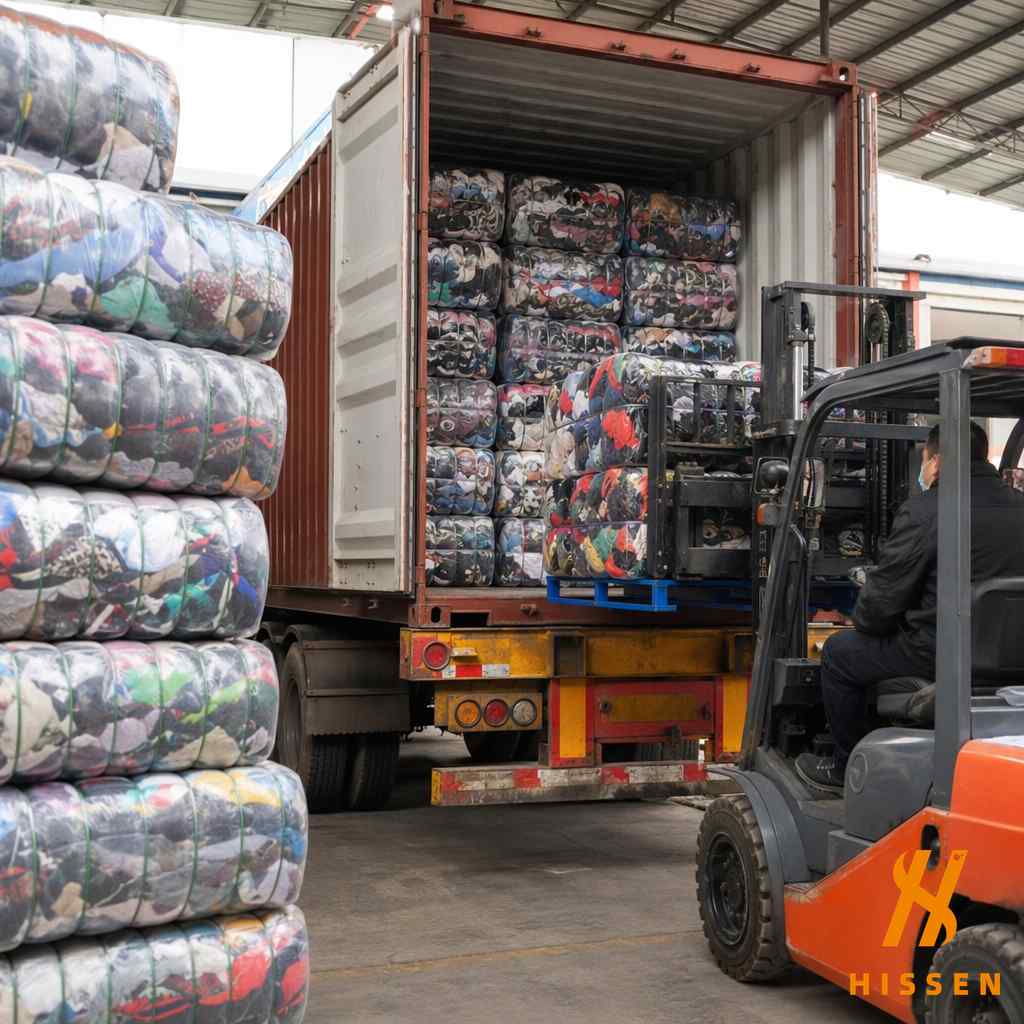
Why Hissen Global’s Approach to Seasonal Sorting Stands Out
As a China-based exporter serving South America, Southeast Asia, and Africa, Hissen Global has developed a systematic approach to seasonal sorting that addresses the specific needs of importers in warm-climate markets.
Here is what sets us apart:
- 🌍 Market-Specific Seasonal Profiles — We maintain seasonal profiles for each destination market. A bale destined for Manila looks very different from one destined for Lima — and we customize accordingly.
- 🔍 Multi-Stage Sorting Process — Our facility uses a 3-stage sorting system: pre-sort → category sort → seasonal sort. Each garment passes through multiple hands before being baled, ensuring accuracy.
- 📸 Real-Time Factory Visibility — We offer live video walkthroughs of our sorting lines, baling area, and warehouse inventory. You see exactly what you are buying before it is loaded.
- 📦 Flexible Bale Composition — Whether you need 70% summer tops / 30% accessories for the Philippine market or a balanced mix for Brazil’s diverse climate zones, we tailor bale compositions to your specifications.
- 📊 Transparent Pricing with Volume Options — Our pricing is based on the actual labor and sorting effort required, not on arbitrary market premiums. We offer tiered pricing for single-container and multi-container orders.
- 🤝 Long-Term Partnership Focus — We invest in our clients’ success by sharing market data, pricing intelligence, and category performance insights from our global network.
💡 Key Takeaways
- Seasonal sorting directly impacts profitability — importers who specify season-sorted bales see 18-25% higher sell-through rates
- Not all used clothing factories offer true seasonal sorting — verify with video calls and clear process documentation
- Use the 7-step framework to evaluate suppliers: ask about source markets, seasonal lines, pricing, customization, and references
- Customize bale composition for your specific market climate — one size does not fit all
- Plan shipping timing so that sorted seasonal inventory arrives before your peak selling season
- Hissen Global offers market-specific seasonal profiles, live factory tours, and transparent pricing for importers across South America, Asia, and Africa
Frequently Asked Questions
1. What is the difference between Grade A and Grade B seasonal sorted used clothing?
Grade A seasonal sorted clothing contains near-new items (minimal to no wear, current styles) that can be retailed immediately in mid-range to premium second-hand stores. Grade B sorted clothing shows visible wear but is still sellable, typically in lower-price markets or for bulk resale. Grade A commands a higher price but delivers better per-item margins for importers with quality-focused channels.
2. How do I know if a Chinese used clothing factory actually sorts by season?
The most reliable way is to request a live video tour of the sorting floor. A legitimate facility with seasonal sorting lines will happily show you their process. Additionally, ask for photos of their seasonal sorting stations and video of the separation process. Vague descriptions or excuses to avoid visual verification are warning signs.
3. Can I order a small quantity to test seasonal sorting quality before committing to a full container?
Some Chinese exporters offer small quantities for new clients to test quality before full container orders. However, small-order pricing is higher per kg due to logistics and sorting setup costs. The most cost-effective approach is to start with a container order, which gives you enough volume to properly evaluate quality and market fit.
4. Which source countries produce the best quality used clothing for seasonal sorting in China?
Chinese factories source from Europe (Germany, UK, Netherlands, Italy), North America, South Korea, Japan, and increasingly from domestic Chinese collections. For summer-season sorted clothing, Southern European and South Korean sources tend to have a higher proportion of lightweight garments. For winter-season sorted clothing, Northern European and North American sources provide more heavy-weight items.
5. How long does it take to produce and ship a container of sorted seasonal used clothing from China?
Production typically takes 7–14 days for sorting and baling. Sea freight from Guangzhou to South American ports (Santos, Callao, Cartagena) takes 25–35 days, and to Southeast Asian ports (Manila, Jakarta, Bangkok) takes 7–12 days. We recommend placing orders 5–6 weeks ahead for South America and 3–4 weeks ahead for Asia.
Is Your Current Supplier Meeting Your Seasonal Needs?
The used clothing industry is evolving rapidly. Importers who succeed in 2026 and beyond are those who treat seasonal sorting as a strategic advantage, not an optional add-on. Whether you are importing to Brazil, Peru, the Philippines, Indonesia, or any other market, the quality of your seasonal sorting determines the speed and profitability of your inventory turnover.
At Hissen Global, we bring the transparency and expertise that the modern used clothing trade demands. We are not just a supplier — we are a knowledge partner who helps you source better, sell faster, and grow your business sustainably.
📦 Ready to source sorted seasonal used clothing for your market? We invite you to compare before you decide.
Hissen Global is a China-based exporter specializing in grade A and grade B used clothing bales for South America, Africa, and Asia. Our seasonal sorting system ensures you receive exactly what your market needs — no surprises, no mismatched inventory.
📞 Request Pricing & Live Video Tour →
✅ Prefer to learn more first? Browse our industry guides for free insights on used clothing importing, grading, and market trends.