Which Used Clothing Wholesalers Allow Customized Bale Weights and Packaging? A Complete Guide 2026
⏱ 14 min read · For importers from Africa, South America & Southeast Asia
In this guide you will learn:
- Why bale weight and packaging customization matters for different import markets
- Which types of wholesalers offer flexible bale specifications — and which do not
- How to negotiate the ideal bale weight, packaging, and labeling for your needs
- How Hissen Global’s flexible approach helps importers optimize their container
When importers search for used clothing wholesalers, most focus on price and quality. But there is a third factor that can make or break your import business: bale weight and packaging flexibility.
Why does this matter? Because the standard bale from one supplier may not suit your market. A 50 kg bale might be too heavy for your port workers to handle efficiently. A bale packed in thin polypropylene might burst during transit. And a bale labeled in Chinese characters might confuse your customs inspector.
At Hissen Global, we have spent years listening to importers from Africa, South America, and Southeast Asia tell us what they need. And we have adapted our bale weights, packaging materials, and labeling to meet those needs. In this guide, we share what we have learned about bale customization — and how you can find a wholesaler who puts your requirements first.
Why Bale Weight and Packaging Matter
Before we discuss which wholesalers offer customization, let us understand why bale specifications matter to your business:
⚖️ Bale Weight: More Than a Number
- Handling efficiency: Heavier bales (60–80 kg) require mechanical handling. Lighter bales (30–45 kg) can be moved manually. Choose based on your local infrastructure.
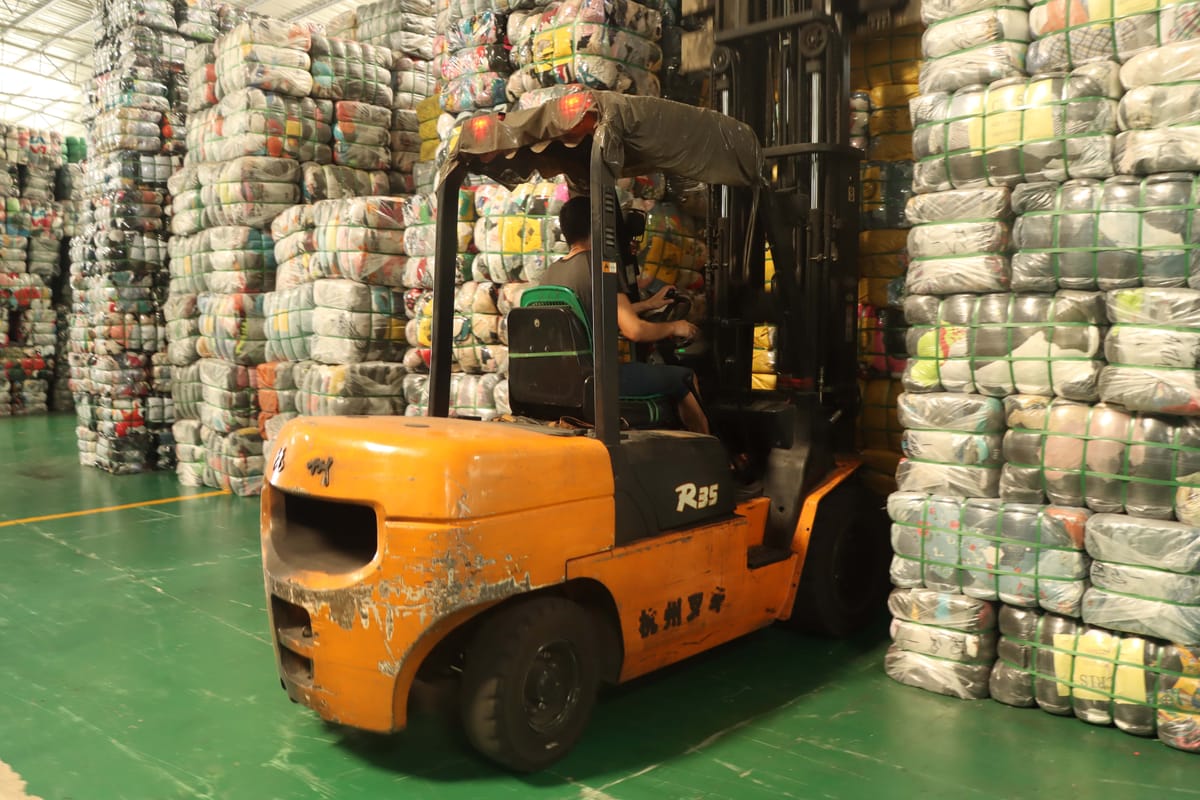
- Shipping optimization: Bale weight affects how many bales fit in a container. A 40ft container holds approximately 250–300 bales at 50 kg each, or 400+ bales at 30 kg each.
- Market preference: Some markets prefer smaller bales for easier distribution to local resellers. Others prefer larger bales for warehouse storage efficiency.
📦 Packaging Material: Protection Matters
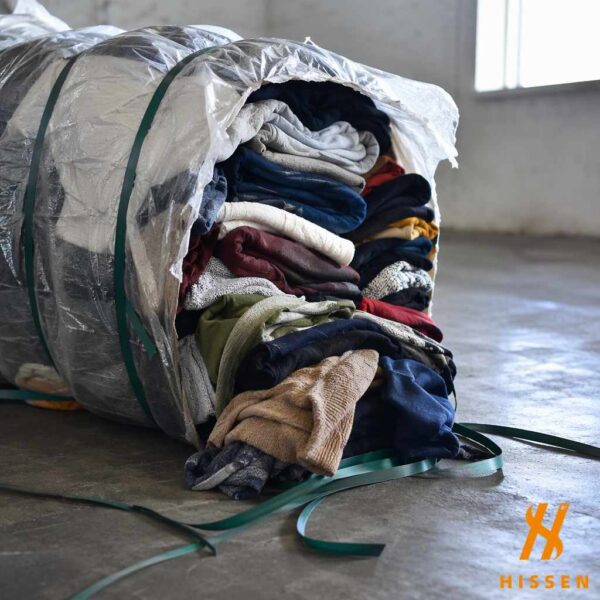
- Polypropylene (woven): Durable, tear-resistant, good for long-distance shipping. Used by most professional wholesalers.
- Thin plastic wrap: Cheaper but prone to tearing. May lead to content loss during handling.
- Cardboard / box: Used for premium or branded bales. Adds protection but increases cost and weight.
- Container liner: Separate from bale packaging — an inner plastic liner inside the container for moisture protection.
🏷️ Labeling: More Important Than You Think
- Customs inspectors in many countries check bale labels against the packing list and invoice
- Labels in the local language (English, French, Spanish, Portuguese) speed up clearance
- Clear labeling of bale grade, weight, and category helps your warehouse team sort efficiently
💡 Key Takeaway: Bale Specifications Are a Business Decision
The right bale weight, packaging, and labeling for your business depend on your local infrastructure, your reseller network, and your destination country’s import regulations. A wholesaler who offers customization is not just being helpful — they are giving you a competitive advantage.
Standard Bale Weights and Packaging in the Industry
Understanding industry standards helps you know what is normal — and what requests are reasonable. Here are the typical specifications across different sourcing regions:
| Source Region | Standard Bale Weight | Common Packaging | Labeling | Customization Willingness |
|---|---|---|---|---|
| 🇪🇺 Europe (Germany, UK, NL) | 45–65 kg | Woven polypropylene | English / Local | Low — standard sizes only |
| 🇰🇷 South Korea | 40–60 kg | Woven polypropylene | Korean / English | Moderate |
| 🇨🇳 China (Top suppliers) | 30–80 kg (flexible) | Woven polypropylene or custom | English / Custom | High — buyer preference accepted |
| 🇺🇸 USA | 40–70 kg | Woven polypropylene | English | Low–Moderate |
| 🇯🇵 Japan | 30–50 kg | Cardboard / Woven | Japanese / English | Moderate |
📌 Key insight: Chinese wholesalers, particularly experienced exporters like Hissen Global, offer the highest degree of customization in bale weight, packaging, and labeling — because we understand that one size does not fit all.
Which Used Clothing Wholesalers Allow Customization?
Now to the central question: which wholesalers offer customized bale weights and packaging? Based on our industry knowledge, here is a breakdown:
🇪🇺 European Wholesalers
Most large European exporters operate with standardized bale specifications. Their sorting lines are set up to produce bales of uniform weight (typically 50–65 kg) with standardized packaging. While some may accommodate minor requests, large-scale customization is uncommon. The trade-off is that European suppliers offer exceptional quality consistency.
🇨🇳 Chinese Wholesalers (The Flexible Choice)
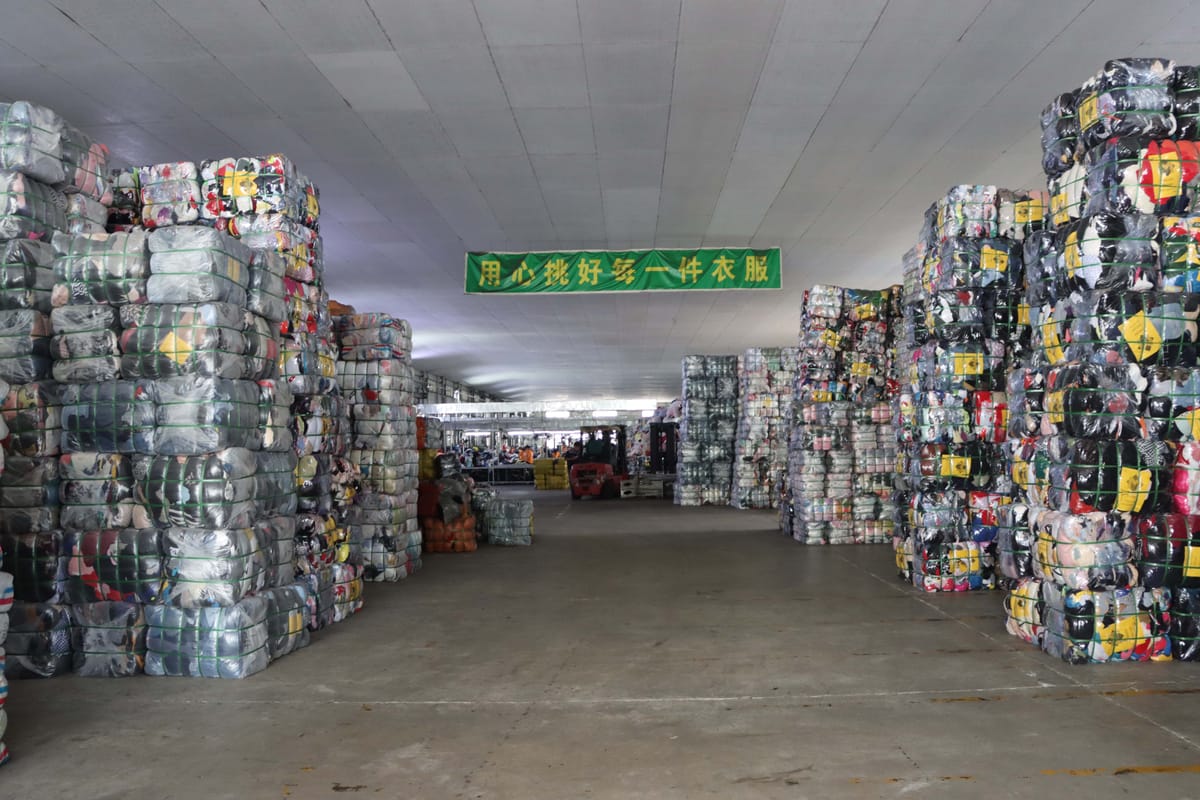
Chinese used clothing exporters generally offer much greater flexibility. This is because many operate with semi-automated baling equipment that can be adjusted for different bale weights, and they are accustomed to accommodating diverse international buyer requirements. The best Chinese suppliers:
- Can produce bales from 25 kg to 85 kg based on your preference
- Offer different packaging materials (woven poly, reinforced wrap, or custom)
- Provide English, French, Spanish, or Arabic labeling upon request
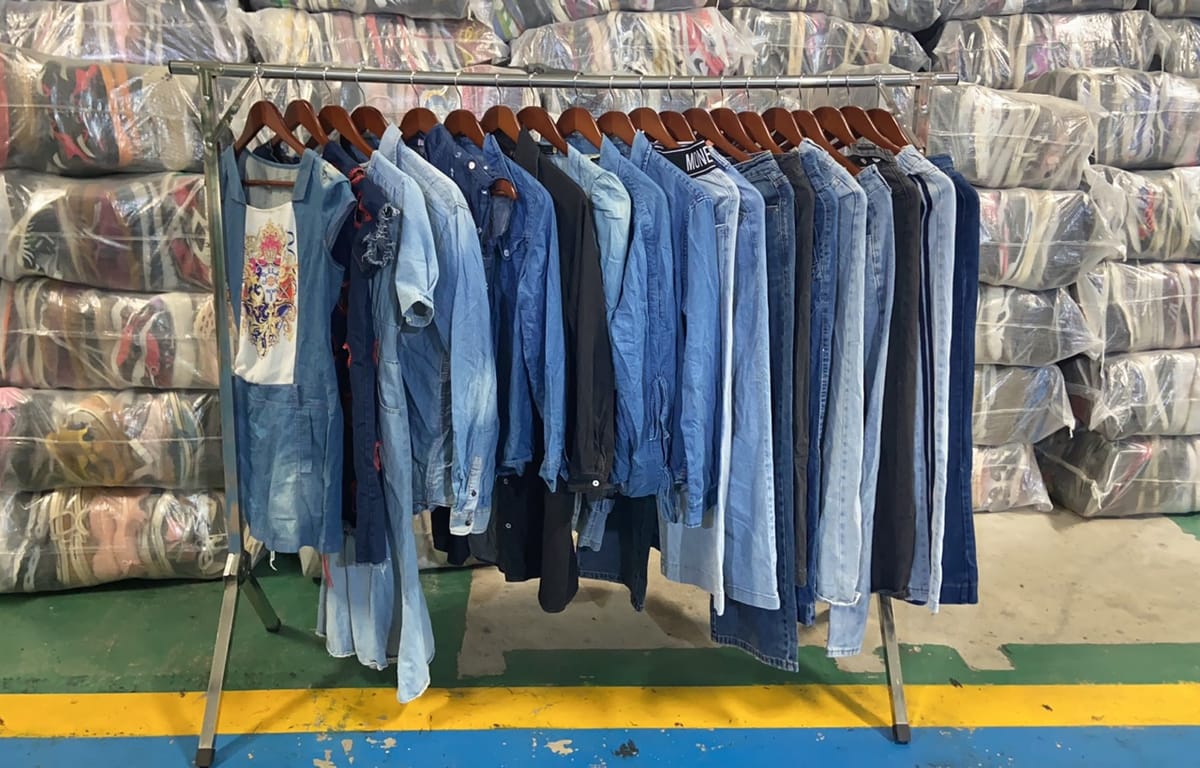
- Will separate bales by category within the same container (e.g., men’s, women’s, children’s in different bales)
🇰🇷 South Korean Wholesalers
Korean suppliers typically offer moderate flexibility. Their bale weights are usually in the 40–60 kg range, and they are often willing to adjust labeling and basic packaging. However, their pricing tends to be higher than Chinese suppliers.
🇺🇸 US Wholesalers
US-based exporters generally work with standard bale sizes (40–70 kg) and offer limited customization. They are best suited for buyers who want American-sourced clothing and can work within standard parameters.
✅ Wholesaler Customization Checklist
Use this checklist when evaluating a wholesaler’s flexibility:
- ☐ Can you specify bale weight (within reasonable range)?
- ☐ Can you choose packaging material (woven, reinforced, cardboard)?
- ☐ Can you request English or local-language labeling?
- ☐ Can bales be separated by category or grade?
- ☐ Can special labeling for customs clearance be added?
- ☐ Is there an extra cost for customization? (Should be minimal or none)
How to Request Customized Bale Specifications
Customizing your bale specifications is straightforward when you work with the right supplier. Here is a step-by-step process:
Step 1: Identify Your Requirements
- What bale weight suits your handling equipment and reseller network?
- What packaging has worked best for you in the past?
- What labeling will make customs clearance and warehouse sorting easiest?
- Do you need category-separated bales?
Step 2: Communicate Early
Bring up your bale specifications during your first negotiation, not after the order is confirmed. A flexible supplier will be happy to discuss customization upfront.
Step 3: Confirm in Writing
Ensure your order confirmation includes:
- Exact bale weight (± tolerance, typically 2–3 kg)
- Packaging material specification
- Labeling details (language, content, placement)
- Any category separation requirements
Step 4: Verify Before Shipment
During your pre-shipment video verification, ask to see the bales with their labels, check that the weight matches your specification, and confirm the packaging quality.
⚡ Efficiency Tip: Combine Customization Requests
If you need multiple customizations — different bale weights, special packaging, specific labeling — present them as a complete package at the start. This shows the supplier you are organized and serious, and it helps them plan production efficiently. At Hissen Global, we appreciate buyers who know what they want — it allows us to serve them better.
Cost Implications of Bale Customization
A common concern among importers is whether customization costs extra. Here is the reality:
| Customization Request | Typical Cost Impact | Notes |
|---|---|---|
| Different bale weight (±20% of standard) | 💰 Minimal to none | Simple adjustment of baling machine settings |
| Special packaging material | 💰 $1–$5 per bale extra | Depends on material type and availability |
| Custom labeling | 💰 Minimal ($0.10–$0.50/bale) | Printing cost only |
| Category-separated bales | 💰 Minimal to none | Requires organized sorting but no extra material |
| Individual bale wrapping | 💰 $1–$3 per bale extra | Extra material and labor |
💡 The bottom line: Most basic customizations — bale weight adjustments, labeling, and category separation — cost little to nothing. At Hissen Global, we include these as standard service for our buyers. Premium packaging may carry a small surcharge, but it is usually a worthwhile investment for the protection it provides.
Common Mistakes When Requesting Customization
Even with a flexible supplier, mistakes in specifying bale requirements can cause problems. Avoid these:
✅ 5 Rules for Successful Bale Customization
- Be specific, not vague — “Lighter bales” is unclear. “Each bale should be 35–40 kg” is clear.
- Consider the entire supply chain — Your perfect bale weight should work for the supplier’s baling equipment, the container loading pattern, and your local handling capacity.
- Check customs labeling requirements — Some countries require specific labeling on used clothing bales (country of origin, weight, content). Ask your customs broker before ordering.
- Request a bale photo — Ask your supplier to send a photo of a bale with your specifications before the full production run.
- Do not over-customize on your first order — Start with one or two customizations. Add more as you build trust with your supplier.
Frequently Asked Questions
What is the standard bale weight for used clothing?
The industry standard bale weight ranges from 40 kg to 65 kg depending on the source region. European suppliers typically produce 50–65 kg bales, while Chinese suppliers offer a wider range from 30 kg to 80 kg. The optimal weight depends on your local handling equipment and reseller network.
Can I request different bale weights for different categories in one container?
Yes, many flexible wholesalers can produce bales of different weights for different categories within the same container. For example, men’s clothing in 50 kg bales and children’s clothing in 35 kg bales. This is a common request that we handle regularly at Hissen Global — simply specify your requirements for each category when ordering.
Which used clothing wholesalers allow customized bale weights without extra charges?
Chinese wholesalers are the most likely to offer bale weight customization without additional fees, as they can adjust baling machine settings easily. European and US suppliers typically have less flexibility due to standardized production lines. At Hissen Global, we offer bale weight customization within a reasonable range as a standard free service.
What packaging material is best for used clothing bales?
Woven polypropylene is the industry standard and recommended for most shipments. It is durable, tear-resistant, and cost-effective. For premium bales or long-distance shipping, reinforced wrapping is available at a small additional cost. Cardboard packaging is used for high-end branded bales but is more expensive and heavier.
How should used clothing bales be labeled for customs clearance?
Bales should be labeled with: grade (e.g., Grade A, Grade B), net weight, gross weight, category (men’s, women’s, children’s, mixed), country of origin, and supplier name. Labels should be in English or the destination country’s official language. Some countries have specific labeling requirements — check with your customs broker before ordering.
Can I get trial bales with custom specifications before ordering a full container?
Yes, many flexible wholesalers offer LCL (Less than Container Load) or trial shipments that allow you to test custom specifications before committing to a full container. At Hissen Global, we welcome trial orders and will produce bales with your exact specifications so you can evaluate quality and suitability before scaling up.
Why Hissen Global: Flexibility Built Into Our Service
At Hissen Global, customization is not an occasional favor we grant — it is how we do business. We understand that every market is different, and every importer has unique requirements. Here is how we deliver on bale weight and packaging flexibility:
- ⚖️ Flexible bale weights — From 25 kg to 85 kg, whatever suits your market and handling capacity
- 📦 Multiple packaging options — Standard woven polypropylene, reinforced wrapping, or custom packaging upon request
- 🏷️ Custom labeling — English, French, Spanish, Portuguese, Arabic — or your preferred language
- 📂 Category separation — Bales sorted and labeled by category within the same container
- 🎥 Visual verification — We show you the custom bales before shipment so you can confirm they meet your specifications
- 🆕 Trial orders welcome — LCL shipments with your custom specifications to test before scaling
- 📞 Responsive communication — Tell us what you need, and we will find a way to make it work
Get the Bale Specifications You Need
Ready to work with a wholesaler who puts your requirements first? The best way to find out if a supplier can meet your bale specification needs is to ask them directly.
Tell us about your target market, your ideal bale weight and packaging preferences, and your volume goals. We will prepare a detailed proposal that addresses your specific customization needs — with clear pricing, lead times, and shipping options.
Here is what you can expect when you contact us:
- 📞 A free consultation on your bale specification requirements
- 🎥 A live video tour showing our baling and packaging process
- 📋 A detailed quote with your preferred bale specifications confirmed
- 📚 Access to our importer resource library — packaging guides, shipping tips, and regulatory updates
📩 We respond within 24 hours · WhatsApp + Email