Published July 2, 2026 · Policy analysis for used clothing importers
France Pushes EU Ban on Used Clothing Exports to Africa & Asia — What Importers Need to Know (2026)
A bombshell landed in the used clothing trade in late June 2026. French President Emmanuel Macron pledged to push for an EU-wide ban on used clothing exports to Africa and Asia, citing environmental waste concerns. Denmark and Sweden have reportedly signaled support.
From our perspective as a Chinese exporter shipping to 110+ countries across Africa, Asia, and South America, this proposal — if implemented — would be the most significant regulatory change in the history of the used clothing trade. But there are reasons to believe it is not as simple as it sounds.
This article explains what Macron proposed, why he proposed it, how realistic it is, and — most importantly — what importers in Africa, Asia, and South America should do to prepare.
⏱ 10 min read · For importers affected by EU policy changes
In this article:
- What Macron proposed and why
- How realistic is an EU-wide ban — timeline and obstacles
- The 96% wearable data that challenges the “waste” narrative
- What this means for importers in Africa, Asia, and South America
- How Chinese sourcing provides a stable alternative to European bales
- Practical steps to protect your supply chain
🇫🇷 What Macron Proposed — and Why
The European Context
France’s proposal did not emerge from nowhere. The European Union has been moving toward stricter controls on textile waste for several years. The EU Textile Strategy, published in 2022, called for Extended Producer Responsibility (EPR) schemes and better waste management. The Basel Convention’s ongoing discussions about reclassifying used textiles have created political momentum for action.
Macron’s pledge should be understood as a political positioning — it aligns with the EU’s broader environmental agenda while resonating with French voters concerned about sustainability. However, there is a significant gap between political positioning and actual legislation, especially when the legislation would harm industries in other EU member states.
Speaking in late June 2026, President Macron announced France would push for a European Union-wide ban on used clothing exports to Africa and Asia. The stated rationale: environmental waste concerns. The argument is that used clothing exports are simply “dumping” textile waste on developing countries — an accusation that the industry has faced for years.
Denmark and Sweden have reportedly expressed support for the proposal. If adopted, the ban would apply to all 27 EU member states, cutting off one of the largest sources of used clothing for African and Asian importers.
However, the timing is critical. EU institutions shut down from April for the June elections, with a new European Commission taking office in September 2026. This means the proposal cannot advance in any meaningful way until at least the fall — and even then, it would face significant opposition from within the EU itself.
Jun 2026
Macron proposes
Jul-Sep 2026
EU elections / Break
Sep 2026
New Commission
2027+
Earliest decision

🔍 How Realistic Is an EU-Wide Ban?
Industry Reaction
The used clothing export industry in Europe employs tens of thousands of workers across sorting, processing, and logistics. Germany’s textile recycling industry alone processes over 1 million tons of used textiles annually. The Netherlands’ port of Rotterdam handles a significant share of European used clothing exports bound for Africa and Asia. These are not marginal industries — they are established economic sectors with political influence.
Industry associations across Europe have already begun lobbying against the proposed ban, arguing that it would destroy jobs, increase textile waste in Europe (since used clothing would have nowhere to go), and harm developing countries that depend on affordable used clothing imports.
Here is an honest assessment from someone who follows European trade policy: a full ban is unlikely in the short term. Here is why:
| Obstacle | Explanation |
|---|---|
| EU legislative process | A full ban requires approval from the European Commission, Parliament, and Council. This takes years, not months. The new Commission takes office in September 2026 — earliest realistic action is 2027. |
| Internal opposition | Several EU member states have significant used clothing export industries (Germany, Netherlands, UK — though UK is not in the EU). These countries will oppose a ban that destroys a legitimate industry. |
| AGOA implications | The US previously threatened to remove EAC countries from AGOA over mitumba import restrictions. An EU ban could trigger similar trade tensions with African nations. |
| WTO challenges | A blanket export ban would likely face challenges at the World Trade Organization as a violation of free trade principles. |
| The 96% data | The SMEP study (224,500 items analyzed in Uganda and Tanzania) found 96% of exported used clothing is wearable quality. This directly undermines the “waste dumping” narrative. |
More likely outcome: Instead of a full ban, the EU may introduce stricter documentation and quality standards for used clothing exports — similar to what the UK EA did in June 2026. This would increase compliance costs for EU exporters but would not stop the trade.
[[IMAGE 2: 5-obstacle visual showing why a ban faces challenges — legislative process, internal opposition, AGOA, WTO, 96% data — with realistic outcome at the bottom.]]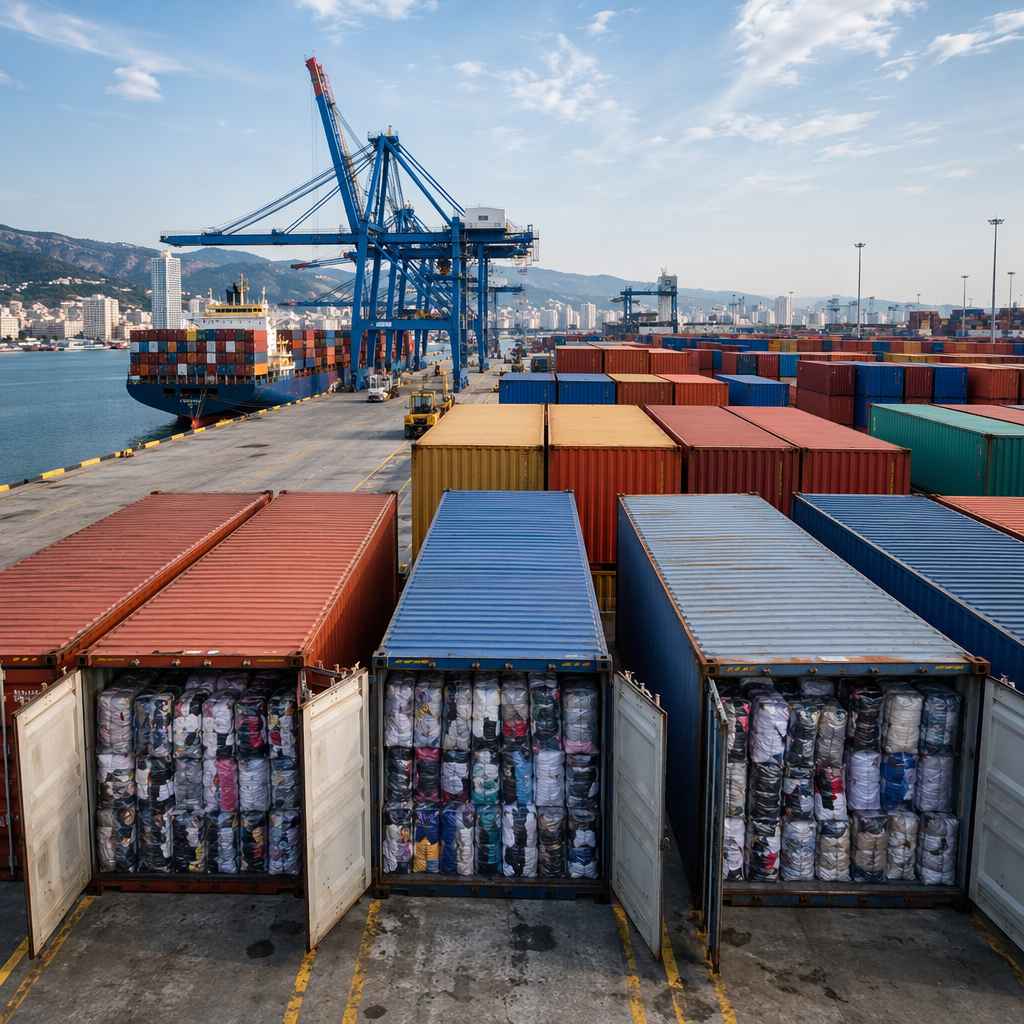
📊 The 96% Study: Why the “Waste” Narrative Is Wrong
Just before Macron’s announcement, the BIR and UNCTAD presented the SMEP study at the Geneva Standards Conference (June 23, 2026). The study analyzed 224,500 clothing items imported into Tanzania and Uganda and found:
- 👕 96% wearable — suitable for direct reuse
- ♻️ 2.9% downgraded — suitable for recycling
- 🗑️ 1.1% waste — true disposal
This data directly contradicts the narrative that used clothing exports are “waste dumping.” The study was conducted by UNCTAD — a UN agency — using rigorous methodology across 2,100+ stakeholders. The Macron proposal was clearly made without reference to this evidence. For a detailed analysis, see our UN global standards article.
🌍 What This Means for Importers
If you import used clothing from European sources — particularly from France, Germany, the Netherlands, or other EU countries — here is what you need to consider:
| Scenario | Likelihood | Impact on You |
|---|---|---|
| Full EU ban | Low (2027+ earliest) | Major — would need to switch to non-EU origins |
| Stricter export standards | Moderate-Likely | Moderate — higher compliance costs, better quality |
| No change (status quo) | Moderate | Minimal — trade continues as normal |
| China & Korea gain market share | Very Likely | Positive — more supply options at competitive pricing |
The key takeaway: regulatory risk is real, but a near-term ban is unlikely. The smart response is not panic — it is preparation.
✅ How Importers Can Prepare
- 🌐 Diversify your sourcing origins. If you currently rely mainly on European suppliers, start building relationships with Chinese or Korean exporters. Chinese suppliers offer competitive A Grade pricing ($2.00-3.00/kg FOB) with 20-35% branded content — comparable to European mid-range bales.
- 📋 Maintain documentation. If stricter standards replace a full ban, documented quality will become essential. Work with suppliers who provide written grade definitions, bale composition reports, and live video verification.
- 📊 Monitor the EU legislative calendar. The new European Commission takes office in September 2026. Follow EU trade policy developments — early awareness gives you a competitive advantage.
- 🤝 Build relationships with Asian suppliers now. Chinese exporters have the capacity to fill any supply gap left by European sources. With 200+ exporters and $135M monthly exports, China can replace European volumes.
- 💰 Factor regulatory risk into your pricing. Build a small buffer into your margins to absorb potential compliance costs from any new standards.
Diversify origins
Document quality
Monitor EU policy
Asian supplier relationships
Price for risk
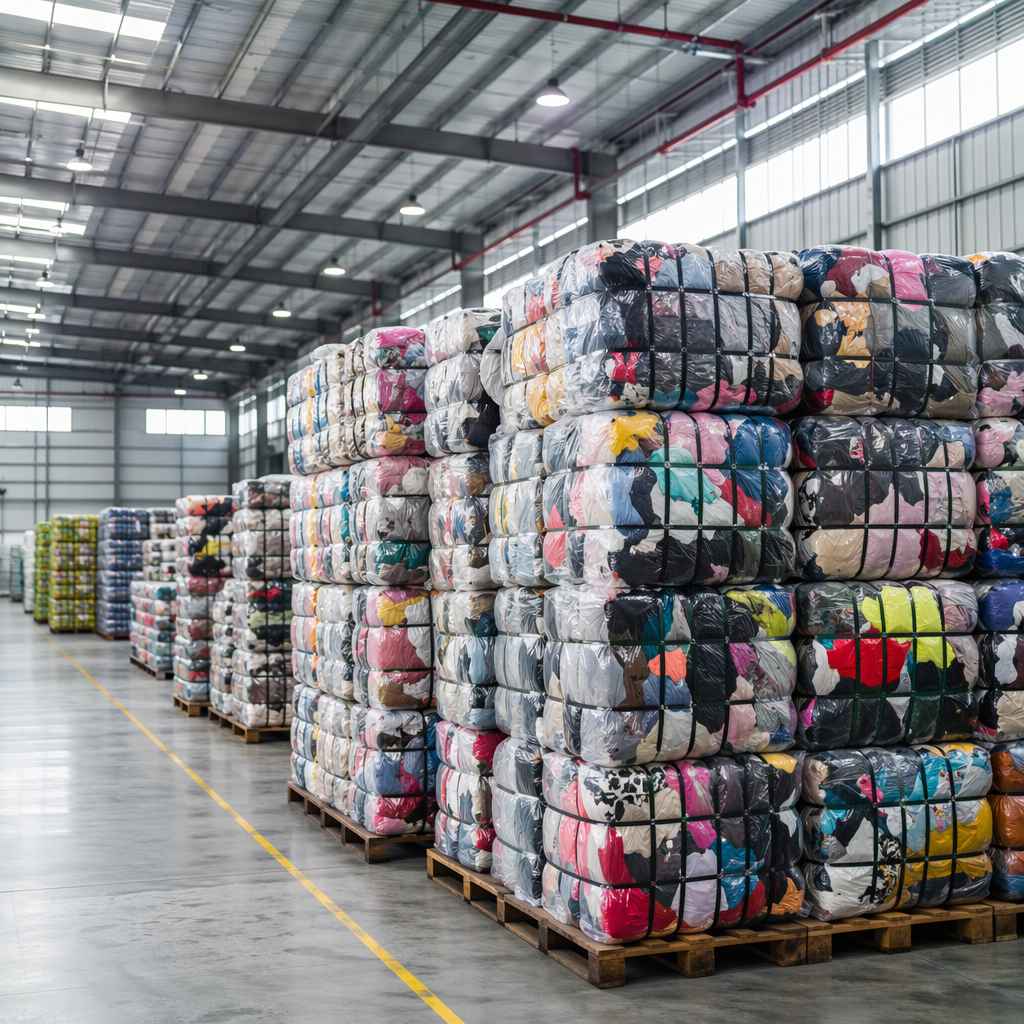
🇨🇳 Why Chinese Sourcing Is a Stable Alternative
If European used clothing supply is disrupted — whether by a ban, stricter standards, or uncertainty — Chinese exporters offer a ready alternative. Here is why:
- ✅ No regulatory uncertainty. China’s used clothing export industry operates under stable policies. There are no debates about banning exports.
- ✅ Massive capacity. China exports ~$135 million worth of used clothing monthly — roughly 4x the UK, 5x France, and 7x Germany.
- ✅ 200+ suppliers. The largest supplier base in the world means competitive pricing and flexible options.
- ✅ Established routes. Shipping from Guangzhou to Mombasa (18-25 days), Lagos (20-28 days), or Durban (18-22 days) is well-established.
- ✅ Quality documentation. Professional Chinese exporters provide complete export paperwork and live video verification.
❓ Frequently Asked Questions
Will the EU ban used clothing exports?
When would an EU ban take effect?
What should I do if I currently import from EU countries?
Is the 96% wearable data relevant to this debate?
Can China replace European used clothing supply?
📈 Summary: What Importers Should Do Right Now
The Macron proposal is a reminder that the used clothing trade operates in a changing regulatory environment. Whether or not a ban materializes, importers who prepare will be better positioned than those who react.
- Short term (now-Sept 2026): No changes. Keep importing as normal. EU institutions are in transition; no action can occur until the new Commission takes office.
- Medium term (Sept 2026-2027): Monitor the new Commission’s position. If stricter standards are proposed (more likely than a ban), ensure your suppliers can meet documentation requirements.
- Long term (2027+): If a ban or significant restrictions emerge, Chinese and Korean suppliers can fill any supply gap. Build relationships now — not when the crisis hits.
🌍 Build a Resilient Supply Chain
Regulatory changes in Europe do not have to disrupt your business. Chinese used clothing exports operate in a stable policy environment with proven capacity to serve African, Asian, and South American markets.
Related reading: