Published July 2, 2026 · Policy analysis for used clothing importers
Kenya Finance Bill 2026: What the Mitumba Tax Debate Really Means for Used Clothing Importers
A major policy debate is unfolding in Kenya that could affect every importer of used clothing into the country. The Finance Bill 2026 proposes a new tax treatment for mitumba (second-hand clothing) imports — and the outcome will directly impact your costs, your margins, and your business planning.
From our perspective as a Chinese exporter who has shipped thousands of containers to Kenya and East African markets, we have been watching the Finance Bill debate closely. This article explains what is being proposed, what it means for your business, and how you can prepare — regardless of whether the bill passes in its current form.
⏱ 10 min read · For used clothing importers in Kenya & East Africa
In this article:
- What the Finance Bill 2026 proposes for mitumba imports
- The debate — who supports, who opposes, and what the arguments are
- Real cost impact: how much more you will pay per container
- Why this is happening — Kenya’s economic balancing act
- How smart importers can prepare and adapt
- What this means for choosing between Chinese, Korean, and other origins
📋 What the Finance Bill 2026 Proposes
The Kenya Finance Bill 2026, which has passed the National Assembly and awaits presidential assent as of late June 2026, introduces a new tax treatment for mitumba imports. Here is the key provision:
| Provision | Details |
|---|---|
| What is proposed | A presumptive tax of 5% of the customs value of mitumba imports |
| How it works | 5% of the customs value is treated as “assumed profit” — then taxed at 30% income tax |
| Effective rate | 1.5% of customs value (5% × 30% = 1.5%) |
| Payment method | Single upfront payment at the port of entry, replacing multiple existing taxes |
| Current status | Passed National Assembly, awaiting presidential assent. Some provisions may still be amended. |
The government presents this as a simplification — replacing multiple smaller taxes with one clear assessment. But the mitumba industry has mixed views.
[[IMAGE 1: Visual breakdown showing the tax calculation: Container customs value $50,000 → 5% assumed profit = $2,500 → 30% income tax = $750 total new tax. Simple 3-step flow.]]⚠️ What this means in practice: On a container declared at $25,000 customs value, the new tax would be approximately $375 — an increase, but the government argues it replaces other taxes that were inconsistently applied.
⚖️ The Debate: Who Supports and Who Opposes
The proposed tax has created an unusual split in Kenya’s mitumba industry:
| Position | Who | Argument |
|---|---|---|
| ✅ Support | Mitumba Consortium Association of Kenya (MCAK) | Represents ~2 million livelihoods. Supports the simplified 5% final tax model, arguing it offers certainty, transparency, and protects jobs by formalizing the sector. |
| ❌ Oppose | Consumer groups, some traders | Argue it will raise prices for low-income households who depend on affordable second-hand clothing. |
| ⚠️ Neutral / Watching | Treasury | Signaled a possible rethink after public participation — some provisions could still be amended before full implementation. |
The surprising endorsement by MCAK is significant. The industry body — which represents the majority of Kenya’s mitumba traders — sees the simplified tax as better than the current system of multiple, inconsistently applied levies. They argue that certainty is worth paying for.
[[IMAGE 2: Three-column visual showing Support (green), Oppose (red), Watching (yellow) with key arguments for each side.]]💰 Real Impact: Calculating Your New Costs
Here is a practical example of how the Finance Bill would affect a typical container used clothing shipment to Kenya:
| Item | Current | Under Finance Bill | Change |
|---|---|---|---|
| FOB price (18 tons) | $45,000 | $45,000 | — |
| Freight | $6,000 | $6,000 | — |
| CIF value | $51,000 | $51,000 | — |
| Import duty (16% est.) | $8,160 | $8,160 | — |
| New presumptive tax | $0 | $765 | ⬆️ +$765 |
| Total duty & taxes | $8,160 | $8,925 | ⬆️ +9.4% |
The increase is modest on a per-container basis. However, for importers bringing in 10-20 containers per year, the additional cost adds up to $7,650-15,300 annually.
Compared to other recent tax changes in the region — Uganda’s 30% environmental levy is far more severe — Kenya’s proposed 1.5% effective rate is relatively moderate. The key question is not the cost itself, but whether the tax simplifies or complicates the import process.
🌍 Why Is This Happening Now?
Kenya Economic Context
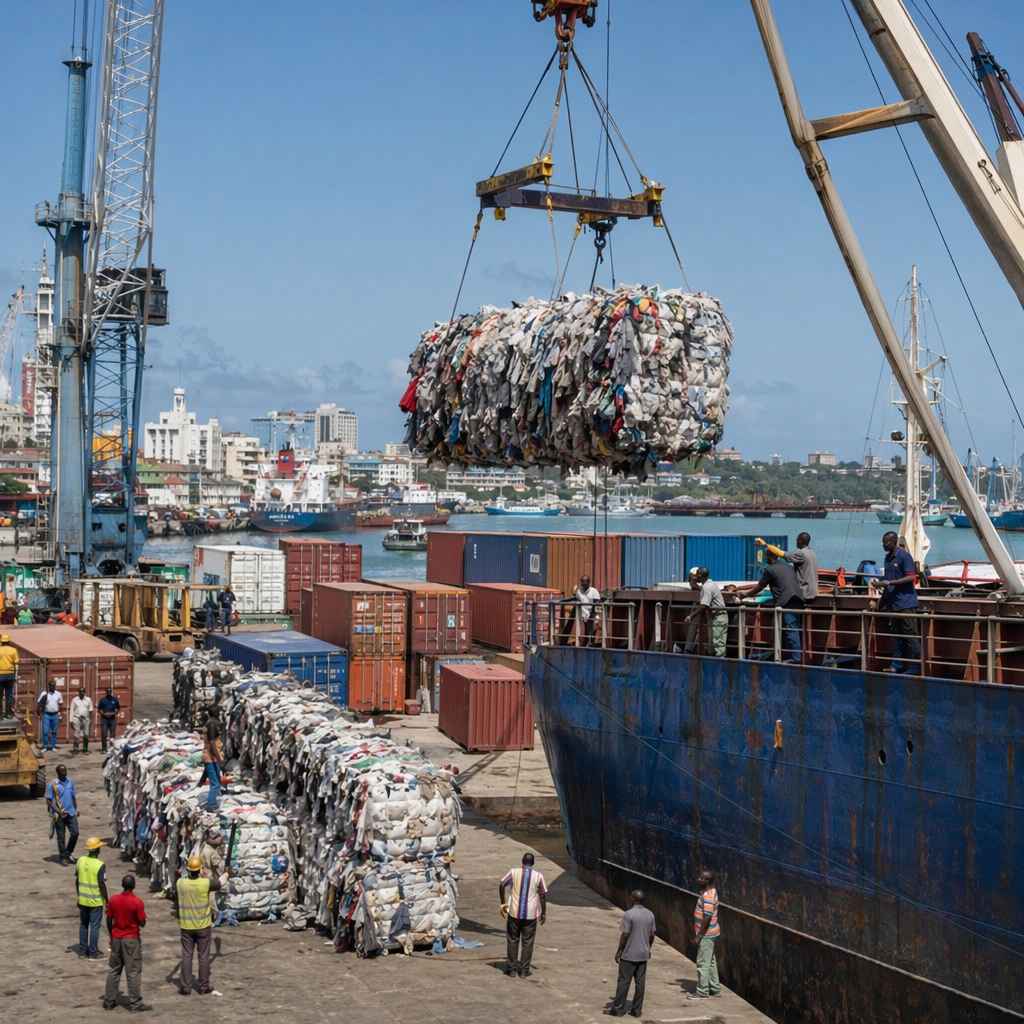
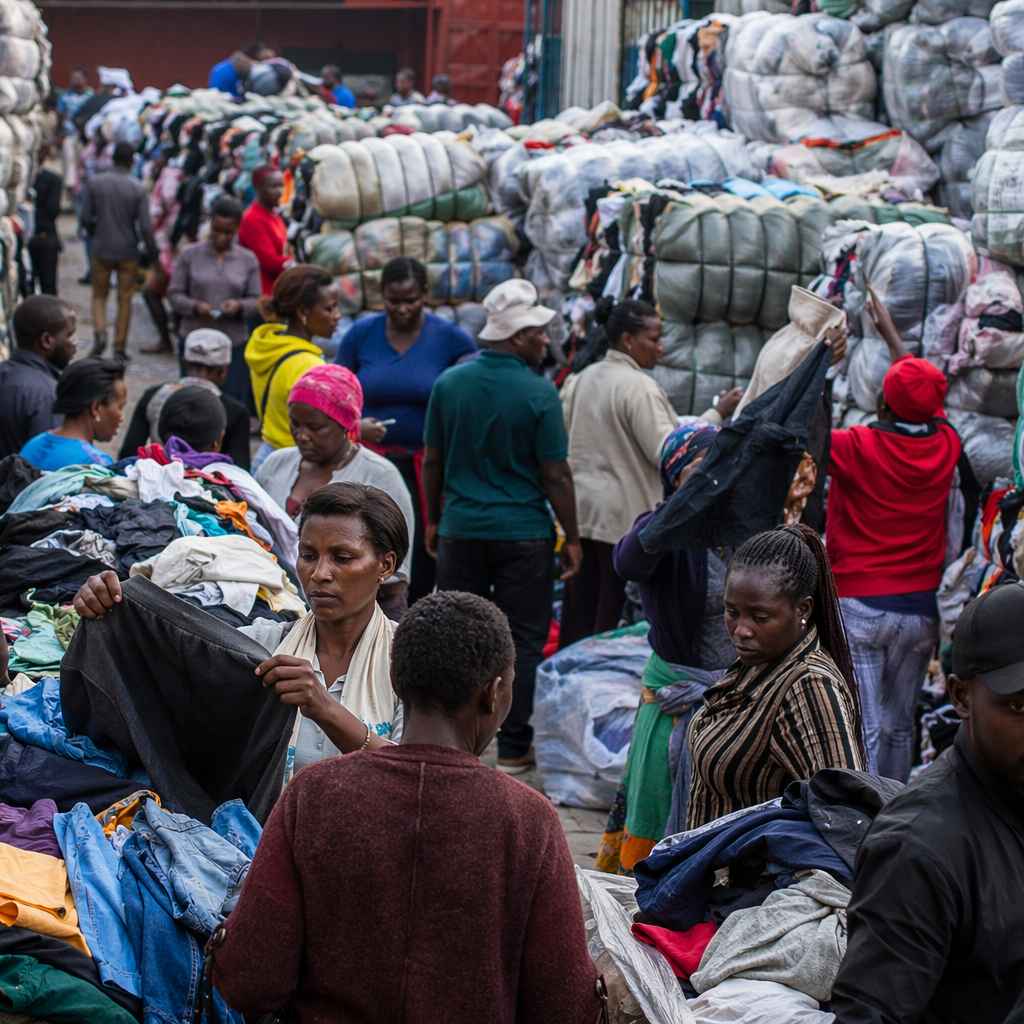
Kenya faces a challenging fiscal environment in 2026. The government is under pressure to increase domestic revenue while managing debt servicing costs and funding development priorities. Used clothing imports represent a visible and growing tax base — Kenya imported over 100,000 tons of mitumba in 2025, making it Africa’s largest importer of second-hand clothing.
The Finance Bill is the government’s primary vehicle for revenue mobilization. The mitumba tax proposal should be seen in this broader context — not as a targeted attack on the industry, but as part of a comprehensive revenue drive that touches multiple sectors.
The Finance Bill 2026 tax proposal is not happening in isolation. It is part of a broader regional and global trend:
- 🇰🇪 Kenya: Balancing budget deficits (tax revenue needed) vs protecting 2M+ mitumba-dependent jobs
- 🇺🇬 Uganda: Already passed 30% environmental levy on used clothing imports (June 2026)
- 🇪🇺 EU: France pushing for bloc-wide ban on used clothing exports to Africa
- 🌍 EAC: Ongoing debate about harmonized used clothing import policies
For Kenyan importers, the key takeaway is that regulatory change is coming regardless of this specific bill. The trend across East Africa is toward higher taxes and tighter regulation on used clothing imports. Importers who plan for this reality will be better positioned than those who react to each change as it happens.
🚢 How Kenya Compares with Other East African Markets
To understand the potential impact of the Finance Bill, it helps to compare Kenya’s proposed mitumba tax with its neighbors:
| Country | Current Tax Burden | Recent Changes |
|---|---|---|
| 🇰🇪 Kenya | ~16% import duty + VAT + proposed 1.5% presumptive tax | Finance Bill 2026 — awaiting assent |
| 🇺🇬 Uganda | 25% duty + 18% VAT + 30% environmental levy | 30% levy passed June 2026 |
| 🇹🇿 Tanzania | 35% duty + 18% VAT + 1.5% IDF | Higher duties than neighbors |
| 🇷🇼 Rwanda | .50/kg tariff (raised from /usr/bin/bash.20 in 2016) | 1,150% increase since 2016 |
Compared to its neighbors, Kenya’s proposed tax is relatively moderate. Uganda’s 30% environmental levy and Rwanda’s .50/kg tariff are far more restrictive. If the Finance Bill passes as currently drafted, Kenya will remain one of the more accessible East African markets for used clothing imports.
✅ How Smart Importers Can Prepare
- 📊 Recalculate your margins. Add 1.5-2% to your total landed cost assumption. If your margins are thin, adjust pricing or bale selection to compensate.
- 📦 Consider higher-grade bales. When taxes increase, every container needs to work harder. A Grade bales with 95%+ sellable rates deliver better value than lower grades where you pay tax on waste.
- 🔍 Work with transparent suppliers. Proper documentation (commercial invoice, packing list, BL, fumigation) becomes even more important when customs valuation determines your tax bill.
- 🤝 Build relationships with customs brokers. Know your broker and ensure they understand the new provisions if the bill passes.
- 📈 Diversify your supplier base. Chinese suppliers offer the best combination of pricing, volume, and consistent quality — and the 200+ supplier base means competitive pricing that helps offset tax increases.
🇨🇳 A Chinese Exporter’s Perspective
From our side of the trade, we see the Kenya Finance Bill as part of a natural evolution. Used clothing imports are growing rapidly across East Africa — Kenya’s imports rose 76% between 2013 and 2022. With that growth comes regulatory attention. Every country that imports used clothing eventually reaches this point.
Our view is straightforward: quality and transparency become more important when regulations tighten. Importers who work with suppliers that provide consistent grading, proper documentation, and fair pricing will navigate regulatory changes more smoothly than those who compete on price alone.
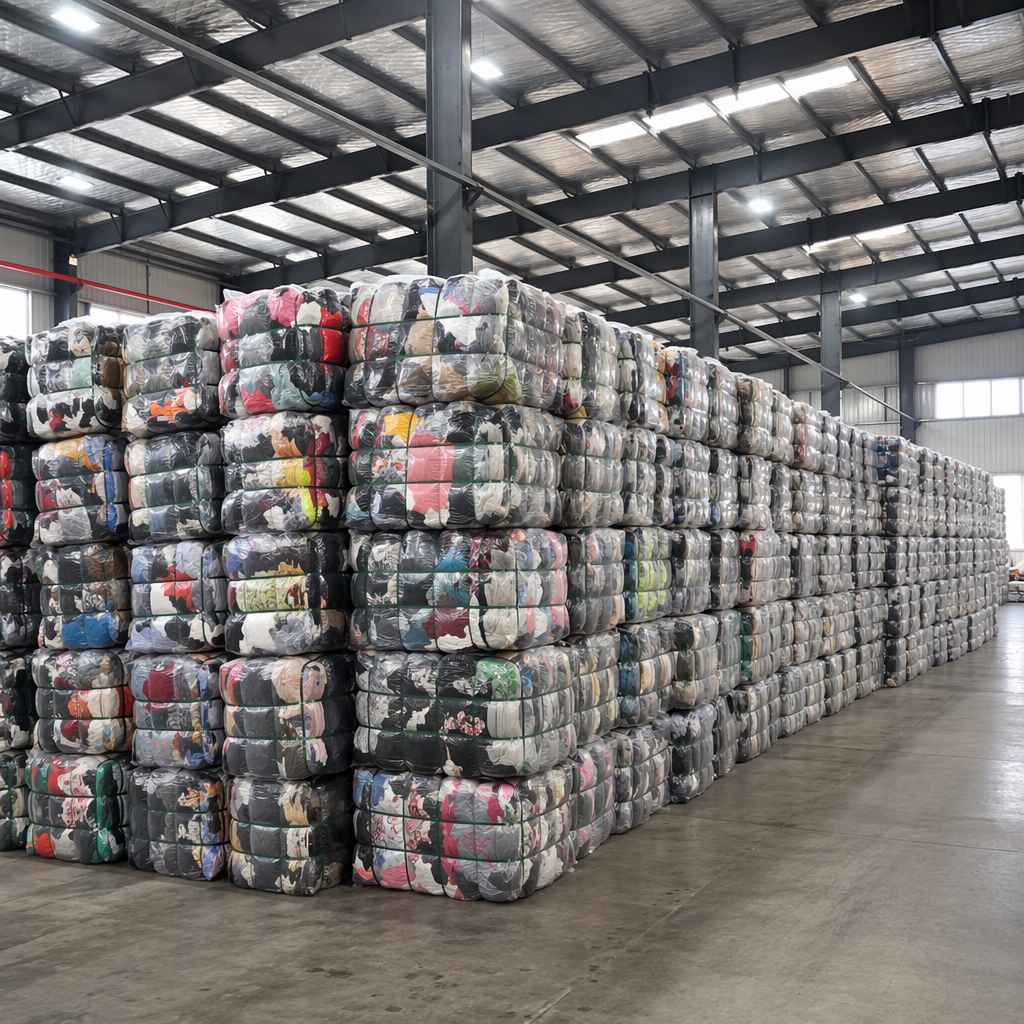
Chinese A Grade bales offer the best value for importers facing higher tax burdens. At $2.00-3.00/kg FOB with 95%+ sellable rates, Chinese bales ensure that you are paying tax on quality inventory — not on waste.
We also offer live video verification of every bale before it ships, documented packing lists with category breakdowns, and complete export documentation. In a regulatory environment where paperwork matters, this transparency is valuable.
📈 Looking Ahead: What Kenyan Importers Should Watch
Beyond the Finance Bill 2026, several developments will shape the mitumba import landscape in Kenya over the next 12-18 months:
- Presidential assent timeline — The bill has passed the National Assembly. Once signed, implementation timelines will be announced.
- EAC harmonization — Uganda has already passed a 30% environmental levy. Kenya may face pressure to align with regional standards.
- EU export policy — France is pushing for an EU-wide ban on used clothing exports. If this gains traction, Kenyan importers relying on European sourcing may need to shift to Asian origins.
- Exchange rate trends — The Kenyan shilling’s performance against the USD will affect landed costs regardless of tax policy. Importers with USD-denominated contracts should watch forex markets.
❓ Frequently Asked Questions
How much more will I pay per container under the Finance Bill 2026?
Has the Finance Bill 2026 been signed into law?
Will the new tax put Kenyan mitumba traders out of business?
How does China compare with other origins under the new tax?
Should I delay my imports until the tax situation is clearer?
📊 Stay Ahead of Regulatory Changes
Tax changes, environmental levies, and import regulations are evolving across East Africa. Importers who stay informed and work with transparent suppliers will navigate these changes most effectively.
Related reading: