South Korea Used Clothing Companies: Top Exporters & How to Find Reliable Suppliers
If you are searching for korea used clothes companies or a reliable south korea used clothing company to partner with, you are in the right place. South Korea has a well-established used clothing export industry with dozens of active suppliers shipping to over 30 countries worldwide.
⏱ 9 min read · For importers, wholesalers & trade buyers
In this guide you will learn:
- Key industry insights and practical sourcing knowledge
- How to evaluate suppliers and avoid common mistakes
- Pricing benchmarks and quality standards
- Actionable steps for your import business
This guide profiles the top Korean used clothing exporters, explains how their businesses operate, and provides a practical framework for vetting suppliers before you commit to an order. We also compare Korean suppliers with Chinese alternatives to help you determine which sourcing origin best fits your market.
The Korean used clothing export industry has grown significantly, with monthly exports reaching $36 million in 2024, up 19.3% year-over-year. This growth has attracted more suppliers to the market, creating both more options and more noise for buyers. Knowing how to separate reliable exporters from intermediaries or undercapitalized operators is the difference between a successful importing relationship and a costly mistake.
First time exploring Korea as a source? Read our complete guide to Korea second hand clothes for market data and pricing overview.
Top Korean Used Clothing Exporters
Based on B2B platform listings, trade data, and industry presence, here are the most notable South Korea used clothing companies currently active in export:
1. K-FOREIGNER Trading
| Established | — |
| Monthly Volume | 40–50 containers (approx. 12,000 tons/year) |
| Workforce | 130 employees |
| Product Categories | 160+ clothing categories |
| Export Markets | 30+ countries across Africa, Asia, Middle East |
| Contact | CEO Eric Han — [email protected] / kforeigner.com |
K-FOREIGNER is one of Korea’s largest used clothing exporters by volume. With 130 workers sorting 160+ categories, they serve over 30 countries and ship 40-50 containers monthly. Their scale makes them a benchmark for serious buyers looking for consistent supply.
2. KISUK TRADING (News Industry)
| Established | 2000 (25+ years in business) |
| Monthly Volume | 40–50 containers |
| Export Markets | 20+ countries (Africa, Middle East, SE Asia) |
| Contact | [email protected] / kisuktrading.com |
KISUK TRADING has been in the used clothing export business since 2000, making them one of the longer-established players. They ship comparable volumes to K-FOREIGNER (40-50 containers/month) and have built relationships across 20+ countries over their two decades of operation.
3. GNL Company
| Established | 2002 |
| Annual Sales | $25–50 million |
| Export Focus | 100% export-oriented |
| Facility Size | 5,000–10,000 sqm |
| Contact | CEO Hwieon Kim — gnlcompany.com |
GNL Company is a substantial operation with $25-50 million in annual sales and a dedicated 5,000-10,000 sqm facility. Their 100% export focus means their entire operation is built around serving international buyers.
4. DHY Co., Ltd. (HKT Korea)
| Specialty | A-grade used clothes, shoes, bags, wipers |
| Export Markets | Africa, East Asia |
| Contact | CEO HAM Taehwa — dhytrading.en.ec21.com |
DHY Co., Ltd. specializes in A-grade used clothing and accessories, with a focus on serving African and East Asian markets. They are listed on EC21 and TradeKorea.
5. JUNGWON TRADING
| Location | Gimhae-si, Gyeongsangnam-do |
| Type | Used clothes manufacturer/supplier |
| Platform | TradeWheel, TradeKey |
JUNGWON TRADING is a smaller but established supplier based in Gimhae-si, listed on multiple B2B platforms. They represent the broader ecosystem of small-to-medium Korean exporters serving global buyers.
How Korean Used Clothing Companies Operate
Understanding the business model of South Korea used clothing companies helps you evaluate which supplier type suits your needs:
Collection Model
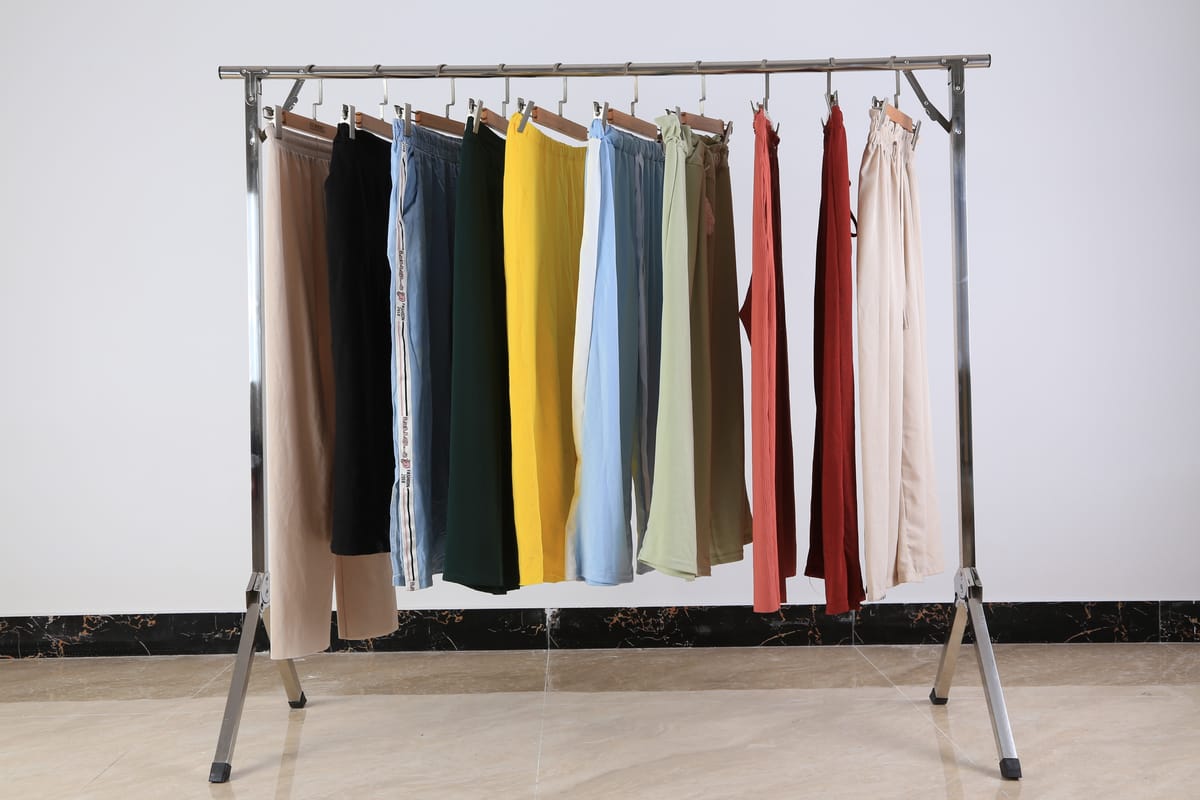
Korean exporters collect used clothing through a network of collection bins, charitable partnerships, and direct sourcing from apartment complexes in major cities. The Seoul Capital Area (25+ million people) is the primary collection zone. Clothing is typically donated by urban residents with relatively high disposable income and fast fashion turnover.
Sorting and Grading
Once collected, clothing is transported to sorting facilities where workers sort by:
- Category: Tops, bottoms, dresses, outerwear, accessories
- Gender: Men’s, ladies’, unisex
- Grade: A (near-new), B (light wear), C (worn/flawed)
- Season: Summer, winter, all-season
Pricing Structure
Korean exporters quote on a FOB (Free On Board) Korea basis. Pricing depends on grade, category mix, and volume:
- A Grade bales: $1.10–$2.00/kg
- B Grade bales: $0.60–$1.20/kg
- Mixed-grade bales: Available at negotiated rates
Shipping and Logistics
Korean used clothing companies typically ship through the Port of Busan, which offers excellent connectivity to African, Asian, and Middle Eastern destinations. Standard shipping terms:
- FOB Busan is the most common pricing term — the buyer arranges freight from the port
- Container loading: 20ft container holds approximately 8-10 tons; 40ft HQ holds 18-22 tons
- Transit time to East Africa: 14-18 days
- Transit time to West Africa: 18-25 days
- Free time at destination: Typically 14-21 days
Export Documentation
Korean suppliers typically provide: Commercial invoice, packing list with detailed category breakdown, Bill of Lading, fumigation certificate, and certificate of origin. Korea’s trade infrastructure is well-developed, and most exporters are experienced with international shipping requirements.
How to Find Korean Used Clothing Suppliers
Here are the most reliable channels for connecting with korea used clothes companies:
- TradeKorea (tradekorea.com) — Korea’s largest B2B marketplace, government-supported, with verified company listings
- GOBIZKOREA (gobizkorea.com) — Run by the Korea Trade-Investment Promotion Agency (KOTRA), lists only Korean companies
- Alibaba — Lists some Korean suppliers, though many are resellers or intermediaries
- TradeKey and EC21 — Additional B2B platforms with Korean company listings
- Industry referrals — Other importers in your network may have Korean supplier contacts
How to Verify a Korean Used Clothing Supplier
Before placing an order, verify any used clothes korea supplier with these checks:
| Check | What to Ask For | Why It Matters |
|---|---|---|
| Business registration | Korean business registration number | Confirms the company is legally registered in Korea |
| Facility verification | Photos or video tour of sorting facility | Confirms they have actual sorting operations, not just a trading desk |
| Export history | Past Bill of Lading samples, references | Proves they have shipped before and have happy customers |
| Category samples | Photos of actual bale contents | Shows real sorting quality, not stock photos |
| Third-party presence | TradeKorea or GOBIZKOREA verification | Government-supported platforms offer basic vetting |
Korean Suppliers vs Chinese Suppliers: Making the Right Choice
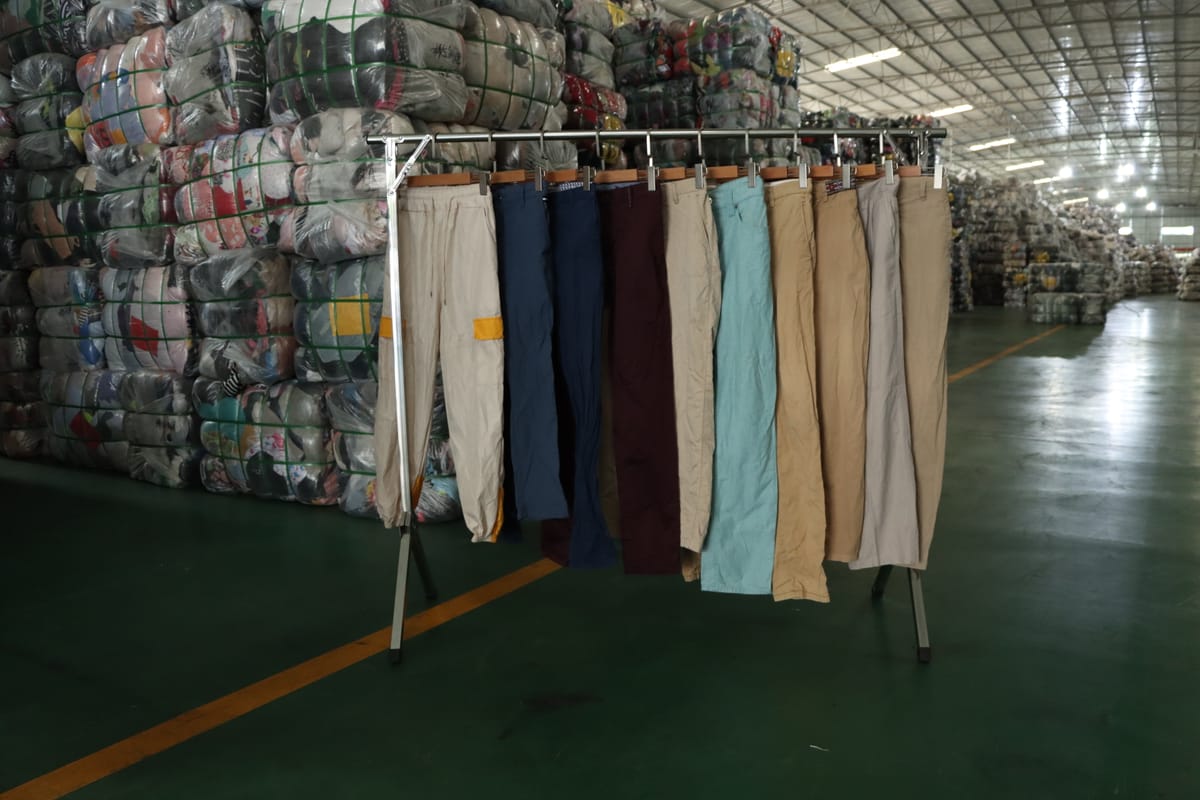
While this guide focuses on Korean used clothing companies, experienced importers often compare Korea with China before deciding. Here is how they stack up for a buyer evaluating suppliers:
| Factor | South Korea | China |
|---|---|---|
| Number of exporters | ~50+ active | 200+ active |
| Typical MOQ | From 1 bale | From 1 bale |
| FOB pricing (A Grade) | $1.10–$2.00/kg | $2.00–$3.00/kg |
| Communication language | Korean, English | Chinese, English |
| Product variety | Fashion-forward, trendy styles | Broad mix, basics to luxury |
| Supply consistency | Good, but limited by population | Excellent, very high volume |
| Shipping to Africa | 14–21 days from Busan | 18–28 days from Chinese ports |
If your target market values trendy Korean fashion and you are willing to work with smaller supplier base, Korean companies are an excellent choice. If you need maximum volume, variety, and supplier options, Chinese suppliers offer advantages.
Some importers use both: Korean bales for boutique/retail customers seeking fashion items, and Chinese bales for volume markets where price matters most. For a detailed look at Chinese sourcing, see our complete guide to used clothing suppliers in China and current pricing guide.
For importers interested in Chinese Grade A bales as an alternative or complement to Korean sourcing, Hissen Global is a China-based supplier with 12 years of export experience, 3 factories (20,000 m² total), 25 sorting lines, and shipments to 110+ countries. Contact us for pricing and a direct comparison with Korean options.
Common Mistakes When Dealing with Korean Used Clothing Suppliers
Even experienced importers make these mistakes when sourcing from korea used clothes companies for the first time:
Mistake 1: Not Verifying the Facility
Some businesses registered as “used clothing exporters” in Korea operate as brokerages without their own sorting facilities. They source from other suppliers and add a markup. Always request a live video tour of the sorting floor before committing.
Mistake 2: Ordering Based on Price Alone
The lowest-priced Korean bale ($0.60–$0.80/kg) may contain B Grade or mixed-grade items rather than true A Grade. Ask for photos of actual bale contents — not promotional images — and clarify the grading standard before ordering.
Mistake 3: Assuming All Korean Bales Are Fashion-Forward
While Korean used clothing has a reputation for trendy styles, not all Korean exporters specialize in fashion-forward inventory. Some focus on basics (cotton t-shirts, plain pants) that may not differ significantly from Chinese sources. Ask about the style profile of their typical bales.
Mistake 4: Ignoring the Category Mix
Korean bales can vary significantly in their category composition. One supplier’s “mixed ladies bale” might contain 40% tops and 30% bottoms, while another’s might emphasize outerwear and dresses. Confirm the breakdown matches your market demand.
Mistake 5: Not Planning for Supply Continuity
Korea’s smaller population (51 million) means the used clothing supply chain is more sensitive to seasonal changes and collection fluctuations compared to China. Establish a relationship with multiple Korean suppliers, or consider a dual-source strategy with Chinese suppliers as a backup. For more on the Chinese option, see our suppliers in China guide.
💡 Key Takeaways
- Choose suppliers who offer live video verification — not just photos
- Compare total landed cost, not just FOB price per kg
- A Grade standards vary by supplier — always get written definitions
- Start with a small order to evaluate quality before scaling
- Build long-term relationships with consistent suppliers for better pricing
Frequently Asked Questions
How many used clothing companies are there in South Korea?
How do I contact Korean used clothing suppliers?
Do Korean used clothing companies speak English?
What is the minimum order from a Korean used clothing supplier?
Are Korean used clothes better than Chinese used clothes?
Can I visit a Korean used clothing factory?
Next Steps: Connect with the Right Supplier
Finding a reliable korea used clothes company requires research, verification, and clear communication about your quality expectations. Start with the suppliers listed in this guide, use the verification framework above, and choose the sourcing origin that best fits your target market.
For a broader perspective, explore our complete guide to Korea second hand clothes and our Grade A vs Grade B comparison guide which applies to bales from any origin.