Published June 17, 2026 · Analysis from a China-based exporter’s perspective
UK Just Changed the Rules for Used Clothing Exports — What Importers in Africa, Asia & South America Need to Know
On June 3, 2026, the UK’s Environment Agency (EA) published formal guidance on importing and exporting waste and non-waste textiles. This is the most significant regulatory change to come out of Europe this year — and it affects every importer who buys UK used clothing bales.
From a Chinese exporter’s perspective, we see this as a wake-up call for the entire industry. The UK is tightening enforcement, not introducing new laws. But the message is clear: sorting quality is no longer optional — it is the standard.
Here is what changed, why it matters to you as an importer, and what you can learn from it — whether you buy from the UK, China, or both.
⏱ 8 min read · For used clothing importers in Africa, Asia & South America
In this article:
- What the UK EA guidance actually says — and what it changes
- How “mixed loads = waste” affects bale importers
- Why Chinese exporters are watching this closely
- What smart importers should do to protect their supply chain
- A comparison: UK vs China sorting standards
📋 What the UK EA Guidance Actually Says
On June 3, 2026, the UK Environment Agency published official guidance that clarifies the legal line between “used clothing for reuse” and “textile waste.” Key points:
| Rule | What It Means |
|---|---|
| Sort before export | Items must be sorted by type and quality in the UK before they leave. No more shipping unsorted “mixed lots” and sorting at destination. |
| Mixed loads = waste | If a container has a mix of wearable and non-wearable items without clear separation, the entire load can be classified as waste — triggering strict Basel Convention controls. |
| Shoes must be paired | Shoes exported from the UK must be in matched pairs. Loose or unpaired shoes may be classified as waste. |
| Documentation required | Exporters must provide evidence that items are suitable for direct reuse, including quality inspection records. |
The guidance does not create new laws. But it signals that the EA will enforce existing rules more strictly. Industry leaders have called it a “wake-up call” for exporters who have been operating with loose sorting standards.
- 📦 Mixed bales common — wearable + non-wearable together
- 📄 Limited documentation required
- ⚠️ Enforcement was inconsistent
- ❓ “Waste vs wearable” decided case-by-case
- 🔍 Pre-sorting mandatory — clear separation by grade
- 📋 Documented quality inspection required
- 🔒 Stricter enforcement signaled
- 📏 “Mixed = waste” — clear legal definition
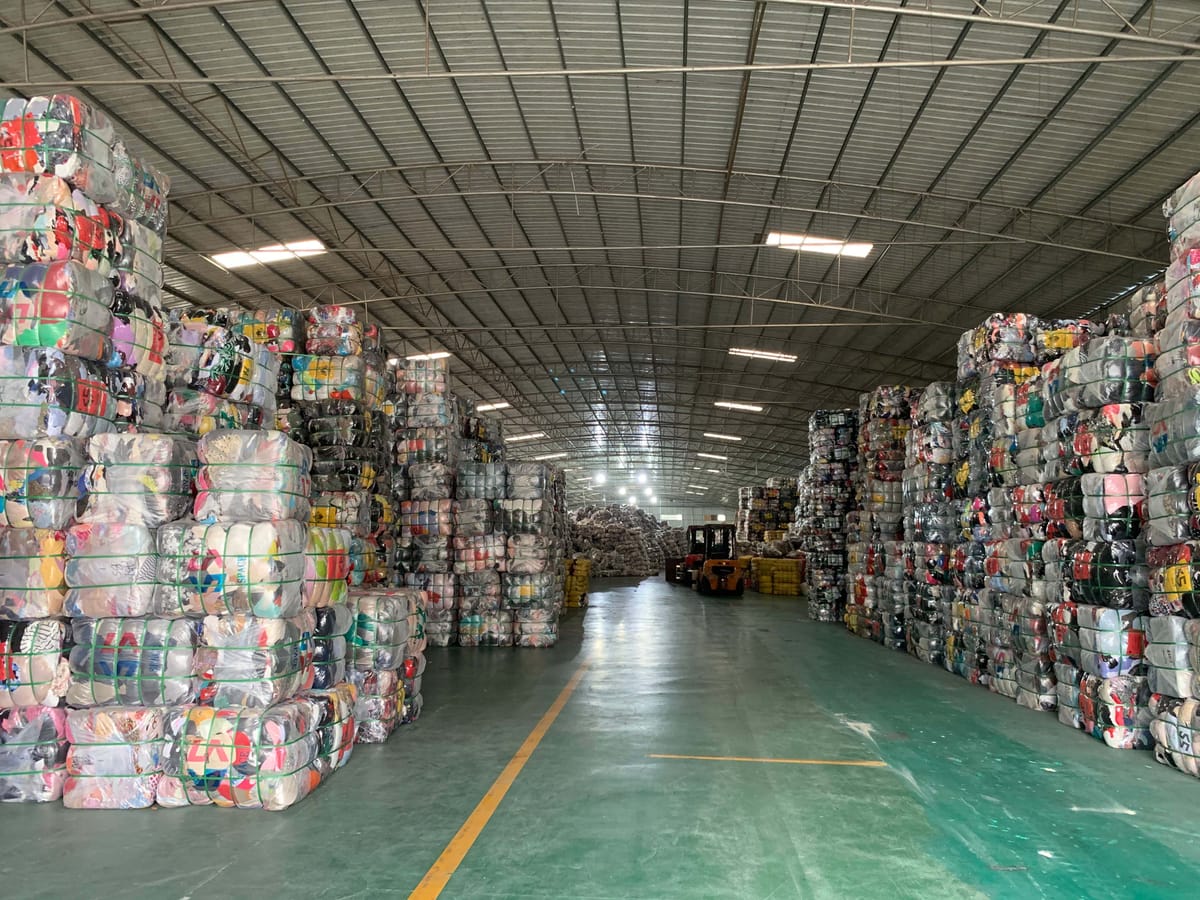
💡 From a Chinese exporter: This is not bad news. It is alignment — the UK is moving toward standards that quality-focused Chinese suppliers have followed for years. Pre-sorting, grading, and documented quality checks are already the norm in Guangzhou’s major sorting facilities.
⚖️ “Mixed Loads = Waste” — Why This Rule Matters Most
The single most impactful part of the new guidance is this: mixed loads that contain both wearable and non-wearable items without clear separation will be classified as waste.
Once classified as waste, the shipment falls under the Basel Convention — an international treaty that restricts cross-border waste movements. This means:
- 🚫 Longer customs processing times
- 📄 Additional documentation requirements
- 💰 Higher shipping costs
- ⚠️ Risk of rejection at destination
For importers who buy UK bales, this means you need to be certain your UK supplier is sorting properly — because if their export is classified as waste, your container could be delayed or rejected at your port.
🔍 China vs UK — How Sorting Standards Compare
As a Chinese exporter, we have a perspective that might surprise you. Here is how sorting standards compare between the two origins:
| Factor | UK (Post-Guidance) | China (Major Exporters) |
|---|---|---|
| Pre-sorting required | ✅ Yes — by law | ✅ Yes — standard practice |
| Grading system | ✅ A/B/C — widely used | ✅ A/B/C — widely used |
| Mixed bale classification | ❌ Risk = waste | ✅ Clear grade labels per bale |
| Documented quality | ✅ Required | ✅ Available on request |
| Video verification | Varies by exporter | ✅ Common practice |
| Bale weight consistency | Standard weights | Standard weights (25 kg shoes, 45-55 kg clothing) |
The key difference: Chinese suppliers have more experience with high-volume, consistent grading. A top Guangzhou facility sorts 6,000+ tons monthly — scale that drives standardised processes. The UK guidance essentially formalises what professional Chinese sorters already do.
🌍 What This Means for Importers in Africa, Asia & South America
If you import used clothing bales, here is how the UK changes affect your business:
- 📋 Ask your UK supplier for documentation. Request their quality inspection records and sorting procedures. If they cannot provide them, consider it a red flag.
- 🔍 Compare quality from multiple origins. The UK rules do not affect Chinese bales. Compare UK A Grade with Chinese A Grade — not just on price, but on consistency and documentation.
- 🎓 Stay informed. The Basel Convention meeting (June 23-26) may create global standards that extend beyond the UK. What starts in London often reaches your port eventually.
The smart importer’s takeaway: The UK is raising the bar. If your UK supplier can meet it, great — UK bales remain a good option for branded content. If they cannot, consider increasing your volume from Chinese suppliers where consistent grading and documentation are already standard.
🤔 Why We’re Sharing This — From a Chinese Exporter
You might wonder: why is a Chinese exporter writing about UK regulations?
Because an informed importer is a better business partner. When you understand global regulations, you ask better questions. You choose suppliers more wisely. And you build a supply chain that lasts.
The used clothing trade is becoming more transparent — the UK EA guidance, the Basel Convention discussions, and the UNCTAD 96% study are all pointing in the same direction: quality and transparency are becoming the industry standard.
We believe importers who understand these changes will make smarter sourcing decisions. That is good for you — and good for suppliers who are already operating at this level.
❓ Frequently Asked Questions
Does the UK EA guidance affect used clothing already shipped before June 3?
Does this mean UK used clothing bales will be more expensive?
Do these rules apply to Chinese used clothing exports?
What is the Basel Convention and why does it matter?
Should I stop buying UK bales?
📚 Want to Stay Ahead of Industry Changes?
The used clothing trade is changing fast. UK new rules, Basel Convention meetings, global standards — keeping up takes time.
We publish regular industry analysis for importers who want to make informed sourcing decisions. No fluff, no hard selling — just practical knowledge from inside the industry.
Related reading: