Part 3 of our used clothing wholesale series. Part 1 covers the global market overview. Part 2 covers where and how to find suppliers. This guide focuses specifically on used clothes bales — what they contain, how they are graded, what affects pricing, and how to evaluate quality before you buy.
⏱ 8 min read · For importers, wholesalers & trade buyers
In this guide you will learn:
- Key industry insights and practical sourcing knowledge
- How to evaluate suppliers and avoid common mistakes
- Pricing benchmarks and quality standards
- Actionable steps for your import business
Used Clothes Bales: Complete Guide to Grades, Pricing & Sourcing (2026)
If you are searching for used clothes bales for your import business, you have probably noticed something confusing: two suppliers can both call their product “A Grade used clothes bales” — but the contents can be completely different. One might contain sorted, high-quality garments ready for retail. The other might contain items barely fit for rag processing.
This guide explains exactly what used clothes bales are, how they are made, what determines their quality and price, and how to evaluate them before you commit to an order.
What Are Used Clothes Bales?
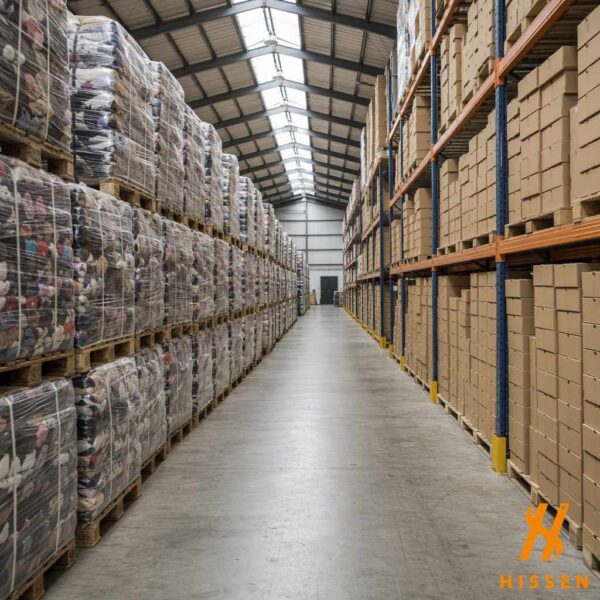
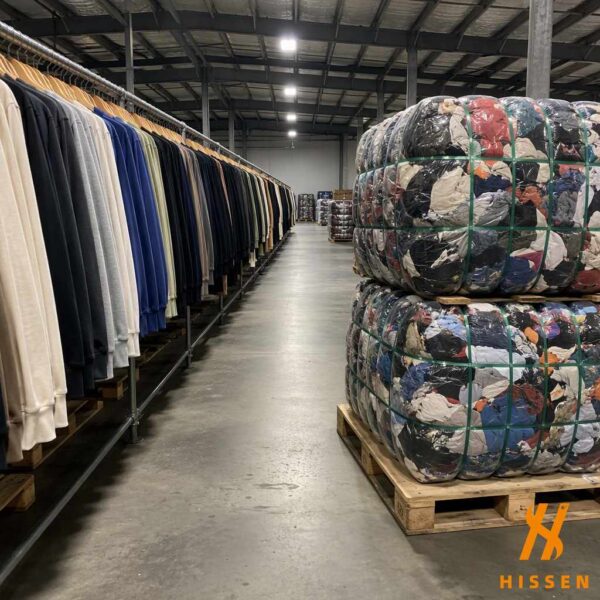
A used clothes bale is a compressed bundle of sorted second hand garments, typically wrapped in plastic strapping or shrink wrap, weighing between 45 kg and 100 kg. Bales are the standard unit of trade in the wholesale used clothing industry — they are how garments move from sorting facilities to international buyers.
Think of a bale as a “product package” with specific characteristics: grade, category composition, bale weight, and origin. When you buy a bale, you are buying a standardized unit — or at least, it should be standardized. The quality of standardization is where the difference between suppliers shows.
Bale Sizes and Standards
| Bale Size | Common Destinations | Bales per 20ft Container | Bales per 40ft HQ |
|---|---|---|---|
| 45 kg | East Africa (Kenya, Tanzania, Uganda) | ~180 | ~400 |
| 55 kg | East/South/Middle Africa | ~145 | ~330 |
| 80 kg | West Africa, Asia | ~100 | ~225 |
| 100 kg | West Africa (Nigeria, Ghana), Asia | ~80 | ~180 |
Bales are compressed using hydraulic balers to reduce volume for shipping. A well-compressed bale should be dense enough to minimize shipping cost but not so dense that garments are damaged by the pressure.
Types of Used Clothes Bales
By Grade
| Type | Quality | Typical Price (FOB/kg) | Best For |
|---|---|---|---|
| A Grade | No stains, tears, holes, fading. Current styles. Professionally sorted by category. | $2.00–$3.00 | Retail resale, boutique markets |
| B Grade | Light wear, minor fading. Still sellable in price-sensitive markets. | $1.00–$1.80 | Wholesale markets, secondary cities |
| Mixed Grade | Combination of A and B Grade items. Not separated. | $1.20–$1.80 | Importers who sort locally |
| Assorted / Unsorted | Minimal sorting. Mixed qualities and categories. | $0.60–$1.00 | Recycling, rag trade, experienced sorters |
By Category
| Category | Typical Contents | Demand |
|---|---|---|
| Ladies fashion | Tops, blouses, dresses, skirts, pants, jackets, cardigans | Highest — largest market segment |
| Men’s wear | Shirts, pants, suits, jackets, t-shirts, shorts | High — consistent demand |
| Children’s wear | School uniforms, casual wear, outerwear, baby clothes | Moderate — seasonal demand |
| Mixed bales | Combination of all categories in varying proportions | High — for general wholesalers |
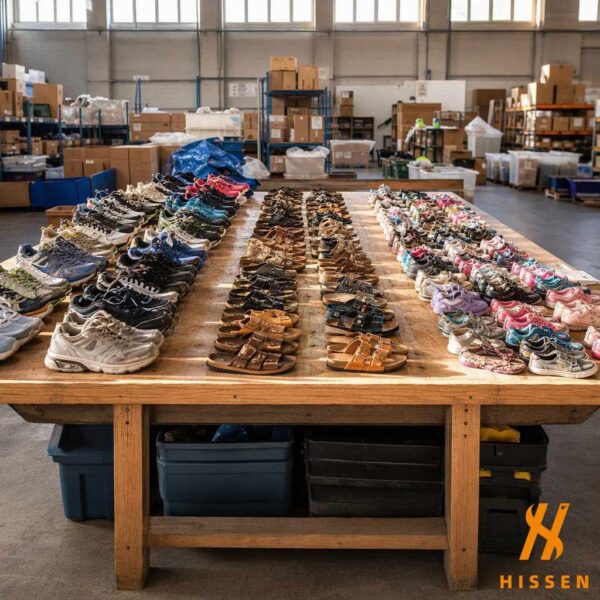
| Shoes bales | Mixed or sorted second hand shoes, sandals, boots | Moderate — specialized market |
| Winter wear | Coats, sweaters, thermal wear, heavy jackets | Seasonal — cold regions and seasons |
How Used Clothes Bales Are Made
Understanding the process helps you evaluate what you are buying:
- Collection — Used clothing is collected through donation bins, charity partnerships, and direct sourcing from urban areas. The collection source directly affects quality — urban collections from affluent areas yield higher quality garments.
- Pre-sorting — Workers remove obviously unwearable items (heavily stained, torn, or damaged). These are diverted to the rag trade or recycling.
- Category sorting — Garments are sorted by gender (ladies, men’s, children’s) and then into sub-categories (tops, bottoms, dresses, outerwear, etc.).
- Grading — Each garment is inspected and assigned a grade (A, B, or C) based on condition, style currency, and marketability.
- Baling — Sorted and graded garments are compressed using a hydraulic baler into standard bale sizes. Bales are weighed, tagged with their specifications, and wrapped for shipping.
What Affects the Price of Used Clothes Bales?
Several factors determine the FOB price per kilogram:
| Factor | Impact on Price |
|---|---|
| Grade | A Grade commands a significant premium over B Grade — typically 40-60% higher |
| Category | Ladies fashion bales are priced higher than mixed or men’s bales |
| Origin | European bales ($2.50–$4.00) > Chinese bales ($2.00–$3.00) > Korean bales ($1.10–$2.00) |
| Volume | Container orders typically receive $0.10–$0.40/kg discount vs single bales |
| Season | Winter items in bales may command a premium during cold-season demand periods |
| Branded content | Bales with higher proportions of branded items are priced higher |
For current pricing by origin, grade, and category, see our mitumba bale pricing guide.
How to Evaluate Used Clothes Bales Before Buying
Since you cannot open a bale before it ships, use these methods to evaluate quality:
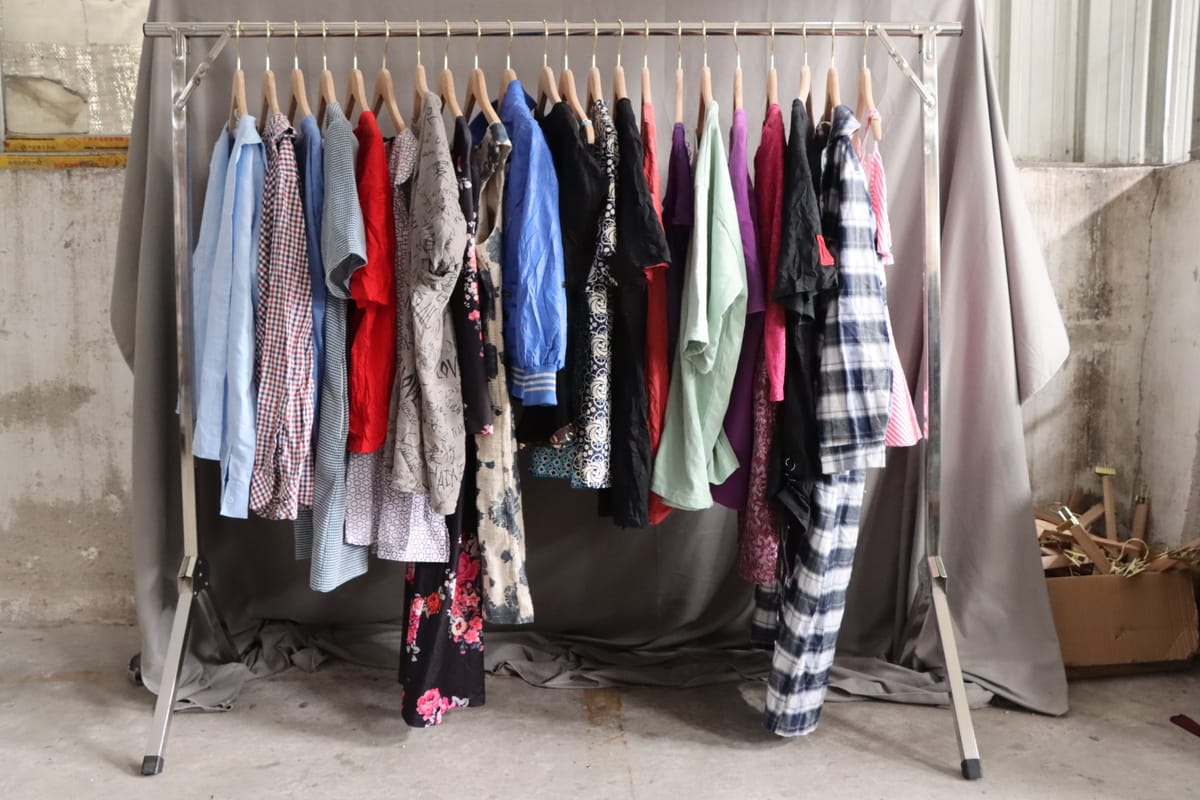
- Request bale content photos — Ask the supplier to open a bale of the same grade/category you are ordering and spread 20-30 items on the floor. Take a photo. This shows the actual quality level.
- Video call during packing — Ask to join a live video call while your bales are being packed. You can see the items going in and verify they match the agreed grade.
- Check bale weight documentation — Request photos of the scale showing each bale’s weight during packing. Compare with the weight on your invoice.
- Start with a small order — One bale or a partial container tells you more than any number of photos. Use the first order to evaluate, then scale with confidence.
- Visit the facility — If possible, visit your supplier’s sorting facility in person. This is the gold standard of verification.
Common Problems with Used Clothes Bales
- Mixed grading — Bales labeled A Grade contain significant B Grade items. Solution: request written grade definitions and video verification.
- Underweight bales — Bales arrive lighter than invoiced. Solution: request documented weights during packing, with scale photos.
- Wrong category mix — You ordered ladies fashion, the bale contains mixed categories. Solution: specify exact category breakdown in your purchase agreement.
- Poor compression — Loose bales take more container space, increasing your shipping cost per kg. Solution: confirm compression standards with your supplier.
- Inconsistent quality across orders — First order is excellent, subsequent orders decline. Solution: build a relationship with a consistent supplier rather than chasing the lowest price each time.
For a detailed look at supplier verification, see our China suppliers guide and our grade comparison.
💡 Key Takeaways
- Choose suppliers who offer live video verification — not just photos
- Compare total landed cost, not just FOB price per kg
- A Grade standards vary by supplier — always get written definitions
- Start with a small order to evaluate quality before scaling
- Build long-term relationships with consistent suppliers for better pricing
Frequently Asked Questions
What is a used clothes bale?
How much does a bale of used clothes cost?
How many clothes are in a bale?
What is the difference between A Grade and B Grade used clothes bales?
How many used clothes bales fit in a container?
How can I check the quality of used clothes bales before buying?
Buy Used Clothes Bales with Confidence
Used clothes bales are the foundation of the wholesale second hand clothing trade. Understanding what goes into them, how they are graded, and what affects their price is essential for any importer.
The key to success is finding a supplier who is transparent about their grading, bale weights, and category composition. Take the time to verify before you pay — it saves money and frustration in the long run.
For more resources and the full series:
- 📖 Used clothing wholesale market overview
- 📈 Second hand apparel market 2026: size, trends & opportunities
- 🌍 Used clothing export — global trade guide
- 🔍 Where and how to find wholesale suppliers
- 📊 Current bale pricing by origin and grade
- 📦 Shipping cost guide for used clothing containers
Ready to order? Contact Hissen Global for transparent pricing, live video verification of our A Grade bales, and a proforma invoice tailored to your market.