Most used clothing importers overlook shoes. That is a mistake.
The used shoes bales market is one of the most undervalued segments in the second-hand apparel trade. While everyone competes for ladies fashion and mixed clothing bales, experienced importers know that wholesale used shoes — particularly branded sneakers — can deliver profit margins 30-50% higher than standard clothing bales.
But here is the catch: shoes are not clothes. You cannot evaluate a shoes bale wholesale the same way you evaluate a clothing bale. The weight economics are different. The grading is different. The buyer expectations are different. And if you use the wrong calculation, you will leave money on the table — or worse, lose it.
This guide is written for used shoe importers, wholesalers, and container buyers who want to understand the real math behind second hand shoes wholesale, how to evaluate suppliers, and how to choose between budget mitumba shoes bales and premium branded lots.
of the used shoe supply chain: Collection → Sorting by type (sneakers, dress, sandals, boots) → Pairing → Grading → Baling → Container loading. The “Pairing” step is highlighted as the key difference from clothing sorting. This helps readers visualize why shoe sourcing requires different operational thinking than clothing sourcing.]]
⏱ 10 min read · For used shoe importers & wholesale buyers
In this guide you will learn:
- Why used shoes are a different business from clothing — and why that matters for your margins
- The real math: how many pairs in a bale and what each pair actually costs you
- Where to source used shoes bales by origin — China, Europe, Korea, USA
- Mitumba vs premium: which shoe bale model fits your market
- A 5-point evaluation checklist for buying used shoes bales
Why Used Shoes Are a Different Business from Used Clothing
The most common mistake importers make is treating used shoes bales like clothing bales. They apply the same pricing logic, the same weight expectations, and the same grading assumptions. This leads to miscalculations that directly hit the bottom line.
Here is the fundamental difference: shoes are heavier per item than clothing. A single pair of sneakers weighs 0.5–0.8 kg. A single t-shirt weighs 0.15–0.25 kg. This means a 25 kg bale of mixed shoes contains roughly 48-50 pairs, while a 45 kg bale of clothing contains 250-400 pieces. Brand-specific bales vary: men’s (35 pairs/bale), women’s (40 pairs/bale), children’s (50 pairs/bale). Your “cost per item” calculation must account for this — or you will overpay.
| Metric | Clothing Bale (55 kg) | Shoes Bale (45 kg) |
|---|---|---|
| Items per bale | 250–400 pieces | 60–90 pairs |
| Avg weight per item | 0.15–0.25 kg | 0.5–0.8 kg |
| Shipping cost impact | Lower per item | Higher per pair |
| Sorting complexity | By category, gender, size | By type, size, + must pair match |
| Retail margin potential | Good | Higher (branded sneakers $20-50) |
👉 Want to see our current used shoes bale pricing? Request a live video tour and quote — see exactly what you are buying before you pay →
Used Shoes Bales — What You Actually Get
Not all used shoes bales are created equal. The contents vary dramatically depending on the supplier, the origin, and the grade you order. Understanding what is inside a typical bale is the first step to making profitable purchasing decisions.
Types of Used Shoes Bales
| Bale Type | Contents | Ideal For |
|---|---|---|
| Mixed shoes bales | Sneakers, casual shoes, dress shoes, sandals — unsorted by type | General shoe wholesalers, market traders |
| Sneaker bales | Predominantly athletic shoes — Nike, Adidas, Puma, New Balance | Branded sneaker resellers |
| Dress shoe bales | Formal shoes, loafers, heels, leather shoes | Formal wear retailers |
| Boot bales | Winter boots, work boots, fashion boots | Seasonal/cold climate markets |
| Sandal & flip-flop bales | Open footwear, summer shoes | Warm climate markets |
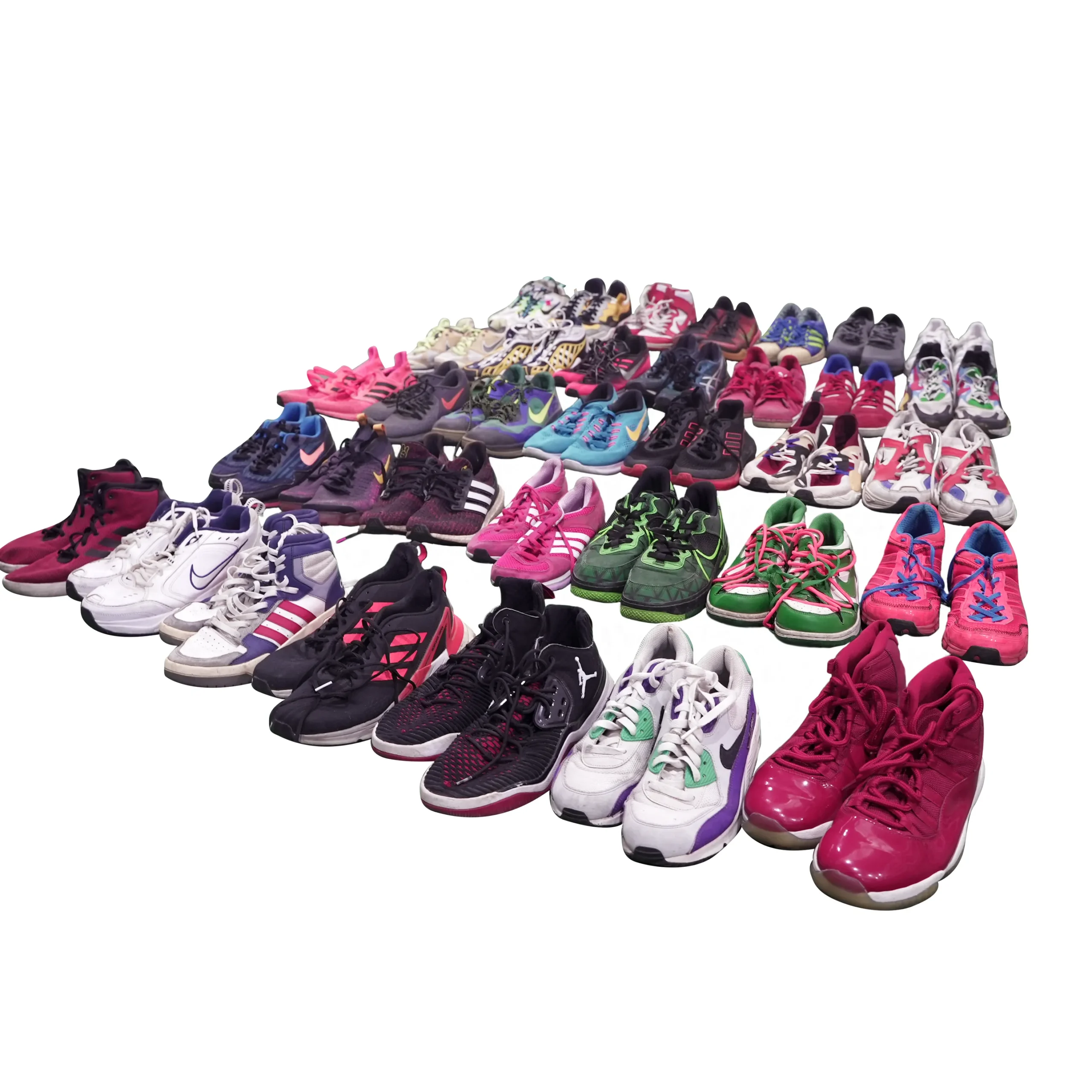
of a typical 45 kg mixed used shoes bale. Show approximate percentages: sneakers 40%, casual shoes 25%, dress shoes 15%, sandals/flip-flops 12%, boots 8%. This helps readers visualize what “mixed” actually means before they order.]]
Bale Weights for Shoes
Used shoes bales are typically packed in different weights depending on the supplier and category. At Hissen Global, our standard mixed shoes bale is 25 kg, containing 48-50 pairs per bale. Brand-specific bales are also available with guaranteed pair counts: men’s brand shoes (35 pairs/bale), women’s brand shoes (40 pairs/bale), and children’s brand shoes (50 pairs/bale).
Knowing the exact pair count — not just the weight — is what makes your profit calculations accurate. Always confirm pair counts with your supplier before ordering.
How Many Pairs in a Bale
? — The Math Every Importer Should Know
This is the single most important calculation for shoe bale buyers. If you get this wrong, your profit projections are meaningless.
Formula 1: Calculate Pairs Per Bale
Purpose: This tells you how many sellable units you actually have.
Pairs per bale = Bale weight (kg) ÷ Average weight per pair (kg)
Example (mixed bale): A 25 kg mixed shoes bale from Hissen Global contains 48-50 pairs.
Brand-specific bale pair counts (25 kg each):
- Men’s brand shoes: ~35 pairs per bale
- Women’s brand shoes: ~40 pairs per bale
- Children’s brand shoes: ~50 pairs per bale
Key point: Always ask your supplier for the guaranteed pair count — not just the bale weight. Pair count is what determines your real unit cost.
Formula 2: Calculate Cost Per Pair
Purpose: This tells you your wholesale unit cost — the number you compare against your expected selling price.
Cost per pair = Landed cost per kg × Average weight per pair (kg)
Example: You buy a 25 kg mixed shoes bale at $2.50/kg FOB. After freight and duties, landed cost is market-rate landed cost. Total landed cost: 25 kg x $3.80 = your cost per bale.
your total landed cost ÷ 48 pairs = ~competitive per-pair pricing landed cost
If you sell those pairs at $4-8 wholesale, your gross margin is 50-75%.
📊 Want us to run these numbers for YOUR target market? Tell us your country and we will calculate your estimated landed cost and margin per pair. Get your personalized cost analysis →
Sourcing Origins Compared — Where Used Shoes Come From
Different origins produce different shoe bale profiles. Here is how the major sources compare for used shoes bales:
| Origin | Best For | FOB/kg | Branded % | Typical Mix |
|---|---|---|---|---|
| China | Volume, competitive pricing | $2.00–$3.00 | 20-35% | Sneakers, casual, sandals |
| Europe / UK | Premium branded sneakers | $3.00–$5.00 | 40-60% | Branded athletic, formal |
| South Korea | Fashion footwear | $1.50–$2.50 | 20-35% | Trendy sneakers, casual |
| USA | Athletic shoes volume | $2.00–$3.50 | 30-50% | Nike, Adidas, casual |
🗺️ IMAGE 4: Global Sourcing Origins Map
World map with four origins highlighted: China ($2.00-3.00), Europe/UK ($3.00-5.00), South Korea ($1.50-2.50), USA ($2.00-3.50). Shoe type icons per origin.
China — The Volume Leader for Used Shoes Bales
China is the largest source of used shoes bales wholesale, offering the widest variety at the most competitive pricing. Guangzhou-based processors sort shoes from major urban centers, producing mixed bales with a good balance of sneakers, casual shoes, and sandals. A Grade Chinese shoe bales at competitive pricing within the A Grade market range offer the best value-to-cost ratio for most importers. Contact us for current used shoes bale pricing from China.
Mitumba Shoes Bales vs Premium Branded Shoe Bales
There are two distinct markets in the used shoes trade. Choosing the right one depends on your customer base and distribution model.
| Factor | Mitumba Shoes Bales | Premium Branded Sneaker Bales |
|---|---|---|
| FOB price | budget-friendly B Grade pricing | premium pricing reflecting the exceptional quality of Japanese-sourced items |
| Branded content | <20% | 40-60% |
| Pair-match rate | 70-85% | 95%+ |
| Condition | Mixed — wearable to worn | Near-new to excellent |
| Wholesale price per pair | $2–$4 | $5–$15 |
| Best for | Market traders, price-sensitive | Boutique resellers, online |
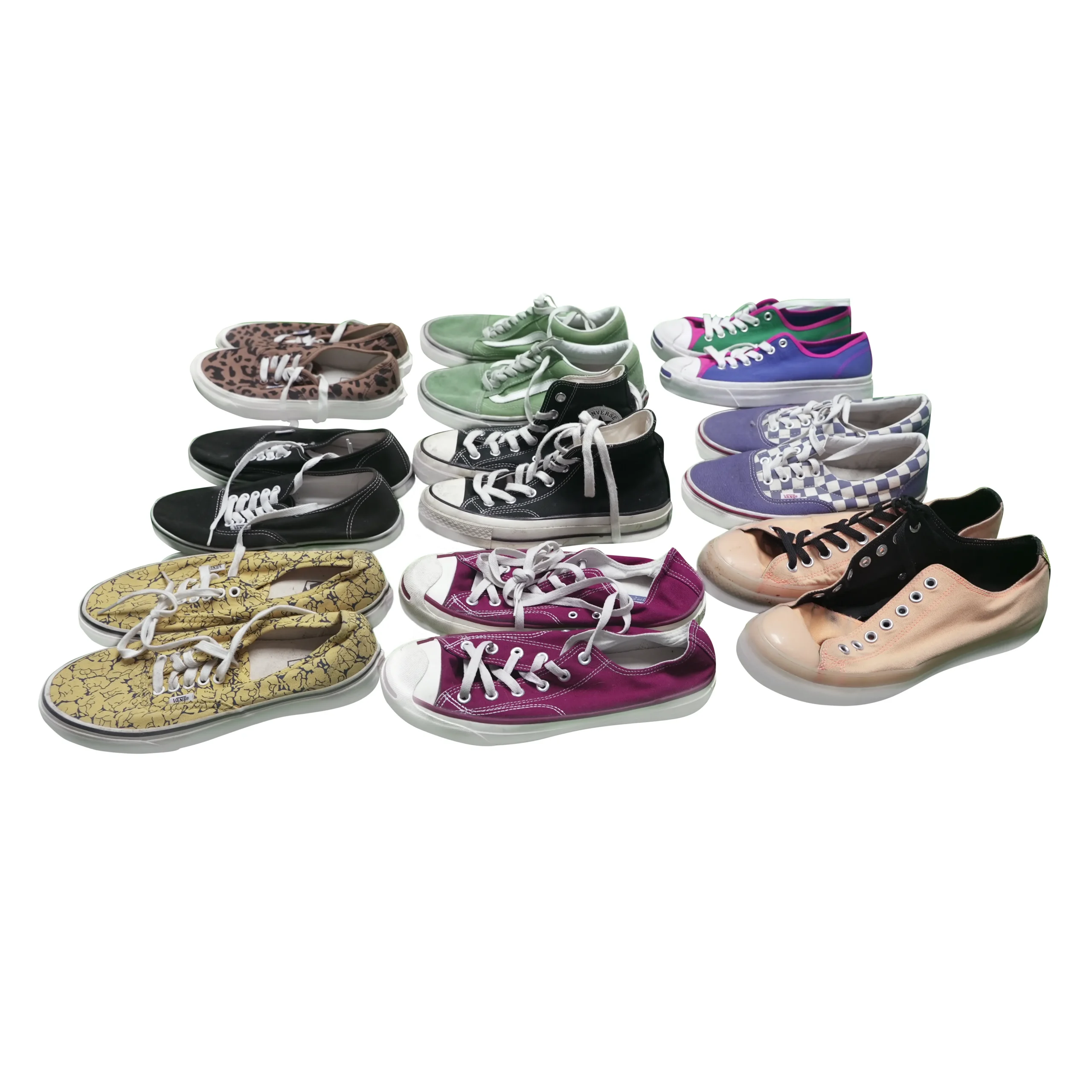
The key insight: premium bales have higher FOB cost but significantly higher sell-through rate and per-pair pricing. Many experienced importers buy both — mitumba bales for volume market channels and premium bales for their boutique buyers.
👉 Not sure which model fits your market? Tell us your target country and we will recommend the right shoe bale type →
How to Evaluate Used Shoes Bales Before Buying
Use this 5-point checklist to evaluate any used shoes bales for sale — whether from China, Europe, or another origin:
- Check the pair-match rate — Are shoes sorted as matched pairs, or is it a “mix-and-match” bale? Matched pairs sell faster and at higher prices. Ask for the pair-match percentage before ordering.
- Check the style mix — What percentage are sneakers vs dress shoes vs sandals vs boots? A mixed bale is fine for general wholesale, but if your market needs sneakers specifically, request a sneaker-focused bale.
- Check the branded percentage — Branded shoes (Nike, Adidas, New Balance, Timberland, Dr. Martens) sell for 3-5x the price of unbranded shoes. Ask for photos with labels visible.
- Check the size range — Does the bale match your market? West Africa prefers larger sizes (US 9-12). East Asia prefers smaller sizes (US 5-8). Confirm the size profile with your supplier.
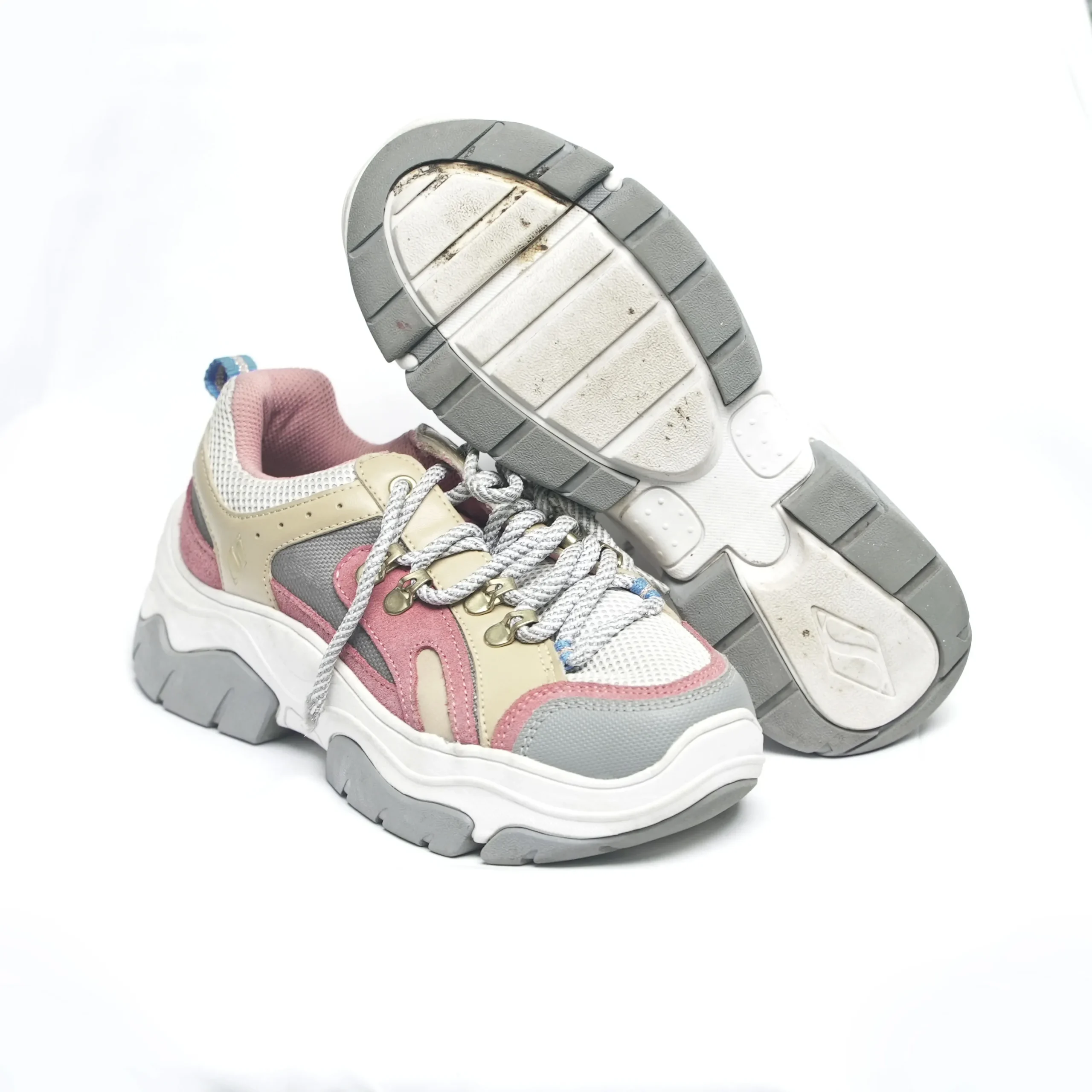
- Check for condition issues — Worn soles, leather cracks, missing laces, mismatched pairs. A Grade shoes should have no structural damage — only normal cosmetic wear.
For a full comparison of different used clothing categories and their profit potential, see our used clothing categories profitability guide.
Frequently Asked Questions
How many pairs of shoes in a bale?
Are used shoes bales profitable?
Where can I buy used shoes bales wholesale?
What is the difference between mitumba shoes bales and premium shoe bales?
What size is a standard used shoes bale?
💡 Key Takeaways
- Used shoes bales offer higher per-item margins than clothing — but require different math
- Always calculate cost per pair, not just cost per kg — shoes are heavier per item
- China offers the best value for mixed shoes bales at competitive A Grade pricing (see our pricing guide for current rates)
- Premium branded sneaker bales (Europe/UK) deliver 3-5x resale pricing
- Check the 5 factors — pair-match rate, style mix, branded %, size range, condition — before every order
👟 Ready to Source Used Shoes Bales?
Hissen Global supplies A Grade used shoes bales from Guangzhou, China — mixed, sneaker-focused, and category-specific. Every order includes:
- Live video verification of your actual bale contents
- Documented pair counts — 48-50 mixed bales, 35 men’s brand, 40 women’s brand, 50 children’s brand per 25 kg
- Competitive FOB pricing (competitive pricing within the A Grade market range for mixed A Grade)
- Complete export documentation — BL, packing list, invoice, fumigation