China’s Two-Wheel Model: New Stock Clearance + Used Shoe Sorting — Why China Leads in Price, Volume & Speed (2026)
⏱ 15 min read · For importers, wholesalers & trade buyers
In this guide you will learn:
- ✅ What the “two-wheel model” is — and why it changes your sourcing strategy
- ✅ Wheel 1: how new stock clearance delivers brand-new shoes below factory price
- ✅ Wheel 2: how sorting turns mixed used shoes into premium branded lots
- ✅ Why China leads on price, volume and speed all at once
- ✅ A step-by-step process to choose the right supplier for your market
1️⃣ The Two-Wheel Model: One Supplier, Two Powerful Engines ⚙️
The smartest importers today buy from suppliers who run two parallel engines: new stock clearance and used shoe sorting. We call this the two-wheel model — and it is one of the clearest explanations of why China has become the world’s dominant source of affordable footwear.
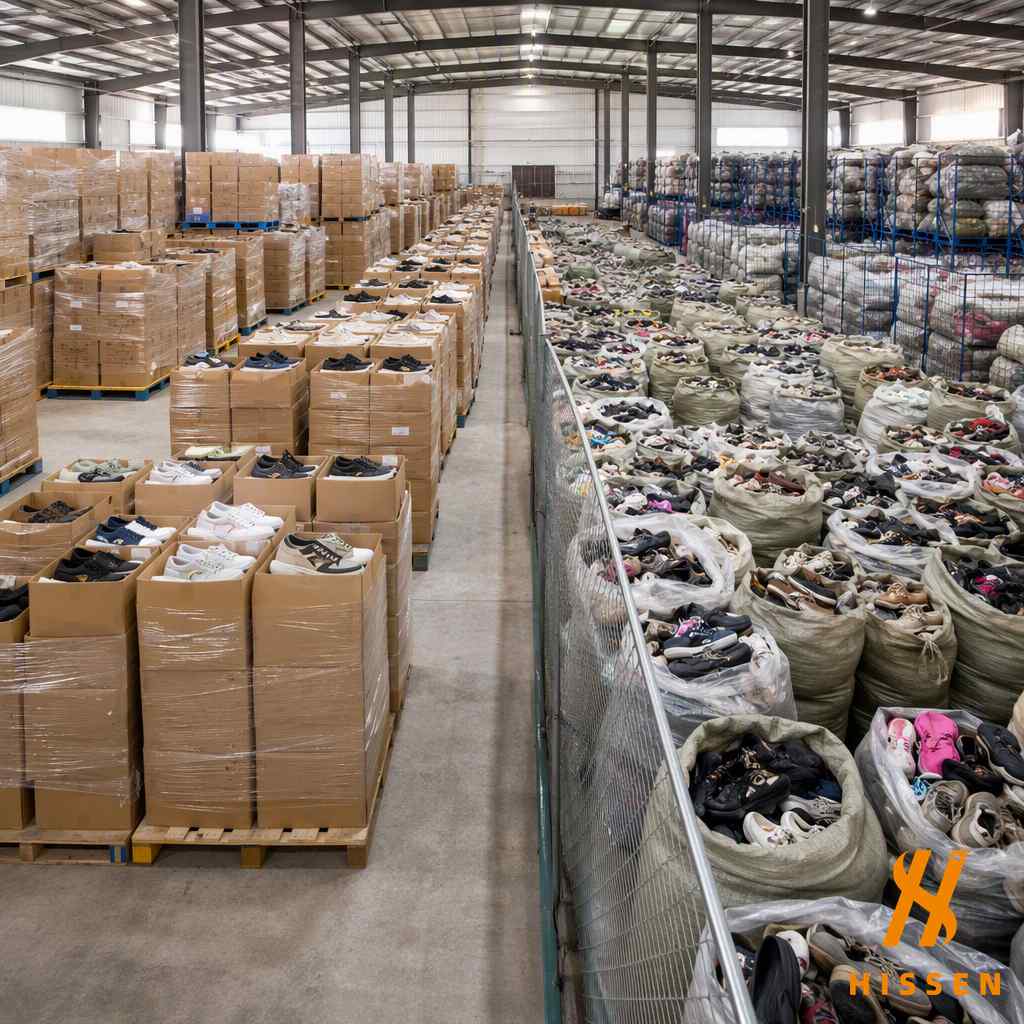
On one side, Chinese factories and brands constantly generate surplus new inventory — unsold production, seasonal overruns and brand clearances — sold below factory price to convert stock into cash. On the other side, the same export ecosystem runs sorting facilities that turn collected used shoes into graded, marketable assortments. One importer can therefore buy brand-new branded shoes and graded used sneakers from the same trusted door, mixing both into one container.
Written from the perspective of a China-based exporter, this guide explains the model in depth and shows you how to evaluate a supplier that runs both wheels. Our own operation demonstrates it today with a 500,000-pair 361° branded shoe clearance alongside our graded used-shoe and clothing supply.
2️⃣ Wheel 1 — New Stock Clearance: Brand-New Shoes Below Factory Price 👟
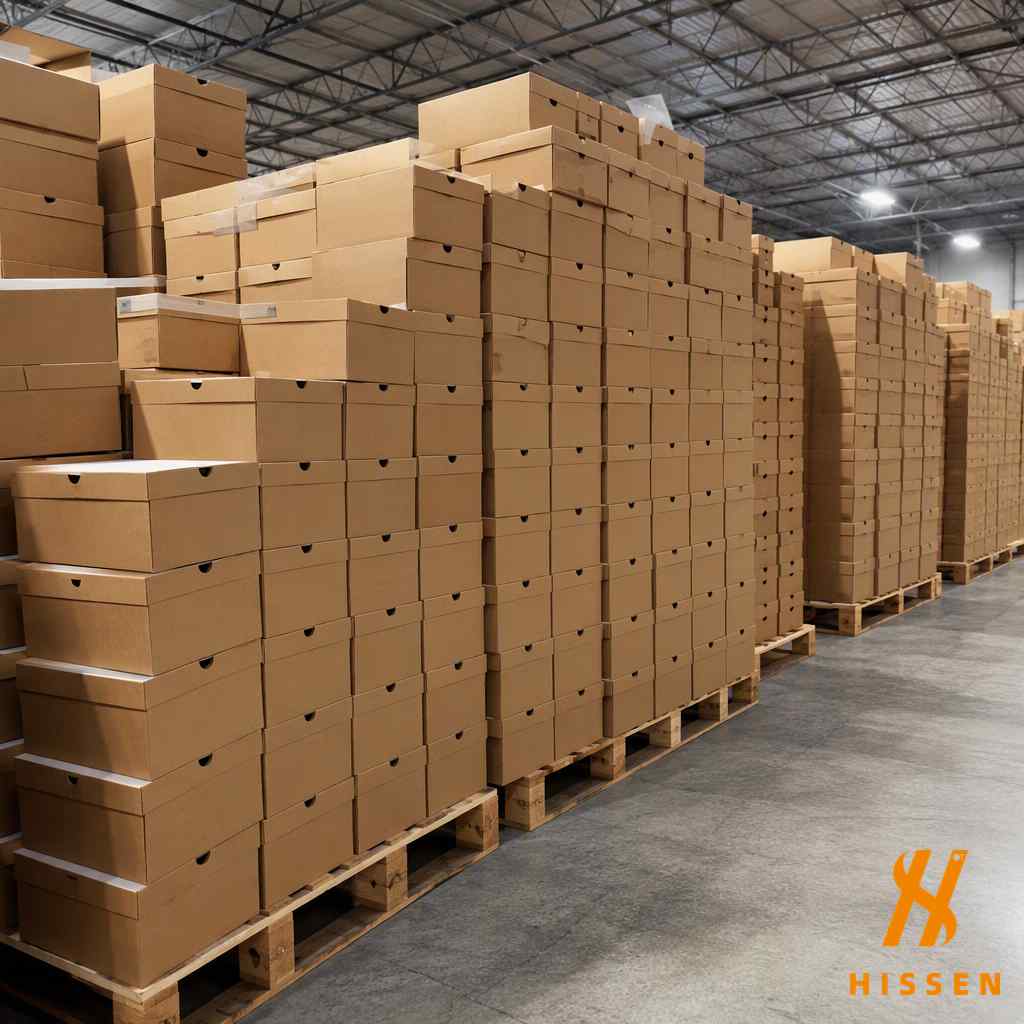
New stock clearance is the wheel that gives importers something used markets cannot: brand-new, boxed shoes at below-factory cost.
Why does below-factory pricing exist?
When a production line closes, a season ends, or a brand reorganizes its channel, surplus inventory must be converted to cash fast. The exporter absorbs the carrying cost; the buyer captures the margin. The result is that the same branded shoe that retails at full price in an official store can be acquired by you at a fraction of that cost.
Real numbers from the 2026 market
Recent clearances illustrate the pattern. Ahead of a major global brand’s direct-to-consumer shift, distributors in China liquidated sneakers at 70–80% below retail, with some iconic models at 80–90% off. This is the same logic behind our 361° allocation: 500,000 pairs of branded sports shoes, below factory price, sold until the lot is gone. New-stock clearances are the fastest legal shortcut to a wide margin — provided grades and documentation are right.
| Buying New Stock Clearance ✅ | What You Get |
|---|---|
| Condition | Brand-new, boxed, unworn pairs |
| Price level | Below factory price |
| Margin at retail | Wide — 30%+ is realistic |
| Best for | Boutiques, urban shops, brand-conscious markets |
3️⃣ Wheel 2 — Used Shoe Sorting: Grading Turns Mixed Stock into Gold 🔄
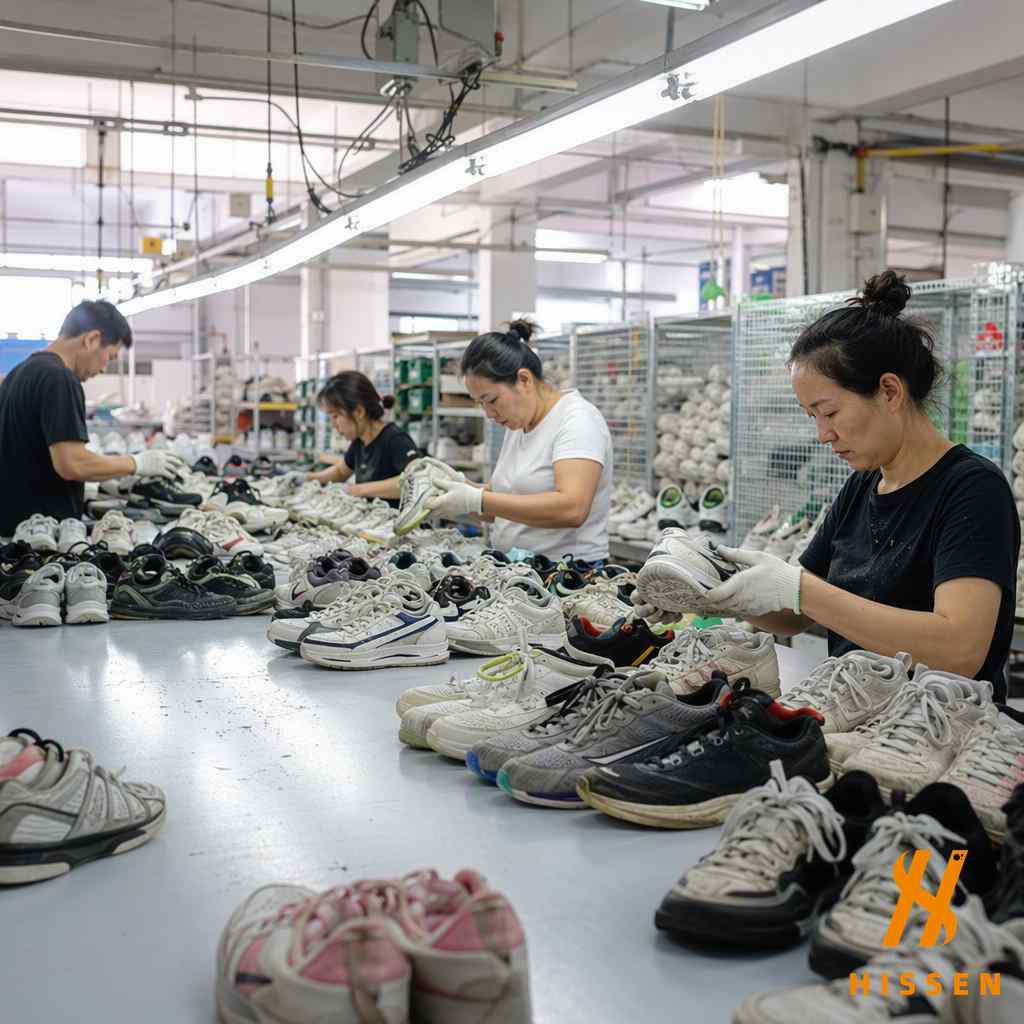
The second wheel is the grading line. Collecting used shoes is the easy part; the profit is made in how they are sorted.
Professional sorting facilities hand-inspect every pair, checking condition, brand, size and wear. The output is a range of defined grades:
- 👟 A-grade / like-new: minimal wear, original soles, often branded — ready for direct retail.
- 👟 B-grade / standard: moderate wear, clean and wearable, sold in volume.
- 👟 C-grade / mixed: varied condition, priced for the price-sensitive tier.
Pair counts are predictable — a standard 45kg sack holds roughly 35–50 pairs depending on type. Sizes are sorted toward market demand: EU 40–46 for African and South American buyers, smaller ranges for Southeast Asia. The difference between an unsorted mixed sack and a well-graded branded sack can be several times in retail value.
4️⃣ Why China Leads on Price, Volume & Speed ⚡
The two-wheel model explains the three advantages that bring importers back to China again and again:
| Advantage | What It Means for You |
|---|---|
| 💰 Price | Surplus sold below factory cost + large-scale sorting keeps per-pair cost among the lowest on earth |
| 📦 Volume | Pools measured in hundreds of thousands of pairs let you configure containers and reorder monthly |
| 🚀 Speed | Warehouse stock + dense shipping = dispatch in days, not the 60–90 day lead of overseas factories |
These three are interlocking. Volume makes low price possible; speed makes volume practical; price keeps demand growing. That is why importers who once split orders across Europe, Korea and China increasingly consolidate on Chinese suppliers — one door, two wheels, three advantages.
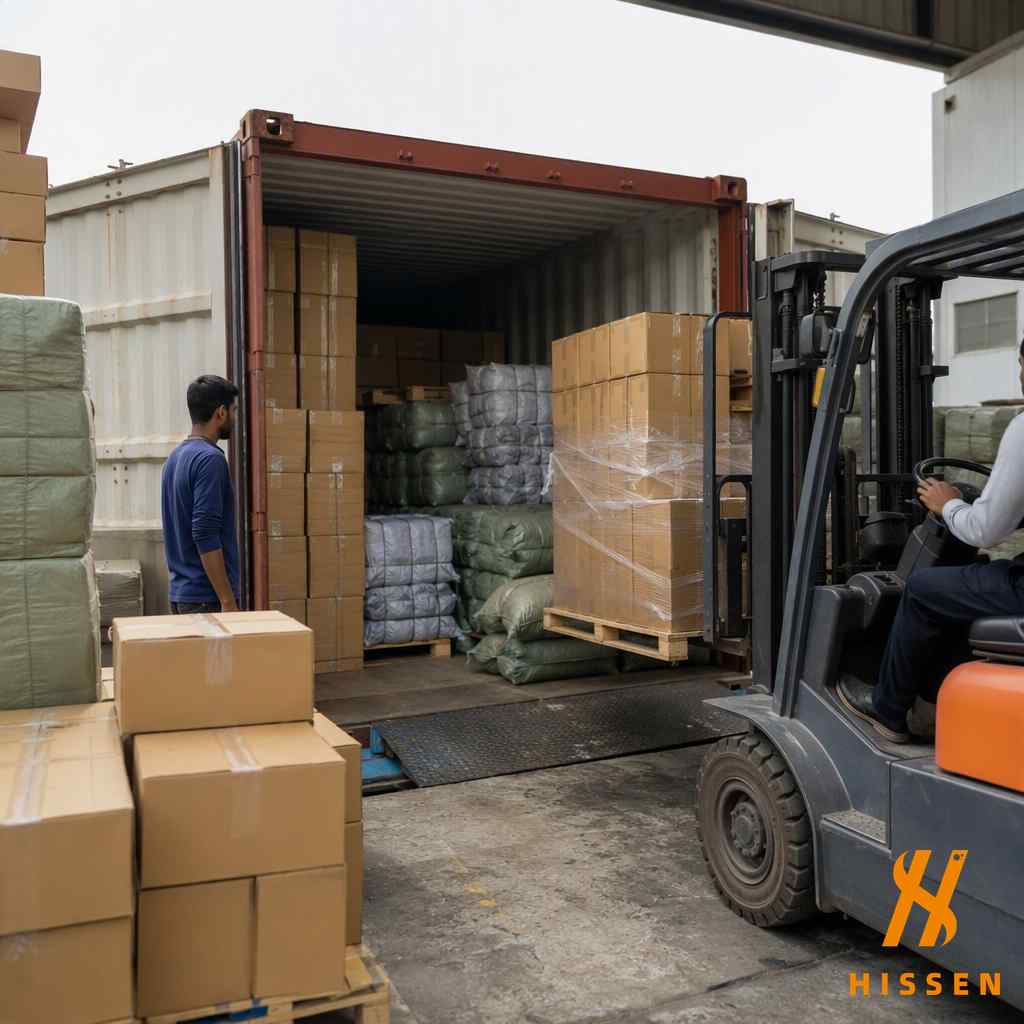
A concrete way to think about the mix is a per-container calculation. Suppose a 40ft container carries 4,000 pairs of new 361° stock at a landed cost of $6 per pair, plus 500 used-shoe sacks at a landed cost of $115 per sack (about 40 resalable pairs each). If the new stock retails at $18 and the used pairs at $5, your gross revenue from the container approaches $190,000 against a total landed investment near $81,000 — a strong blended margin, and one that neither wheel could produce alone. Run this same arithmetic with your own market’s freight and duty, and you will see why importers increasingly refuse to choose between new stock and used shoes.
5️⃣ Step-by-Step: How to Choose a Supplier That Runs Both Wheels 📋
The two-wheel model only pays off when the supplier is reliable on both sides. Here is the 7-step process we recommend — and the same one we invite you to run on Hissen Global:
- 🛡️ Verify each wheel separately. Ask how new stock is acquired (brand clearance documents) and how used shoes are graded (written standard per grade).
- 📸 See both operations live. A real two-wheel supplier shows you the boxed stock and the sorting line on a live video tour.
- 📊 Get the mix in writing. Style mix, size curve, grade percentages and pair counts — written, not verbal.
- 📏 Match sizes to your market. Confirm the size range of both new stock and used lots fits your customers.
- 💵 Calculate landed cost per pair. For both wheels, add freight and duty to find the true cost — not just the FOB price.
- 🔁 Check repeat capacity. Can the supplier reorder monthly? A one-off lot is a deal; a channel is a business.
- 🏆 Ask about market knowledge. Does the supplier tailor mixes for Africa, South America or Southeast Asia? Region-specific sorting is a real skill.
Our guides on used shoe sourcing and importer education cover these checks in more detail.
6️⃣ Real Landing Scenarios Across Your Markets 🌍
Here is how the two-wheel model shows up at three different ports.
Lagos, Nigeria 🇳🇬
A Lagos wholesaler combines a 361° new-stock sub-lot (brand-new pairs for shops) with graded B-grade used sneakers (volume for market stalls) in one 40ft container. The new stock carries the margin; the used lot carries the cash flow. One supplier, one shipment, two profit engines.
Bogotá, Colombia 🇨🇴
South America is the most brand-conscious region. A Bogotá distributor leans on the new-stock wheel — branded, like-new shoes sold to sport shops and boutique resellers — while using A-grade used sneakers to feed price-conscious online channels. Container values in this market run among the region’s highest.
Jakarta, Indonesia 🇮🇩
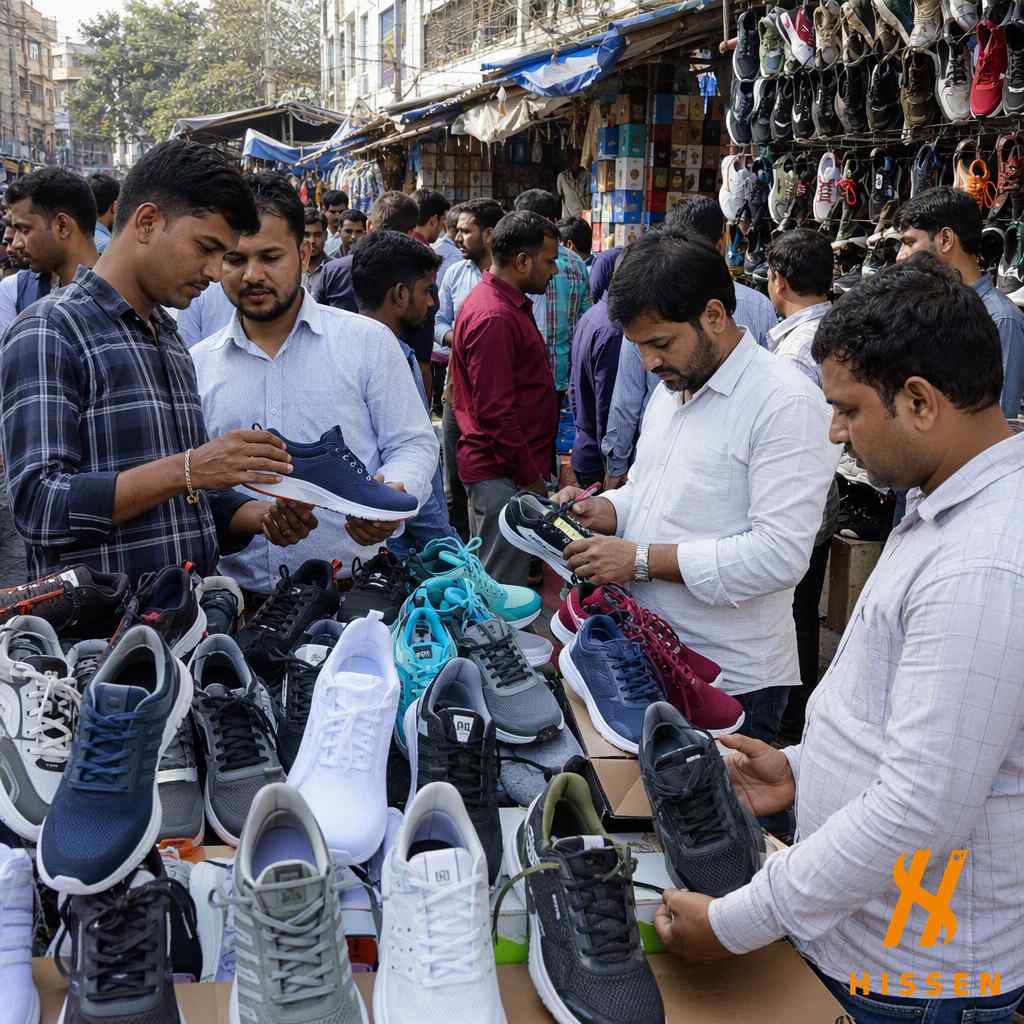
Social-commerce sellers in Jakarta blend new-branded lifestyle shoes and clean used sneakers to serve different buyer segments. The speed advantage matters most here: warehouse dispatch in days keeps listings live and sellers restocked before momentum fades.
7️⃣ Common Mistakes When Buying Across Both Wheels ⚠️
- ❌ Applying used-shoe rules to new stock. New clearance needs brand authorization checks; used lots need grade checks. They are different risk profiles.
- ❌ Ignoring the size curve. Broken sizes destroy recovery on both wheels — a full curve is worth 35–50% recovery; a broken one only 8–18%.
- ❌ Judging the supplier by one wheel. Strong sorting does not guarantee clean new-stock paperwork. Verify both.
- ❌ Forgetting landing cost. Freight and duty add 20–40% to FOB. Compute per-pair cost to the port, not the sticker.
- ❌ Waiting too long. Clearance stock sells out; graded used lots turn over fast. Delays cost you the allocation.
💡 Key Takeaways
- 🔑 China’s two-wheel model — new stock clearance + used shoe sorting — explains its global price, volume and speed leadership.
- 🔑 New stock clearance gives brand-new shoes below factory price; sorting turns used shoes into graded premium lots.
- 🔑 Verify both wheels separately: brand documentation for new stock, written grade standards for used lots.
- 🔑 Combine both wheels in one container — margin from new stock, cash flow from used volume.
- 🔑 Match sizes and mixes to your market, calculate landed cost per pair, and choose a supplier with repeat capacity.
8️⃣ Frequently Asked Questions
Q1. What is the two-wheel model in footwear export?
It is a supplier running two parallel engines: new stock clearance (brand-new shoes sold below factory price) and used shoe sorting (graded pre-owned sneakers). Importers can buy both from one door and mix them in a single container.
Q2. How can shoes be sold below factory price?
Surplus and clearance stock is priced to convert idle inventory into cash quickly, so it sells below production cost. Buyers capture that gap as margin. Our 500,000-pair 361° allocation is priced exactly this way.
Q3. Which is better for my market — new stock or used shoes?
They serve different tiers. New stock carries wide margins and suits brand-conscious markets like South America; graded used shoes deliver fast turnover and suit price-sensitive markets like much of Africa. Most importers mix both.
Q4. How many pairs fit in a container?
Roughly 9,000–12,000 boxed brand-new pairs, or around 1,000 used-shoe sacks (about 35–50 pairs each), depending on packing. Your supplier can plan the exact loading for your mix.
Q5. How do I verify quality on both wheels?
Ask for brand clearance documents on new stock, a written grade standard on used shoes, and a live video tour of both the stock and the sorting line. Transparent suppliers show everything.
Q6. Do you ship to Africa, South America and Southeast Asia?
Yes. We ship regularly to all three regions, with container planning, documentation and port guidance handled by our logistics team.
Ready to run both wheels for your market? Our 500,000-pair 361° new-stock clearance and our graded used-shoe supply are both open now.
Hissen Global is a China-based exporter serving used-clothing, used-shoe and branded-stock importers across Africa, South America and Southeast Asia. Tell us your market and container size — we will show you live stock, written grades and a landed-cost plan for both wheels.