Published September 16, 2026 · South America import guide for kitchenware buyers
Chile and Colombia are neighbours on the same continent, both import Chinese kitchenware at scale, and both are open to the category. Yet the same 20-foot container of the same goods can land in Santiago profitably and land in Bogotá at a loss. The reason is not freight and not demand. It is a single structural difference: Chile has a free trade agreement with China and Colombia does not — and Colombia applies an anti-dumping floor price to ceramic tableware that Chile does not.
We are a China-based exporter of stock kitchenware sold by the kilogram, and we have watched importers lose money on this exact difference. This guide walks through importing kitchenware from China to Chile and Colombia in 2026: the zero-duty certificate that most importers under-use, the anti-dumping mechanism that punishes clearance-priced ceramic, the new 2026 tariff decrees that are already being misreported, and the compliance route each country actually enforces.
⏱ 13 min read · For importers & wholesalers shipping kitchenware to Chile or Colombia
In this guide you will learn:
- Why the same container gets two different verdicts in two neighbouring countries
- The China–Chile FTA: how much the origin certificate is actually worth per container
- Colombia’s anti-dumping floor price on ceramic tableware — and why clearance stock is structurally exposed
- The 2026 Colombian tariff decrees, and the “17 subpartidas” figure that keeps being misreported
- Food-contact compliance: one test report, two very different regulators
- Duties and taxes compared, with worked numbers for both countries
- Ports, transit times and the free-zone re-export play
- A 9-step process for your first South American container
🎯 The One-Sentence Answer: Chile Is Open, Colombia Is Conditional
Neither country prohibits kitchenware. Neither requires an import licence for it. Both are normal, importable markets where Chinese cookware already dominates the shelves. The difference is in what happens at the border.
Chile is the easier market by a wide margin. Chinese kitchenware enters at a preferential 0% duty under the China–Chile free trade agreement when a valid origin certificate accompanies the shipment. There is no pre-shipment conformity body standing between you and the container, and we found no anti-dumping measure against Chinese kitchenware or ceramic tableware.
Colombia is importable but conditional. There is no FTA, so duty applies at normal rates. More importantly, Colombia maintains a long-running anti-dumping measure on Chinese ceramic tableware, expressed as a minimum FOB price per kilogram — renewed for a further five years at the end of 2025. For metal cookware this is a non-issue. For ceramic dinnerware bought as clearance stock, it can be decisive.
| 🇨🇱 Chile | 🇨🇴 Colombia | |
|---|---|---|
| Import permitted? | ✅ Yes, no licence | ✅ Yes, no licence |
| FTA with China? | ✅ Yes — in force since 2006 | ❌ No |
| Duty on steel kitchenware (7323) | 0% with origin certificate (6% without) | Typically 15% — confirm the 10-digit subpartida |
| Anti-dumping on ceramic tableware | ✅ None identified | ⚠️ Confirmed — minimum FOB price per kg, renewed 5 years |
| Pre-shipment conformity body | None — declaration & lab reports | None — but importer-side INVIMA registration |
| Food-contact regulator | MINSAL — food sanitation regulations | INVIMA — food contact material resolutions |
| Customs broker | Mandatory above US$1,000 CIF | Mandatory above US$1,000 FOB |
| Approx. landed tax uplift | ~19% of CIF (mostly recoverable) | ~37% of CIF |
| Ceramic dinnerware verdict | ✅ Workable | ⚠️ Hostile to low-declared-value stock |
| Metal cookware verdict | ✅ Excellent | ✅ Good — mind one specific subpartida |
🇨🇱 Chile: The Zero-Duty Door Into South America
Chile was the first Latin American country to sign a free trade agreement with China, back in 2006. The agreement was upgraded by a protocol signed in 2017. Across the two instruments, roughly 97% of products now enter at zero tariff, rising to about 98% after the upgrade. Chile’s general ad valorem rate is 6% — that is what an importer pays if they cannot claim the preference.
Kitchenware is a normal manufactured consumer good and sits inside the liberalised majority. As with any FTA, though, the tariff outcome is decided at the subpartida level, not by category. A handful of sensitive products are excluded or carry longer staging. So the first practical step for Chile is not commercial, it is technical: confirm the exact eight-digit Chilean subpartida for your product against Chile’s tariff concession schedule before you quote a landed price.
📄 The certificate most importers under-use
The China–Chile preference is claimed with a Certificate of Origin, Form F — the specific form issued for this agreement. Be careful here, because the naming trips people up: Form E serves the China–ASEAN route, not Chile. We have seen suppliers send the wrong form and the importer pay 6% for no reason.
Three practical rules on the Form F:
- 🔴 Without a valid Form F, the importer pays the full 6%. The preference is not automatic — it is claimed with a document.
- 🧾 Every field must match. HS code, description, quantity and consignee on the certificate must agree exactly with the commercial invoice, the bill of lading and the customs declaration. Mismatches are the most common reason a preference is denied.
- ↩️ There is a recovery route. If the certificate was not presented at the time of import but the goods genuinely meet the origin rules, the importer can claim a refund within one year of importation. Worth knowing if a document arrives late — but it costs time and cash flow, so issue it before shipment.
- 🏭 The goods must actually qualify. Preferential treatment depends on the origin rules in the agreement — wholly obtained, or substantially transformed through a change in tariff classification or regional value content — plus a direct-consignment rule.
💰 What you actually pay in Chile
Chile is refreshingly simple. Duty either applies or it does not, and then VAT (IVA) of 19% applies on top of CIF plus any duty — regardless of whether the preference was claimed. There is no separate levy stack.
Here is an illustrative 20-foot container, FOB US$12,000 with freight and insurance of US$1,800, so CIF of US$13,800:
| Scenario | Duty | IVA (19%) | Total tax | % of CIF |
|---|---|---|---|---|
| ✅ With Form F | 0 | 13,800 × 19% = 2,622 | 2,622 | 19.0% |
| ❌ Without Form F | 13,800 × 6% = 828 | 14,628 × 19% = 2,779 | 3,607 | 26.1% |
| Cost of a missing document | US$985 per container | |||
📊 The number that matters is not the headline tax rate — it is the US$985. That is what a properly issued Form F is worth on a single modest container. Across a year of monthly shipments it is a five-figure sum that no negotiation over the price per kilogram will recover.
💡 And the IVA is largely recoverable. If your Chilean buyer is VAT-registered, import IVA is claimed back as an input tax credit. For a compliant importer the real, unrecoverable cost of importing Chinese kitchenware into Chile is close to zero in duty terms — the IVA is a cash-flow timing issue, not a cost. Say this explicitly when you quote. Many buyers assume all tax is dead money, and showing them otherwise makes your price look far better than it first appears.
⚖️ The one thing to monitor in Chile
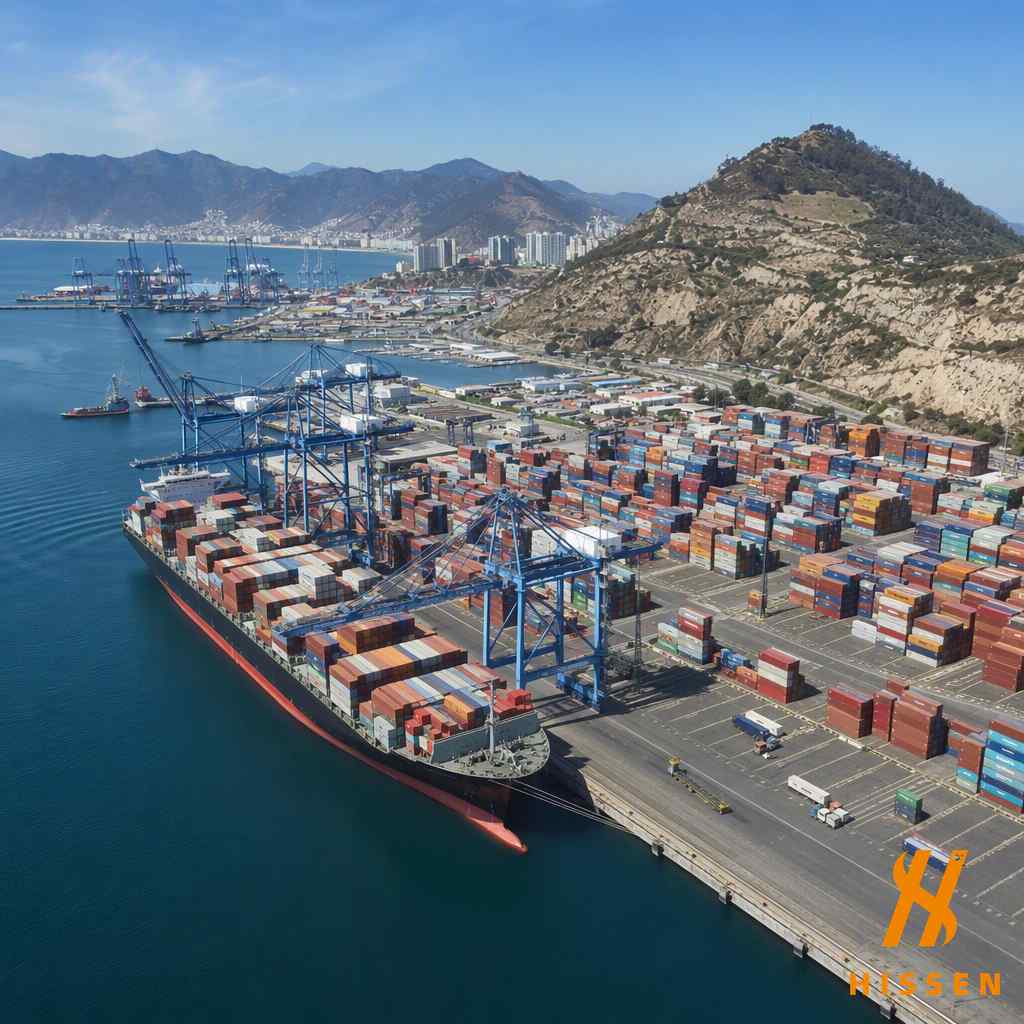
Chile has no anti-dumping measure on Chinese kitchenware that we could identify. But you should know that Chile’s trade-remedy machinery is active and politically charged. Chile’s Anti-Distortion Commission has imposed provisional anti-dumping duties on Chinese steel bars (around 24.9%) and Chinese grinding balls for mineral milling (around 33.5%), in a case tied to the country’s domestic steel producer.
Those measures cover steel mill products — bars, rod and media balls — not household kitchenware. The same commission has also rejected a request for measures on steel balls in an earlier proceeding, which shows the process is case-by-case rather than blanket. The practical takeaway: kitchenware is clear today, but Chile’s steel sector is vocal, so verify the current position for your specific subpartida before each major programme rather than relying on a single check.
🇨🇴 Colombia: Importable, But Three Gates to Clear
Colombia is a genuinely good kitchenware market — large population, strong informal retail sector, high demand for affordable cookware, and China as the dominant supplier. Nothing prohibits kitchenware, and no import licence is required for it. What Colombia has instead is three specific gates that determine whether your container makes money.
Gate 1 — The ceramic anti-dumping floor price
This is the single most important fact for anyone selling stock kitchenware into Colombia. Colombia has maintained anti-dumping measures on ceramic tableware from China for two decades, and the measure was renewed again in the fifth sunset review.
Resolución 363 of 30 December 2025, published in the Diario Oficial on 31 December 2025, adopted an affirmative final determination in the fifth expiry review, maintaining the measures unchanged from the 2022 resolution. The applicant was Colombia’s domestic tableware producer. The mechanism is not a percentage — it is a minimum FOB price per kilogram:
| Product | Subpartida | Minimum FOB price |
|---|---|---|
| Earthenware tableware (loza) and loose pieces | 69.12.00.00.00 | US$1.71 / kg |
| Porcelain tableware (porcelana) and loose pieces | 69.11.10.00.00 | US$2.88 / kg |
The duty is assessed as the difference between your declared FOB value and that floor. Declare at or above the floor and no anti-dumping duty applies at all. Declare below it and you pay the shortfall.
🔴 Why this is structurally hostile to clearance stock. The mechanism inverts the usual logic of buying cheap. Clearance and surplus ceramic dinnerware is priced low by nature — that is the entire reason it is attractive. But under a floor-price mechanism, the cheaper you declare, the more anti-dumping duty you pay. Your cost advantage is not merely reduced; it is collected back at the border.
Here is what it looks like on a container:
| Scenario — 20FT carrying 22,000 kg | Declared FOB | Floor | Shortfall | Anti-dumping duty |
|---|---|---|---|---|
| Earthenware (loza) clearance stock | US$1.20/kg | US$1.71/kg | US$0.51/kg | US$11,220 |
| Porcelain (porcelana) clearance stock | US$1.90/kg | US$2.88/kg | US$0.98/kg | US$21,560 |
| Porcelain priced above the floor | US$3.10/kg | US$2.88/kg | — | US$0 |
⚠️ This is the calculation to run before you quote ceramic into Colombia — not after. Convert your offer to a per-kilogram FOB figure and compare it against US$1.71 or US$2.88. If you are below the line, the buyer’s landed cost carries an extra charge that has nothing to do with your price, and your competitor who quoted metal will look cheaper than you even at a higher unit price.
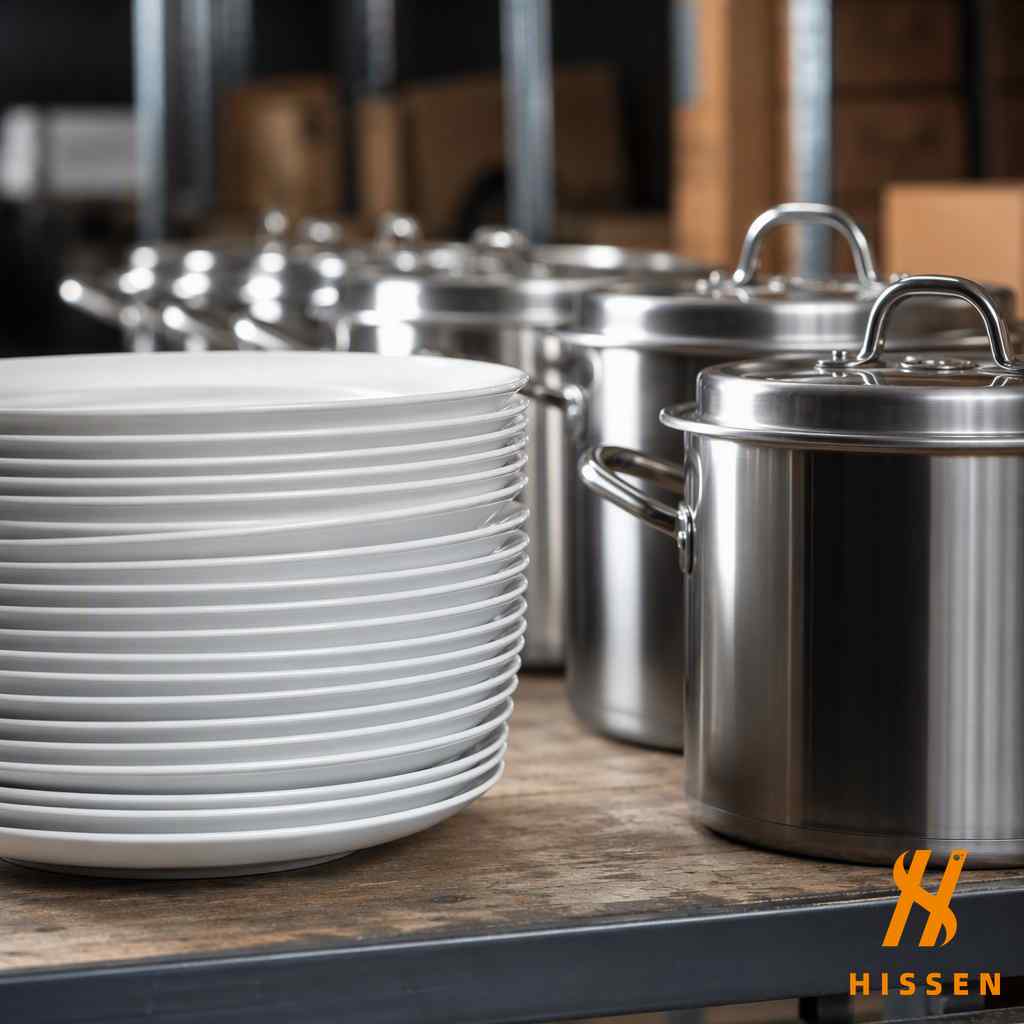
✅ The clean way out: build the load around stainless steel (7323) and aluminium (7615) cookware, with cutlery under 8215 and glassware under 7013. None of these fall under the tableware measure. This is exactly the same conclusion we reached for other markets — the ceramic-versus-metal split is the single highest-value decision in this trade, and you can read the market-by-market comparison in our guides to importing kitchenware into Nigeria and into Kenya.
Gate 2 — The 2026 steel decrees, and one subpartida that matters
In March 2026 Colombia raised tariffs on steel and metalworking products from countries without a trade agreement — which includes China. Two decrees were issued on the same day, and they are routinely conflated:
- 📌 Decreto 0264 of 16 March 2026 — a 35% tariff on 14 steel and metalworking subpartidas from countries without an FTA (principally China, Russia, Turkey and India). It took effect fifteen days after publication and runs for one year, after which the tariff committee reviews its impact. The covered goods are construction and industrial steel: corrugated bars, wire rod, cold-finished bars, angles and profiles, steel wire, barbed wire, welded tubes, nails and staples, aluminium bolts and screws, and office articles.
- 📌 Decreto 0265 of the same date — a 25% tariff on ceramic tiles, subpartidas 6907.21, 6907.22 and 6907.23.
🔍 Kitchenware is not on either list. Household articles of iron or steel (7323) and of aluminium (7615) are not among the fourteen steel subpartidas, and ceramic tableware (6911/6912) is not part of the tile measure. But there is one adjacent code worth checking: the steel list includes 7326.20 — other articles of iron or steel wire. Wire-based kitchen accessories — baskets, racks, strainers, tongs, whisks — are the borderline category where a broker’s classification choice can move the duty from the normal household-article rate up to 35%. It is a classification risk rather than a certainty, and it is entirely preventable.
💡 What to do: for any wire-based kitchen item in a Colombian load, obtain a binding tariff classification from DIAN before you commit to prices. It costs a little time and removes a 20-percentage-point swing from your costing. This is the same discipline we recommend everywhere in this trade: the HS code is a commercial decision, not an administrative afterthought.
Gate 3 — INVIMA food-contact registration
Kitchenware touches food, so Colombia regulates it as a food contact material. Two resolutions form the framework: the general rules for food contact materials and articles, and a later resolution covering glass, ceramic and glass-ceramic articles.
The heavy metals that matter are lead (Pb) and cadmium (Cd), assessed for migration. The relevant Colombian technical standards are the NTC series for ceramic and glassware in contact with food, with testing carried out according to the corresponding NTC test method. Labelling must be in Spanish, and must identify the country of origin and the manufacturer or importer.
⚠️ One important structural point: this registration is submitted by the Colombian importer, not by us as the exporter. That means two things. First, your buyer must be a properly constituted company with the right RUT and DIAN registration — a trader working informally cannot complete it. Second, we owe them the inputs: material composition declarations and heavy-metal migration test reports from an accredited laboratory. If you are comparing suppliers and one of them cannot produce migration reports on request, that supplier will stall your Colombian registration. Penalties for non-compliance run up to 10,000 SMMLV, plus seizure of goods and possible suspension.
🚫 The “17 Subpartidas” Myth — And Why It Keeps Fooling Importers
Here is something we want to flag directly, because it is already circulating and it will cost somebody money.
When the two March 2026 decrees were reported, some outlets described them together as a single measure covering “17 subpartidas” affecting steel and ceramics — fourteen steel lines plus three ceramic lines. Headlines along the lines of “Colombia raises tariffs on steel and ceramic imports” followed.
Read in a hurry, that reads like Colombia has raised tariffs on ceramics, including tableware. It has not. Decreto 0265 covers ceramic tiles under HS 6907.21, 6907.22 and 6907.23 — flooring and wall tile. Ceramic plates, bowls and cups sit under 6911 (porcelain) and 6912 (other ceramic), and they are not in that measure. The ceramic anti-dumping floor price described above is a separate, pre-existing, product-specific measure — not part of the 2026 steel package.
⚠️ A rule worth memorising: 6907 is not 6911 or 6912
When you see a headline about tariffs or anti-dumping on “ceramics”, check the HS code before you draw any conclusion. 6907 is ceramic tiles. 6911 and 6912 are tableware. We have now seen this exact confusion appear in five different markets — Colombia, Kenya, Algeria, the GCC and now the 2026 Colombian steel package. It is the single most repeated error in kitchenware trade reporting, and it cuts both ways: it makes some importers refuse a market that is actually open, and makes others walk into a real measure they never checked.
💰 Duties and Taxes Compared: The Same Container, Two Answers
Let us put both countries side by side on identical terms — the same US$13,800 CIF 20-foot container of stainless steel cookware (HS 7323):
| Item | 🇨🇱 Chile (with Form F) | 🇨🇴 Colombia |
|---|---|---|
| CIF value | 13,800 | 13,800 |
| Import duty | 0% → 0 | 15% → 2,070 |
| Dutiable base for VAT | 13,800 | 15,870 |
| VAT / IVA | 19% → 2,622 | 19% → 3,015 |
| Total tax at the border | 2,622 | 5,085 |
| As % of CIF | 19.0% | 36.9% |
| Recoverable by a registered importer | IVA — fully, as input credit | IVA only — the 15% duty is a real cost |
| True unrecoverable tax cost | ≈ 0 | ≈ 2,070 (15%) |
📊 Read the last two rows carefully, because they are where the real comparison lives. Chile’s 19% looks like a tax but functions as working capital for a VAT-registered buyer. Colombia’s 15% duty is gone permanently. On identical goods, the Colombian importer carries roughly US$2,000 more in irrecoverable cost per container than the Chilean importer — before any anti-dumping question arises.
Beyond duty and IVA, both countries add customs service and formalities charges, port handling, storage, inland transport and broker fees. Budget a further 1–3% of CIF for these in either market; they are routine rather than exceptional, but they are frequently left out of a first costing.
🔄 Now the awkward part. Colombia has a free trade agreement with Chile — trade between the two is duty-free. Chilean importers can source Chinese kitchenware at zero duty; Colombian importers cannot. Colombian buyers know this, and sooner or later one will ask why your price does not reflect a “Chilean” advantage. The honest answer, and one worth giving early: the duty difference is a function of the importing country’s trade agreements, not of the supplier’s price. No Chinese exporter can make Colombian duty disappear. What a good exporter can do is choose the sub-category that avoids Colombia’s anti-dumping exposure and quote a per-kilogram price that survives the landed-cost math. Raise this before the buyer does — it establishes that you understand their market better than the competitor who stays quiet.
🧪 Food-Contact Compliance: One Test Report, Two Regulators
Both countries regulate kitchenware as food contact material, but the mechanism differs enough that the same test report does different work in each.
| 🇨🇱 Chile | 🇨🇴 Colombia | |
|---|---|---|
| Legal basis | Food Sanitation Regulations (DS 977/96), with a major revision of food contact material rules notified to the WTO in 2025 | General food contact material resolution plus a resolution specific to glass, ceramic and glass-ceramic articles |
| Authority | MINSAL and the regional health authorities | INVIMA |
| Metals of concern | Lead, cadmium and other migrating substances; the revised rules also cap combined metal impurities and set a limit for arsenic | Lead and cadmium migration |
| Testing basis | Migration limits — overall migration plus specific migration for substances not on the positive list | Colombian NTC technical standards for ceramic and glassware, tested per the corresponding NTC method |
| Who files | Held in the supply chain via a Declaration of Conformity | The Colombian importer registers the product |
| Evidence accepted | Reports from accredited foreign laboratories, certification by accredited bodies, or a written declaration from the manufacturer or importer | Heavy-metal migration test reports and composition declarations from the exporter |
| Labelling | Spanish; “for food contact” indication or the fork-and-glass symbol — with exemptions for table utensils and items designed specifically for food contact | Spanish, with country of origin and manufacturer or importer identified |
| Partial exemptions | Utensils, salt shakers and articles designed for food contact are exempt from the contact-labelling requirement | — |
💡 The practical insight for importers is in the “evidence” row. Chile explicitly accepts conformity evidence from accredited foreign laboratories and written manufacturer declarations. That means a well-prepared Chinese supplier’s existing test documentation can be the basis of Chilean compliance without a pre-shipment inspection regime. Colombia’s route is heavier, but note that the ceramic measure in Colombia applies to food contact ceramic — so a supplier who can supply current lead and cadmium migration reports from an ISO/IEC 17025-accredited laboratory clears Gate 3 for you in one document.
⚡ One timing note for Chile: the revised food contact material regulation was notified to the WTO in August 2025 following a public consultation, and is modelled on EU and Mercosur practice. Its migration requirements phase in progressively after publication — overall migration first, then specific migration. Products may comply early. If you are planning ceramic or plastic-contact goods for Chile in 2026–2027, ask your supplier to test against the incoming framework rather than only the outgoing one; it avoids re-testing a season later.

🚢 Ports, Transit Times and the Free-Zone Play
Geography shapes the two markets differently, and it affects your delivery promises and your buyer’s cash cycle.
- 🇨🇱 Chile — San Antonio and Valparaíso. These are the main Pacific gateways serving Santiago and the central valley. Iquique, in the far north, hosts a major free zone and is the natural entry point for goods moving onward to Bolivia, southern Peru and Paraguay.
- 🇨🇴 Colombia — Cartagena, Buenaventura, Barranquilla and Santa Marta. Cartagena on the Caribbean coast is the principal container port; Buenaventura on the Pacific serves the interior and the south. Bogotá-bound cargo moves inland from either coast, so confirm which port your buyer nominates — it changes inland trucking cost and clearance timing substantially.
- ⏱️ Transit from China. Routings to Chile and Colombia commonly run 45 to 75 days door-to-gate depending on origin port, routing and transhipment. Chile’s Pacific route is generally more direct; Colombia often involves a transhipment or a longer routing via the Panama area. Build this into your promise — a buyer who expects six weeks and gets ten is a buyer who starts comparing other suppliers.
🏭 The free-zone opportunity worth raising with South American buyers. Chile’s northern free zone at Iquique functions as a regional distribution and re-export hub: goods enter, are stored, repacked and re-exported into neighbouring markets with the customs treatment of a free zone rather than a domestic import. For a trader whose business is moving volume into several Andean markets rather than only selling in Chile, this can change the economics materially. If your prospective buyer mentions Bolivia, Peru or Paraguay as well as Chile, ask whether they operate through Iquique — it is a strong signal that they are a serious regional distributor, not a single-shop importer.
🗺️ Your First South American Container: 9 Steps
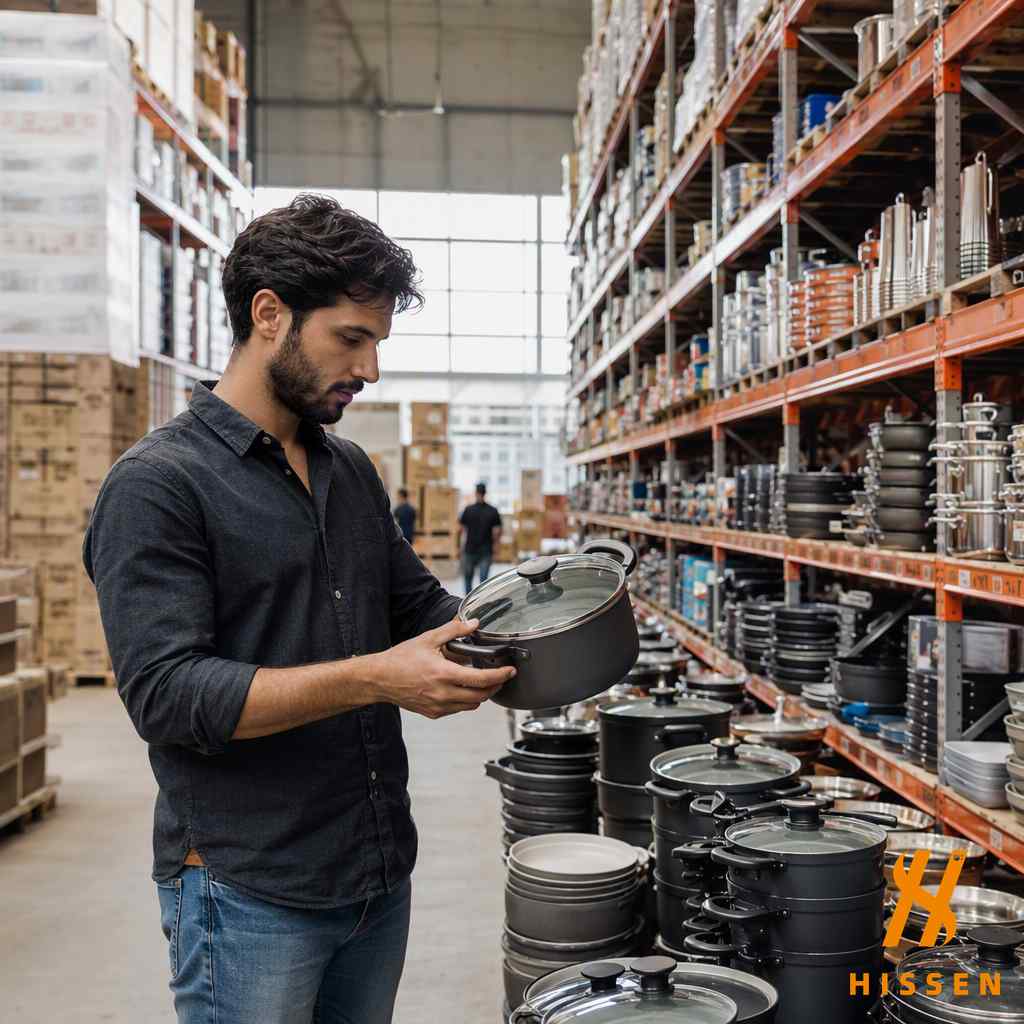
- 🔍 Fix the destination first. Chile and Colombia have opposite answers for ceramic tableware. Decide the market before you decide the mix — not the other way round.
- 🧾 Confirm the exact subpartida. Check the eight-digit Chilean code and the ten-digit Colombian code for every category in your offer: 7323 steel, 7615 aluminium, 8215 cutlery, 7013 glassware, 6911/6912 ceramics.
- ⚖️ Run the Colombian floor-price test on any ceramic. Convert your offer to a per-kilogram FOB figure and compare it against US$1.71 (earthenware) or US$2.88 (porcelain). Do this before quoting, not after.
- 📄 For Chile, prepare the Form F. Issue the China–Chile certificate of origin, and check every field against the invoice, packing list and bill of lading for exact agreement.
- 🧪 Assemble food contact documentation. Lead and cadmium migration reports plus composition declarations, from an ISO/IEC 17025-accredited laboratory, current and matching the goods exactly.
- 🏢 Verify the buyer’s standing. Chile: a VAT-registered importer who can recover the IVA. Colombia: a formally constituted company with the correct RUT and DIAN registration, able to file the INVIMA registration.
- 🧑💼 Confirm the customs broker. Both countries require a licensed broker above the US$1,000 threshold — Chile measured on CIF, Colombia on FOB. In Colombia, brief the broker on the 7326.20 wire-article question if your load contains wire kitchen accessories.
- 🚢 Agree the port and the inland leg. San Antonio or Valparaíso for Chile; Cartagena or Buenaventura for Colombia, depending on where your buyer actually receives the goods.
- 📈 Start with one 20-foot container. Measure sell-through by category, then scale to 40-foot loads where the price per kilogram improves — the same discipline we describe in our guide to buying wholesale kitchenware by the kilogram.
🚩 Red Flags When Comparing South American Quotes
Most of the money lost in this trade is lost in the comparison stage, before anything ships. Five things to check in any offer you receive:
| Red flag | What it usually means |
|---|---|
| A price quoted per piece only, with no per-kilogram figure | Weight is the honest common denominator. Without it you cannot compare two suppliers, and you cannot run the Colombian floor-price test |
| Ceramic quoted into Colombia with no mention of the minimum FOB price | Either the supplier does not know the measure, or they expect you to discover it at the border |
| No lead and cadmium migration reports, or reports without an accreditation mark | Colombian INVIMA registration will stall, and Chilean conformity evidence will be weak |
| A “Form E” offered for a Chilean shipment | Wrong form. Form E serves the China–ASEAN route; Chile requires Form F |
| A duty estimate that is a single blended percentage with no subpartida basis | Duty depends on classification. A blended number hides the classification risk instead of resolving it |
🇨🇳 Building a South America Load With Hissen Global
We would rather be compared than trusted. Hissen Global is a China-based exporter selling wholesale kitchenware by the kilogram from a 20,000 m² warehouse, with a minimum order of one 20-foot container. Our range covers five categories — cookware, mixed kitchenware, kitchen knives, knives & forks, and kitchen utensils — which means we can build a Chile or Colombia load weighted the way your market needs rather than pushing a fixed assortment.
Three things matter most for South America, and we focus on all three. Sub-category fit: for Colombia we steer loads toward stainless steel and aluminium cookware that avoid the ceramic measure entirely, and for Chile we build around the categories where the zero-duty preference is cleanest. Weight accuracy: every carton is weighed, because your duty base, your VAT base and our invoice all rest on the same number — and a packing list that does not match the physical goods is the fastest way to a customs dispute. Documentation readiness: we supply composition declarations and heavy-metal migration reports from accredited laboratories, so your Chilean conformity file and your Colombian INVIMA registration both have what they need. Browse our full product range or learn more about our company.
For the cost side of the equation, see our kitchenware price per kilogram breakdown, and for how these layers apply to container imports generally, our guide to shipping stock goods from China.
❓ Frequently Asked Questions
Can I import kitchenware from China to Chile duty-free in 2026?
Does Colombia charge anti-dumping duty on Chinese ceramic tableware?
Why is Colombia’s anti-dumping rule a problem for clearance stock?
Did Colombia raise tariffs on ceramics in 2026?
What is the total tax on kitchenware imported into Chile versus Colombia?
Do I need test reports to import kitchenware into Chile or Colombia?
Which is the easier market for a first South American container, Chile or Colombia?
💡 Key Takeaways
- Both markets are open to kitchenware — the difference is duty and anti-dumping, not permission.
- Chile’s China FTA gives zero duty with a correctly issued Form F certificate. Without it the importer pays 6%: on our illustrative container that single document is worth US$985.
- Colombia has no FTA with China, so duty applies — typically around 15% for steel kitchenware under 7323. Confirm the ten-digit subpartida.
- Colombia’s ceramic anti-dumping measure is a minimum FOB price: US$1.71/kg for earthenware and US$2.88/kg for porcelain, renewed five years in December 2025. Below the floor you pay the difference — which is why clearance-priced ceramic is structurally exposed.
- The March 2026 Colombian tariff decrees hit steel and ceramic tiles, not kitchenware. 6907 is tile; 6911 and 6912 are tableware.
- One adjacent risk in Colombia: subpartida 7326.20 (articles of iron or steel wire) is on the 35% steel list. Get a binding DIAN classification for wire kitchen accessories.
- Chile accepts accredited foreign lab reports and manufacturer declarations for food contact conformity; Colombia’s INVIMA registration is filed by the importer but depends on your migration test reports.
- Landed tax runs about 19% of CIF in Chile and about 37% in Colombia — and only Colombia’s duty is permanently unrecoverable.
- Build Colombia loads around stainless steel (7323) and aluminium (7615); reserve ceramic for markets without a floor price.
Planning a kitchenware container to Chile or Colombia? We invite you to compare before you decide.
Hissen Global is a China-based exporter selling wholesale kitchenware by kg from a 20,000 m² warehouse — cookware, mixed kitchenware, kitchen knives, knives & forks, and kitchen utensils. Minimum order: one 20-foot container. We build loads around stainless steel and aluminium for Colombia to avoid the ceramic measure, supply weight-accurate packing lists, and provide accredited lead and cadmium migration reports so your Chilean conformity file and your Colombian INVIMA registration both clear.
📱 WhatsApp: +86 191 2829 4940
Request Pricing & Live Video Tour →
Related: Wholesale Kitchenware by KG — Complete Guide · Kitchenware Price Per KG — Cost Breakdown · Import Kitchenware to Nigeria — Duties & SONCAP · Import Kitchenware to Kenya — PVoC & Duty Guide · Import Kitchenware to Peru & Ecuador — FTA & Duty Guide · Import Kitchenware to Bolivia & Paraguay — Landlocked Routes & IBNORCA · Browse all product categories