Published September 16, 2026 · Peru & Ecuador import guide for kitchenware buyers
Here is the good news first: both Peru and Ecuador have free trade agreements with China. Peru’s has been running since 2010; Ecuador’s is the newest in the region, in force since May 2024. Between them they have removed duty from the large majority of Chinese imports, and kitchenware is broadly inside that liberalisation.
So the duty question — the thing that makes Colombia expensive — is largely solved in both markets. What replaces it is more specific and easier to miss: each country protects a different sub-category, and the protection is not always a tariff. Peru enforces a weight-based anti-dumping duty on table cutlery. Ecuador runs a mandatory certification and labelling gate that stops cargo at the port. Neither is a ban. Both are entirely plannable — if you know which one applies to your load before it sails.
We are a China-based exporter of stock kitchenware sold by the kilogram, and this guide covers importing kitchenware from China to Peru and Ecuador in 2026: the two FTAs and the origin documents that unlock them, Peru’s cutlery anti-dumping mechanism with worked numbers, Ecuador’s certification system and its new 2026 linkage rule, and the category that keeps getting protected across Latin America.
⏱ 14 min read · For importers & wholesalers shipping kitchenware to Peru or Ecuador
In this guide you will learn:
- Why both markets are duty-light — and where the real cost sits instead
- Peru’s anti-dumping duty on Chinese cutlery: US$1.88 per kilogram, and the price ceiling that switches it off
- Why Peru is clean on ceramic tableware while its neighbour Colombia is not
- Ecuador’s FORM R certificate, its 2024 FTA, and the 40% regional value content rule
- The ISD that is not a customs duty — and why mis-budgeting it distorts the whole costing
- INEN certification, the new 2026 FORM R linkage rule, and what non-compliance costs
- The two sub-categories Latin America keeps protecting
- A 9-step process for your first Andean container
🎯 The Short Answer: Both Have FTAs, Each Guards a Different Category
Neither Peru nor Ecuador prohibits kitchenware. Neither requires an import licence for it. Both are established markets where Chinese cookware and utensils are already the mainstream supply. The two agreements have done most of the tariff work:
- 🇵🇪 Peru — the FTA with China has been in force since 1 March 2010. Most Chinese manufactured goods enter at 0% duty, with the general ad valorem range running 0% to 11%.
- 🇪🇨 Ecuador — the FTA was signed in May 2023, ratified in February 2024 and entered into force on 1 May 2024. 4,677 tariff lines went to zero immediately, a further 1,666 are staged over 5–10 years, and 1,089 over 15–20 years. Roughly 820 lines were excluded as sensitive.
That is genuinely good news for a kitchenware importer. But it moves the risk rather than removing it, because each country has a separate protection running alongside the tariff:
⚠️ Peru protects cutlery, not ceramics. A definitive anti-dumping duty of US$1.88 per kilogram applies to standard table cutlery of Chinese origin, with a price ceiling of US$7.84 per kilogram above which the duty does not apply. Ceramic tableware, by contrast, has been free of anti-dumping measures in Peru since 2009.
⚠️ Ecuador protects through certification, not tariffs. Roughly 820 tariff lines were carved out of the FTA — including flat ceramics and iron wire and profiles — and separately, regulated consumer goods must carry INEN certification before they can be released. Without it, the cargo does not clear, whatever the duty rate says.
| 🇵🇪 Peru | 🇪🇨 Ecuador | |
|---|---|---|
| Import permitted? | ✅ Yes, no licence | ✅ Yes, no licence |
| FTA with China | ✅ In force since 1 March 2010 | ✅ In force since 1 May 2024 |
| Origin document | Certificate of Origin | FORM R, issued by Chinese customs or CCPIT |
| Duty on steel kitchenware (7323) | Generally 0% with the certificate | Generally 0% if the line is liberalised — verify the staging |
| Anti-dumping exposure | ⚠️ Cutlery (8211/8215) — US$1.88/kg, ceiling US$7.84/kg | No kitchenware measure identified |
| Ceramic tableware | ✅ Free of measures since 2009 | ✅ No measure identified |
| Pre-shipment certification body | None | ⚠️ INEN for regulated consumer goods |
| Food-contact authority | DIGESA | ARCSA / MSP with INEN technical regulations |
| Customs broker | Mandatory for commercial imports | Mandatory — ECUAPASS, agent US$150–300 per clearance |
| Tax uplift | ~18% of CIF (IGV, largely recoverable) | ~15–21% of CIF including FODINFA and IVA |
| Currency | Sol — floating | US dollar — no exchange-rate risk |
🇵🇪 Peru: Zero Duty Since 2010 — But Watch Your Cutlery
Peru was one of the first Latin American countries to sign an FTA with China, and fifteen years of implementation means the preference is mature and well understood by Peruvian brokers. For most kitchenware categories this is a straightforward, low-friction import. The single exception is cutlery.
📄 The FTA and the origin certificate
Preferential treatment is claimed with a Certificate of Origin issued by an authorised body in China. Without it, the general ad valorem rate applies. Three details matter:
- 🔴 The preference depends on the exact tariff line and its staging schedule — not on the category. Confirm the national subpartida for each item in your offer rather than assuming “kitchenware is zero”.
- 🚫 The preference does not apply to used goods. This is worth understanding precisely, because our business is stock and clearance goods. The goods we supply are new surplus stock — unused, in original packing. That qualifies. What does not qualify is genuinely second-hand merchandise. Make sure your commercial invoice and packing list describe the goods accurately as new stock; a vague description creates an avoidable argument at the port.
- 🧾 Documents must agree exactly. Description, quantity, value and consignee must match across invoice, packing list, bill of lading and the origin certificate.
💰 What you actually pay in Peru
Peru’s IGV (general sales tax) totals 18% and is charged on CIF plus duty. The payment is recoverable as a fiscal credit by a registered importer, so for a compliant buyer the tax is largely a cash-flow matter rather than a cost.
⚠️ One 2026 detail to confirm with your broker: some recent sources describe the 18% as now split 15.5% IGV plus 2.5% IPM under a recent law, while others still quote the traditional 16% plus 2%. The total is 18% either way, so it does not change your budgeting — but the split can affect how it appears on the liquidation. Ask your broker for the current composition.
There is also the IGV perception — a withholding of commonly 10%, frequently applied on a first import. It is not an extra tax; it is an advance against future IGV that the importer recovers. But it is real cash out of the door at clearance, and first-time importers are regularly surprised by it. Flag it to your buyer before they commit.
| Scenario — US$13,800 CIF container | Duty | IGV (18%) | Total | % of CIF |
|---|---|---|---|---|
| ✅ With FTA certificate | 0 | 13,800 × 18% = 2,484 | 2,484 | 18.0% |
| ❌ Without certificate (6% band) | 828 | 14,628 × 18% = 2,633 | 3,461 | 25.1% |
| Cost of a missing document | US$977 per container | |||
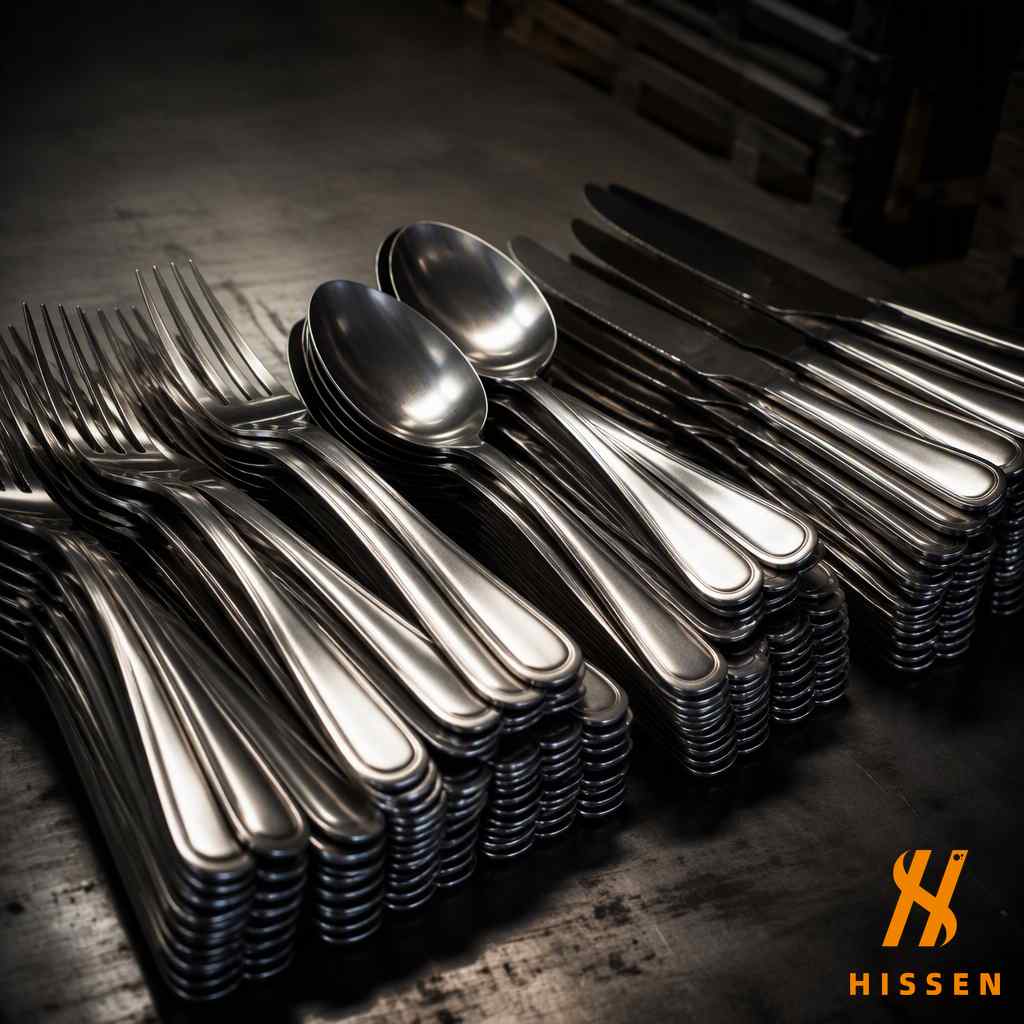
🔴 The cutlery anti-dumping duty: US$1.88 per kilogram
This is the single most important commercial fact about importing kitchenware into Peru, and it is not a tariff — it is a trade remedy, so it sits outside the FTA. A free trade agreement does not remove an anti-dumping duty.
By Resolución N.° 058-2025/CDB-INDECOPI, published in El Peruano on 27 April 2025 and valid for five years, Peru imposed definitive anti-dumping duties on imports of standard table cutlery — fork, spoon, teaspoon and knife — of base metal, with a thickness of up to 1.5 millimetres, of Chinese origin. The application was made by the domestic producer Fábrica de Cubiertos S.A.C. (FACUSA), and the investigation found a dumping margin of 56.6%, with imports having grown 15.4% over 2021–2023 at prices up to 24% below domestic equivalents.
The mechanism has two numbers, and the relationship between them is what you need to understand:
| Declared import price (FOB) | Anti-dumping duty payable |
|---|---|
| At or below US$7.84 / kg | ⚠️ US$1.88 / kg |
| Above US$7.84 / kg | ✅ None — treated as not competing directly with domestic production |
The covered tariff lines are 8211.10.00.00, 8211.91.00.00, 8211.93.90.00, 8215.10.00.00, 8215.20.00.00, 8215.91.00.00 and 8215.99.00.00 — that is, knives and cutlery sets, and spoons, forks and ladles.
🔴 Now look at what a weight-based duty does to a weight-based business. Our entire trade prices by the kilogram. So does this duty. That means the charge scales with the weight of the shipment, not with its value — and it hits hardest exactly where the margin is thinnest:
| 20FT container of cutlery | Declared FOB | FOB value | Anti-dumping duty | As % of FOB |
|---|---|---|---|---|
| 20,000 kg at US$4.00/kg | Below the ceiling | US$80,000 | 20,000 × 1.88 = US$37,600 | 47.0% |
| 20,000 kg at US$6.50/kg | Below the ceiling | US$130,000 | 20,000 × 1.88 = US$37,600 | 28.9% |
| 20,000 kg at US$8.50/kg | Above the ceiling | US$170,000 | US$0 | 0% |
📊 Read the first and third rows together, because that is the whole lesson. A cheap cutlery load at US$4.00/kg attracts a duty worth 47% of its own value. An expensive cutlery load above the ceiling attracts nothing. The remedy is not designed to tax cutlery — it is designed to set a floor under the price, and it does so very effectively.
⚠️ One practical caution: official and trade summaries describe the duty slightly differently — some present it as a flat US$1.88/kg charge applying below the ceiling, others as a minimum-price mechanism. Confirm the exact application with your Peruvian customs broker before you price a cutlery line, because whether the duty is a flat charge or the shortfall up to the ceiling changes the landing cost materially. In every reading, US$7.84/kg FOB is the number that decides it.
✅ Three ways to handle this:
- Quote cutlery above the ceiling where the product quality justifies it — above US$7.84/kg FOB there is no duty at all.
- Shift the load toward cookware and utensils — pots, pans, kitchen tools and utensils are not covered by this measure. A mixed container weighted toward cookware sidesteps it entirely.
- Be transparent with the buyer. A Peruvian importer who discovers this duty after the ship sails is a lost customer. An importer you told in advance is a customer who trusts your landed-cost maths.
✅ Why Peru is clean on ceramic tableware — and why that surprises people
Here is the mirror image of Colombia. Peru does have a history of anti-dumping measures on Chinese ceramic tableware: in 2004, INDECOPI imposed definitive duties on ceramic tableware, loose pieces and accessories of earthenware and porcelain of Chinese origin, at US$0.30 per kilogram for porcelain and US$0.17 per kilogram for earthenware, following a dumping margin of 48% for porcelain and 24% for earthenware.
Those duties were suppressed in 2009. By Resolución N° 165-2009/CFD-INDECOPI, the measures were lifted from 19 October 2009 and have not been reimposed.
💡 This is the practical conclusion for a ceramic offer: ceramic dinnerware that would run straight into Colombia’s minimum-price mechanism can be shipped to Peru without any anti-dumping exposure. If you are building ceramic loads for South America, the map now reads: Chile and Peru clear, Colombia hostile — which is worth understanding before you allocate a container. We covered the Colombian side, and the reasoning behind it, in our guide to importing kitchenware into Chile and Colombia.
⚠️ One caution so this is not read too broadly. INDECOPI remains active on ceramics in adjacent product categories. In April 2025 it opened an investigation into alleged dumping of one-piece ceramic toilets of Chinese origin, with a preliminary margin reported above 300%, and it has run reviews and new measures on other Chinese products including steel tubing through 2026. None of that concerns tableware or cookware. The point is simply that a clean status is a current status, not a permanent one — re-check before a large programme rather than relying on a check made years earlier.
🔬 DIGESA: the open question worth closing early
In Peru, DIGESA is the health authority that handles sanitary registration for regulated categories. Its remit clearly covers processed foods, cosmetics and pesticides. What matters for us is that articles in contact with food appear in that controlled space too.
We want to be straight about the limits of what we can confirm: we could not find a source that explicitly settles the position for stainless steel cookware. The requirement is therefore best treated as an open question to close before ordering, not as a settled yes or no.
📋 The cheap version of this risk, and the expensive version. The expensive version is discovering a sanitary requirement when your container is already sitting at Callao, accruing storage. The cheap version is a written query to DIGESA, or to your Peruvian broker, before the first order — and having lead and cadmium migration reports from an ISO/IEC 17025-accredited laboratory ready in case they are asked for. In our experience the second conversation costs a day and saves a container.
Peruvian labelling requirements are also worth building in from the start: Spanish language, identifying country of origin, manufacturer, importer, product description, net weight and any instructions.
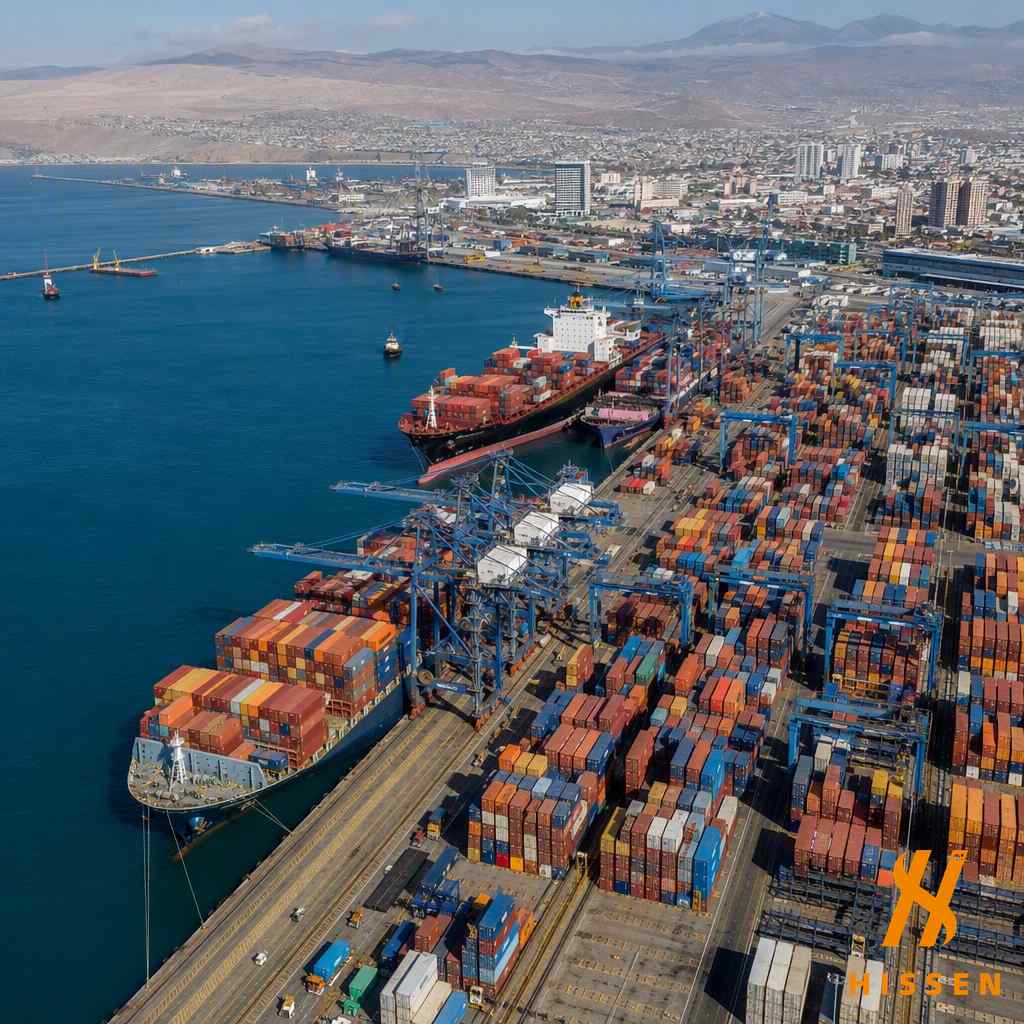
🇪🇨 Ecuador: The Newest FTA, and the Certification Gate
Ecuador’s FTA with China is barely two years old, and that changes the character of the market. The tariff opportunity is real and still being discovered by local importers. But Ecuador’s practical difficulty is not duty — it is conformity and labelling, and getting that wrong stops cargo in a way a tariff never does.
📄 The 2024 FTA and the FORM R
The agreement entered into force on 1 May 2024, Ecuador’s first with an Asian country. The structure is typical of a modern Chinese FTA:
- ✅ 4,677 tariff lines at zero from day one — roughly 60% of covered lines.
- ⏳ 1,666 lines staged over 5–10 years.
- ⏳ 1,089 lines staged over 15–20 years — the medium and long-sensitivity list.
- 🚫 Approximately 820 lines excluded from liberalisation entirely, protecting sensitive domestic sectors: fabrics, footwear, apparel, white goods, wood and wood panels, tyres, auto parts, flat ceramics, washbasins, and iron wire and profiles.
The origin document is the FORM R certificate of origin under the China–Ecuador FTA, issued by Chinese customs or by the CCPIT at the exporter’s or producer’s request. Practical requirements:
- ✍️ Completed in English — this is a specific requirement of the agreement, not a formatting preference.
- 📅 Valid for one year, and may be issued retrospectively bearing the words “ISSUED RETROSPECTIVELY”. Best practice remains issuing it before shipment.
- 🔢 Filed with the import declaration by entering liberation code 0808 in the TPCI field of Ecuapass. If you or your broker do not enter that code, the preference is not applied — even with a valid certificate in hand.
- 🧾 Data must match the invoice and packing list exactly — description, quantity, FOB value and number of cartons.
- 🏭 Origin criteria: wholly obtained (WO), produced entirely from originating materials (WP), a product-specific rule involving a change in tariff classification (PSR), or regional value content of at least 40% (RVC). Manufactured kitchenware that is not covered by a specific rule normally qualifies through the 40% RVC route — which is comfortably achievable for goods genuinely produced in China.
💰 What you actually pay in Ecuador — including a charge that is not a customs duty
Ecuador’s import tax stack is short but has one element that most guides get wrong:
| Charge | Rate (2026) | Base |
|---|---|---|
| Ad valorem duty | 0%–45%, average around 10%; 0% for liberalised lines under the FTA | CIF |
| FODINFA | 0.5% — payable on all products | CIF |
| IVA | 15% | CIF + ad valorem + FODINFA |
| ICE | Only specific goods — alcohol, cigarettes, perfumes, some electronics | — |
| ISD | Not a customs duty — it taxes outflows of foreign currency | — |
🔴 The ISD deserves its own paragraph, because it trips people up consistently. The ISD is an outflow-of-currency tax. It is not part of the customs liquidation, is not calculated on CIF, and should not be added into the duty estimate alongside ad valorem, FODINFA and IVA. But it absolutely is a real cost — because paying a Chinese supplier means sending dollars out of Ecuador, and that is the transaction the ISD taxes.
💡 Why this matters to how you quote. Your buyer’s true cost of paying you includes the ISD, and many Ecuadorian importers do not account for it when they compare your offer against a local wholesaler’s price. Being the supplier who explains it — rather than the supplier who ignores it and gets blamed later — is a genuine commercial advantage. Ask your buyer how they structure payment; it is a legitimate, useful question.
Here is an illustrative US$13,800 CIF container under two duty outcomes:
| Item | Liberalised line (0% duty) | Excluded line (5% duty) |
|---|---|---|
| CIF value | 13,800 | 13,800 |
| Ad valorem | 0 | 690 |
| FODINFA (0.5% of CIF) | 69 | 69 |
| IVA (15%) | 13,869 × 15% = 2,080 | 14,559 × 15% = 2,184 |
| Total at the border | 2,149 | 2,943 |
| As % of CIF | 15.6% | 21.3% |
⚠️ And note the possibility of a safeguard — a temporary additional tariff the government can impose on a specific product. These come and go, so a duty position verified once is worth re-verifying before a large commitment.
🏷️ INEN certification: the real gate in Ecuador
This is where Ecuador differs sharply from every other market we have covered. Peru uses a customs-tariff model with an anti-dumping overlay. Ecuador uses a standards-and-certification model: regulated consumer goods must demonstrate conformity and carry the certification, and without it the cargo is not released — no matter what duty you are paying.
INEN’s technical regulations (RTE INEN) cover well over 200 product categories, including household articles and electrical goods. For food-contact products there is a specific regulation — RTE INEN 100, covering plastic articles and equipment in contact with food, setting out terms, classification, requirements, test methods and inspection rules.
📋 The certification sequence, in order:
- Identify the subpartida with your broker and confirm whether an RTE applies to that specific product. This is the step that decides everything downstream.
- Arrange laboratory testing — in China if the laboratory is recognised by the Ecuadorian authority, or in Ecuador.
- Obtain the certificate of conformity from an accredited certification body.
- Register the certificate in the VUE (Ecuador’s single window) before import.
💵 Budget realistically. Industry figures put laboratory testing at roughly US$200–3,000, certification at US$500–2,000, and origin inspection at US$300–1,500 — giving a first-certification cost of about US$1,000–5,000 per product. Timelines run 30–60 days in the normal case, and Chinese trade sources report cases extending to 3–6 months end to end. This is a fixed cost and a lead time, not a per-container cost — which means it amortises well over repeat shipments and badly on a one-off.
⚠️ What non-compliance costs: cargo held at port with storage commonly running US$50–150 per container per day, re-export or destruction, and fines that can reach US$100,000. The storage alone will exceed the certification fee within weeks.
🏷️ Labelling is mandatory and detailed. Spanish language, with country of origin, the importer’s name, address and RUC, product characteristics, the INEN mark and certification number, net weight, and any warnings. Getting the label right is part of certification, not an afterthought — labels that do not match the certificate create a fresh problem at the port.
🧪 One honest caveat. RTE INEN 100 covers plastic food-contact articles. Whether a given metal cookware line falls under an RTE at all must be checked product by product — some household goods categories are covered and others are not. We are not going to pretend to know the answer for every line in our range, and neither should any supplier who has not checked. What we will do is supply the documentation needed to run that check: material composition, and heavy-metal migration reports from an accredited laboratory.
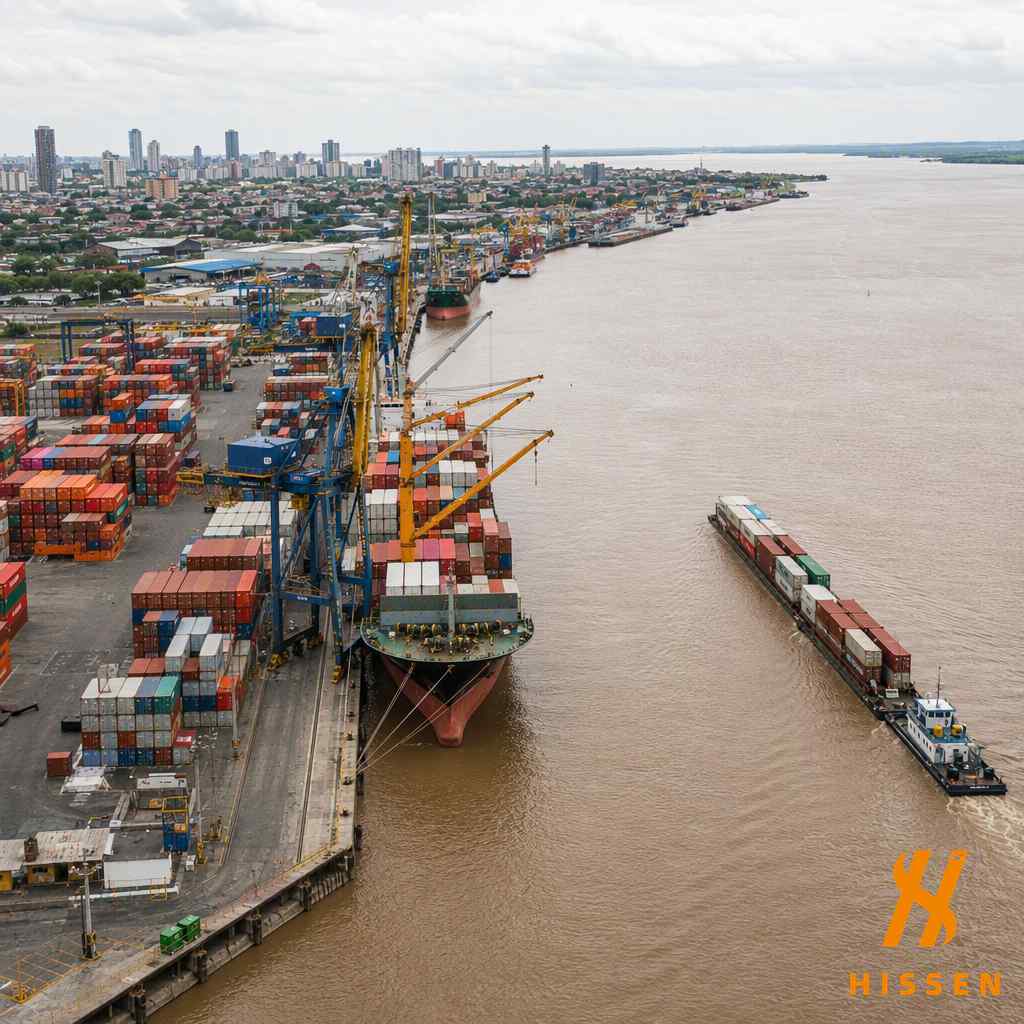
🔗 The 2026 FORM R linkage rule — the detail that catches people out
This is new and worth reading carefully, because it is exactly the kind of rule that only becomes visible when cargo is already at the port.
Under the 2026 regime, the INEN certification must be linked to the FORM R certificate of origin. If the HS code recorded on the FORM R does not match the one on the INEN certificate, the Ecuapass system intercepts the cargo. Kitchenware without the applicable INEN certification faces strict controls.
⚠️ Two documents, one HS code — get them consistent
Historically the origin certificate and the technical certificate were handled by different people at different times. The 2026 rule joins them: one HS code, agreed before either document is issued, and used identically on the FORM R, the INEN certificate, the commercial invoice and the packing list. If you take one operational lesson from this guide for Ecuador, take this one. A classification disagreement between two Chinese-issued documents now stops a container at a South American port.
🚫 The Two Sub-Categories Latin America Keeps Protecting
If you read across the South American markets, a pattern emerges that is more useful than any single country’s rules. Two categories are repeatedly carved out of liberalisation or hit with trade remedies, and they are the same two everywhere:
| Market | Ceramic tableware (6911/6912) | Cutlery (8211/8215) | Wire / iron profiles (7326.20 etc.) |
|---|---|---|---|
| 🇨🇱 Chile | ✅ No measure found | ✅ No measure found | ✅ No measure found |
| 🇵🇪 Peru | ✅ Measures suppressed 2009 | ❌ US$1.88/kg, ceiling US$7.84/kg | ⚠️ Steel tube measures active 2026 |
| 🇨🇴 Colombia | ❌ Minimum FOB price US$1.71 / US$2.88 per kg | ✅ No measure found | ⚠️ 7326.20 on the 35% steel list |
| 🇪🇨 Ecuador | ✅ No measure found (tiles 6907 excluded from FTA) | ✅ No measure found | 🚫 Iron wire and profiles excluded from the FTA |
🔴 Notice what this table means for your product mix. No single market in the region is clean across all three. But stainless steel cookware (7323) and aluminium cookware (7615) are clear in every one of them. That is not a coincidence — it is the category that no Latin American producer has organised to defend — and it is why we default to metal cookware for Andean and Southern Cone loads.
🔴 And note the recurring 6907-versus-6911/6912 trap. Ecuador excluded flat ceramics — tiles under 6907 — from its FTA. That is flooring and wall tile, not tableware. We have now seen this exact confusion surface in six markets: Colombia, Kenya, Algeria, the GCC, the 2026 Colombian steel package, and now Ecuador. Check whether a “ceramics” headline refers to 6907 or to 6911/6912 before you draw any conclusion — in either direction.

🧪 Food Contact Compliance Across the Southern Markets
If you are building a multi-market South American programme, this is the comparison worth keeping. The technical concern is similar everywhere — migration of lead and cadmium from materials in contact with food — but the mechanism and the evidence accepted differ enough to change your document pack.
| 🇵🇪 Peru | 🇪🇨 Ecuador | 🇨🇴 Colombia | 🇨🇱 Chile | |
|---|---|---|---|---|
| Authority | DIGESA | ARCSA / MSP with INEN | INVIMA | MINSAL |
| Mechanism | Sanitary approval for food-contact articles — confirm per product | INEN conformity certificate registered in the VUE before import | Importer-side registration | Declaration of conformity held in the supply chain |
| Foreign lab reports accepted? | Not confirmed for cookware — verify with DIGESA | Yes, if the laboratory is recognised by the Ecuadorian authority | Yes, as the exporter’s input to the importer’s file | ✅ Explicitly — accredited foreign labs and manufacturer declarations |
| Spanish labelling | ✅ Required | ✅ Required, with INEN mark and certificate number | ✅ Required | ✅ Required, with limited exemptions |
| Pre-shipment inspection regime | None | Certification before import, not inspection at port | None | None |
💡 The efficient move for a multi-market buyer: commission one set of lead and cadmium migration tests from an ISO/IEC 17025-accredited laboratory, on the actual production goods, with the model, material and HS code stated on the report. That single document supports the Chilean conformity file, the Colombian INVIMA registration, the Ecuadorian INEN application and the Peruvian DIGESA query. Suppliers who treat testing as a per-market expense are wasting money; the tests are the same tests.
⚡ What cannot be shared is the classification and the labelling. Each market needs its own Spanish label content and its own HS confirmation. Budget the testing once and the paperwork four times.
🚢 Ports, Transit and the Southern Free Zones
- 🇵🇪 Peru — Callao is the dominant gateway, handling the overwhelming majority of container traffic and serving Lima. Paita in the north serves Piura and the northern coast; Salaverry serves Trujillo; Matarani in the south serves Arequipa and, importantly, is a natural corridor toward Bolivia.
- 🇵🇪 Zofratacna, the free zone at Tacna in the far south, functions as a distribution and re-export platform into Bolivia and northern Chile. If a Peruvian buyer talks about supplying Bolivia as well as Peru, ask whether they operate through Tacna — the same signal we flagged for Chile’s Iquique free zone.
- 🇪🇨 Ecuador — Guayaquil handles the bulk of the country’s containers via the Guayas river system, with Posorja nearby as a deepwater alternative and Manta and Esmeraldas serving other regions. Air cargo arrives at Quito’s Tababela terminal.
- ⏱️ Transit from China runs roughly 30–45 days port to port for a 20-foot container, with typical FCL freight in the US$2,800–4,500 range. Peruvian and Ecuadorian Pacific routings are generally more direct than Caribbean-coast destinations.
- 📅 Declare on time. In Ecuador the import declaration must be presented within 30 calendar days of the vessel’s arrival. Miss it and the cargo is deemed tacitly abandoned — a genuinely severe outcome for a paperwork delay.
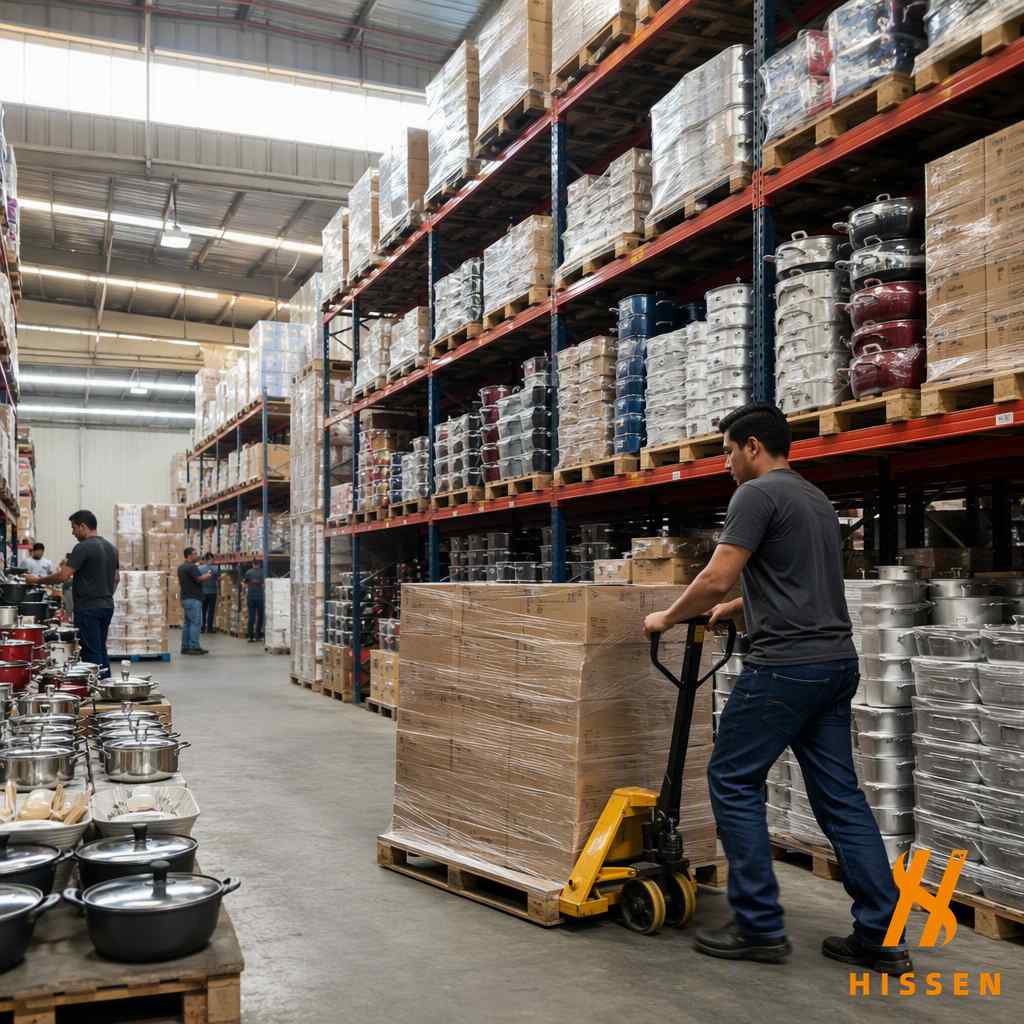
🗺️ Your First Container to Peru or Ecuador: 9 Steps
- 🔍 Fix the destination and the mix together. Peru and Ecuador have different gates. Decide which market first, then decide whether cutlery belongs in the container.
- 🧾 Confirm the subpartida in the destination tariff. Peru: check the staging schedule. Ecuador: check whether the line was liberalised, staged, or excluded.
- ⚖️ Run the cutlery test before quoting into Peru. Convert any cutlery line to a per-kilogram FOB figure. Below US$7.84/kg, add US$1.88/kg to the landing cost. Above it, there is no duty.
- 📄 Prepare the right origin document. A Certificate of Origin for Peru; a FORM R in English for Ecuador — with the 0808 liberation code entered in the TPCI field of Ecuapass.
- 🏷️ For Ecuador, confirm the RTE INEN position early. Identify whether an RTE applies to your product, and start certification before booking freight — the lead time is measured in weeks to months.
- 🔗 Align one HS code across every document. Under the 2026 Ecuadorian rule, the FORM R and the INEN certificate must carry matching codes or Ecuapass intercepts the cargo.
- 🧪 Commission accredited food-contact testing once. Lead and cadmium migration from an ISO/IEC 17025 laboratory, naming the model, material and HS code — usable across all four southern markets.
- 🏢 Verify the buyer’s standing. Peru: RUC enabled for imports with SUNAT, and awareness of the IGV perception on a first import. Ecuador: RUC active and registered in ECUAPASS.
- 📈 Start with one 20-foot container and measure sell-through by category before scaling — the same discipline we set out in our guide to buying wholesale kitchenware by the kilogram.
🚩 Red Flags When Comparing Andean Quotes
| Red flag | What it usually means |
|---|---|
| Cutlery quoted into Peru with no mention of the anti-dumping duty | Either the supplier has not checked, or the buyer will discover US$1.88/kg at clearance |
| “Our FTA certificate removes all duties” | An FTA does not remove anti-dumping measures. Cutlery into Peru is the proof |
| Ecuador-bound cargo with no INEN plan | The container will not be released regardless of duty paid — and storage runs daily |
| A price quoted per piece only | Weight is the common denominator in this trade; without it you cannot run the cutlery test or compare suppliers |
| No lead and cadmium migration reports, or reports with no accreditation mark | Weakens every market’s food-contact file, and blocks the Ecuadorian certification route |
| A duty estimate that ignores FODINFA or treats ISD as a customs charge | The first is an omission that understates landed cost; the second overstates it — either way the number is not usable |
🇨🇳 Building an Andean Load With Hissen Global
We would rather be compared than trusted. Hissen Global is a China-based exporter selling wholesale kitchenware by the kilogram from a 20,000 m² warehouse, with a minimum order of one 20-foot container. Our range covers five categories — cookware, mixed kitchenware, kitchen knives, knives & forks, and kitchen utensils — which matters more in this region than anywhere else, because it lets us weight a load toward cookware and utensils and away from the cutlery lines Peru protects.
Three things we focus on for the Andean markets. Sub-category fit: we will tell you plainly when a cutlery line should not go into a Peruvian container, and build the mix accordingly — a supplier who stays quiet to win the order is not doing you a favour. Weight accuracy: every carton is weighed, because in a market where one anti-dumping duty is charged per kilogram, the weight figure is not an administrative detail — it is the duty base. Documentation: material composition declarations and heavy-metal migration reports from accredited laboratories, ready for your Ecuadorian INEN application, your Peruvian DIGESA query, and your Colombian INVIMA registration. Browse our full product range or learn more about our company.
For the cost framework behind these numbers, see our kitchenware price per kilogram breakdown, and for how these layers apply to container imports generally, our guide to shipping stock goods from China.
❓ Frequently Asked Questions
Is there anti-dumping duty on Chinese kitchenware in Peru?
Does Peru have anti-dumping duties on Chinese ceramic tableware?
Can I import kitchenware from China to Ecuador duty-free?
What is a FORM R certificate and why does it matter in Ecuador?
Do kitchenware imports into Ecuador need INEN certification?
What taxes apply to kitchenware imports in Peru and Ecuador?
Which kitchenware categories are safest across South America?
💡 Key Takeaways
- Both Peru and Ecuador have FTAs with China — Peru since 2010, Ecuador since 1 May 2024 — so duty is largely solved in both. The risk moves elsewhere.
- Peru’s gate is cutlery: US$1.88 per kilogram anti-dumping duty on standard table cutlery below a US$7.84/kg FOB ceiling. Above the ceiling, nothing is payable.
- Because that duty is charged by weight, a cheap cutlery load can carry a duty worth 47% of its own value. Weight accuracy in your packing list is a duty issue in Peru.
- An FTA does not remove an anti-dumping duty. They are separate instruments — cutlery into Peru is the proof.
- Peru’s ceramic tableware measures were suppressed in 2009; Chile’s market is clean too. Colombia is the outlier with its minimum FOB price.
- Ecuador’s gate is certification, not duty. INEN conformity must be registered in the VUE before import, costing roughly US$1,000–5,000 per product and taking 30–60 days — with cargo held at US$50–150 per container per day if it is missing.
- Since 2026, the FORM R and the INEN certificate must carry the same HS code or Ecuapass intercepts the cargo. One HS code, agreed early, across every document.
- Ecuador’s IVA is 15% on CIF plus ad valorem plus FODINFA. The ISD is not a customs duty — it taxes currency outflows and affects how your buyer pays you.
- Stainless steel (7323) and aluminium (7615) cookware are clear of trade remedies in every South American market. Iron wire articles and profiles are the recurring trouble spot.
- 6907 is tile, 6911/6912 is tableware — Ecuador’s FTA exclusion covers flat ceramics, not your dinner plates. This confusion has now appeared in six markets.
Planning a kitchenware container to Peru or Ecuador? We invite you to compare before you decide.
Hissen Global is a China-based exporter selling wholesale kitchenware by kg from a 20,000 m² warehouse — cookware, mixed kitchenware, kitchen knives, knives & forks, and kitchen utensils. Minimum order: one 20-foot container. We build Andean loads weighted toward cookware and utensils rather than the cutlery lines Peru protects, supply weight-accurate packing lists, and provide accredited lead and cadmium migration reports plus material declarations for your Ecuadorian INEN application and your Peruvian DIGESA file.
📱 WhatsApp: +86 191 2829 4940
Request Pricing & Live Video Tour →
Related: Wholesale Kitchenware by KG — Complete Guide · Kitchenware Price Per KG — Cost Breakdown · Import Kitchenware to Chile & Colombia — FTA & Duty Guide · Import Kitchenware to Nigeria — Duties & SONCAP · Import Kitchenware to Kenya — PVoC & Duty Guide · Import Kitchenware to Bolivia & Paraguay — Landlocked Routes & IBNORCA · Browse all product categories