Published September 17, 2026 · Bolivia & Paraguay import guide for kitchenware buyers
Bolivia and Paraguay share a problem that no other market in our South American coverage has: neither country has a seaport. Your container will dock in Chile, Peru, Uruguay, Argentina or Brazil, and then travel overland for one to five days to reach your buyer. By the time it arrives, the inland leg can cost more than the ocean freight did.
That single fact reorganises everything else. It means the port you choose matters more than the tariff you pay. It means a forty-foot container is not automatically cheaper than a twenty-foot. And it means the questions worth asking a Bolivian or Paraguayan buyer are different from the ones that work in Lagos or Mombasa.
The two countries then diverge sharply. Bolivia has just done something no other market in this series has done in 2026: it cut the tariff on the entire national tariff schedule by five percentage points, and it changed the way freight enters the dutiable value. Paraguay, meanwhile, has the lowest value-added tax in South America and a structural barrier that is not economic at all — it is the only Mercosur member, and the only country in our coverage, with no diplomatic relations with China.
From our position as a China-based exporter of stock kitchenware sold by the kilogram, this guide covers what actually decides whether a kitchenware container into Bolivia or Paraguay makes money in 2026: the tariff cuts, the certificate gates, the inland routes, and the re-export pattern that shapes who your buyer really is.
⏱ 13 min read · For importers & wholesalers shipping kitchenware to Bolivia and Paraguay
In this guide you will learn:
- Why neither country bans kitchenware — and what the real gate is in each
- Bolivia’s 2026 tariff cut: five points off every rate, and a bigger change to how freight is taxed
- Why IBNORCA, not customs, is Bolivia’s binding constraint
- Paraguay’s Mercosur tariff, its refundable 10% VAT, and what the absence of diplomatic relations actually costs you
- The paperwork gate: RUC, SOFIA, PVAA and a mandatory despachante
- Bolivia’s four gateways and Paraguay’s three corridors — with real 2026 numbers
- Why dense kitchenware should ship in a twenty-foot, not a forty-foot, to the Altiplano
- The storage arbitrage worth up to twenty times the daily rate
- Which kitchenware sub-categories survive both regimes
✅ Is Kitchenware Allowed Into Bolivia and Paraguay? Neither Country Bans It — but Both Have a Certificate Gate
Start with the good news, because in this region it is not always available. Neither Bolivia nor Paraguay prohibits the import of kitchenware. No decree closes the category in either country, no licence excludes it, and in both markets a wholesale trade in Chinese cookware already exists and moves at volume.
That distinguishes both countries from some of their neighbours. It also means the question is not whether you can ship, but which certificate you need before you do.
🇧🇴 Bolivia: no ban, and kitchenware is not on the prior-authorisation list
Bolivia operates a list of goods that require prior authorisation before import. That list is real and it is enforced — it was built by Decreto Supremo N.º 2752 and later modified by Decreto Supremo N.º 4010, and it was re-published, updated, inside the Arancel Aduanero de Importaciones 2026 issued in March 2026.
The categories on it are wearing apparel and accessories, footwear, and wooden furniture. Kitchenware is not on the list. This matters practically: it means a kitchenware container does not need a prior authorisation file opened weeks before shipment, which is the single largest scheduling risk in several other markets we cover.
What Bolivia does have instead is a product safety and food-contact certification regime built on IBNORCA — and that regime names kitchenware explicitly. We cover it in full below, because it is the constraint that actually determines whether your container clears.
🇵🇾 Paraguay: no ban — the famous Paraguayan import prohibition is on used clothing
Paraguay’s most-cited import ban, Decreto N.º 12.294/92 together with Decreto N.º 7.084/2000 covering NCM headings 6309 and 6310, prohibits used clothing. It has nothing to do with kitchenware. Paraguay applies no equivalent prohibition to new household goods.
Paraguay’s controls sit in a different place entirely: documentation and registration. Every commercial import must be declared through a licensed local customs broker, every inbound consignment needs a valid local RUC attached to the recipient, and food-contact materials fall inside the INTN certification catalogue. Again, that is a paperwork problem rather than a permission problem — but it is not optional.
The short version: both markets are open to kitchenware. Bolivia’s gate is a certificate about what your product is made of. Paraguay’s gate is a certificate about who is importing it and through whom.

🇧🇴 Bolivia Just Cut Every Tariff by Five Points — and Changed What Freight Is Dutiable
In the middle of 2026 Bolivia did something across its entire tariff schedule that has no equivalent in any other market in this series. If you have Bolivian duty numbers from 2025 or even from January 2026, they are now wrong.
The DS 5646 window: July 2026 through December 2027
Decreto Supremo N.º 5646 was signed on 29 June 2026 and took effect on 6 July 2026. It reduces the Gravamen Arancelario — Bolivia’s import duty — by five percentage points across the whole tariff universe, and it runs until 31 December 2027.
The reduction is mechanical and applies uniformly:
| Standard GA rate (AAI 2026) | Rate applied under DS 5646 |
|---|---|
| 20% | 15% |
| 15% | 10% |
| 10% | 5% |
| 5% | 0% |
Household kitchenware sits in the consumer-goods band, which in the Arancel Aduanero de Importaciones 2026 is most commonly 20% for finished consumer articles, with some input and intermediate lines at 5%, 10% or 15%. Under DS 5646, the finished-goods rate you should be modelling is therefore 15% — not 20%.
Two things are worth flagging. First, the decree was introduced to cushion the impact of Bolivia moving to a flexible exchange rate for the boliviano, so its logic is monetary rather than commercial — it is a cost-of-living measure, and like the short-lived zero-tariff decree on soybeans that was repealed under producer pressure, it was enacted by decree and can be changed by decree. Second, the DS 5646 reduction is applied on top of whatever specific benefit a product line already holds: where another decree grants a lower rate, that lower rate continues while it lasts, and only reverts to the DS 5646 numbers afterwards.
The bigger change: only 10% of your freight is now dutiable
This is the part most importers have not noticed, and for a landlocked country it is worth more than the five tariff points.
DS 5646 contains a Disposición Adicional Única that amends Article 20 of the Reglamento a la Ley General de Aduanas (Decreto Supremo N.º 25870). The dutiable base for the Gravamen Arancelario is now calculated as:
Bolivia’s new dutiable base
Dutiable base = transaction value + loading & unloading costs + only 10% of the transport and insurance value to the border
For air freight, the equivalent figure is 10% of the freight paid.
Read that against the inland leg numbers further down this guide. A forty-foot container from Arica to Santa Cruz can cost between US$2,600 and US$4,200 — freight that, under a conventional CIF valuation, would be fully dutiable. Under the new rule, only ten percent of the transport and insurance value enters the base.
For a landlocked market, that is a structural reduction, not a rounding error. Ask your Bolivian despachante to confirm in writing how the rule is being applied to the IVA base in your specific declaration — the decree speaks to the tariff base, and the IVA treatment should be confirmed rather than assumed.
Bolivia’s full tax stack
| Charge | Rate | Base |
|---|---|---|
| Gravamen Arancelario (GA) | 15% for most finished consumer goods under DS 5646 | Transaction value + handling + 10% of freight and insurance |
| IVA a la importación | 13% nominal, applied por dentro — an effective rate of 14.94% | CIF + GA + other customs charges |
| Verificación | 1% | FOB value |
| Customs service fee | around 2.5% (cited by some sources — confirm with your despachante) | CIF |
| Statistical charge | around 0.8% (cited by some sources) | CIF |
| ICE (excise) | Not applicable to kitchenware — ICE covers drinks, tobacco and vehicles | — |
| IT (3% transactions tax) | Not collected at customs | — |
Note the IVA figure carefully. Bolivia’s headline VAT rate is 13%, but the import IVA is applied por dentro — effectively grossed up — producing an effective rate of about 14.94% on the CIF-plus-duty base. Importers who budget 13% and get quoted 14.94% at the counter are usually the ones who did their homework from a general guide rather than a customs calculation.
Worked example: a twenty-foot container of stainless steel cookware
| Line | Amount |
|---|---|
| Goods value (FOB, 20-foot container of steel cookware) | US$18,000 |
| Ocean freight Shanghai → Arica + insurance | US$2,800 |
| Inland leg Arica → La Paz / El Alto | US$1,400 |
| Dutiable base for GA (value + handling + 10% of freight & insurance) | ≈ US$18,280 |
| GA at 15% (post-DS 5646) | US$2,742 |
| CIF for other charges | US$20,800 |
| IVA a la importación at 14.94% effective | US$3,517 |
| Verificación 1% of FOB | US$180 |
| Customs service and statistical charges (indicative) | ≈ US$686 |
| Total customs charges | ≈ US$7,125 — about 34% of the goods value |
| Landed cost at La Paz (goods + freight + inland + duties) | ≈ US$29,325 |
Two observations. First, the IVA is the largest single line — larger than the tariff. That is normal in Bolivia and it is why the refundability of IVA matters so much to your buyer’s real cost. Second, the tariff at 15% instead of 20% saves roughly US$900 on this container, and the freight-base change saves more, because US$2,520 of the US$2,800 ocean freight is now outside the GA base.
⚠️ Do not treat the DS 5646 numbers as permanent
The five-point cut expires on 31 December 2027. It was introduced as a monetary stabilisation measure, not as trade policy, and Bolivia has already repealed other decrees from the same package — including the soybean zero-tariff decree, withdrawn under producer pressure. If you are modelling a two-year supply plan, run your numbers at both the 15% rate and the 20% rate, and be aware that a change in the exchange-rate regime is the trigger to re-check.
🔴 Bolivia’s Real Gate Is IBNORCA, Not the Tariff
Everything above is arithmetic. This section is the one that stops containers.
Bolivia’s product safety framework rests on Ley N.º 453 de Productos y Seguridad, which requires that products placed on the Bolivian market conform to Bolivian technical standards — normas NB. The body that certifies that conformity is IBNORCA, the Instituto Boliviano de Normalización y Calidad.
What “voluntary” means in practice
IBNORCA certification is legally described as voluntary. In practice it functions as quasi-mandatory for goods subject to import control, because Bolivian customs and the health authorities can require the certificate as a condition of release. Without it, the goods can be held at the border, fined, or returned.
The critical detail for our category is this: food-contact materials are explicitly inside that controlled perimeter. The published scope names plastic containers, tableware and kitchen utensils, and food packaging film. That is a direct description of what a kitchenware container contains.
What the file actually needs
| Requirement | Detail |
|---|---|
| Third-party laboratory report | From a laboratory accredited to ISO/IEC 17025. The test items must correspond one-to-one with the applicable norma NB for your product. |
| IBNORCA certificate or registration | The document customs and health authorities will ask for. |
| Product description | In Spanish, with technical parameters — material, finish, dimensions, intended food use. |
| Factory registration documents | Business licence, quality system documentation such as ISO 9001, component and supplier qualification list. |
| Importer registration in Bolivia | RUC and commercial registration of the Bolivian importer or distributor. |
| Physical units for type testing | Commonly three to five units per model, sent for laboratory type testing. |
| Local representation | A representation agreement if a local agent files on the manufacturer’s behalf. |
Two consequences follow for how you plan the order.
First, this is a pre-shipment file, not a border problem. The laboratory report has to exist before the container leaves China. That is the same structural pattern as Kenya’s PVoC and Ecuador’s INEN: the purchasing can move quickly, the certification cannot. If your Bolivian buyer tells you the goods are needed in six weeks, the honest answer is that the certification clock starts when the specification is frozen, not when the vessel sails.
Second, this is why material choice is a commercial decision in Bolivia, not an aesthetic one. A product line whose food-contact standard is clearly published and commonly tested is materially easier to certify than one whose limits have to be negotiated with a laboratory. In practice, that favours stainless steel under heading 7323 and aluminium under 7615, where the applicable standard for metallic food-contact articles is well established and laboratory capacity to test it is routine. Ceramic tableware under 6911 and 6912 is not impossible, but the lead and cadmium migration limits that apply, and which norma NB governs them, are not published in any source we could verify. Treat that as an open question to settle with IBNORCA in writing before you commit a ceramic container to Bolivia.
One more Bolivian rule that catches importers late: Andean labelling requirements apply directly. Bolivia is a member of the Andean Community, and Resolución N.º 2107 — in force since 15 November 2021 and directly applicable across Peru, Bolivia, Ecuador and Colombia — requires Spanish-language labelling naming the principal materials, the manufacturer’s or importer’s name and RUC, and the country of origin.
There is an important warning attached to this, and it is a place where Bolivia and Peru diverge on the same supranational rule. In Peru, the tax authority has issued an official opinion (Informe N.º 000111-2021-SUNAT/340000) confirming that customs does not verify labelling at the clearance stage — labelling is checked by INDECOPI at the point the goods are offered to consumers, and under Delegated Legislative Decree N.º 1304 labelling requirements cannot be made a condition of entry or of duty payment.
That exemption is Peruvian customs doctrine, not an Andean Community rule. Do not carry it across the border. For Bolivia, treat Spanish labelling as a shipment-ready requirement, and confirm with your Bolivian despachante whether the Aduana Nacional is enforcing it at clearance. Practically, the requirement to print the importer’s RUC on the label means one of your first post-order actions is getting the customer’s RUC — it is a dependency, not a detail.

🇵🇾 Paraguay: Mercosur Tariffs, the Lowest VAT in South America, and One Structural Barrier
Paraguay’s import profile is unlike anything else in this series, because Paraguay does not set its own tariff on most goods. As a full Mercosur member it applies the bloc’s Arancel Externo Común — the Common External Tariff.
The tariff: AEC, not a national schedule
The AEC was adopted in 1994 by Decision CMC N.º 22/94 and has been updated repeatedly, most recently through Decision CMC N.º 12/2021 and the 2026 revisions to the NCM nomenclature. Rates run from 0% to 35% depending on the eight-digit NCM code.
For our category, the relevant band is finished consumer goods, which carry the higher end of the schedule — typically 18% to 20%, with the 35% ceiling reserved for footwear, textiles and automobiles. Kitchenware in stainless steel under NCM 7323, aluminium under 7615, knives and flatware under 8211 and 8215, and ceramic tableware under 6911 and 6912 all sit in that consumer band.
There is a national layer on top. Paraguay holds a Lista Nacional de Excepciones — national exceptions to the common tariff — and under Decision CMC N.º 01/25 it may maintain up to 649 NCM codes outside the AEC until the end of 2030, plus temporary additional lists of up to fifty codes. So the common tariff is the starting point, not the answer. Verify the specific NCM code against Paraguay’s current exception list before you quote a landed cost — and note that any AEC table published before the 2026 revisions is now unreliable.
The VAT is the best in the region — and it is refundable
Paraguay applies IVA at 10%, the lowest standard rate in South America. It is charged on CIF plus duty:
Paraguay’s import tax formula
Duty = CIF × AEC rate
IVA = (CIF + duty) × 10%
The critical point is that Paraguayan import IVA is creditable against the VAT your buyer charges on domestic sales. For a reseller, it is a cash-flow item rather than a final cost. Compare that with a market where the same tax is a permanent expense and you can see why the 10% headline understates Paraguay’s advantage — and why the buyer’s VAT registration status is a question worth asking early.
On top of duty and IVA, budget a customs processing fee of around 0.5% of CIF and a valuation fee of about 0.5% of the dutiable value, plus customs broker fees of 0.5% to 1.5% of CIF with minimums, or roughly US$100 to US$500 per shipment. ISC, Paraguay’s selective consumption tax, applies to cigarettes, alcohol and automobiles and does not touch kitchenware.
There is a simplified regime for small importers: up to US$2,500 FOB per transaction, accumulable to US$10,000 per month per importer. That is relevant for a buyer testing a category, and irrelevant for a container — a twenty-foot of kitchenware runs well past it. Postal consignments under US$100 enter duty-free; above that they attract duty plus the 10% IVA.
The structural barrier: no diplomatic relations with China
Now the part that makes Paraguay unique in this entire series.
⚠️ Paraguay is the only Mercosur member with no diplomatic relations with China
Paraguay maintains diplomatic relations with Taiwan and has done for over six decades. In June 2026, at the Mercosur summit in Luque, Foreign Minister Rubén Ramírez Lezcano stated that Paraguay is willing to establish commercial relations with China “siempre y cuando no haya condicionamientos respecto de la relación diplomática que Paraguay sostiene y mantiene con Taiwán.” Beijing’s response was that economic cooperation cannot be separated from the political basis, and that the One China principle is not negotiable.
The practical reading: a China–Paraguay free trade agreement is not available, and is not on any credible timeline.
What this means concretely for a kitchenware shipment:
- No FTA, so no preferential rate — ever. Paraguay pays the full AEC. Any supplier or agent who tells you they can obtain “preferential Paraguay rates” for Chinese-origin goods is either confused or selling you something else. There is no legal instrument that would produce that result.
- No consular channel. China has no embassy or consulate in Paraguay. If a shipment is detained, a document needs legalising, or a dispute needs escalation, there is no commercial attaché to call. This is a real risk factor to price, not a formality.
- Trade runs through third countries. The Paraguayan government itself describes its China trade as taking place through indirect mechanisms and intermediary markets — Brazil, Argentina, Uruguay, Hong Kong or Miami. Routing through an intermediary adds cost and reduces documentation transparency, and it does not create a legal shortcut: the goods still clear Paraguayan customs, and every rule still applies.
- The trade is nonetheless enormous. According to the Banco Central del Paraguay, imports from China reached a record US$6,122 million in 2025, and between January and May 2026 totalled US$2,747 million — 36.4% of everything Paraguay imported. China is Paraguay’s largest goods supplier. The barrier is diplomatic, not commercial.
One thing that is not a problem: payment. Paraguay has no foreign exchange controls — Ley N.º 489/95, articles 47 to 51, provides for free convertibility — and the US dollar functions as a fully accepted second currency inside the Paraguayan banking system, with roughly half of bank deposits denominated in dollars and banks offering both guaraní and dollar accounts. From a payment-risk standpoint, a Paraguayan buyer sits in a completely different category from buyers in Ethiopia, Nigeria or Algeria.
📄 Paraguay’s Paperwork Gate: RUC, SOFIA, PVAA and a Mandatory Despachante
If Bolivia’s gate is about the product, Paraguay’s is about the importer. Four things must be in place before a container can be declared.
| Requirement | What it involves |
|---|---|
| Valid RUC with import activity enabled | The same tax number as any other business, with the international trade activity activated before the DNIT. Allow 5 to 10 working days. The RUC must be active — not expired or cancelled. Legal entities: numbers begin above 80,000,000. Natural persons: cédula number plus check digit. |
| RUC on the consignment itself | Every incoming consignment — including personal parcels — must carry the recipient’s local RUC. Without a valid RUC the goods are held. This is the single most common cause of a stuck shipment. |
| A licensed despachante | Commercial goods must be declared through a customs broker registered and habilitated with the customs authority. Exceptions exist only for non-commercial postal and express consignments, traveller baggage, border trade and returning residents’ goods. The despachante is legally responsible for customs infractions, so this relationship is not interchangeable. |
| PVAA registration | The Registro de Personas Vinculadas a la Actividad Aduanera. Since 1 August 2025 this is filed exclusively through the Marangatu tax system (Formulario 621) under Resolución General DNIT N.º 30/2025. For importers it is a new registration. If the importer operates through representatives before customs, the RUC data including “Apoderados PVAA” must be updated first. Legal entities must have current legal representative data in the RUC. |
Three operational notes.
The customs authority is now part of the tax authority. Paraguay’s Dirección Nacional de Aduanas was merged into the DNIT (Dirección Nacional de Ingresos Tributarios) in 2023. The customs function continues as the Gerencia General de Aduanas, but the institution you are dealing with is the DNIT. Older guides referring to “DNA” as a separate agency are out of date.
The systems do not talk to each other. Declarations are filed digitally through SOFIA, which connects brokers, carriers, depositaries and foreign trade agencies. Import permits and certifications run through the VUI (Ventanilla Única de Importaciones). The two platforms, plus the export window VUE, are not interconnected — in practice this means registering in each.
Foreign compliance certificates are not automatically recognised. Paraguay’s standards body, INTN, is the national certification authority for food-contact materials. A foreign certificate will not simply be accepted; testing must be performed by a laboratory accredited by INTN or one holding recognised Mercosur equivalence, documents must be in Spanish or officially translated, and a foreign manufacturer must act through a local representative. Certificates typically run from one to three years, with surveillance audits.
That is worth restating in plain terms, because it is a different model from Bolivia. Bolivia lets you bring an ISO 17025 laboratory report from a Chinese lab and certify against a Bolivian norma NB. Paraguay’s INTN path expects its own framework and a local representative. Where we could identify a specific Paraguayan standard, we have named it: NP 25 010 covers metallic food-contact containers, and NP 25 001 sets migration limits for plastics. For ceramic tableware we could not locate a published Paraguayan standard or lead and cadmium migration limits, and we will not guess. Confirm the applicable standard with INTN directly.
There is also an INAN layer, separate from INTN. INAN, under the Ministry of Public Health, handles food and beverage registration (Resolución N.º 0252/18) and food packaging registration (Resolución N.º 380/11). Whether kitchenware falls under the INAN packaging registration as distinct from INTN certification is not something our sources resolved. Ask both institutions in writing before you ship, and keep the answer in the file.
🧭 Bolivia vs Paraguay Side by Side
| Factor | 🇧🇴 Bolivia | 🇵🇾 Paraguay |
|---|---|---|
| Kitchenware permitted | Yes — not on the prior-authorisation list | Yes — no general prohibition |
| Free trade agreement with China | None | None — and not achievable while Taiwan relations hold |
| Tariff | GA 0/5/10/15/20%, then −5 points across the board until 31 Dec 2027 (DS 5646). Most consumer goods now 15% | Mercosur AEC 0–35%; consumer goods typically 18–20%. Up to 649 national exceptions |
| Dutiable base | Only 10% of freight and insurance enters the GA base | Standard CIF |
| VAT | IVA 13% nominal, 14.94% effective at import | IVA 10% on CIF + duty — creditable against sales VAT |
| Food-contact gate | IBNORCA under Ley 453. ISO 17025 lab report against the applicable norma NB | INTN certification, local representative required. NP 25 010 for metallic containers |
| Labelling | Andean Resolución 2107 — Spanish, importer RUC, origin. Treat as a shipment requirement | Spanish labelling per INTN. Verify scope by product |
| Customs authority | Aduana Nacional — DUI via SIDUNEA++ | DNIT (absorbed the DNA in 2023) — declaration via SOFIA |
| Broker required | Optional for the importer, recommended. Practically near-universal | Mandatory for commercial goods |
| Import registration threshold | Non-habitual importer via courier capped at US$1,000 FOB / 40 kg per shipment, US$4,000 per year. Above that, habitual importer status is required | Simplified regime to US$2,500 FOB per transaction, US$10,000 per month |
| Foreign exchange | Flexible exchange rate regime introduced 2026 — the trigger behind DS 5646 | No controls. Ley 489/95. USD is a fully accepted second currency |
| Port access | Arica, Iquique/ZOFRI (Chile); Ilo, Matarani, Callao/Chancay (Peru) | Montevideo, Buenos Aires, Paranaguá/Santos; Hidrovía Paraguay-Paraná |
| Re-export role | Destination for ZOFRI and Zofratacna transit trade | Ciudad del Este — re-export engine serving Brazil, Argentina, Uruguay |
| Biggest single risk | IBNORCA food-contact certification not obtained before shipment | No consular channel, and a mandatory local broker/representative you cannot bypass |
🚢 The Landlocked Problem: Where Your Money Actually Goes
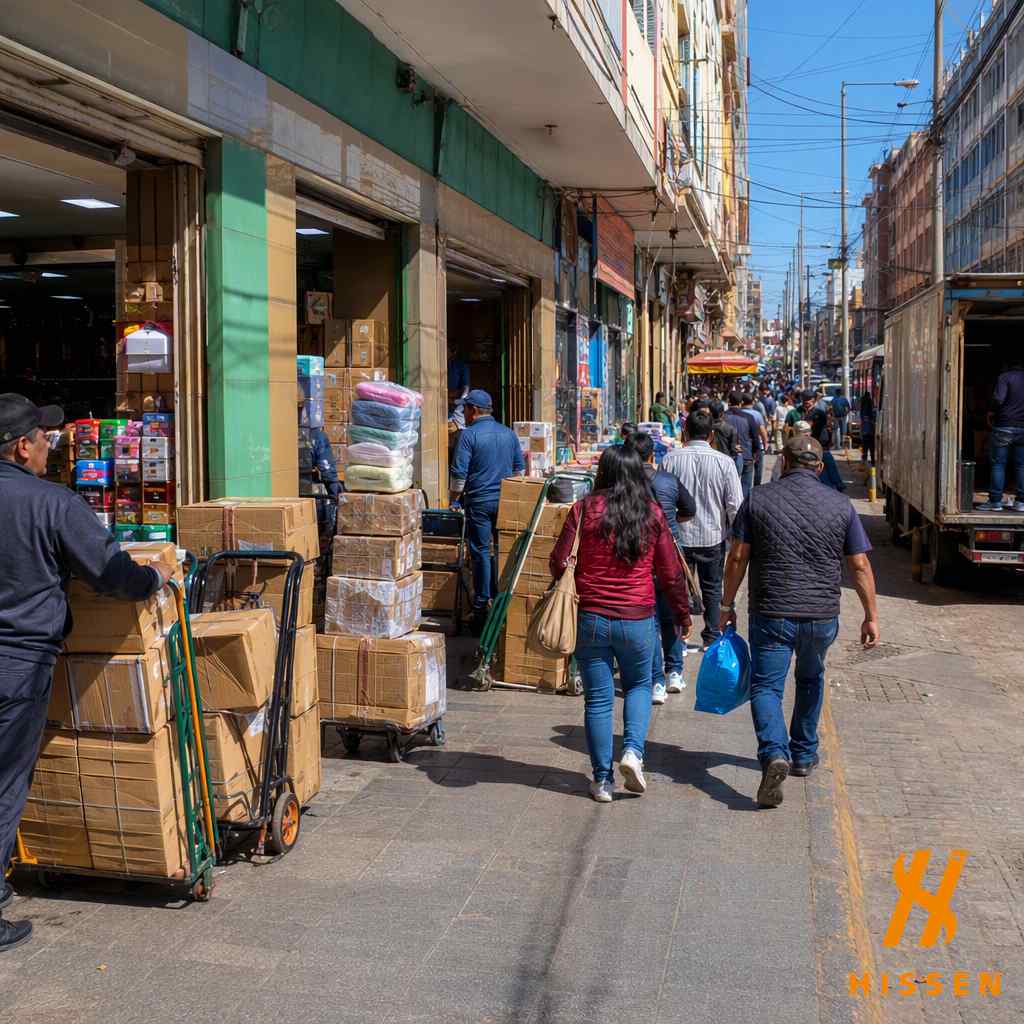
Here is the number that reorganises a landlocked budget. On a forty-foot container into Bolivia’s interior, the inland leg can cost more than the ocean crossing. Once you accept that, port selection becomes the single highest-value decision you make on the shipment.
Bolivia’s gateways, with 2026 rate ranges
| Leg | 20-foot | 40-foot / 40HQ | Transit |
|---|---|---|---|
| Shanghai → Arica (ocean) | US$1,400–2,500 | US$2,000–3,300 | — |
| Shenzhen/Yantian → Arica (ocean) | US$1,300–2,400 | US$1,900–3,200 | — |
| Ningbo → Ilo (ocean) | US$1,500–2,700 | US$2,100–3,500 | — |
| Arica → La Paz / El Alto | US$1,000–1,800 | US$1,300–2,300 | 1–2 days |
| Arica → Cochabamba | US$1,500–2,500 | US$2,000–3,200 | 2–3 days |
| Arica → Santa Cruz | US$2,000–3,200 | US$2,600–4,200 | 3–5 days |
| Ilo or Matarani → La Paz | US$1,100–2,000 | US$1,400–2,500 | 2–3 days |
| Total to a Bolivian terminal | US$2,500–4,800 | US$3,100–6,000 | — |
Two structural features sit behind those numbers.
Arica is the default, and it is congested. Arica handles a large share of Bolivian transit cargo and has dedicated storage for it, but in 2026 Bolivian road blockades pushed the port to roughly 120% of yard capacity and forced a temporary suspension of deconsolidation for Bolivia-bound cargo, with extra-port yards opened to absorb the overflow. Iquique, the other Chilean option, accumulated more than 1,000 containers during the same period.
Chancay is the new variable. COSCO’s megaport at Chancay offers direct Asia connections in about 23 days, against roughly 35 days from Chilean ports, and feeder services now link it to southern Peru and Chile. In January 2026 Bolivia completed its first commercial shipment to China via the Santa Cruz → Arica → Chancay → Shanghai route. But the current reading from the trade press is that Chancay complements Arica rather than replacing it — Arica still provides customs transit, bonded warehousing, sanitary inspection and cargo consolidation that the new route does not yet replicate.
The twenty-foot rule for dense kitchenware
In most categories the forty-foot is cheaper per unit, and the standard advice is to fill one. On Andean routes into Bolivia, that advice inverts for kitchenware.
Stainless steel and cast iron cookware is a dense cargo. A forty-foot container loaded with it approaches 26 tonnes, and the Altiplano routes — Tambo Quemado from Arica, Desaguadero from Ilo and Matarani — carry weight limits that trigger overweight surcharges well before a forty-foot is full by volume. A twenty-foot reaches cargo weight limits with a far better ratio of payload to penalty.
The rule of thumb: steel and cast iron cookware to the Bolivian highlands should be planned as a twenty-foot container. Aluminium and mixed lightweight kitchenware, which cubes out before it weighs out, suits a forty-foot high cube — and for the eastern lowlands around Santa Cruz, where the routes are flatter and the weight limits less restrictive, the forty-high-cube becomes the natural choice again.
This is worth raising with your buyer directly, because a Bolivian importer who has only ever imported textiles or electronics may be planning a forty-foot by habit and pricing the ocean leg on that basis.
The storage arbitrage: USD 200 a day versus USD 10
When a container is held at the port waiting for documentation, someone pays storage. The rate spread between facilities at the same port is large enough to change the outcome of a shipment:
The Iquique storage spread
A forty-foot container at the Iquique terminal facility (ITI): up to US$200 per day. Forty days of that reaches roughly US$8,000 — a figure that can exceed the customs duty on the entire shipment.
The same container at the Zofri deposit in Punta de Diamante: US$10–15 per day.
That is a spread of more than thirteen to twenty times for the same box, on the same days, waiting for the same paperwork.
The actionable version: ask your freight forwarder in writing where the container will sit while documentation clears, and at what daily rate. Most importers only discover this line item when it has already accrued. It is also a strong signal about the forwarder — one that answers this question precisely is a forwarder that has handled Bolivian transit cargo before.
Paraguay’s three corridors
Paraguay’s geography gives it a different set of options, all of them involving a neighbouring country.
- The river. The Hidrovía Paraguay-Paraná carries the majority of Paraguayan trade — over 70% of exports — connecting Asunción to the Atlantic via Argentina and Uruguay. It is the cheapest mode per tonne and the slowest.
- The Brazilian truck corridor. Containers land at Paranaguá or Santos and move by road to Ciudad del Este via Foz do Iguaçu and the Friendship Bridge. Fast and heavily used, but exposed to border queueing.
- The Uruguayan and Argentine ports. Ocean freight Asia to Paraguay routed via Montevideo runs roughly US$3,500–5,000 per forty-foot container, plus onward river or road movement. Buenos Aires is the alternative. Air cargo enters via Silvio Pettirossi airport at Asunción for urgent, high-value consignments.
Customs brokerage on a Paraguayan declaration runs about US$300–700 per DUI in professional fees, with clearance typically completed within 2 to 5 days of arrival. Note the asymmetry with Bolivia: the inland leg into Bolivia is priced per container and dominated by distance and altitude, whereas Paraguay’s cost is driven more by mode choice and border throughput.
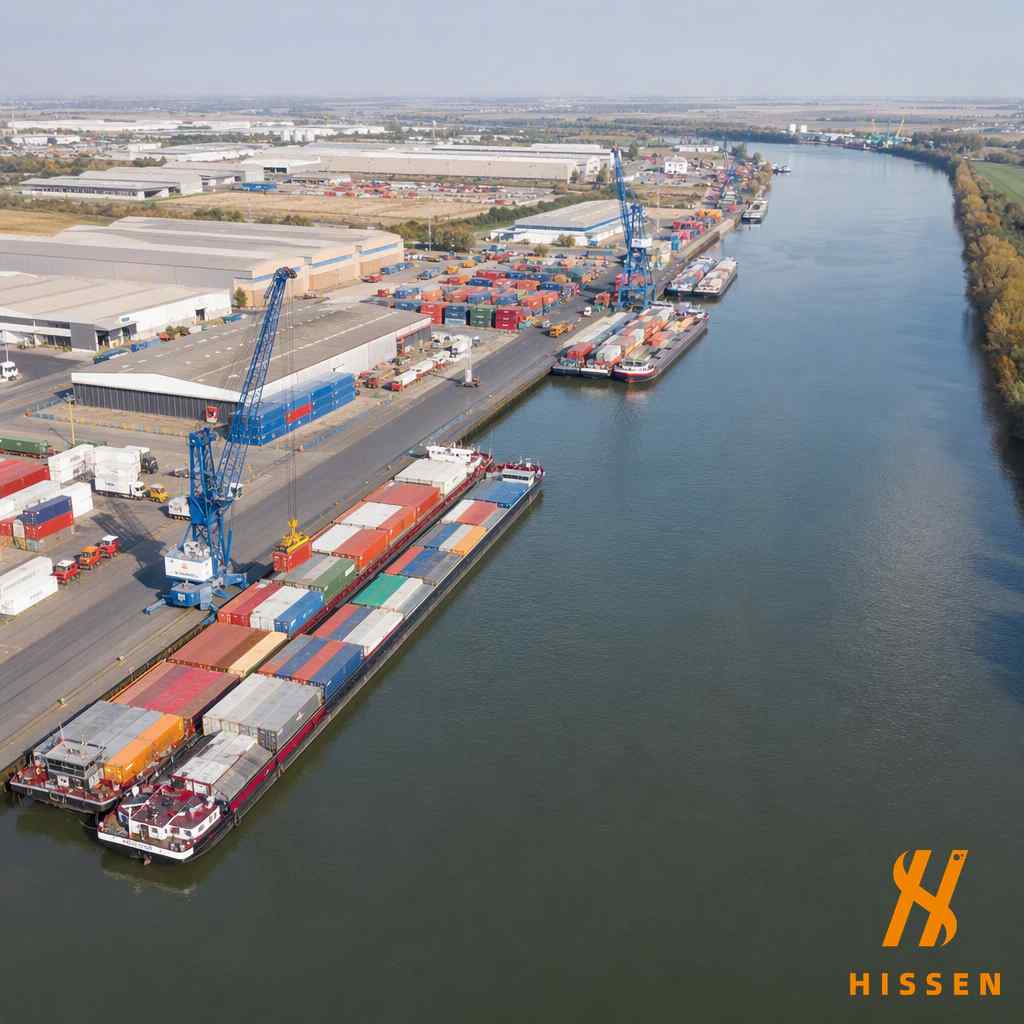
♻️ Both Are Re-Export Hubs — and That Changes Who Your Buyer Is
There is a second reason these two markets matter beyond their own populations, and understanding it will tell you within one conversation whether you are dealing with a retailer or a regional distributor.
ZOFRI Iquique: the gateway that exists because of Bolivia
Chile’s ZOFRI free zone at Iquique is the natural entry point for Bolivia, southern Peru and Paraguay. Bolivian buyers account for roughly 47% of Zofri’s total sales — nearly half the zone’s turnover serves a country with no coastline. When a Chinese or Taiwanese user of the zone reports reduced activity, Bolivian road access is usually the cause.
The coverage of that single fact is straightforward. If a buyer tells you their container will enter through Iquique, they are telling you they are moving goods across at least one international border on a regular basis. That is a distributor’s business model, not a shop’s.
Ciudad del Este: the largest re-export engine in South America
Paraguay’s border city of Ciudad del Este functions as a free zone with a special customs regime, and its entire commercial logic rests on a simple arbitrage: Paraguay’s import charges are significantly lower than its neighbours’, and that price differential pulls Chinese electronics, appliances and consumer goods into the country, where they are consolidated and moved onward to Brazil, Argentina and Uruguay.
The scale is not marginal. The tourism-regime channel alone recorded US$2.9 billion in imports between January and September 2025. Over Black Friday 2025, the city recorded more than 400,000 visitors and US$610 million in four days. It is one of the highest-throughput retail and wholesale zones in the hemisphere.
⚠️ The Mercosur origin trap
It is true that goods of Mercosur origin circulate within the bloc at 0% tariff on presentation of a Mercosur origin certificate, and that this makes Paraguay an excellent platform for re-exporting regional products into Brazil, Argentina and Uruguay.
Chinese-origin kitchenware is not Mercosur-origin. No amount of consolidation or warehousing in Ciudad del Este changes the origin of the goods. Re-exporting a Chinese container from Paraguay into Brazil means entering Brazil’s own import regime, at Brazil’s own rates, with Brazil’s own documentation. If a buyer’s pitch is “we bring it into Paraguay and then it enters Brazil freely”, the correct response is that the origin certificate will not support that — and that a supplier cannot participate in a structure that depends on misrepresenting origin.
🔍 Three questions that separate a distributor from a speculator
- “Which port does your cargo enter through?” A real Bolivian distributor names a port and a route — Arica, Iquique, Ilo, Matarani. A vague answer means they have not done this before.
- “Do you have a despachante and an active RUC with import activity enabled?” In Paraguay this is a legal prerequisite, so a serious buyer answers immediately. In Bolivia the equivalent is habitual importer registration — ask for the USO registration status.
- “Who is the final buyer — your own retail, or other wholesalers?” Bolivian buyers routing through ZOFRI and Paraguayan buyers operating out of Ciudad del Este are usually selling onward. That changes the packaging, the labelling requirement and the sub-category mix that will actually sell.
🔪 Which Kitchenware Sub-Category Survives Both Regimes
Here is where the analysis converges into a buying decision. The binding constraint in both countries is the same type of gate — a food-contact certificate — but the two gates have different levels of documented clarity.
| Sub-category | Bolivia (IBNORCA) | Paraguay (INTN) | Practical verdict |
|---|---|---|---|
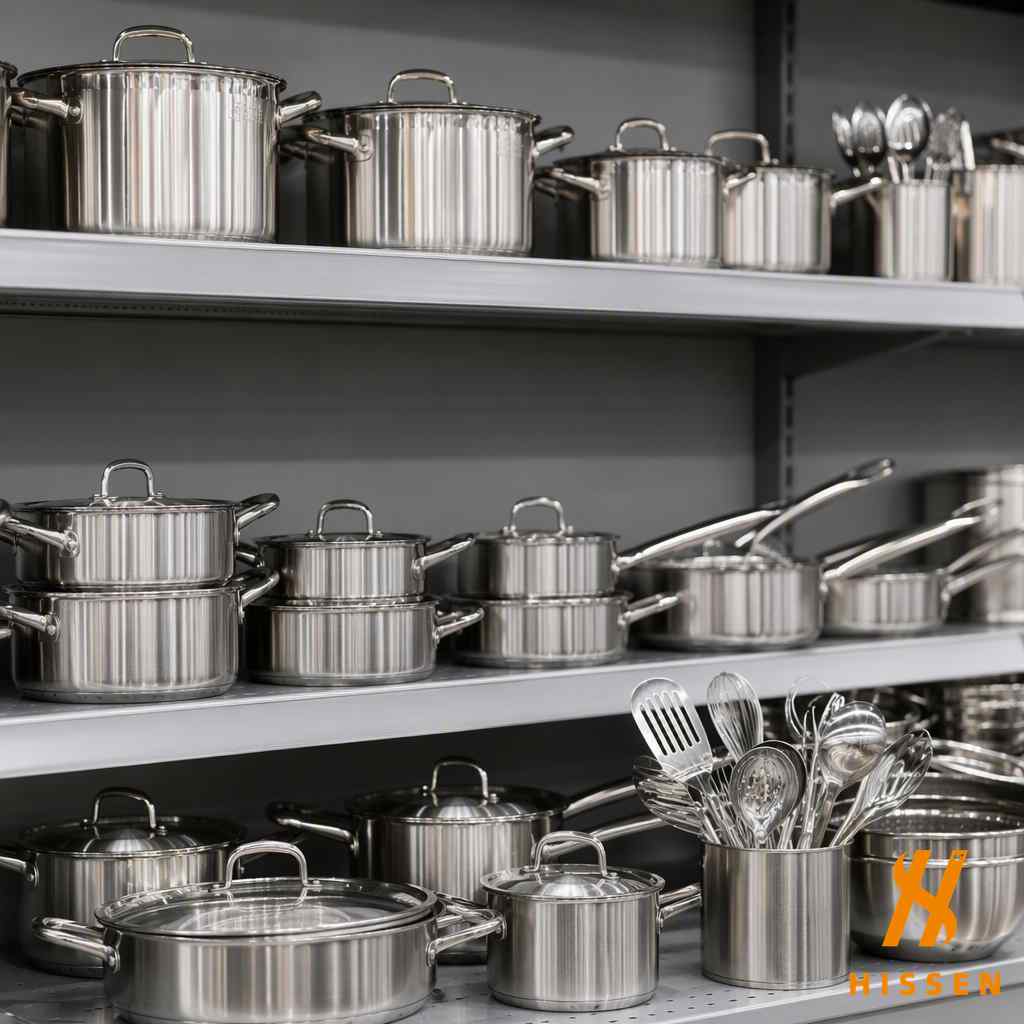
| Stainless steel cookware (HS 7323) | Metallic food-contact standard well established; routine lab capacity | NP 25 010 covers metallic food-contact containers | Clearest path in both markets |
| Aluminium kitchenware (HS 7615) | Same metallic category | Same metallic category | Strong second choice; lightweight, cubes out rather than weighs out |
| Plastic kitchenware | Explicitly named inside the controlled food-contact scope | NP 25 001 sets migration limits | Workable, but both countries test it explicitly — budget for it |
| Knives and flatware (HS 8211, 8215) | Metallic food-contact rules apply | Metallic food-contact rules apply | No anti-dumping measure found in either country — unlike Peru |
| Ceramic tableware (HS 6911, 6912) | Applicable norma NB and lead/cadmium limits not publicly documented | No published Paraguayan standard or Pb/Cd limits located | Do not commit without written confirmation from IBNORCA and INTN |
The pattern is the same one that runs through every market in this series, and it is now the seventh time we have had to write it: ceramic tableware is the sub-category that carries an unresolved question everywhere. In Bolivia and Paraguay the unresolved question is not anti-dumping — it is whether a lead and cadmium migration standard exists that a laboratory can test against, and neither country’s published material answered that for us.
⚠️ The ceramic confusion, seventh market running: 6907 is not 6911 or 6912
Household ceramic tiles sit under HS 6907 and are a construction material, subject to entirely different rules. Ceramic and porcelain tableware, kitchenware and other household articles sit under 6911 (porcelain and china) and 6912 (other ceramic).
Bolivia already applies zero-tariff treatment to certain lines and Paraguay’s Mercosur schedules have their own exceptions, and in several markets a tariff reduction or a safeguard announced for 6907 has been read by importers as applying to tableware. Check the heading, not the word “ceramic”.
Anti-dumping status in both markets
This is the question that matters most in a series where one market — Peru — turned out to levy a weight-based anti-dumping duty that lands directly on kitchen knives and flatware. Neither Bolivia nor Paraguay showed an equivalent measure in our research.
Paraguay deserves a more precise statement than a clean bill of health, though. Paraguay’s trade defence framework is complete and active: Ley N.º 444/94 incorporates the WTO Anti-Dumping Agreement into Paraguayan law, Decreto N.º 15286/96 sets out the anti-dumping and countervailing duty procedures, Decreto N.º 1827/99 governs safeguards, and the competent authority is the trade defence office of the MIC. Mercosur ministers have agreed to develop a common trade defence mechanism to address Chinese products, with textiles and footwear named as the sensitive sectors.
Kitchenware is not among the named sectors. But our search for an existing Paraguayan anti-dumping duty on Chinese products did not return a result, and a failed search is not evidence of absence. Treat Paraguay as a market where a trade defence action is institutionally easy to launch, and verify the current position with the MIC before committing to a long-term supply plan. Bolivia’s framework is the same WTO-derived structure and we found no measure there either, on the same caveat.
🗺️ Your First Container to Bolivia or Paraguay: 9 Steps
Step 1 — Confirm which country, and which side of it. A buyer in Santa Cruz and a buyer in La Paz have different optimal ports. A buyer in Ciudad del Este and a buyer in Asunción have different optimal corridors. Establish the delivery city before you quote freight.
Step 2 — Establish your buyer’s registration status. Bolivia: habitual importer registration with the Aduana Nacional through the USO, plus a valid NIT and SEPREC commercial registration and an active OCE record. Paraguay: an active RUC with import activity enabled at the DNIT, plus PVAA registration through Marangatu. Budget five to ten working days in Paraguay.
Step 3 — Get the importer’s tax number before you print anything. Both andean labelling under Resolución 2107 and Paraguayan labelling require the importer’s RUC or NIT on the product label. In Paraguay it is required on the consignment itself. This is a printing dependency — it comes before production, not after.
Step 4 — Freeze the specification, then start certification. Bolivia: commission the ISO 17025 test report against the applicable norma NB and open the IBNORCA file. Paraguay: confirm the applicable INTN standard and appoint a local representative. This is the longest lead time in the whole project and it starts here.
Step 5 — Confirm the exact tariff line on both sides. Bolivia: NANDINA subheading against the Arancel Aduanero de Importaciones 2026, then apply the DS 5646 five-point reduction. Paraguay: the eight-digit NCM code, checked against both the updated AEC and Paraguay’s national exception list. Asking a broker to confirm a code in writing takes a day and prevents a dispute later.
Step 6 — Choose the port and size the container against the route, not the habit. Dense steel cookware to the Bolivian highlands: twenty-foot. Lightweight mixed kitchenware to Santa Cruz: forty-foot high cube. Paraguay: choose between the river, the Brazilian truck corridor and Montevideo, and price all three.
Step 7 — Ask where the container will sit, and at what daily rate. Get the storage arrangement in writing. The difference between the terminal facility and a free-zone deposit at Iquique is more than thirteen times per day, and documentation delays are routine in both markets.
Step 8 — Assemble the customs file before the vessel arrives. Bolivia: commercial invoice, packing list, bill of lading, a Declaración Andina de Valor if the value exceeds US$5,000, freight invoice, insurance certificate, certificate of origin, plus the IBNORCA file. Paraguay: commercial invoice, packing list, bill of lading, certificate of origin, RUC and PVAA documentation, plus the INTN file. Declare through SIDUNEA++ in Bolivia and SOFIA in Paraguay.
Step 9 — Pay and clear. Bolivia: customs duties are payable within three working days of the DUI being accepted, after which the system assigns a green, yellow or red channel — red meaning physical inspection. Paraguay: clearance typically completes within two to five days of arrival. Budget broker fees of 0.5% to 1.5% of CIF in Paraguay, or US$300–700 per declaration.
🚩 Red Flags: Questions That Should End the Conversation
| What the buyer says | Why it ends the discussion |
|---|---|
| “Declare it as plastic kitchenware and we avoid the ceramic test” | Misdeclaring the product to avoid a conformity requirement. We stop the conversation. |
| “Write the invoice at half value to reduce the IVA” | Under-invoicing. Both markets apply customs valuation rules and the importer carries the penalty — and so does the exporter named on the invoice. |
| “Use a different HS code so we get the Mercosur rate” | False declaration of origin or classification. There is no lawful way to obtain a preferential rate for Chinese-origin goods in Paraguay. |
| “Send it through Bolivia and we will move it into Brazil as Mercosur goods” | Relies on misrepresenting origin. We do not participate. |
| “We do not need the certificate — our broker always gets it through” | If the claim is that a broker can bypass the food-contact requirement, the mechanism involved is not one we will supply into. |
| “Send the goods first and we will pay after clearance” | Open-account terms on a first shipment to a buyer with no verifiable import record. Start with a deposit and a letter of credit. |
Our position is simple and it does not vary by market: if a buyer proposes changing the product name, under-declaring the value, or altering the HS code to get around customs, we end the conversation immediately. These are not negotiating positions. They are the difference between a business that can supply you for the next ten years and one that cannot supply you next quarter.
❓ Frequently Asked Questions
Is kitchenware prohibited in Bolivia or Paraguay?
No. Neither country prohibits kitchenware imports, and neither requires a prior import licence for it. Bolivia’s prior-authorisation list covers wearing apparel, footwear and wooden furniture, not kitchenware. Paraguay’s well-known import prohibition covers used clothing under Decreto 12.294/92 and Decreto 7.084/2000, not household goods. The real requirement in both markets is food-contact conformity certification — IBNORCA in Bolivia, INTN in Paraguay.
What did Bolivia’s Decreto Supremo 5646 change?
DS 5646, signed on 29 June 2026 and in force from 6 July 2026 until 31 December 2027, reduces Bolivia’s import duty by five percentage points across the entire tariff schedule — so 20% becomes 15%, 10% becomes 5% and 5% becomes 0%. Crucially, its single additional provision also changes the dutiable base: the tariff base is now the transaction value plus handling plus only 10% of the transport and insurance value, rather than the full CIF amount. For a landlocked country where inland freight is large, that is worth more than the rate cut.
Does Paraguay have a free trade agreement with China?
No, and none is available. Paraguay is the only Mercosur member that maintains diplomatic relations with Taiwan rather than China. In June 2026 Paraguay’s foreign minister said the country is open to commercial relations with China provided there are no conditions attached to the Taiwan relationship; Beijing rejected that framing. Without diplomatic relations there is no instrument that could grant preferential tariffs to Chinese-origin goods, so Paraguay pays the full Mercosur Common External Tariff. China is nevertheless Paraguay’s largest goods supplier — US$6.122 billion in 2025, and 36.4% of total imports in the first five months of 2026 — routed through third-country intermediaries.
What does IBNORCA certification require for kitchenware in Bolivia?
Ley N.º 453 de Productos y Seguridad requires conformity with Bolivian technical standards, and food-contact materials are explicitly inside the controlled perimeter — the published scope names tableware and kitchen utensils, plastic containers and food packaging film. In practice you need a test report from an ISO/IEC 17025 accredited laboratory whose test items correspond to the applicable norma NB, an IBNORCA certificate, a Spanish-language product description with technical parameters, factory registration documents, the Bolivian importer’s RUC and commercial registration, three to five units for type testing, and a representation agreement if a local agent files. Without it the goods can be held, fined or returned.
Why should kitchenware go in a twenty-foot container to Bolivia?
Stainless steel and cast iron cookware is dense. A forty-foot container of it approaches 26 tonnes, and the Altiplano routes — Tambo Quemado from Arica, Desaguadero from Ilo and Matarani — have weight limits that trigger overweight surcharges before the container is full by volume. A twenty-foot reaches cargo weight limits with a much better payload-to-penalty ratio. Aluminium and mixed lightweight kitchenware, which cubes out before it weighs out, suits a forty-foot high cube, especially into the eastern lowlands around Santa Cruz.
Which port should a Bolivia-bound container use?
Arica in Chile is the default and handles a large share of Bolivian transit cargo, with dedicated storage, but it reached roughly 120% of yard capacity during the 2026 road blockades and temporarily suspended deconsolidation for Bolivia-bound cargo. Iquique and its ZOFRI free zone is the alternative, and around 47% of Zofri’s sales are Bolivia-bound. Ilo and Matarani in Peru serve La Paz via Desaguadero. Chancay offers 23-day direct Asia connections against roughly 35 days from Chilean ports, but currently complements Arica rather than replacing it. Total cost to a Bolivian terminal runs about US$2,500–4,800 for a twenty-foot and US$3,100–6,000 for a forty-foot.
Is there anti-dumping duty on Chinese kitchenware in Bolivia or Paraguay?
No measure was found in either country, but this should not be read as proof that none exists. Paraguay’s trade defence framework is complete and active — Ley N.º 444/94 incorporates the WTO Anti-Dumping Agreement, Decreto N.º 15286/96 sets the procedures, Decreto N.º 1827/99 governs safeguards, and the competent authority is the MIC trade defence office. Mercosur ministers have agreed to develop a common trade defence mechanism addressing Chinese products, with textiles and footwear named as sensitive sectors. Kitchenware is not among the named sectors, but verify the current position before committing to a long-term plan. This is materially different from Peru, where a weight-based anti-dumping duty on cutlery is in force.
Can I re-export Chinese kitchenware from Paraguay into Brazil?
Not at the preferential rate. Goods of Mercosur origin circulate within the bloc at 0% tariff on presentation of a Mercosur origin certificate, but Chinese-origin kitchenware is not Mercosur-origin, and warehousing or consolidating it in Ciudad del Este does not change that. Re-exporting into Brazil means entering Brazil’s own import regime at Brazil’s own rates with Brazil’s own documentation. A structure that depends on representing the goods as Mercosur-origin is not one we will supply into.
💡 Key Takeaways
- Neither Bolivia nor Paraguay prohibits kitchenware — and Bolivia’s prior-authorisation list does not cover it. The gate in both markets is food-contact certification, not permission.
- Bolivia’s DS 5646 cuts every tariff rate by five percentage points until 31 December 2027, and changes the dutiable base so that only 10% of your freight and insurance is taxed. For a landlocked market, that second change matters more than the first.
- Bolivia’s binding constraint is IBNORCA under Ley 453 — a pre-shipment file requiring an ISO 17025 laboratory report against the applicable norma NB. Start it when the specification freezes, not when the vessel sails.
- Paraguay applies the Mercosur AEC (18–20% for consumer goods) with a refundable 10% IVA on CIF plus duty — the lowest VAT in South America and creditable against sales tax.
- Paraguay has no diplomatic relations with China and no FTA is available. There is no lawful route to a preferential rate for Chinese-origin goods, and no consular channel if a shipment is detained.
- Paraguay requires a licensed despachante for all commercial imports, a valid RUC on every consignment, and PVAA registration through Marangatu. Allow five to ten working days for RUC activation.
- Dense steel cookware belongs in a twenty-foot container to the Bolivian highlands; lightweight kitchenware belongs in a forty-foot high cube.
- Ask where your container will sit while paperwork clears. Iquique terminal storage can run up to US$200 per day against US$10–15 at the Zofri deposit — a spread of more than thirteen times.
- Andean labelling under Resolución 2107 applies directly in Bolivia, and the Peruvian customs exemption does not travel with it. Get the importer’s RUC or NIT before printing labels.
- Stainless steel (7323) and aluminium (7615) have the clearest certification path in both markets. Ceramic tableware carries an unresolved question in both — confirm the standard with IBNORCA and INTN in writing before committing.
Planning your first kitchenware container to Bolivia or Paraguay? We invite you to compare before you decide.
Hissen Global is a China-based exporter selling wholesale kitchenware by kg from a 20,000 m² warehouse — cookware, mixed kitchenware, kitchen knives, knives & forks, and kitchen utensils. Minimum order: one 20-foot container. We supply stainless steel and aluminium cookware suited to both the IBNORCA and INTN certification paths, with weight-accurate packing lists ready for your conformity file.
📱 WhatsApp: +86 191 2829 4940
Request Pricing & Live Video Tour →
Related: Wholesale Kitchenware by KG — Complete Guide · Kitchenware Price Per KG — Cost Breakdown · Import Kitchenware to Peru & Ecuador — FTA & Duty Guide · Import Kitchenware to Chile & Colombia — Duty Guide · Import Kitchenware to Kenya — PVoC & Duties · Import Kitchenware to Nigeria — Duties & SONCAP · Browse all product categories