An Open Letter to Used Clothing Importers — From a Chinese Supplier
Note: I work for Hissen Global, a used clothing exporter in Guangzhou, China. But what I am about to share applies to our entire industry. I am writing this because I believe importers deserve to know the truth about how the Chinese used clothing export business really works.
⏱ 9 min read · For importers, wholesalers & trade buyers
In this guide you will learn:
- Key industry insights and practical sourcing knowledge
- How to evaluate suppliers and avoid common mistakes
- Pricing benchmarks and quality standards
- Actionable steps for your import business
Dear Importer,
I know how this story usually ends. You found a supplier, negotiated the price, sent the deposit, and waited six weeks for your container to arrive. When it did, the quality was not what you agreed on. The bales were short. The grades were mixed. And when you tried to complain, the supplier disappeared or blamed the shipping line.
I have seen this happen hundreds of times. Not because Chinese suppliers are dishonest — most are not. But because the industry is set up in a way that rewards opacity, and the importer is the one who pays for it.
Let me explain how it really works.
You emailed us last week asking for a quote on A Grade ladies bales. We sent you our price: $2.30/kg FOB Guangzhou. You replied, “Can you do $1.80?”
We said no, and explained why. You went with another supplier who said yes.
I am writing to tell you what happened after that.
The Price You Paid — and What You Actually Got
When a Chinese supplier says $1.80/kg for “A Grade,” one of three things happens to your bales:
1. The grade gets mixed.
The supplier puts A Grade on the invoice, but your bales will contain a significant portion of B Grade items — maybe 30-40%. Because at $1.80/kg, A Grade quality is not profitable for them. They have to cut quality somewhere to make the math work. You won’t know until the container arrives at your port, and by then, it is too late to negotiate.
2. The bale weight gets adjusted.
You were quoted $1.80/kg for 55 kg bales. What arrives might be 48kg bales. You are paying the same total amount, but for less product. Your effective price just went up to $2.06/kg — and you are getting lower quality on top of that.
3. The category mix changes.
You ordered ladies fashion bales. What arrives contains more men’s items and children’s items than agreed. Technically still “mixed bales” — but not what you ordered or what your market needs.
I am not saying every supplier does this. But I am saying that when you push the price below what A Grade sorting actually costs, you are inviting the supplier to find savings somewhere else. And it will not be their margin they cut — it will be your quality.
The Truth About “A Grade” in China
There is no official government standard for “A Grade” used clothing in China. That surprises most importers.
A Grade is simply what each supplier chooses to call their best quality. And the gap between supplier A’s “A Grade” and supplier B’s “A Grade” can be enormous.
Some suppliers define A Grade as: “No stains, no tears, no holes, current style, sorted by category, uniform sizing.” That is the standard we use at Hissen Global. It costs more to produce because it requires more sorting labor, more quality checks, and tighter grading.
Other suppliers define A Grade as: “Not completely unwearable.”
Both are called “A Grade” on the invoice. Both are priced differently. The importer only discovers the difference when the container arrives.
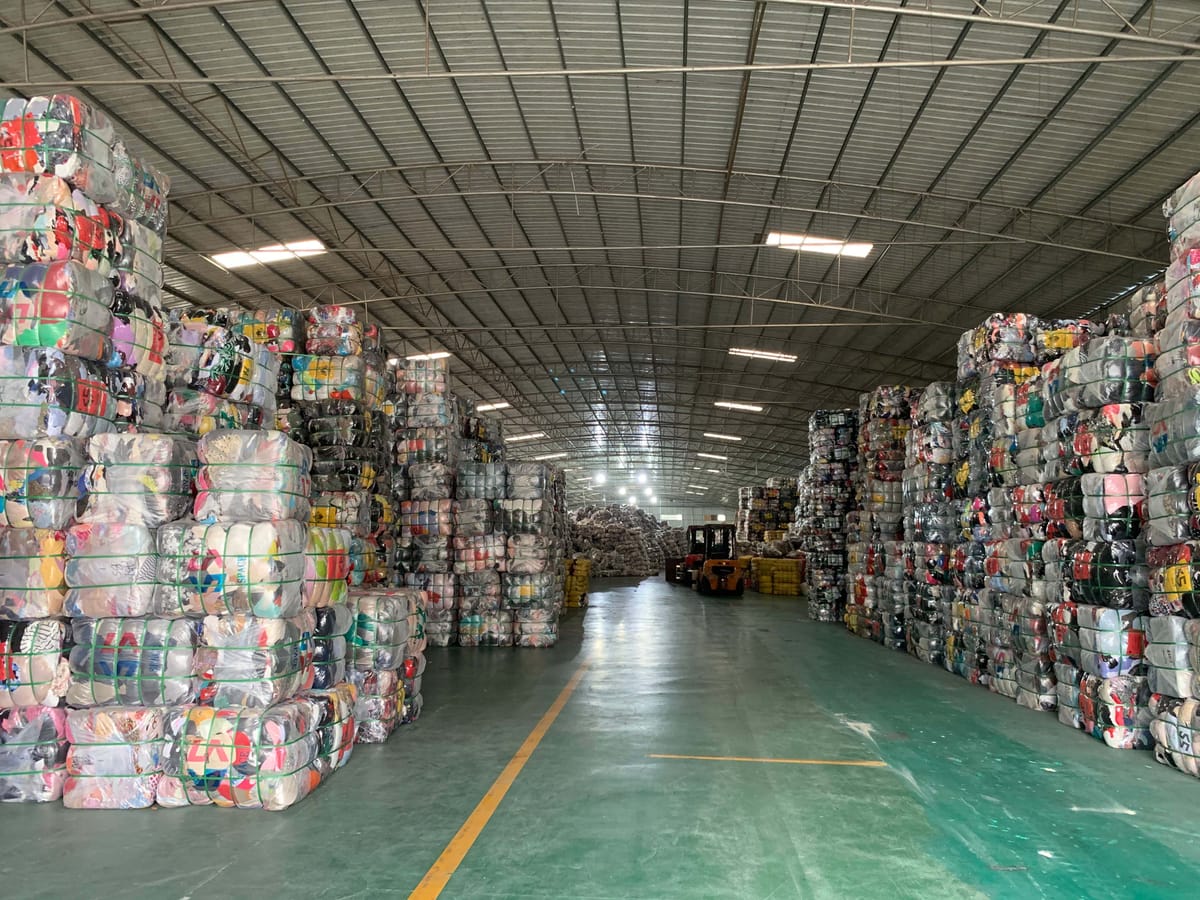
This is why we insist on live video verification. Not because we have something to prove — but because we want you to see exactly what our A Grade looks like before you pay. We want you to compare our sorting line with photos from other suppliers. We want you to make an informed decision.
The Language Barrier and Its Hidden Cost
Here is something many importers do not realize: many Chinese used clothing suppliers do not have English-speaking staff on their sorting floor. The person you are emailing with might be the only English speaker in the company — often a salesperson who has never actually sorted a bale of clothing.
This creates a dangerous gap. The salesperson promises “A Grade, no problem” because that is what the buyer wants to hear. But the sorting team on the floor has never received clear instructions about what “A Grade” means to an international buyer. They sort the way they always have. No one is dishonest — but the translation between “what the salesperson promised” and “what the sorting team delivered” is broken.
This is why we insist on direct communication between buyers and our sorting supervisors. When you video-call our facility, you speak to the people who actually manage the grading. There is no translation gap. What you see is what you get.
Why Some Suppliers Refuse Video Calls
I hear importers complain: “The supplier sent me photos, but they look like a showroom.”
Here is the honest reason some suppliers avoid live video:
- They are not the actual sorter. They are a trading company or broker. They buy from other suppliers and resell. A video call would expose that they do not own a sorting facility.
- Their facility does not look professional. The sorting floor is disorganized, the lighting is poor, the workers are untrained. They know it would not inspire confidence.
- They do not have consistent inventory. A video call requires showing what you have right now. If inventory is low or disorganized, that is embarrassing.
- They are not prepared for the level of transparency that serious buyers expect.
A live video call takes five minutes. Any exporter who cannot spare five minutes for a potential buyer is either not serious, not the actual supplier, or not confident in what you would see.
None of those are good signs.
Real Supplier vs Broker: How to Tell
| What They Say | What It Often Means |
|---|---|
| “We have our own factory” | Ask to see it on a live video call. If they hesitate, they may be a broker. |
| “We can do $1.80/kg A Grade” | Either the grade is not what you think, or the weight will be adjusted. A Grade sorting costs more than that to produce profitably. |
| “We export to many countries” | Ask for specific buyers in YOUR region. “Many countries” can mean one container to a different port every six months. |
| “We have been in business X years” | Check if their company registration matches. Many “old” companies rebrand after problems. |
Not All Chinese Suppliers Are the Same
I want to be clear about something: I am not writing this to insult my competitors. Many Chinese used clothing exporters run honest, professional businesses. But the industry has a transparency problem, and new importers pay the price.
Here is what you should look for in any supplier — whether you choose us or someone else:
- Live video access to the sorting floor — not pre-recorded videos, not photos
- Written grading standards with photos of actual bale contents
- Verifiable company registration — a public registration number you can check
- Market-specific references — buyers in your country you can contact
- Transparent pricing — they explain why A Grade costs what it does
What We Do at Hissen Global
I work for Hissen Global, so I will tell you directly what we offer. I do this not to sell you — but to give you a benchmark for what a transparent Chinese supplier looks like:
| Factor | What We Do |
|---|---|
| Years exporting | 12 years (since 2014) |
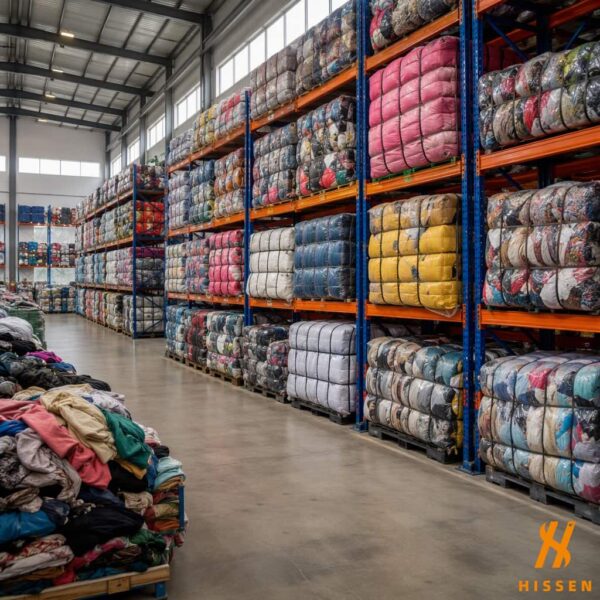
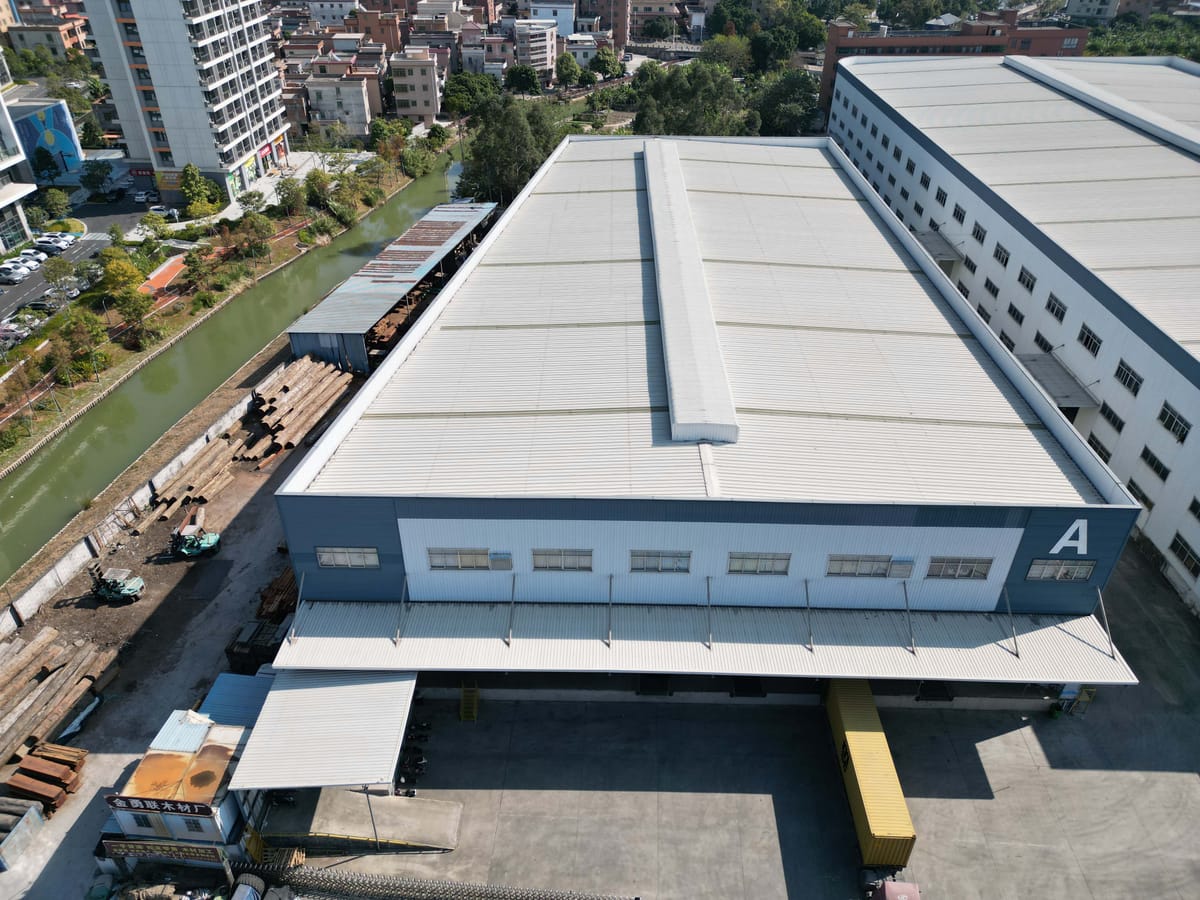
| Our facilities | 3 factories in Guangzhou, Dongguan, and Huadu — 20,000 m² total |
| Sorting capacity | 25 production lines, 400+ workers, 6,000 tons/month |
| Video verification | Live WhatsApp or WeChat calls — we encourage it |
| Grading standards | Written A Grade definition with photos — no ambiguity |
| Public verification | China Credit Code: 91440101MA9W4PK77K |
| Export track record | 7,000+ containers shipped to 110+ countries |
We do not claim to be the cheapest supplier. We claim to be a transparent one.
This approach has a cost. Our A Grade bales are priced between competitive A Grade pricing (see our pricing guide for current rates), depending on category and volume. That is higher than some suppliers. But our customers stay with us for years because they know exactly what each container will contain.
We currently ship to 110+ countries. Many of our customers started with a single bale, built trust over multiple orders, and now import full containers every month. That kind of relationship is only possible when both sides are transparent from the start.
If that is what you are looking for, contact us. We will show you our facility on a live video call, explain our pricing in detail, and let you decide if we meet your standards.
If you choose another supplier, that is fine too. But use the checklist above. Ask the hard questions. Demand transparency.
You deserve to know exactly what you are paying for.
Resources for Importers
- 📖 Complete guide to used clothing suppliers in China
- ⚠️ 7 red flags — used clothing distributor scams
- 📊 Grade A vs Grade B bales comparison
- 📝 $10,000 lesson — 5 things every importer should know
This letter was originally written for our Facebook community. If you found it valuable, share it with a fellow importer. The more transparent our industry becomes, the better it works for everyone.
— A Chinese used clothing exporter who believes honesty is the best policy
Facebook Version — Share This With Your Network
If you want to share this message with your community, here is a short version for Facebook, WhatsApp, or LinkedIn:
🇨🇳 I work for a used clothing exporter in Guangzhou, China. Let me tell you something most of my competitors won’t.
When you push for $1.80/kg “A Grade,” here is what actually happens: the grade gets mixed, the bales get underweight, or the category mix changes. Something has to give — because A Grade sorting at $1.80/kg is not profitable.
And when a supplier refuses a live video call? It is usually because they do not own a sorting facility. They are a broker.
I wrote an open letter explaining exactly how the industry works — the good, the bad, and the honest. No marketing fluff. Just the truth.
♻️ Share this with an importer who needs to hear the honest side of this business.