If you are searching for a used clothing exporter or trying to understand how the used clothing export trade works, this guide covers the major exporting countries, key exporters by region, shipping documentation, regulations, and pricing — everything you need to evaluate suppliers across different origins.
⏱ 8 min read · For importers, wholesalers & trade buyers
In this guide you will learn:
- Which countries export used clothing — and which origin suits your market
- How to verify a used clothing exporter before sending payment
- Export documentation, regulations, and pricing benchmarks
- The real trade risks — and how to avoid them
Used Clothing Export: Complete Guide to the Global Trade (2026)
The used clothing export industry is a major global trade. Every month, hundreds of thousands of tons of second hand garments cross borders — from collection points in developed countries to sorting facilities in trading hubs, then to buyers in Africa, Asia, and the Middle East.
Understanding how this export trade works is essential whether you are a used clothing exporter looking to enter the market, or an importer trying to understand where your containers come from and how the supply chain is structured.
This guide covers the used clothing export trade: major exporting countries, key exporters, shipping routes, documentation, regulations, and market dynamics.
Which Countries Export Used Clothing?
The used clothing export trade is dominated by several major exporting regions:
| Country / Region | Est. Monthly Export | Key Advantages | Main Destinations |
|---|---|---|---|
| China | ~$135 million 1 | Highest volume, 200+ suppliers, competitive pricing, wide variety | Africa, Southeast Asia, Middle East |
| South Korea | ~$36 million 1 | Fashion-forward K-style, good English communication | Malaysia, India, Thailand, Philippines, Africa |
| United Kingdom | ~$30 million 2 | High branded content, mature sorting industry, well-established trade routes | Africa, Asia, Eastern Europe |
| Germany | ~$25 million 2 | Efficient collection system, consistent quality, strong recycling infrastructure | Africa, Asia, Eastern Europe |
| Netherlands | ~$15 million 2 | Major port hub (Rotterdam), mixing European collections | Africa, Asia |
| USA | ~$20 million 2 | Large volume, diverse categories, charity-based collection network | Central America, Africa, Asia |
| Japan | ~$8 million 2 | High quality, clean items, luxury brand presence | Southeast Asia, Africa |
China dominates the used clothing export market by volume — estimated at roughly 3-4 times the next largest exporter. The concentration of sorting facilities in Guangzhou, combined with competitive labor costs and established shipping infrastructure, gives Chinese exporters a structural advantage in serving African and Asian markets.
1 Based on Korean customs data (April 2024) + estimated China ratio from industry trade volumes.
2 Estimated from UN Comtrade HS 6309 reported exports, averaged over recent quarters. Actual figures vary by month and reporting methodology.
Top Used Clothing Exporters by Region
🇨🇳 Used Clothing Exporters in China
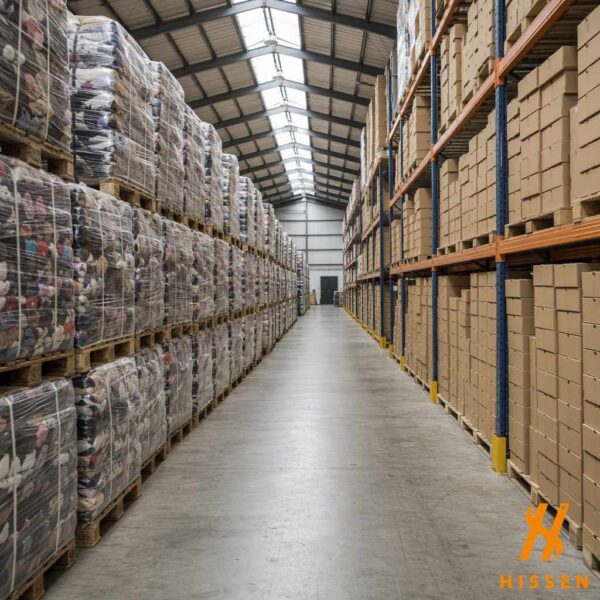
China is home to the largest number of used clothing exporters — over 200 active companies concentrated in Guangdong Province (Guangzhou, Dongguan, Huadu). Guangzhou alone has dozens of sorting facilities processing 6,000+ tons of raw material monthly. Major exporters include Hissen Global, Guangzhou Zagumi, and others operating at industrial scale. See our complete guide to Chinese suppliers for detailed profiles.
🇬🇧 Used Clothing Exporters in the UK
The UK has a mature used clothing export industry centered in London, Manchester, and Birmingham. British used clothing is prized for its branded content — estimates from trade data suggest 40-60% of items carry recognizable brand labels (source: UK Textile Recycling Association, 2024 sector report). Companies like Worth the Weight (Birmingham), British Used Clothing (BUC), and EcoTextile operate large sorting facilities serving African and Asian markets. “Ex UK” bales and mitumba-grade exports to West and East Africa are a significant segment.
🇰🇷 Used Clothing Exporters in South Korea
Korean exporters like K-FOREIGNER Trading (40-50 containers/month), KISUK TRADING (since 2000), and GNL Company ($25-50M annual sales) serve 30+ countries. Korean used clothing is known for fashion-forward styles and professional A/B/C grading. See our Korea sourcing guide for details.
🇺🇸 Used Clothing Exporters in the USA
The US used clothing export industry operates through a combination of charitable organizations (Goodwill, Salvation Army) and commercial processors. Key companies include GCI Atlanta (Georgia), American Used Clothing (New Jersey), and Vida Used Clothing (California). Major sorting hubs are located in Atlanta, Los Angeles, and the New York-New Jersey area. US exports primarily serve Central American, West African, and South Asian markets.
🇪🇺 Used Clothing Exporters in Germany and Europe
Germany has one of Europe’s most efficient textile collection systems, with companies like Eurotex GmbH, Texaid, and Soex operating large-scale sorting facilities. The Port of Hamburg serves as a major export hub for German used clothing. Across Europe, the Netherlands (Rotterdam) functions as a consolidation hub for mixed European collections. EU trade data shows European A Grade bales priced /usr/bin/bash.50-.50/kg FOB higher than Asian origins, reflecting higher branded content. See our pricing guide for current comparisons.
How the Used Clothing Export Trade Works
The supply chain from collection to export follows these stages:
- Collection — Used clothing is collected through donation bins, charity partnerships, municipal programs, and direct sourcing from households. Collection quality depends on the source population’s income level and fashion turnover rate.
- Pre-sorting — Collected items are brought to sorting facilities where they are first screened for obvious damage. Heavily worn or stained items are diverted to recycling or rag processing.
- Grading and sorting — Garments are sorted by gender, category, and assigned a grade (A, B, or C). This is the most labor-intensive stage and the key determinant of bale quality.
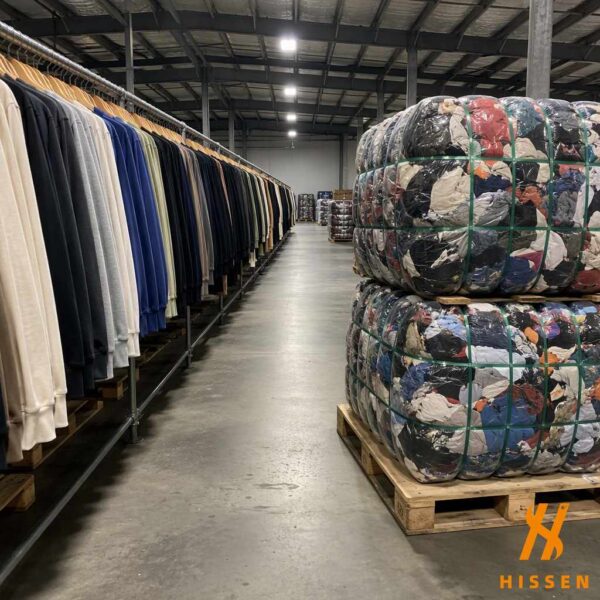
- Baling — Sorted garments are compressed into standard bale sizes (45 kg, 55 kg, 80 kg, 100 kg) using hydraulic balers. Bales are tagged with grade, category, and weight information.
- Export documentation — Exporters prepare commercial invoices, packing lists, Bills of Lading, and fumigation certificates required for international shipping.
- Container loading — Bales are loaded into containers (20ft or 40ft HQ) and shipped to the destination port.
Used Clothing Export Documentation
Exporting used clothing requires specific documentation. The standard set includes:
| Document | Purpose |
|---|---|
| Commercial Invoice | States FOB value, HS code (6309.00 for used clothing), quantity, and buyer/seller details |
| Packing List | Detailed breakdown of bales by grade, category, weight, and quantity |
| Bill of Lading (B/L) | Shipping document that proves ownership and contract of carriage |
| Fumigation Certificate | Certifies that the container and goods have been treated for pests — required by most African and Asian countries |
| Certificate of Origin | May qualify for preferential duty rates under trade agreements |
Reputable exporters provide all of these documents as standard. If a supplier cannot produce proper documentation, it is a red flag.
Used Clothing Export Regulations
Exporting Country Regulations
Most exporting countries do not heavily regulate used clothing exports. China, South Korea, the UK, Germany, and the USA all allow free export of second hand clothing with standard customs documentation. However, individual exporters must comply with local business registration and tax requirements.
Importing Country Regulations
⚠️ Import Regulations — Key Risks to Know
Several importing countries regulate or restrict used clothing imports:
- East African Community (EAC) — Kenya, Tanzania, Uganda, Rwanda, Burundi. Rwanda raised tariffs on used clothing from $0.20/kg to $2.50/kg in 2016 (1,150% increase) to protect its domestic textile industry. The broader EAC has debated a phased ban on used clothing imports under the “EAC Industrialization Strategy,” though enforcement has been inconsistent across member states. Kenya remains one of the world’s largest used clothing importers despite these pressures. Importers should monitor EAC trade policy closely as any changes would significantly affect demand.
- Nigeria — Used clothing imports are legal but subject to import duties and inspection. Import licenses may be required.
- Rwanda — Imposed higher tariffs on used clothing to protect domestic textile industry.
- South Africa — Used clothing imports are restricted but enforcement varies.
- Most other African and Asian countries — Used clothing imports are legal and widely traded.
Used Clothing Export Pricing
Export pricing varies by origin, grade, and category. Typical FOB prices:
| Export Origin | A Grade FOB/kg | B Grade FOB/kg |
|---|---|---|
| China | $2.00–$3.00 | $1.00–$1.80 |
| South Korea | $1.10–$2.00 | $0.60–$1.20 |
| United Kingdom | $2.50–$4.00 | $1.20–$2.00 |
| Germany / Europe | $2.50–$4.00 | $1.20–$2.00 |
| USA | $2.00–$3.50 | $1.00–$1.80 |
| Japan | $3.00–$5.00 | $1.50–$2.50 |
For current pricing by origin, see our mitumba bale pricing guide. For shipping costs, see our shipping cost guide.
How to Verify a Used Clothing Exporter
Whether you are buying from a used clothing exporter in China, UK, Korea, or elsewhere, use this checklist:
✅ Exporter Verification Checklist
- ✅ Request a live video tour of the sorting facility — not pre-recorded videos
- ✅ Verify company registration through public government databases
- ✅ Ask for buyer references in your specific market
- ✅ Request photos of actual bale contents — 20-30 random items spread on the floor
- ✅ Confirm bale weights with documented scale photos during packing
- ✅ Get grading standards in writing — what exactly defines A Grade?
- ✅ Check the exporter’s export history — how many containers per month?
For a more detailed guide, see our red flags for distributor scams article.
💡 Key Takeaways
- China offers the best balance of price, volume, and supplier options (competitive pricing within the A Grade market range A Grade FOB)
- UK/Europe provides higher branded content (40-60%) at premium pricing
- South Korea delivers fashion-forward styles at competitive pricing reflecting the Korean market position
- Always verify with live video tours and public company registration before paying
- Documentation errors (fumigation cert, HS code 6309.00) are the #1 cause of customs delays
Frequently Asked Questions
Which country exports the most used clothing?
How do I find a used clothing exporter?
What documents do I need to export used clothing?
What happens if my used clothing container gets held at customs?
How do I verify a used clothing exporter if I cannot visit in person?
Building Your Used Clothing Export Business
The used clothing export trade offers real opportunities for both exporters and importers. The market is growing at 16% annually, with demand across Africa, Asia, and the Middle East continuing to rise.
For importers: understanding the export side helps you evaluate suppliers more effectively and make informed sourcing decisions. For potential exporters: the market rewards scale, sorting accuracy, and transparent business practices.
Explore our complete series: market overview, supplier sourcing, bales guide, market trends, and sourcing by country.
Evaluating used clothing exporters? We invite you to compare before you decide.
Hissen Global is a China-based exporter that meets the transparency standards described in this guide: live video tours, verifiable company registration (China Credit Code: 91440101MA9W4PK77K), and documented export history across 110+ countries.