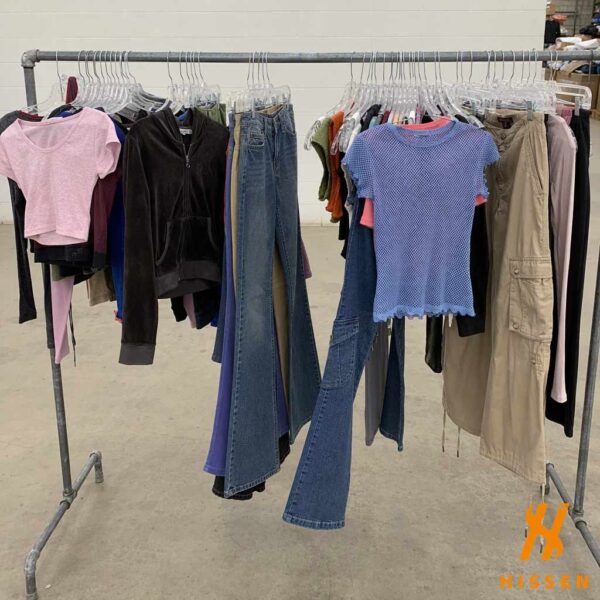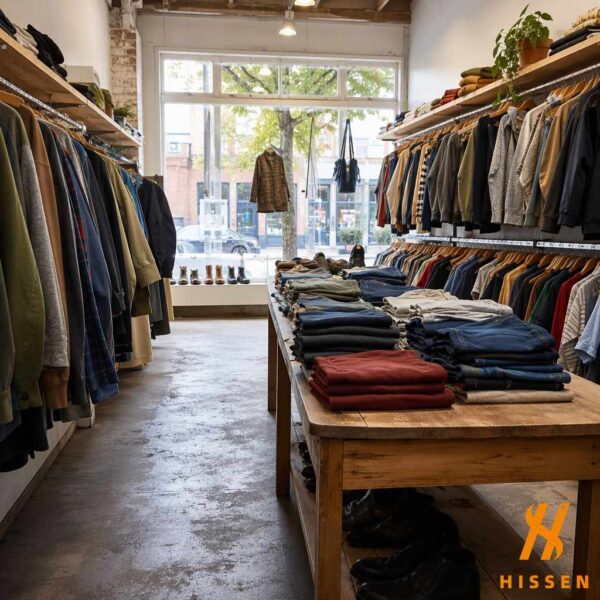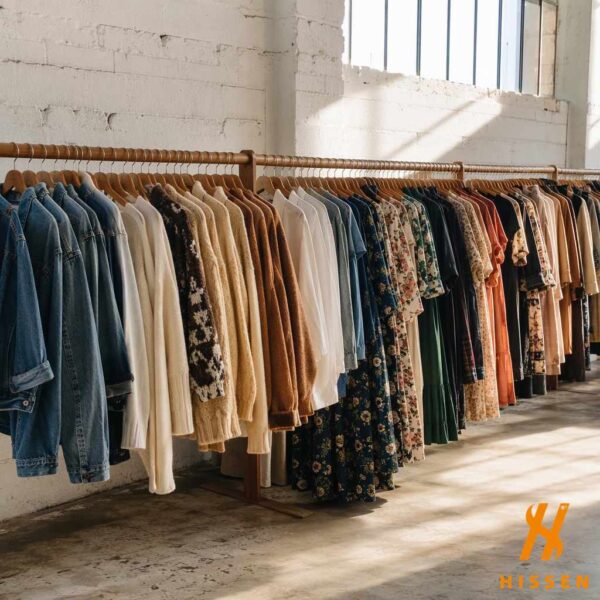
Few words in this trade cause more expensive confusion than “bundle”. In one market it means a tied pack of fifteen garments sold at a weekend rag market. In another it means a fifty-kilogram pack that is functionally identical to a bale. Online it usually means a stranger’s wardrobe, emptied into a bag and sold for a round number. The same three syllables, four different products, and prices that cannot be compared with each other at all.
That matters because the bundle question is really a question about where you sit in the chain. A bundle exists because somebody opened a bale and broke it down, and the price you pay for it includes their labour, their storage and their risk. Sometimes that premium is worth it — a small trader testing a market has no business buying a whole bale. Sometimes it is the most expensive thing you can do, because the bundle is what remains after the best pieces have been taken out.
This guide is about that decision: what a bundle is in each market, where it sits on the chain, the arithmetic that tells you whether to buy bundles or open bales yourself, what to check before you tie up money, why the online “clothes bundle” is usually a different product entirely, and what it takes to bundle for a living.
⏱ 12 min read · For buyers choosing between bundles and bales
In this guide you will learn:
- The four different products sold as a “bundle”, and why their prices are not comparable
- Where a bundle sits on the chain, and what the bundler actually adds
- The arithmetic that tells you when a bundle is worth its premium
- Why the premium is mostly labour and leftover risk
- When buying bundles is the right call — and when it quietly costs you the margin
- Six checks to run before you pay for a bundle
- How to tell a graded bundle from an online clear-out
- What it takes to make bundles yourself, and where that business fails
One Word, Four Products
Before comparing any prices for clothes bundles for sale, work out which product you are being quoted for. The word is not standardised and no supplier will warn you that it is not.
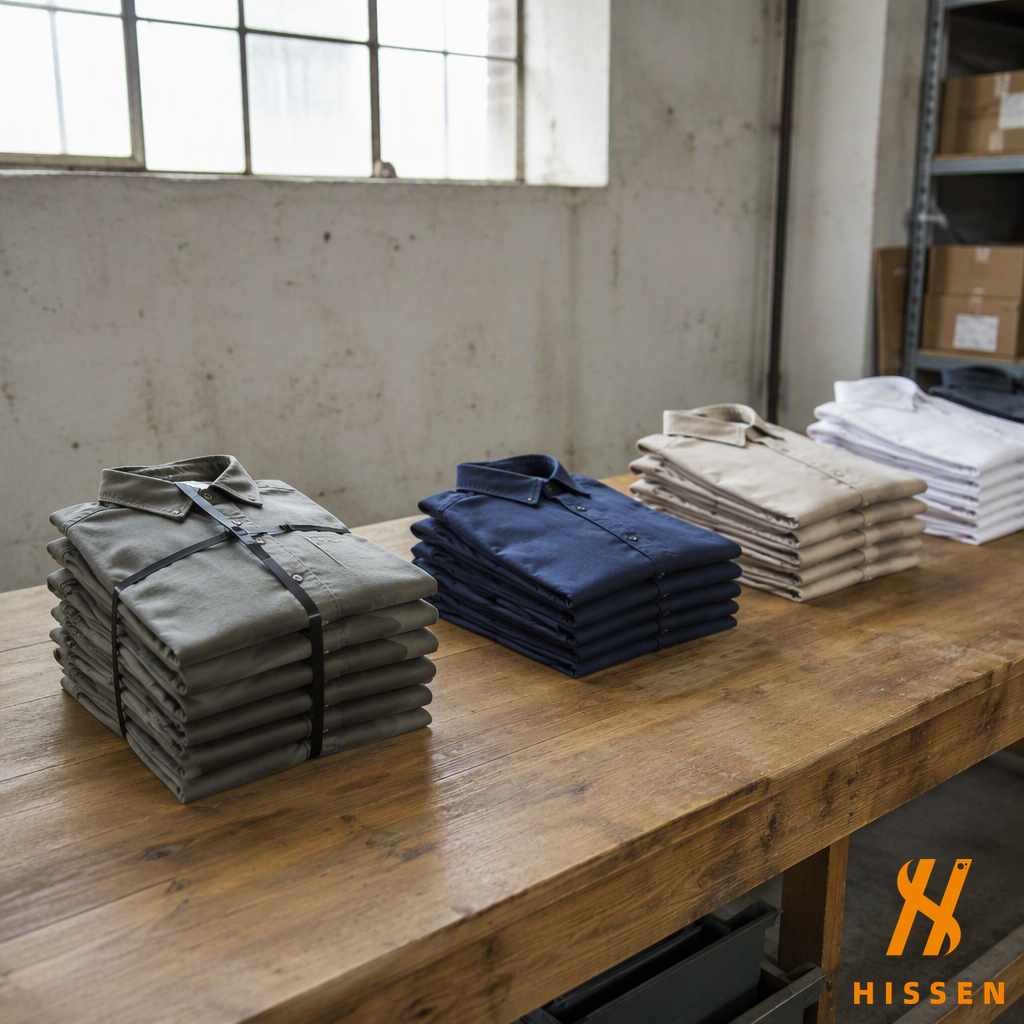
- The rag-market bundle (UK and Ireland). A tied pack of roughly ten to twenty-five garments, usually a single category — all men’s shirts, all women’s knitwear, all childrenswear — sold by the bundle at wholesale markets and rag warehouses. This is a small, category-pure unit designed to be carried home and sold piece by piece.
- The ukay-ukay bundle (Philippines). Here the word means something close to a bale: a tied, compressed pack in the tens of kilograms, imported and then broken down locally. A Philippine buyer asking for bundles and a British buyer asking for bundles are asking for products an order of magnitude apart.
- The mitumba bundle (East and West Africa). The wholesale unit is the bale. Below it, a smaller tied pack — what a market trader can actually carry and sell in a week — is sometimes called a bundle. It is a retail-adjacent unit, not an import unit.
- The online job lot. On consumer marketplaces a “clothes bundle” is an assortment of somebody’s used clothing, commonly five to twenty kilograms, sold as one lot without a count, a weight stated in the listing, or any grading at all.
There is a fifth usage and it is not this trade at all: new-goods retailers use “bundle” to mean two or three new products sold together at a discount. If a listing is offering new clothing in bundles, you are looking at retail merchandising, not second-hand supply, whatever the surrounding words suggest.
Why does the distinction matter commercially? Because the only fair comparison in this trade is cost per sellable piece, and the word “bundle” does not tell you the count, the weight, the category purity or the condition floor. Two bundles at the same price, one of fifteen shirts and one of forty mixed garments, are not the same offer at all. What format a bale takes at the top of the chain is set out in the bales of clothes guide; this page is about the step below it.
| Format | Typical size | Sold by | Who it suits |
|---|---|---|---|
| Bale (export unit) | 45–55 kg compressed, banded | Weight, per bale or per container | Importers and wholesalers who will break it down themselves |
| Rag-market bundle (UK) | 10–25 pieces, one category | The bundle, sometimes by count | Market traders and small shops buying weekly |
| Ukay bundle (Philippines) | Tens of kilograms, tied | The pack | Local wholesalers reselling to stallholders |
| Mitumba bundle (Africa) | A trader’s weekly quantity | The pack, often by count in practice | Market traders buying below the bale level |
| Online job lot | 5–20 kg, unsorted household goods | The lot, no count stated | Consumers, and resellers willing to gamble |
Where a Bundle Sits on the Chain
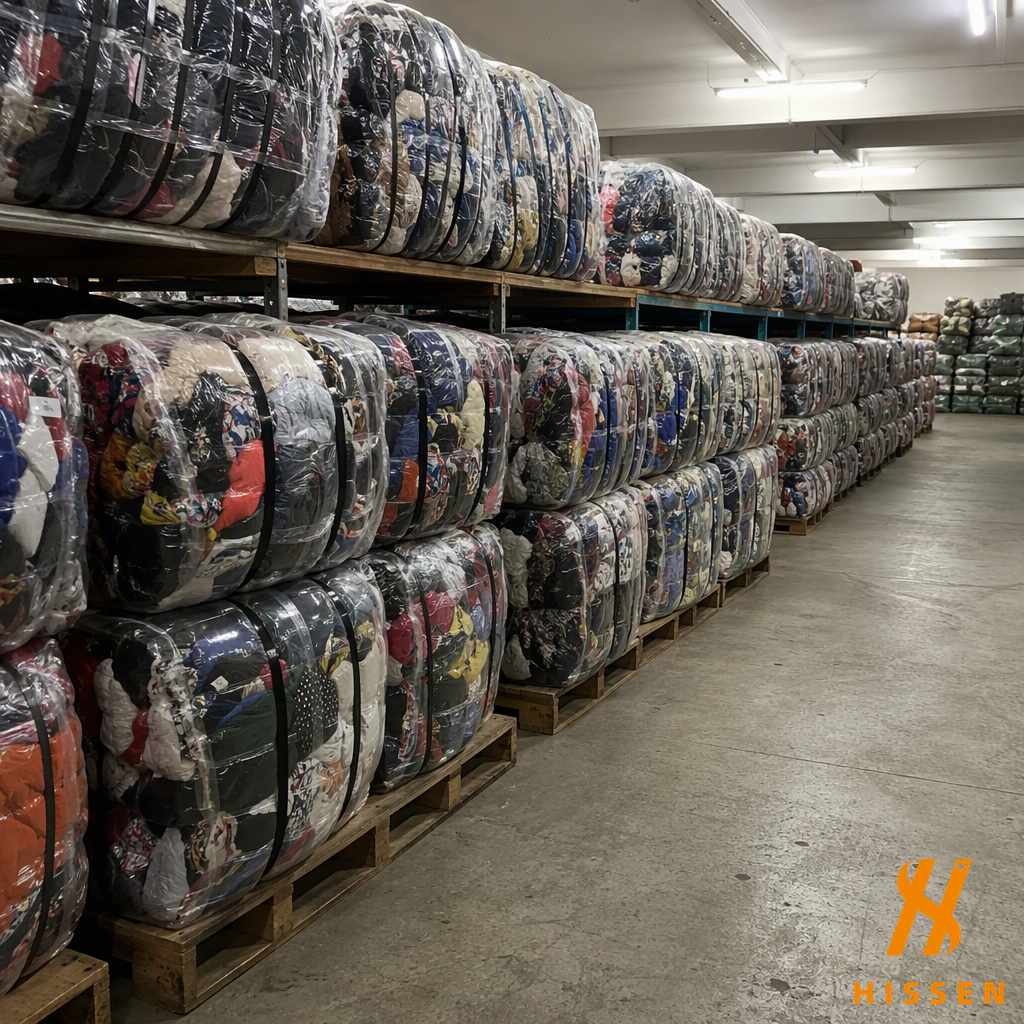
The chain runs: collection, sorting house, bale, bundler, trader. A bundle is not a natural product of the collection system — it is manufactured, deliberately, by someone who buys bales and opens them. Understanding what they do explains the price you are being asked to pay.
A bundler takes a bale and does four things to it. They re-grade: even a well-sorted bale contains pieces that will not sell in their market, and the bundler removes them. They split by category and size, which is the actual value creation — a trader who sells men’s shirts can use a bundle of men’s shirts and cannot use a bundle containing dresses. They break bulk, turning one purchase into twenty, which is what makes the unit affordable to somebody with a market stall and no warehouse. And they carry the leftover risk: the pieces nobody wanted stay on their floor, and their price has to cover them.
That last point is the one buyers underestimate. The bundler is not adding a percentage for doing nothing. They are buying a distribution and selling a selection, and the difference between those two things is inventory that may never move. Every bundle you buy carries a share of somebody else’s unsold stock.
The Arithmetic: Cost Per Piece, Bundle Versus Bale
The decision is arithmetic, not preference. Work it in cost per sellable piece, and the answer usually becomes obvious.
Start with the bale. Take a 45 kg bale of mixed adult clothing at 0.35 kg per piece — about 128 garments. Suppose 55% are sellable in your market after your own grading: roughly 70 pieces. Divide the bale price by 70 and you have your real cost per sellable piece.
Now price the alternative. A bundler selling category-pure packs of twenty shirts might charge a third more per kilogram than the bale price. On the face of it the bale looks better. But the bundle has already had most of the unsellable removed, so its yield is far higher — perhaps 85% sellable, not 55%. Run the numbers per sellable piece and the gap narrows sharply, sometimes to nothing.
Then add what the bale costs you that the invoice does not show: floor space for 128 garments, a table, two or three days of somebody’s time to sort, bags or banding to re-pack what you keep, and the disposal cost of what you cannot sell. In a high-wage market those costs are often larger than the bundler’s premium.
The break-even in one sentence: buy the bale when your fully loaded cost of sorting it — labour, space and waste disposal — is lower than the bundler’s markup per sellable piece; buy bundles when it is higher. For most small traders in Western Europe the answer is bundles. For an importer with a warehouse and staff, the answer is almost always the bale.
Two structural points follow. First, the bundler’s premium scales with labour cost, so the same bundle is worth much more in Norway than in Kenya — which is exactly why bundling as a business exists in high-wage markets and rarely survives in low-wage ones. Second, the premium is highest on exactly the categories where the tail of the distribution carries the value. If the money in your category is in the few exceptional pieces, a bundle that has already been picked over removes the reason you were buying.
The Premium Is Real, and It Is Mostly Labour
Buyers new to this often assume a bundle markup is somebody’s margin on nothing. It is worth being precise about what is inside it, because the components behave differently.
- Labour, twice. Somebody sorted at the bale stage and somebody sorted again at the bundling stage. You are buying the second sort.
- The removed fraction. The pieces taken out at bundling were paid for and are not in your bundle. Their cost is inside your price.
- Leftover risk. The bundler’s unsold stock has to be paid for by the sold stock.
- Storage and handling. Bundles occupy floor space and get moved repeatedly; a bale sits in a corner.
- Proximity. A bundle is often available ten kilometres away, this week, in the category you want. A bale is available in another country, in six weeks, in whatever mix it comes in.
Proximity and timing are the components buyers undervalue. If your selling season starts in three weeks, a container of bales is not a substitute for a vanload of bundles, at any price. The premium you pay for the bundle is partly the price of being able to trade now, and that is a legitimate thing to pay for.
When Buying Bundles Is the Right Call
Bundles win in five situations, and it is worth being honest about which one you are in.
- You are testing a market. One bale commits you to a category mix and a volume you have no evidence for. Ten bundles across three categories is a cheaper way to learn what sells.
- Your capital is below one bale. This is the most common reason and the most legitimate. A bundle business can start with the price of a week’s stock rather than a container.
- Your labour is expensive and your space is small. In a city-centre shop with one member of staff, sorting is not a side activity you can absorb; it is a cost.
- You need category purity. If your customers want men’s workwear and nothing else, a bundle of men’s workwear is a product; a bale is a project.
- You need it this month. Lead time is a real cost, and domestic bundles have almost none.
None of these is a compromise. Bundles are the correct purchase for a large part of the trade — they are how most market traders and small shops actually operate, and the format exists because it works.
When It Is the Wrong Call
The same arithmetic that makes clothes bundles for sale attractive to a small trader makes them expensive for anyone with sorting capacity. Three situations where bundles quietly cost you the margin:
- You already have a warehouse, a table and staff. You are paying somebody else for work you are already equipped to do yourself.
- Your volume is more than a few bundles a week. At that point the bundler’s markup is a line item large enough to fund your own sorting operation, and the transition point arrives sooner than most buyers expect.
- The value in your category is in the rare pieces. Bundles are, by construction, the stock that survived somebody else’s grading. If the reason a lot is interesting is that one piece in two hundred, bundles are the wrong unit entirely — you want to see the bale before it has been picked.
That last point deserves emphasis because it is the one that catches experienced buyers. A bundler’s incentive is to keep the visible quality high and remove anything exceptional, because exceptional pieces can be sold individually at a much higher price elsewhere. If you are buying bundles in a category where individual pieces can be worth many times the average, assume the top of the distribution has already left the building.
What to Check Before You Pay for a Bundle
Before you pay for any clothes bundles for sale, run six checks. All can be done at the point of purchase and none requires special equipment.
- Count, not just weight. A bundle is defined by how many pieces are in it. If the seller can only tell you the weight, the pack is a small bale, not a bundle, and should be priced as one.
- Consistency between count and weight. Divide one by the other. A pack of twenty garments that weighs fourteen kilograms averages 0.7 kg a piece, which is outerwear or denim, not shirts. If the arithmetic contradicts the description, the description is wrong.
- Category purity. Open one bundle fully and count how many pieces are not the stated category. In rag-market trade a small amount of contamination is normal; a third is a different product.
- Size range. Whether the bundle is a size run or a jumble. A jumble of one size is more valuable to a shop than a mixed-size run, and it is priced accordingly.
- Whether the visible layer represents the pack. In bundling, the pieces on top are seen and the rest are not. Open the bundle from the bottom as well, and compare. This single check catches most of the disappointing purchases in this format.
- Uniformity across the lot. If you are buying ten bundles, open three of them. A seller whose bundles vary wildly has no grading standard; one whose bundles are consistent has a sorting process, and that is the supplier you want to keep.
And the question that settles it, which almost nobody asks: what was removed before these were tied? A serious bundler will answer, because they removed things for a reason — wrong category, damaged, wrong season. A seller who claims nothing was removed is telling you either that the grading happened at the bale stage and you are getting a well-sorted pack, or that nobody graded at all. The answer usually reveals which.
The Online Job Lot Problem
A large share of the searches for clothes bundles for sale lead to consumer marketplaces, and that product is different in kind from everything described above. It is not a graded pack; it is a household clear-out. There is no count, no weight, no grade, no category control and no recourse.
The tells are consistent. Photos of a single unopened heap rather than stacks of tied packs. Language borrowed from domestic selling — smoke-free home, pet-free, from a clean house. A price that is round and small. No statement of how many pieces. No mention of brands, categories or seasons. Listings that describe “mixed sizes” as a feature rather than a limitation.
None of that is dishonest; it is simply a different transaction between private individuals. What it is not is wholesale supply, and it cannot be resold on the assumption that it is. If you are buying to resell, a clear-out bundle gives you an unpredictable assortment at an unpredictable cost per piece, and the only way to know what you have is to buy it — which is the opposite of sourcing.
A note if you are buying for yourself, not for resale
Some readers arrive here wanting a cheap bundle of clothes to wear. Nothing on this page is against that, but the trade advice above does not apply to you: you are not buying a distribution, you are buying clothes. For that purpose, marketplace lots and charity retail are cheaper than any wholesale route, because wholesale bundles are priced for people who will resell them.
Making Bundles Yourself: The Small Business Test
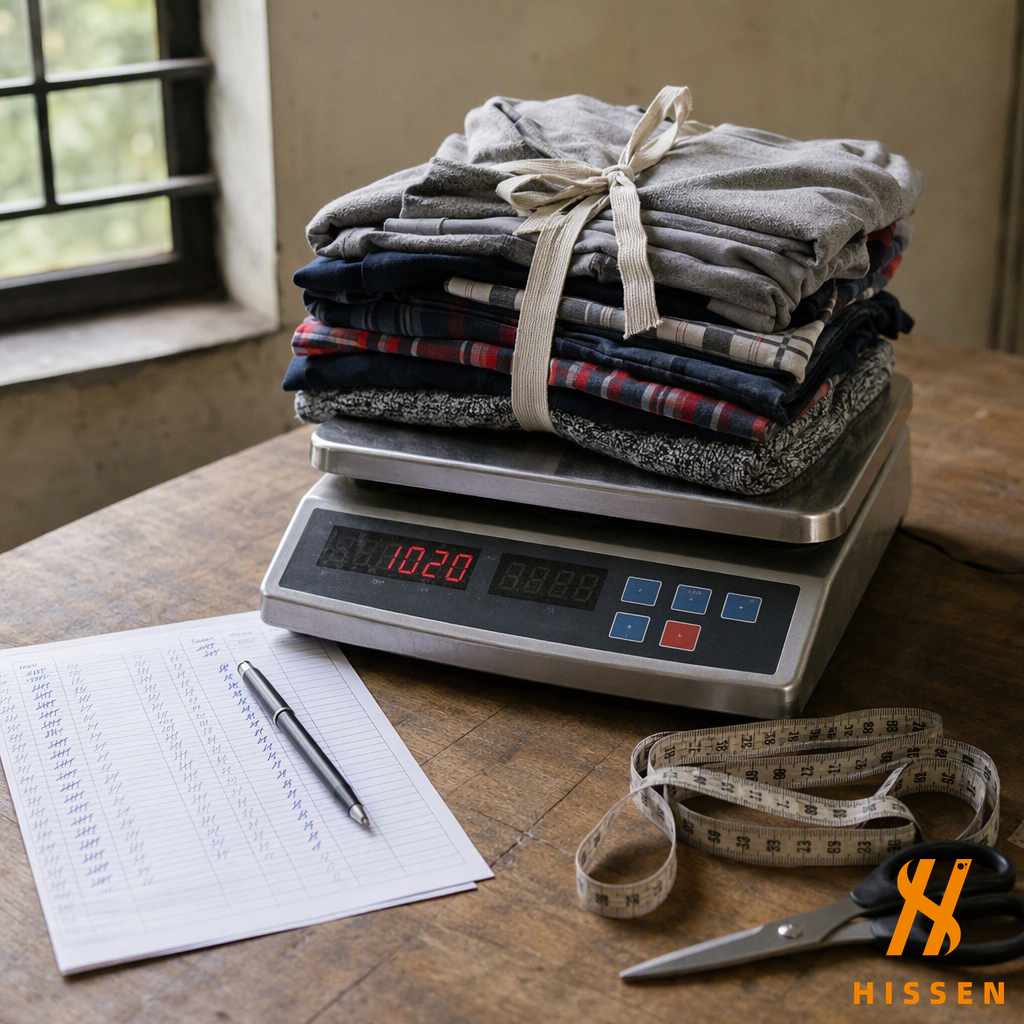
Because the bundler’s premium is largely labour, it is natural to ask whether you should be the bundler. Sometimes yes. The test is arithmetic, and it has four inputs.
Space and setup. A table long enough to lay out a bale, a scale, banding or twine, and enough floor area to keep several days’ output dry and separate. This is modest — a garage or a small unit works — but it is not nothing, and it must be dry.
Labour rate. Time yourself sorting and bundling one bale honestly, including the disposal of what you cannot sell. Multiply by your local wage. If the result is less than the premium you would otherwise pay for bundles, bundling is profitable for you.
A customer who comes back. If you intend to put clothes bundles for sale to traders, the whole model depends on repeat buyers — a trader who wants the same category every fortnight. One-off sales leave you holding the leftover, which is exactly the risk you were trying to avoid by buying bundles in the first place.
The wage structure of your market. This is the harsh one. Bundling exists as a business in high-wage markets because sorting labour is expensive there and bundles are a way to sell the labour rather than the goods. In a low-wage market, the same service is worth much less, and you will be competing with people doing it at a family scale with no overheads. The business is real, but it is a labour-arbitrage business, and it only works on the right side of the arbitrage.
If all four inputs point the same way, bundling is one of the more reliable small businesses in this trade: low capital, fast stock turn, and a product that fits in a car. If the arithmetic is marginal, the same effort applied to buying better bales is usually worth more. The broader cost structure of running this kind of operation is set out in the wholesale clothing business guide.
Bundles in Context: Categories, Grades and Suppliers
Two things are easier once the format question is settled. The first is grading: a bundle inherits the grade of the bale it came from, so the vocabulary — cream, A, B, C — is the same, and it is covered in the second hand and vintage clothing guide and in the used wholesale clothing guide.
The second is finding people to buy from. Bundlers are small, local and rarely listed anywhere; they are found through markets, through other traders, and by asking the sorting houses who buys their bales in your area. The method for building and verifying a list of suppliers — six fields, two-minute screening, where names actually come from — is in the clothing vendor list guide, and applies to bundlers exactly as it applies to exporters.
For buyers whose requirement is a category-pure pack at boutique level rather than a market bundle, the boutique and thrift store supplier guide covers how that end of the trade is structured and vetted. And if you are placing a first order at bale or container level, the sequencing, inspection and claims mechanics are in the bulk ordering guide.
Frequently Asked Questions
What is a bundle of clothes?
It depends entirely on the market, which is why clothes bundles for sale at two different prices are usually two different products. In the UK and Ireland a bundle is a tied pack of roughly ten to twenty-five garments, usually one category, sold at wholesale rag markets. In the Philippines the word describes a pack of tens of kilograms, close to a bale. Online, it usually means an unsorted household clear-out. Always ask for the count, the weight and the category before comparing any two prices.
How many pieces are in a bundle?
In rag-market trade, typically ten to twenty-five, and the number is the defining feature — a bundle is a count-based unit rather than a weight-based one. If a seller can only tell you the weight, treat it as a small bale and price it that way.
Is it cheaper to buy bundles or bales?
Per kilogram, bales are almost always cheaper. Per sellable piece, the gap often disappears, because a bundle has already had most of the unsellable stock removed. Compare cost per sellable piece after your own grading costs, floor space and labour, and buy the bale only when your fully loaded sorting cost sits below the bundler’s markup.
What does “topped” mean in a bundle?
It means the visible layer of the pack is better than the contents. In any tied bundle, the top pieces are the ones a buyer sees, so there is an incentive to put the best there. Opening the bundle from the bottom and comparing the two layers is the fastest check, and it catches most disappointing purchases in this format.
Can I buy bundles directly from a sorting house?
Sometimes, but sorting houses are set up for bales and containers, and a bundle is a retail-adjacent unit they usually sell only locally. If you want bundles at export scale, what you are actually asking for is a bale with a tighter specification, and that is a different conversation — about category purity, size runs and grade floor rather than pack size.
Are bundles good for a first order?
Yes, for most small traders, because they let you test categories with capital far below the price of a bale. The limitation is that your supplier’s grading becomes your quality ceiling, and you learn nothing about how to sort. Many buyers start with bundles and move to bales once they know which categories they can sell.
Why are bundles more expensive per piece than bales?
Because somebody has already done work you would otherwise do: a second grading pass, splitting by category and size, and carrying the risk of the pieces nobody wanted. The premium is mostly labour and leftover risk, plus proximity — a bundle is usually available locally this week, which a container is not.
How do I start a bundle business?
Buy bales, sort them, split by category, and tie packs for traders who come back regularly. That is how the supply of clothes bundles for sale is created in the first place. The setup is a dry space, a long table, a scale and banding. Whether it pays depends on your local wage against the premium buyers will pay for bundles — the business is a labour arbitrage, and it works best where sorting labour is expensive.
Building a bundle business from graded bales?
Hissen Global is a China-based exporter of graded second-hand clothing and shoes, supplying importers, distributors and sub-wholesalers across Africa, Asia, the Middle East and Latin America. We quote with the category composition, the grade and the packing format stated in the proforma, so you know what a bale will yield before you open it.