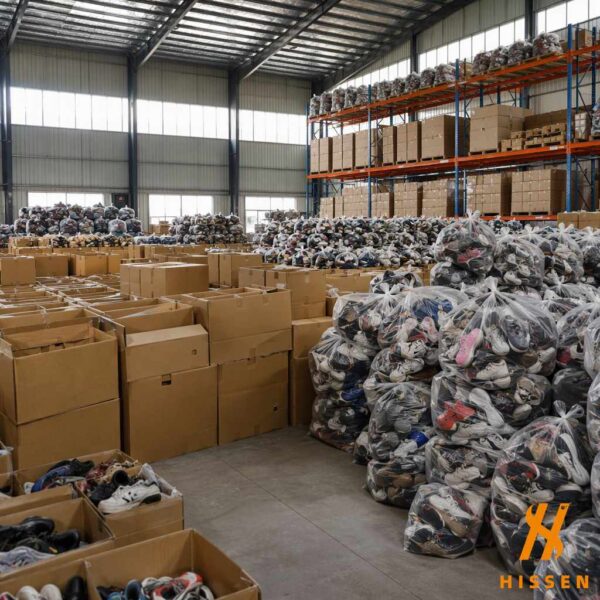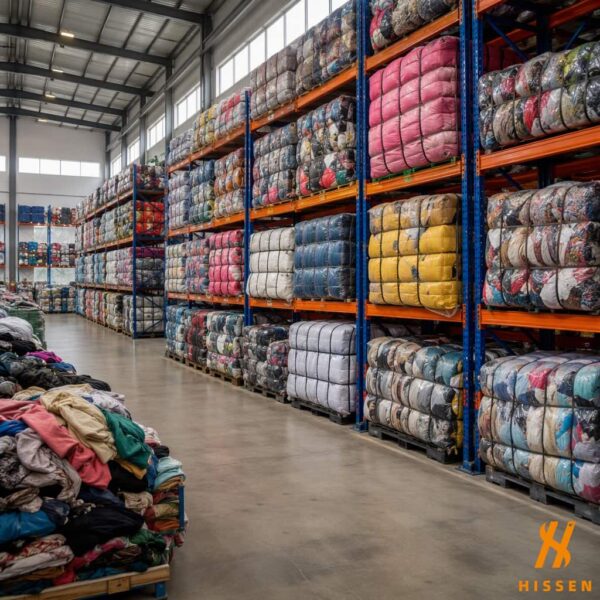
Used wholesale clothing is the widest category in the second-hand textile trade — and the easiest one to buy badly. Unlike a single-product line, where the specification is narrow enough to check in an afternoon, used wholesale clothing is a bundle: the same price per kilogram can buy men’s workwear and branded denim from one supplier, and children’s sleepwear and faded summer dresses from another. The category mix is the product. Get it wrong and no amount of clever selling will recover the margin.
This guide maps the categories you will actually be quoted, explains how grading is applied on a real sorting floor, sets out the packing formats and price bands, and gives you the vetting steps that decide whether the bales you receive match the bales you paid for. Treat it as the map. If you want the route — permits, documents, payment and port procedure — our complete B2B import guide covers that separately.
⏱ 10 min read · For importers, wholesalers & trade buyers
In this guide you will learn:
- The eight used wholesale clothing categories, and which ones carry the least risk
- How A / B / C and cream grading is actually applied before a bale is strapped
- The difference between bales, barrels, lots and overstock — and who should buy each
- Realistic price bands, plus a seven-point supplier vetting checklist
What Counts as Used Wholesale Clothing?
In trade terms, used wholesale clothing means second-hand garments collected, sorted and resold in bulk — never as single items to end consumers. The supply chain runs from donation banks, door-to-door collection and textile recycling networks in North America, Europe, Japan and South Korea, through regional sorting facilities, into export bales and containers. Wholesale buyers sit at the end of that chain: you buy by bale, by barrel or by kilogram, and you resell by the piece.
The distinction that matters most is sorted versus unsorted. Unsorted goods — usually sold as mix — have been baled by origin and weight but not separated by garment type. Sorted goods have passed across a belt where operators pull them into categories, and often into grades. Sorted clothing costs more per kilogram, but the resale profile is far more predictable, which is why most importers who retail by the piece eventually move to sorted supply.
Do not confuse used wholesale clothing with overstock or new-goods clearance. Overstock is unsold new inventory; it is clean and unworn, but it arrives in broken size runs and narrow style ranges, which makes it hard to offer as a full range. Import rules for second-hand clothing also differ from those for new goods in most markets, so the two are not interchangeable from a compliance standpoint either.
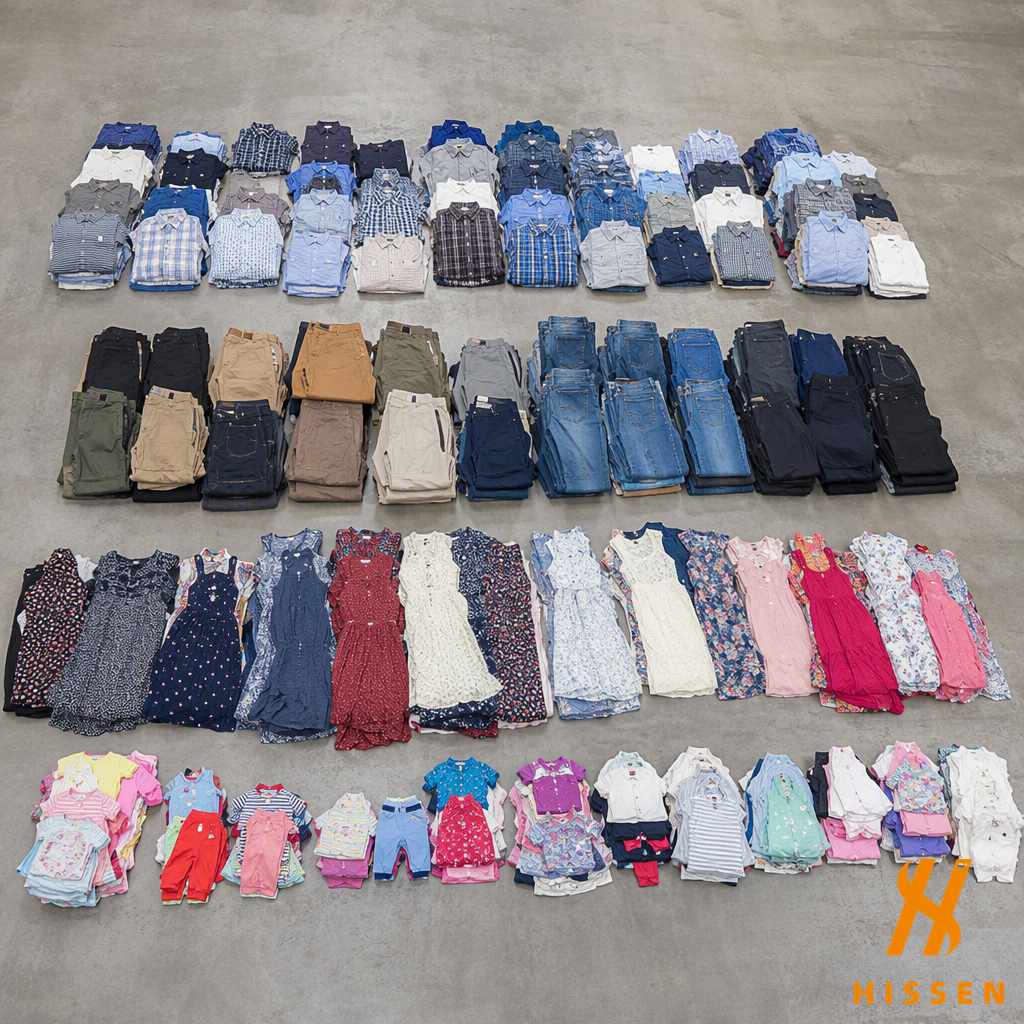
The Wholesale Clothing Categories You Will Be Quoted
Buyers who ask simply for “clothing” get whatever the seller wants to move. Serious buying starts by naming the category, because the category determines the price band, the grading risk and the resale audience at your end.
Menswear and workwear
T-shirts, shirts, trousers, jeans, knitwear, outerwear and, in a distinct sub-category, work clothing — hi-vis, coveralls, work trousers and industrial shirts. Workwear is heavy per piece and was once the cheapest clothing in the trade, but demand for durable work clothing has grown it into a line in its own right, with its own buyers.
Womenswear and dresses
The widest style and quality spread in the trade. Womenswear turns over fastest in almost every destination market — fashion cycles mean stock that sat unsold last season will sit unsold again — so this is the category where buying discipline pays off most.
Juniors, children’s and baby clothing
Children’s clothing sells quickly, is bought in high volume by families and needs the least fashion justification. It is also the category with the most condition problems, because clothes are outgrown faster than they wear out on one hand, and worn hard on the other. Seek a stated age-band split. Our guide to sourcing children’s used clothing bales covers this category in detail.
Branded and name-brand clothing
Garments carrying a recognisable mark. Branded goods are pulled out of the mix because the brand carries a premium in nearly every destination market. Within branded supply, the useful split is between mixed brands — whatever marks happen to be present — and a target brand list, where you name the brands you will accept. See how this is packed in our guide to sourcing branded second-hand clothing bales.
Vintage and retro
Older garments selected for style rather than utility. Vintage is a small share of any bale but can carry the highest margin per piece, because it sells into a different market: boutiques, vintage stores and online resellers rather than market stalls. It requires buyers who can recognise a garment, so it is a poor choice for a first order and a strong one for an established trader.
Seasonal mixes: summer and winter
Summer mix and winter mix are not simply filters on the same stock — they are different products with different packing densities and different seasonal price curves. Winter goods are heavier, bulkier and command a premium when they arrive before the cold season; a container that lands two months late is a discount, not a premium. Our used summer clothing and used winter clothing ranges are packed as separate lines for exactly this reason.
Matching sets and co-ords
Matched two-piece and three-piece sets, from children’s outfits to adult co-ords. Because the pieces must stay together, the value depends on sorting discipline: a set broken up is worth less than the sum of its parts, so sets are only a sensible line from a supplier who extracts them as a category rather than incidentally.
Mixed and unsorted clothing
Everything in one bale: men’s, women’s, children’s, all seasons, all types. The cheapest entry point per kilogram and the highest variance. Mix is the right product only if your buyers are themselves market resellers who sort and accept their own losses — it is the wrong product for stocking a shop.
How Used Wholesale Clothing Is Graded
Grade names are not a global standard, and this is the single largest source of dispute in the trade. Two suppliers can both say “Grade A” and mean entirely different things. What follows is how the terms are normally applied — always confirm the definition in writing before ordering.
| Grade | Condition | Typical yield when re-sold by the piece |
|---|---|---|
| Cream grade | Best available selection; near-new appearance, premium brands, minimal wear, often laundered and pressed | Highest per-piece price; small volumes only |
| Grade A | Lightly worn, no visible defect, clean and saleable as-is | Strong; the workhorse grade for shop retail |
| Grade B | Clearly worn but fully wearable; faded colour, minor marks, sound seams | Good volume; the standard grade for market stalls |
| Grade C | Heavily worn, cosmetic damage, occasionally needing repair or upcycling | Low per-piece; viable only at a very low cost per kg |
Two practical points. First, grading is done fast, by hand, by operators processing a high volume per shift — so “Grade A” describes an average, not a floor. Second, and more important, the grade label is the smaller half of the specification. The larger half is composition: what share of the bale is men’s, women’s, children’s, branded, or unsaleable. A Grade A bale that is 70% children’s summerwear is a different product from a Grade A bale that is 70% adult winter outerwear, even though both are correctly labelled.
Packing Formats: Bales, Barrels, Lots and Overstock
Format is a commercial decision, not a detail. It determines your minimum order, your warehousing cost and who can resell the goods downstream.
| Format | What it is | Best suited to |
|---|---|---|
| Bales | Compressed, plastic-strapped bales of 45–100 kg, packed by category and grade | Volume importers and regional distributors |
| Barrels | Clothing packed loose into bags or drums, usually 45–55 kg, less compressed | Buyers with limited storage or a single-line shop |
| Lots | Assorted goods sold as one lot without a set weight or a detailed manifest | Buyers who sort and resell themselves |
| Overstock (new) | Unsold new inventory, clean and unworn, broken size runs | Retailers who can sell around missing sizes |
| Mixed / unsorted | Baled by origin and weight only, no category separation | Market resellers who expect to sort |
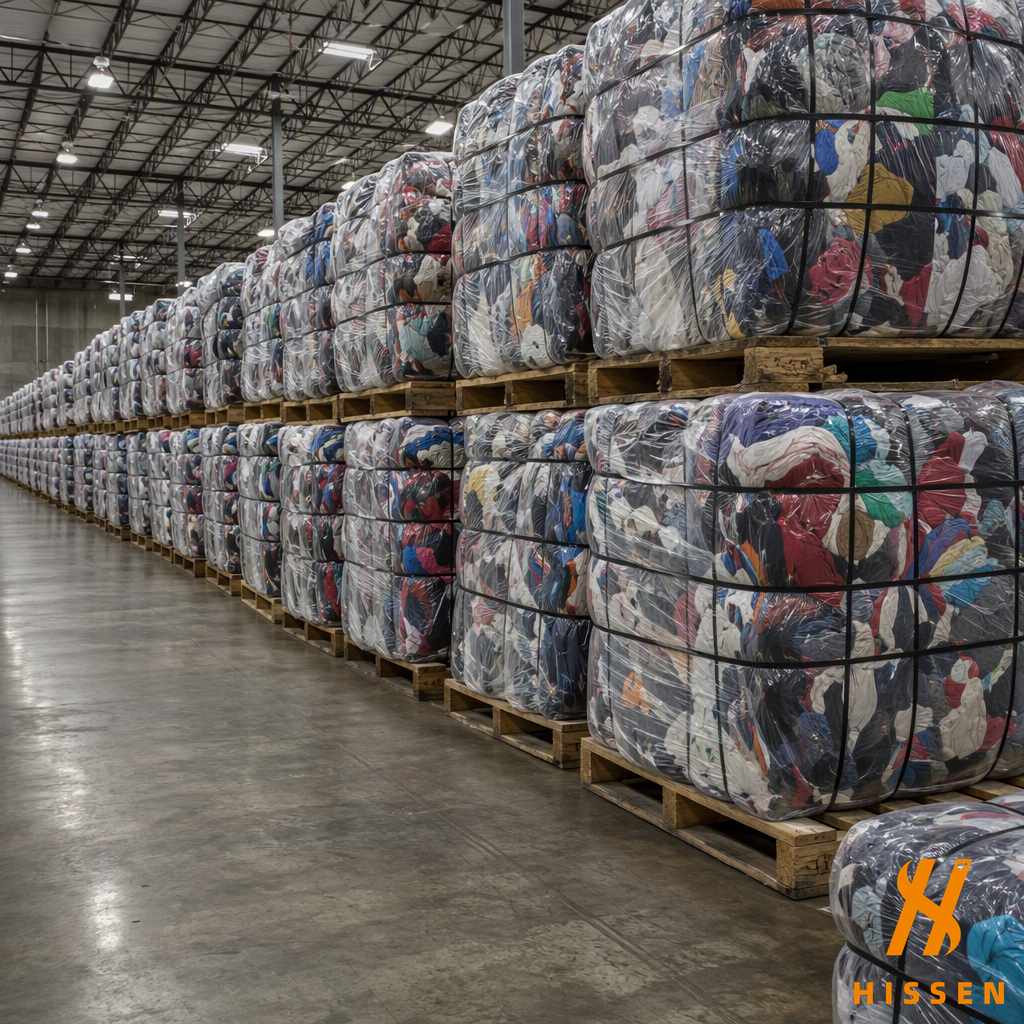
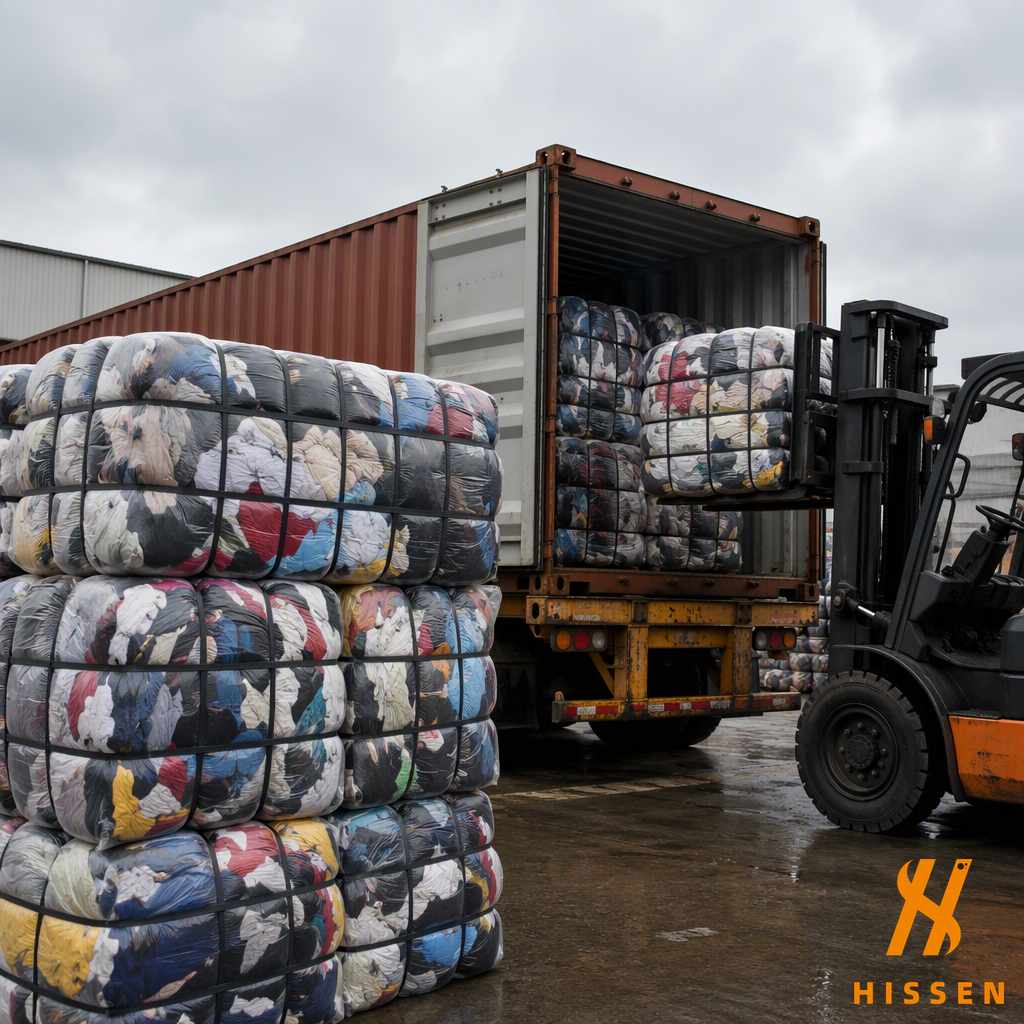
Bales are the standard export unit because compression is what makes low-value-per-tonne goods economical to ship. That is also the trade-off: you cannot see inside a bale, which is precisely why the specification, the loading photographs and the packing list carry so much weight. Our guide to used clothing bales goes deeper on packing and weights.
Where Used Wholesale Clothing Comes From: B2B Channels
There are four realistic sourcing channels, and they differ far more in risk than in price.
- Sorting houses and graders of origin — facilities in the USA, Europe, Japan and Korea that grade before export. Highest traceability, most transparent grading, highest cost per kilogram.
- Export trading companies — intermediaries who buy graded or ungraded bales and consolidate for export. The most common channel for first-time importers, and the one where grade substitution is most frequent.
- B2B marketplaces and trade fairs — online wholesale platforms and second-hand textile trade shows. Useful for price discovery and for finding names to vet; weak on enforceable quality specifications.
- Direct supply from a grader-exporter — buying from a company that runs its own sorting floor and exports directly. This removes the most uncertainty, because the goods never leave the building before you have seen them.
For most buyers the practical answer is a hybrid: set the specification with a source that controls its own sorting floor, and use marketplace quotes only as a price ceiling. Our list of the largest used clothing bales suppliers in the world is a useful starting point for comparison.
2026 Market Overview
Second-hand apparel has moved from a charity-adjacent sideline to a mainstream trade category. Industry analysts at ThredUp have tracked global resale growing several times faster than the conventional apparel market for a decade, and Textile Exchange’s materials reporting shows recycled and second-hand fibre taking a steadily larger share of total textile volume. Clothing leads footwear and bags on this curve, because garments are lighter, easier to sort and cheaper to ship per tonne.
On the demand side, the established import markets remain East Africa — Kenya, Uganda and Tanzania, where the sector is a major employer and a politically sensitive one — alongside Ghana, Nigeria, Chile’s free zone as the gateway to South America, and the Middle East and Southeast Asia. On the supply side, tighter collection and export controls in several European countries, plus continued scrutiny of the trade in East Africa, have kept origin volumes firm and prices range-bound rather than falling.
Two structural pressures are worth planning around. Freight rates on the main container routes remain volatile, and used clothing is a low-value-per-tonne commodity, so a freight spike hits this trade harder than almost any other. Destination regulation keeps tightening as well: a growing number of countries require pre-shipment inspection, fumigation certificates or specific permits for second-hand textile imports. Confirm the current requirements for your own destination before you book, not after.
Used Wholesale Clothing Prices: Per Piece, Per Kg, Per Bale
Prices move with origin, grade, brand content and freight, so treat the bands below as orientation rather than a quotation. The structural point is the ratio between them: sorted branded clothing costs several times more per kilogram than unsorted mix, and it earns more than several times more when resold by the piece. Unbranded mix is not “cheaper product” — it is a different business model.
| Category | Packing unit | Relative cost per kg | Best suited to |
|---|---|---|---|
| Mixed unsorted clothing | 45–100 kg bales | Lowest | Market resellers who sort themselves |
| Sorted mix clothing (Grade B) | 45–100 kg bales, or per kg | Low–mid | Volume market stalls |
| Sorted mix clothing (Grade A) | Per kg | Mid | Shop and stall retail |
| Branded clothing (mixed brands) | Per kg, or per piece | Mid–high | Branded shops, e-commerce |
| Target-brand selections | Per piece | High | Specialist and online resellers |
| Cream grade / vintage selections | Per piece | Highest | Boutiques and vintage stores |
On volume: a 40ft high-cube container typically loads in the region of 20–28 tonnes of baled clothing, depending on bale density and how the load is built. Always ask for the loading weight you are paying for, in kilograms — not “a full container” — and ask for the loading photographs and the packing list with bale counts and weights. If you are weighing clothing against footwear, the used shoes wholesale category loads heavier per bale but returns less per piece.
How to Choose a Used Wholesale Clothing Supplier
Use the same checklist for every supplier, in this order. The point is not to find the cheapest quote; it is to find the supplier whose process makes the quote meaningful.
- Grade and composition in writing. Ask what Grade A means to them specifically: acceptable wear, cleaning standard, brand policy — and what share of the bale is men’s, women’s and children’s. A supplier who cannot answer this in numbers is a trader, not a grader.
- Loading evidence. Loading photographs, bale weights and container numbers. Photographs that show the goods clearly inside the container — not stock imagery of a warehouse.
- A live video walkthrough. A scheduled video call through their sorting floor and warehouse, on their premises, at your request. This is the single most useful vetting step available, and the one most suppliers will resist.
- Trade references in your market. A reference in a comparable destination market tells you what the goods actually looked like on arrival.
- Destination-requirement awareness. A good supplier asks you about import permits and inspection requirements for your country before quoting. If they do not, they have shipped to your market either never or carelessly.
- Payment terms that protect you. Standard practice is a deposit against a balance on documents, but the specification should be an annexe to the contract — grade, composition, bale weights, total kilograms, brand policy — so that a shortfall is a contract breach and not a disagreement.
- Loading, not promising. The order is only as good as the loading. Insist on the inspection or the video verification happening at loading, before the container doors are sealed.
Common Mistakes to Avoid
- Buying on price per kilogram alone. The cheapest bale is usually the one with the most Grade C leakage, the most broken sets and the most unsaleable pieces. Cost per sellable piece is the only meaningful number.
- Accepting a verbal grade definition. If the grade and composition are not written into the order, you have bought a bale of hope.
- Ordering a full container before a smaller first order. Start with a volume you can absorb, sell it, and let the results decide the container. This is standard practice and any supplier worth using will support it.
- Ignoring the category mix. Ask for the men’s / women’s / children’s split as percentages. Refusal to discuss it is an answer in itself.
- Forgetting the destination side. Permits, pre-shipment inspection and port procedure can hold goods longer and cost more than the goods themselves. Understand your own import regime before you commit.
- Assuming a brand list is honoured automatically. If you specified brands, verify against the packing list at loading, not at destination.
- Buying seasonal goods too late. Winter mix that lands after the cold season, or summer mix that lands after the heat, is a discount on paper and a loss in practice.
💡 Key Takeaways
- Category and grade are the two decisions — everything else is logistics. Name the category and write the grade down.
- The grade label is the smaller half of the spec. Composition — the men’s / women’s / children’s split and the brand share — decides what the bale is actually worth.
- Sorted beats unsorted as soon as you retail by the piece. The premium per kg is smaller than the yield you recover.
- Volume is quoted in kilograms, not “containers”. A 40ft high-cube loads roughly 20–28 tonnes of baled clothing.
- Verify at loading, not at destination. Once the doors are sealed, your leverage is gone.
Frequently Asked Questions
What is used wholesale clothing?
Used wholesale clothing means second-hand garments collected, sorted and resold in bulk — by bale, barrel or kilogram — rather than as single items to consumers. Wholesale buyers purchase from sorting houses or export graders and resell by the piece, either into shops, market stalls or online. The category mix inside the bale is the single biggest factor in what the goods are worth to you.
How many pieces are in a bale of used clothing?
A standard export bale weighs between 45 and 100 kilograms and typically contains several hundred garments, but the count varies widely with garment type — children’s light summerwear packs far more pieces per kilogram than adult winter outerwear. Ask for the bale weight and the category composition rather than a piece estimate, and note that compression level changes the weight of a bale of the same physical size.
What is the difference between Grade A and Grade B used clothing?
Grade A normally means lightly worn garments with no visible defect, clean and saleable as-is. Grade B means clearly worn but fully wearable, with faded colour, minor marks and sound seams. Because there is no universal standard, the definition must be agreed in writing — and the composition of the bale matters more than the label attached to it.
Should I buy sorted or unsorted used clothing?
Buy unsorted mix only if you or your buyers are willing to sort and accept the loss on unsaleable pieces. If you retail by the piece into shops or online, sorted and graded supply returns more per kilogram despite the higher purchase price. Unsorted mix is a viable business, but it is a sorting business rather than a retail one.
How much does used wholesale clothing cost?
Prices depend on origin, grade, brand content, category and freight, and they move with the market. The reliable rule is the ratio: unsorted mix is the cheapest per kilogram, sorted mix sits in the middle, and branded, cream grade or vintage selections cost several times more — while also reselling for several times more per piece. Ask for a live quotation against a written specification rather than a headline price.
What should I check before importing used clothing?
Confirm your destination country’s current rules first — a growing number of markets require permits, pre-shipment inspection or fumigation certificates for second-hand textile imports, and enforcement changes. Then confirm the grade, the category composition, the loading weight and the payment terms in writing before the container is loaded.
Why Buy Used Wholesale Clothing from Hissen Global
Hissen Global is a China-based exporter of second-hand clothing, shoes and bags, supplying importers, wholesalers and market resellers across Africa, Latin America, Asia and the Middle East. Our sorting and grading lines are under our own control, which means the grade you are quoted is a process we run rather than a label we apply — and it is documented in our quality standards.
Practical advantages for trade buyers:
- Category-level specification. Order by category — men’s, women’s, children’s, branded, vintage, workwear, seasonal or mix — rather than accepting a general bale.
- Composition declared. We state the men’s / women’s / children’s split and the brand share, so the specification means something at destination.
- Loading photographs and packing lists with bale counts and weights for every shipment.
- Live video inspection of the goods at loading, on request.
- Consolidation — combine clothing categories with used shoes and bags in one container to reduce freight cost per tonne.
- Destination experience. We ship regularly into African, Latin American and Asian markets and will flag the import requirements we have seen enforced.
Keep reading: compare our complete wholesale second-hand clothing import guide, the thrift clothing wholesale guide, the vintage clothing wholesale guide, and our Guangzhou clothing sourcing guide.
Get Your Quote
Evaluating used wholesale clothing suppliers? We invite you to compare before you decide. Send us your destination market, the categories you want and your target volume in kilograms — and we will come back with a specification and pricing you can hold us to.
Hissen Global is a China-based exporter of second-hand clothing, shoes and bags, working with importers and wholesalers across Africa, Latin America, Asia and the Middle East. Browse our full used clothing range or start with our most-requested lines: mixed clothing and shoe bales and used summer clothing.