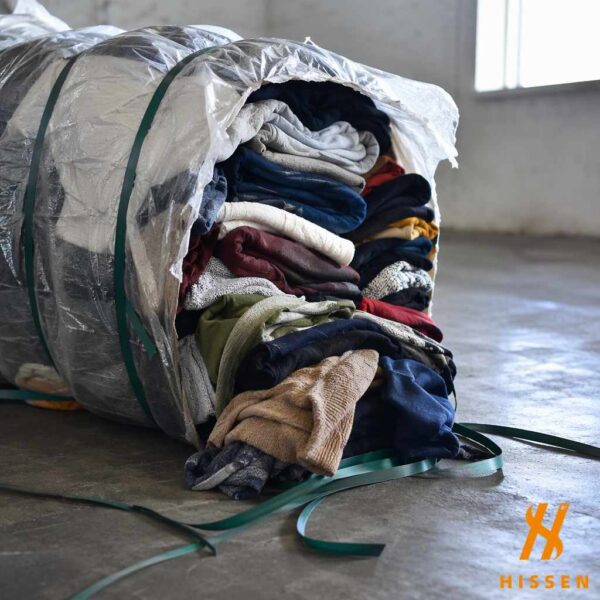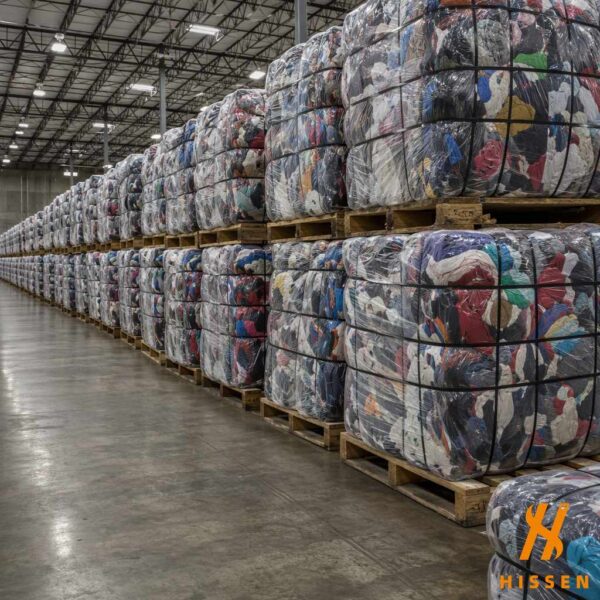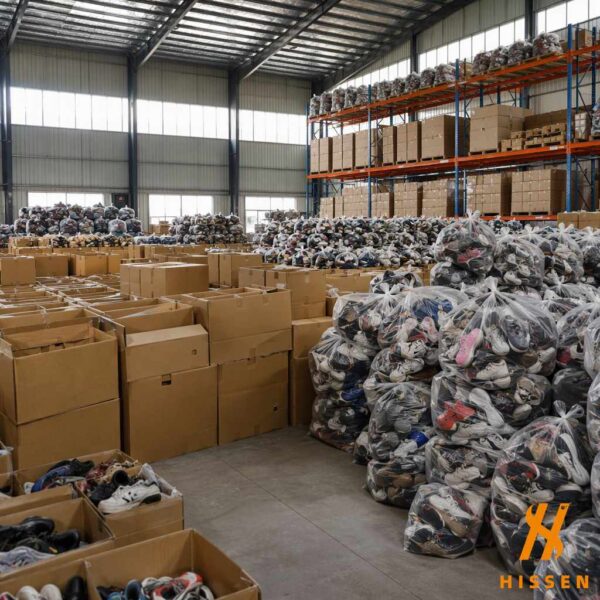
Second hand and vintage clothing sit in the same warehouses, are graded by the same people, and are sold to buyers who are often looking for completely different things. A bale of Grade A adult winterwear and a hand-picked lot of 1990s graphic tees may weigh the same and cost the same, but only one of them can be sold to a market stall by the tonne and only one can be listed piece by piece at a boutique mark-up. Buyers who search for discount vintage clothes are usually looking for the second kind — and the fastest way to lose money in this trade is to order the first kind and expect the second.
This guide covers what actually qualifies as vintage, how the words second hand, thrift, preloved, retro and deadstock differ in the trade, the categories that sell, how vintage is picked and graded, where vintage clothing comes from before it reaches an exporter, and the price bands to expect. If you are buying standard wholesale rather than vintage, our used wholesale clothing categories guide covers the general trade; this page is about the vintage end of it.
⏱ 11 min read · For vintage buyers, boutiques, resellers & importers
In this guide you will learn:
- What actually makes a garment vintage, and why the era bands keep moving
- How second hand, thrift, preloved, retro and deadstock differ — in trade language
- The vintage categories that sell, and why the graphic tee trade behaves differently
- Why hand-picked vintage and bulk bales are two different businesses
- Where discount vintage clothes come from, and realistic price bands per piece and per lot
What Makes Clothing Vintage?
In the trade, vintage is an age and style claim, not a condition claim. The working rule almost everyone uses is a rolling twenty-year window: a garment becomes vintage once it is roughly two decades old, which means the boundary has now moved far enough to include the entire Y2K period. Garments from the 1980s and 1990s are solidly vintage; 1970s and earlier is usually called true vintage; anything made in this decade is simply second hand, however good it looks.
Two things follow from that, and both have money attached to them.
First, the definition moves. A category that was ordinary second hand ten years ago is vintage today, which is why Y2K stock has gone from filler to a priced category in a single cycle. Anyone holding a position in the right era benefits, and anyone who bought assuming the era would stay cheap does not.
Second, age is not condition, and condition is not style. A pristine 2019 t-shirt is not vintage. A frayed 1978 tour tee is vintage and valuable. A rare 1990s jacket in Grade C condition is still worth more per piece than a Grade A modern polo, because the buyer is paying for the era and the rarity, not the neatness.
Be careful with one specific trap: vintage style and vintage inspired describe new garments manufactured to look old. They are not second hand at all. A large share of the search volume around this subject is people looking for new retro-look clothing, and it is not the same product as the one in a vintage bale.
| Era | What it is called in the trade | How it is bought and sold |
|---|---|---|
| Pre-1980 | True vintage | Hand-picked, often sold per piece. Scarce, slow-moving, highest per-piece value and the hardest to source in volume. |
| 1980s – 1990s | Vintage | The core of the vintage trade. Strong demand for denim, workwear, sportswear and printed tees. Sold by the piece, by the lot or by the picked kilo. |
| 2000 – 2010 | Y2K / early 2000s | Now fully inside the vintage window and heavily traded. Sold in boxes, lots and picked bales rather than as singles. |
| Last 20 years | Second hand / modern | Ordinary used clothing. Bought and sold by the bale or by weight. Not vintage, and priced accordingly. |
Vintage vs Second Hand vs Thrift vs Preloved: What the Words Mean
These words get used interchangeably by shoppers and very precisely by traders. Getting the vocabulary right matters because it is how you tell a supplier what you want — and how a supplier tells you what they are actually selling you when you think you are buying discount vintage clothes.
| Term | What it actually means | Who uses it |
|---|---|---|
| Second hand | Any previously owned garment, of any age or condition. The broadest term and the umbrella the rest sit under. | Trade and consumers. The neutral default. |
| Used | Same meaning as second hand. Dominant in wholesale and export, where goods are sold by weight rather than by origin story. | Exporters, importers, freight documents. |
| Thrift | Historically a charity-shop channel and the clothing that flows through it. In practice now used to mean affordable second hand generally. | US and UK retail; increasingly global. |
| Preloved | A marketing framing rather than a grade — second hand positioned as a deliberate, sustainable choice. Carries no condition information at all. | Consumers, resale platforms, Southeast Asia. |
| Vintage | Ages roughly twenty years or more, selected for era and style as well as wearability. An age claim, not a quality claim. | Vintage trade, boutiques, online resellers. |
| Retro | Style that references the past. Applies equally to genuinely old garments and to brand new ones made to look old. | Fashion retail. Weakest of these terms as a specification. |
| Deadstock | Unused stock, usually old shop or warehouse inventory never sold. Not second hand in the worn sense, and often the highest-value category in a vintage lot. | Vintage and sneaker trade. |
| Ukay-ukay / okrika / mitumba | The same second-hand clothing trade under its local name in the Philippines, Nigeria and East Africa. Region-specific vocabulary for the identical goods. | Destination markets. See ukay-ukay wholesale. |
The practical consequence: preloved tells you nothing, retro tells you almost nothing, and vintage tells you about age but not condition. When a supplier quotes you discount vintage clothes, the only useful follow-up questions are the era band, the grade, and whether the goods are hand-picked or a picked-out fraction of a bulk bale.
The Vintage Categories Buyers Actually Order
Vintage is not one product. It is a set of categories that behave very differently in transit, in grading and at resale, and buyers who treat them as a single line usually end up with the wrong inventory.
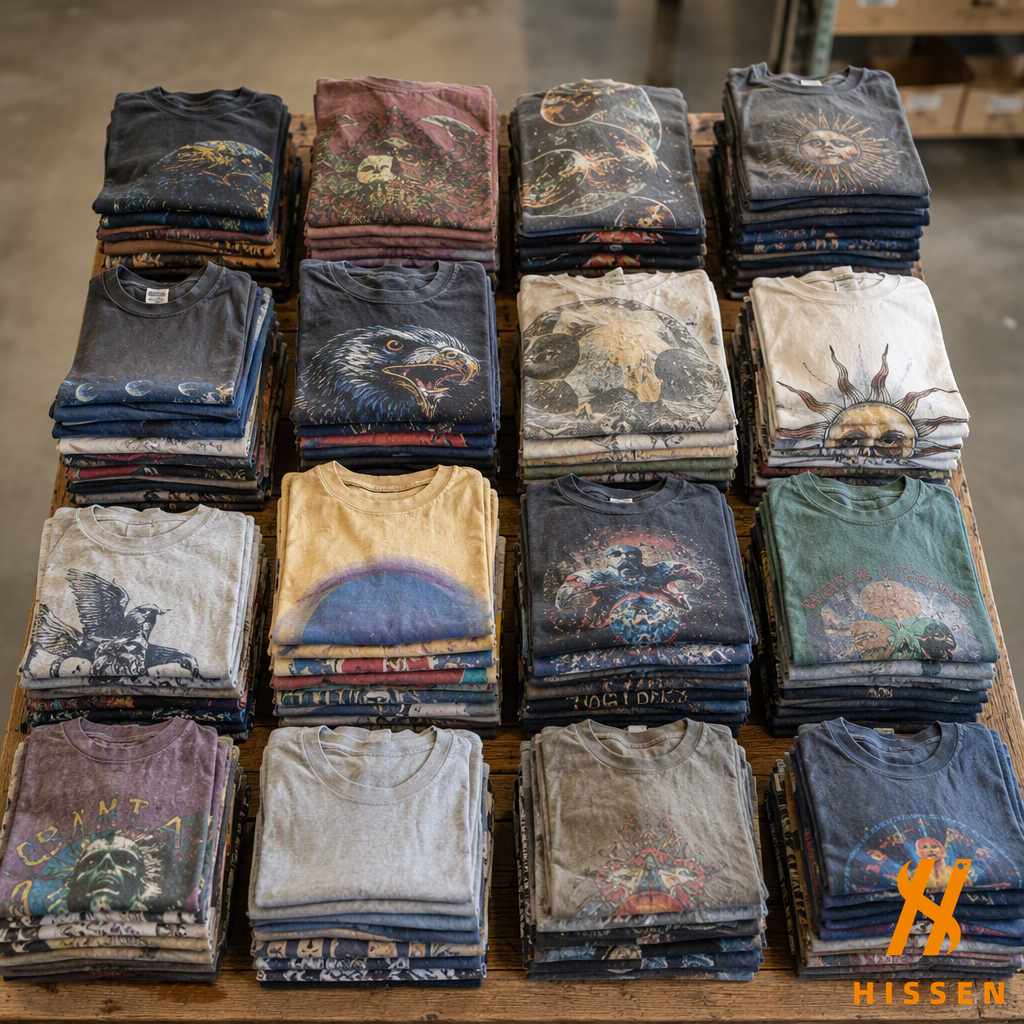
Vintage t-shirts and graphic tees
The deepest and most competitive part of the vintage market. Printed tees — band, tour, sports, film, brand — carry far higher per-piece value than comparable plain garments because the print is the product. They are also the category most exposed to counterfeiting and to print-quality problems, so the same rules that apply to original branded thrift clothing apply here with more force. Expect this category to be sold in lots, packs and picked boxes rather than loose bales.
Vintage denim and workwear
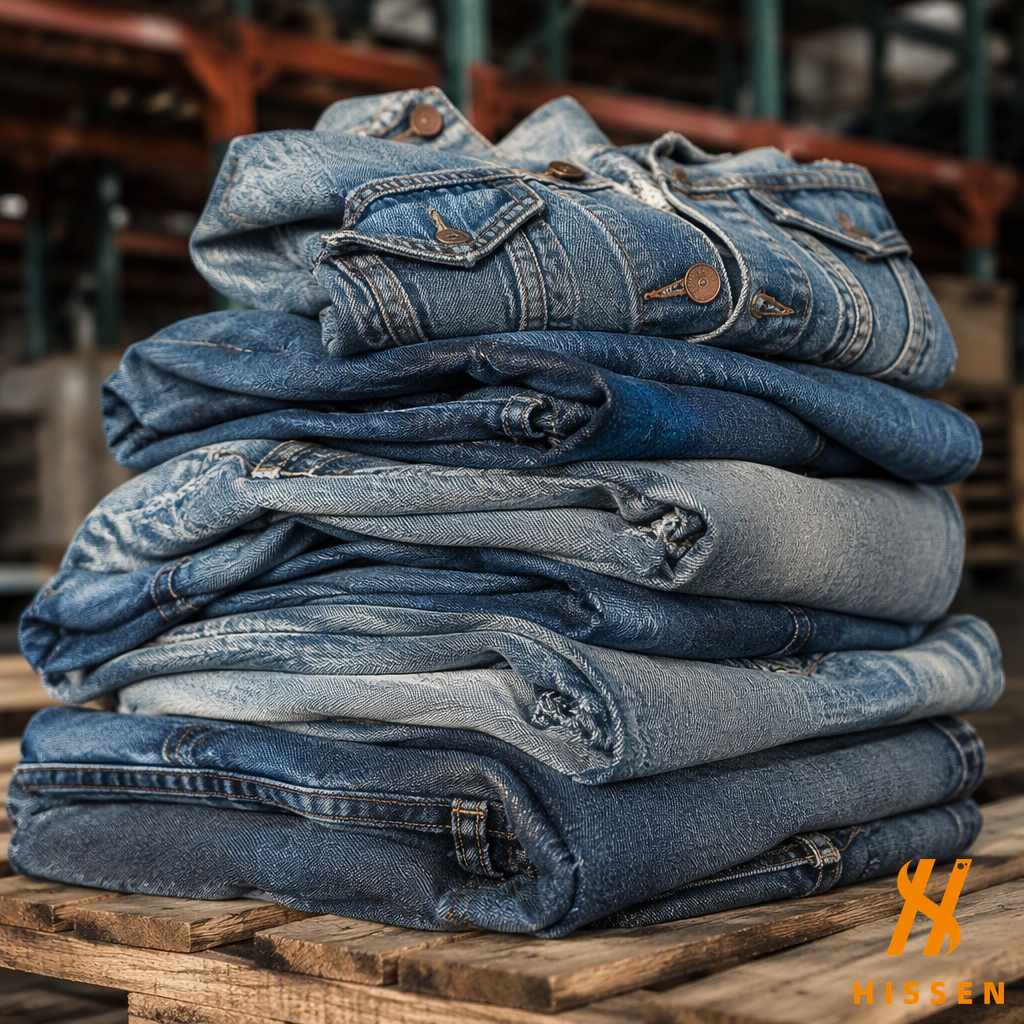
Denim jackets, jeans and chore coats, plus workwear and overalls. Heavy, durable and forgiving of wear, which makes it one of the safest vintage categories to ship and one of the easiest to sell. Sizing is inconsistent and must be measured rather than trusted, because vintage sizing bears little relation to modern labelling.
Vintage dresses and womenswear
The strongest category for boutiques and online resale. Dresses, blouses and knitwear move well per piece but require accurate measurement to sell online, and damaged stock is far harder to move than damaged denim. Buy this category hand-picked wherever you can rather than in bulk.
Y2K and retro sportswear
Track jackets, shell suits, early-2000s branded sportswear and the entire Y2K aesthetic. This is the category that has moved fastest in the last few years, it is now the volume end of the vintage trade, and it is usually sold in boxes and picked bales rather than as individual pieces. See the fuller picture in our guide to supplying boutiques with graded second-hand clothing.
Vintage accessories and bags
Bags, belts, scarves and jewellery. Small, high value per kilogram, and cheap to ship — but the category is where authenticity problems concentrate, so it is best bought from a supplier who will document provenance and accept pre-shipment inspection.
How Vintage Clothing Is Graded and Picked
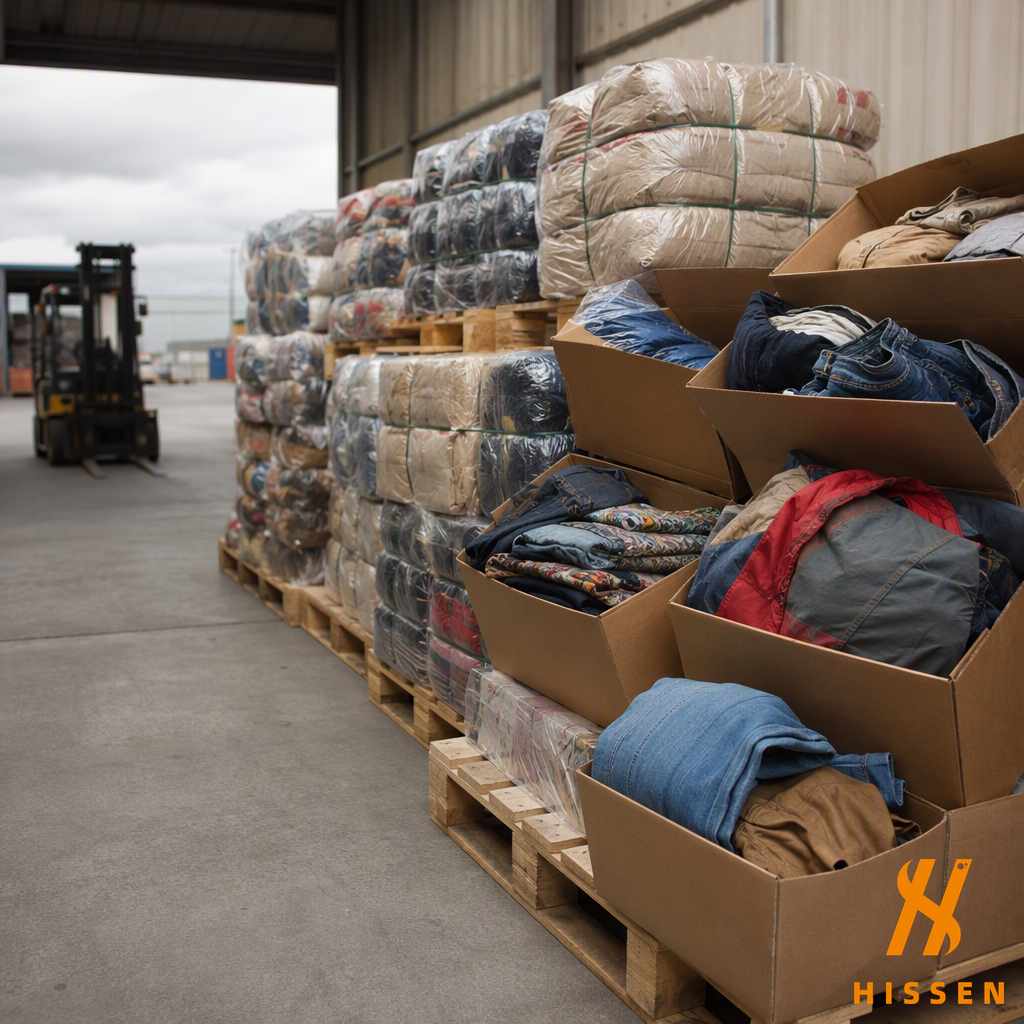
The single most important structural fact about the vintage trade is that the good stock is removed before the bale is closed. A sorting facility produces a graded output; a vintage specialist then works that output by hand and takes out the pieces that carry vintage value. What remains is perfectly good second-hand clothing, correctly graded, and it is not vintage.
That is why hand-picked is the word that matters most in this market. A hand-picked lot means someone has looked at individual garments and selected on era, brand and print. A bulk bale, however honestly graded, is a category average — it will contain vintage, but the proportion is whatever the floor produced, not what you asked for.
Condition grading runs alongside this and uses the same vocabulary as the wider trade. Cream grade is the best available selection, near-new and often laundered. Grade A is lightly worn, clean and saleable as-is. Grade B is clearly worn but fully wearable, with faded colour and minor marks. Grade C is heavily worn and may need repair. In vintage specifically, condition carries less weight than it does elsewhere — a Grade B 1980s jacket frequently outsells a Grade A modern one — because the buyer is paying for the era.
What you should insist on, in writing, is the era split and the pick status. “Vintage bale, mixed, Grade A/B” is not a specification. “Hand-picked 1990s–2000s adult, 60% tees, Grade A/B, average weight per piece 180g” is a specification, and it is the difference between a repeatable business and a lucky container.
Where Vintage Clothing Comes From
Almost no vintage clothing is manufactured as vintage. It becomes vintage while sitting in a warehouse, a wardrobe or a charity shop, and the supply chain that gets it from a donation bank to an export container has four stages that buyers should understand before negotiating.
Collection. The raw material comes from donation banks, kerbside textile collection, charity shop surplus and commercial clothing banks. The countries that generate the most are the ones with high consumption, organised collection infrastructure and a habit of donating rather than storing — which is why northern Europe, the UK, the Netherlands, Germany, Canada and the United States dominate supply. Climate matters too: colder countries hand over heavier garments, warmer ones more summerweight stock.
Sorting. Collected textiles are sorted into categories at scale — men’s, women’s, children’s, shoes, bags, household textiles, and the unsaleable fraction. This is where a shipment’s composition is actually decided, whether or not anyone writes it down.
Grading and baling. Sorted goods are graded by condition and baled for export. This is the stage most buyers think of as “the supply”, and it is the stage where a bale stops being a collection of garments and becomes a priced commodity.
Vintage picking. Before or after baling, depending on the facility, vintage specialists hand-select on era, brand and print. This is the stage that supplies every vintage store and online reseller in the world, and it is the stage that explains why the answer to “where do vintage stores get their clothes” is almost always a wholesaler who bought picked stock from a sorting facility rather than a shop that bought a bale and sorted it themselves.
This is also why destination matters less than you might expect. A vintage lot sourced in Europe and a vintage lot sourced in Asia can be the same garments that travelled in the same direction at different points. What determines quality is not the flag on the warehouse but how selective the picking was and how honestly the grade was declared.
Where to Find Discount Vintage Clothes in Bulk
There are five realistic channels for a trade buyer, and they differ mainly in how much sorting work has already been done for you — which is the thing you are actually paying for.
- Wholesale vintage suppliers and exporters. The most direct route. You buy specified, picked or graded vintage by lot, box, bale or container, with an invoice and a packing list. Pricing is transparent, quality is as consistent as the supplier’s picking is, and it is the only channel that scales to container volume without you building a sorting operation.
- Rag houses and sorting facilities. Where the bales originate. Buying here is closest to the source and cheapest per kilogram, but the output is category average, not vintage, and you take on the sorting yourself.
- Lots and boxes. Smaller picked units — a box of tees, a lot of dresses — sold per box or per piece. The most practical way to test a category or a supplier before committing to a bale, and the format most online resellers start with.
- Pallets and liquidation. Pallets of returned, overstocked or end-of-line goods. Value varies enormously and the goods are not vintage in any meaningful sense unless specified, but per-piece costs can be very low for a buyer equipped to sort.
- Dropshipping and marketplace supply. Lowest capital and lowest margin, with no control over grade or provenance. Useful for testing demand, not for building inventory.
For a buyer genuinely chasing discount vintage clothes, the honest trade-off is this: the cheapest per-piece price is always in the least sorted channel, and the labour to sort it is the real cost. Unless you have a picking floor, buying picked stock at a higher headline price is usually the cheaper purchase — and it is the only way to know in advance what proportion of your order is actually vintage.
How Discount Vintage Clothes Are Priced
Vintage does not price like ordinary second hand, and this is the part buyers most often get wrong. Bulk used clothing is a commodity priced per kilogram. Vintage is priced either per piece or per picked kilogram, and the spread between the two is where the trade lives.
| Format | How it is priced | Best suited to |
|---|---|---|
| Bulk bale | Per kilogram or per bale, by category average. The cheapest per kilogram and the lowest vintage content. | Market sellers, high-volume resale, buyers with their own sorting floor. |
| Picked bale | Per kilogram with a vintage specification and a defined era band. Costs more per kilogram than bulk because the picking is already done. | Vintage wholesalers and larger boutiques needing repeatable supply. |
| Box or lot | Per box, or per piece within a stated category — tees, dresses, denim. The most common entry format. | Online resellers and shops testing a category. |
| Hand-picked premium | Per piece, selected on era, brand and print. The top of the market. | Boutiques, curated resale, collectors. |
Three points about pricing that matter more than the table. First, discount vintage clothes are cheaper per piece the less specific the specification is — and the saving is paid for in sorting labour, exactly as with the sourcing channels above. Second, the price per kilogram of vintage is not comparable to bulk used clothing, so quoting one against the other is meaningless; compare landed cost per saleable piece instead. Third, because a container load is normally described by weight, the schedule of picking and grading is what determines the value of the load, not the weight of it.
Freight works the same way it does across the trade, and consolidating vintage with standard categories in one container is usually the fastest way to cut landed cost per tonne. The mechanics are the same as any second-hand clothing import.
Is Second Hand Clothing Safe, Clean and Sustainable?
This is the most-searched part of the subject and the most misunderstood, so it is worth answering plainly.
Is it clean? Export-grade second hand clothing is sorted, and clean stock is part of what a grade means — Grade A is explicitly saleable as-is. What it is not is sterile, and it should not be treated as new goods. Standard practice before resale is to wash or steam garments, and any buyer moving stock into a retail environment should assume they are doing that themselves.
Is it safe? Can you get diseases from it? The realistic risk is not from a garment but from handling large volumes of dusty textiles without protection, which is a workplace hygiene question rather than a public health one. Textile pathogens do not survive long outside a host, and the internationally traded second-hand clothing trade has been running at scale for decades without a disease-transmission problem. Markets that do impose requirements on imports normally require fumigation or a pre-shipment certificate as a trade control, not because of a demonstrated health hazard — and those import requirements are where a buyer should focus attention, because they are the thing that actually stops containers.
Is it sustainable? Genuinely so, and the numbers are not close. Extending the life of a garment avoids the production impact of making a new one and keeps textiles out of landfill. Second hand is one of the very few consumer markets where the sustainable option is also the cheap one, which is why the sector keeps growing regardless of fashion cycles. It is also why “preloved” has become a marketing term — the substance is real, even when the vocabulary is not.
Common Mistakes When Buying Vintage in Bulk
- Buying a bulk bale and calling it vintage. The single most common and most expensive error. A graded bale is a category average; the vintage has already been picked out of it.
- Confusing retro with vintage. New garments made to look old are not second hand, and neither is new stock that merely references the era.
- Ordering discount vintage clothes without an era band. “Vintage” alone spans five decades. Ask for a decade, and ask for the split between them.
- Trusting labels instead of measurements. Vintage sizing is not modern sizing. Anything sold online has to be measured.
- Ignoring the destination market’s import rules. A growing number of countries regulate second-hand textile imports through permits, inspection or fumigation. Confirm before loading, not on arrival.
- Optimising for the lowest price per kilogram. In vintage the lowest price per kilogram always buys the least picked stock and the most labour. Compare landed cost per saleable piece.
- Skipping the inspection. Ask for loading photographs, the packing list with weights, or live video of the goods being loaded. A supplier who will not provide them is telling you something.
Key Takeaways
- Vintage is an age and style claim, not a condition grade — the working boundary is roughly twenty years and it keeps moving, which now includes all of Y2K.
- Second hand, used, thrift and preloved describe the same broad category; vintage, retro and deadstock mean specific and different things.
- The good stock is picked out before the bale closes. If you want vintage, buy picked — a bulk bale is a category average.
- Vintage prices per piece or per picked kilogram, never on the commodity per-kilogram basis used for bulk used clothing.
- Source through a supplier who declares the era band, the pick status and the grade in writing, and who will document the loading.
- Confirm the destination market’s import requirements early. That, not price, is what stops containers.
Frequently Asked Questions
What is the difference between second hand and vintage clothing?
Second hand means any previously owned garment of any age. Vintage means a garment roughly twenty years old or more, selected for its era and style. All vintage is second hand, but very little second hand is vintage — and the working twenty-year boundary keeps moving, so early-2000s Y2K stock now qualifies.
Is vintage clothing the same as preloved or retro?
No. Preloved is a marketing term for second hand clothing that carries no condition or age information at all, and retro describes a style that can apply equally to genuinely old garments and to new ones made to look old. Neither tells you the era or the grade of the stock you are being quoted.
Where do vintage stores get their clothes from?
Almost always from wholesalers and exporters who buy picked stock from sorting facilities, rather than from donation banks directly. Vintage specialists hand-select garments on era, brand and print before or after baling, and that picked stock is what reaches boutiques and online resellers. This is why vintage supply is a specification market rather than a commodity one.
Is it cheaper to buy discount vintage clothes by the bale or hand-picked?
Hand-picked costs more per kilogram and is usually the cheaper purchase in practice. Bulk bales have the vintage removed before they are closed, so a cheap bale contains a low and unpredictable proportion of vintage and you absorb the sorting labour. Compare landed cost per saleable piece rather than price per kilogram.
Is second hand clothing safe to wear and resell?
Export-grade clothing is sorted and cleaned, and Grade A stock is saleable as-is, though it is not sterile and standard practice is to wash or steam before retail resale. The realistic risk in this trade is dust from handling large volumes of textiles, which is a workplace hygiene matter. Where countries impose fumigation or inspection on imports, it is a trade control rather than a response to a demonstrated health hazard.
What should I confirm before importing vintage clothing in bulk?
Confirm your destination market’s current import requirements first, since a growing number of countries regulate second-hand textile imports through permits, pre-shipment inspection or fumigation. Then confirm in writing the era band, the pick status, the condition grade, the composition and the payment terms before the container is loaded.
Why Buy Second Hand & Vintage Clothing from Hissen Global
Hissen Global is a China-based exporter of second-hand clothing, shoes and bags, supplying importers, wholesalers and boutiques across Africa, Latin America, Asia and the Middle East. Our sorting and grading lines are under our own control, which means the era split and the grade you are quoted are the output of a process we run rather than a label we apply — and they are documented in our quality standards.
Practical advantages for vintage and second-hand buyers:
- Picked and bulk both available. Buy hand-picked vintage by lot or picked bale, or standard graded bales where volume matters more than selectivity.
- Era bands declared. We state the decade split — 1980s, 1990s, Y2K — rather than selling everything under the word vintage.
- Composition declared. Men’s, women’s, children’s and branded shares are stated so a specification means something at destination.
- Loading photographs and packing lists with counts and weights for every shipment, plus live video inspection on request.
- Consolidation — combine vintage and standard clothing with used shoes and bags in one container to reduce freight cost per tonne.
- Destination experience. We ship regularly into African, Latin American and Asian markets and will flag the import requirements we have seen enforced.
Keep reading: compare our wholesale clothing categories guide, the bales of clothes buyer’s guide, the wholesale used shoes guide, thrift clothing wholesale, and kids clothing wholesale.
Get Your Quote
Looking for discount vintage clothes at trade volume? We invite you to compare before you decide. Send us your destination market, the era bands and categories you want, and whether you need hand-picked or bulk — and we will come back with a specification and pricing you can hold us to.
Hissen Global is a China-based exporter of second-hand clothing, shoes and bags, working with importers, wholesalers and boutiques across Africa, Latin America, Asia and the Middle East. Browse our full used clothing range or start with our most-requested lines: mixed clothing and shoe bales and used summer clothing.