Published July 15, 2026 · Industry analysis
Fleek Raises $25 Million for AI-Powered Used Clothing Sorting — What This Means for Importers in Africa, Asia & South America
On July 8, 2026, London-based startup Fleek announced a $25 million Series B funding round to scale its AI-powered secondhand fashion marketplace. The round was led by Burda Principal Investments — early backers of Vinted — with participation from eBay, Andreessen Horowitz, and Y Combinator.
Fleek connects 2,000+ verified wholesale suppliers with 50,000+ retailers across 100+ countries. Its core innovation is Fleek Sort, an AI vision model that can identify, categorize, grade, and price garments from photos or video.
From our perspective as a Chinese exporter with 12 years of sorting experience across 25 production lines, this development is significant. AI-assisted sorting is happening now, and it has implications for every used clothing importer.
⏱ 9 min read · For importers tracking industry innovation
- What Fleek built and why it raised $25M
- How AI sorting compares with human sorting
- What this means for importers in Africa, Asia, South America
- Why human sorting is not going away
- What importers should look for in sorting quality
🤖 What Fleek Built
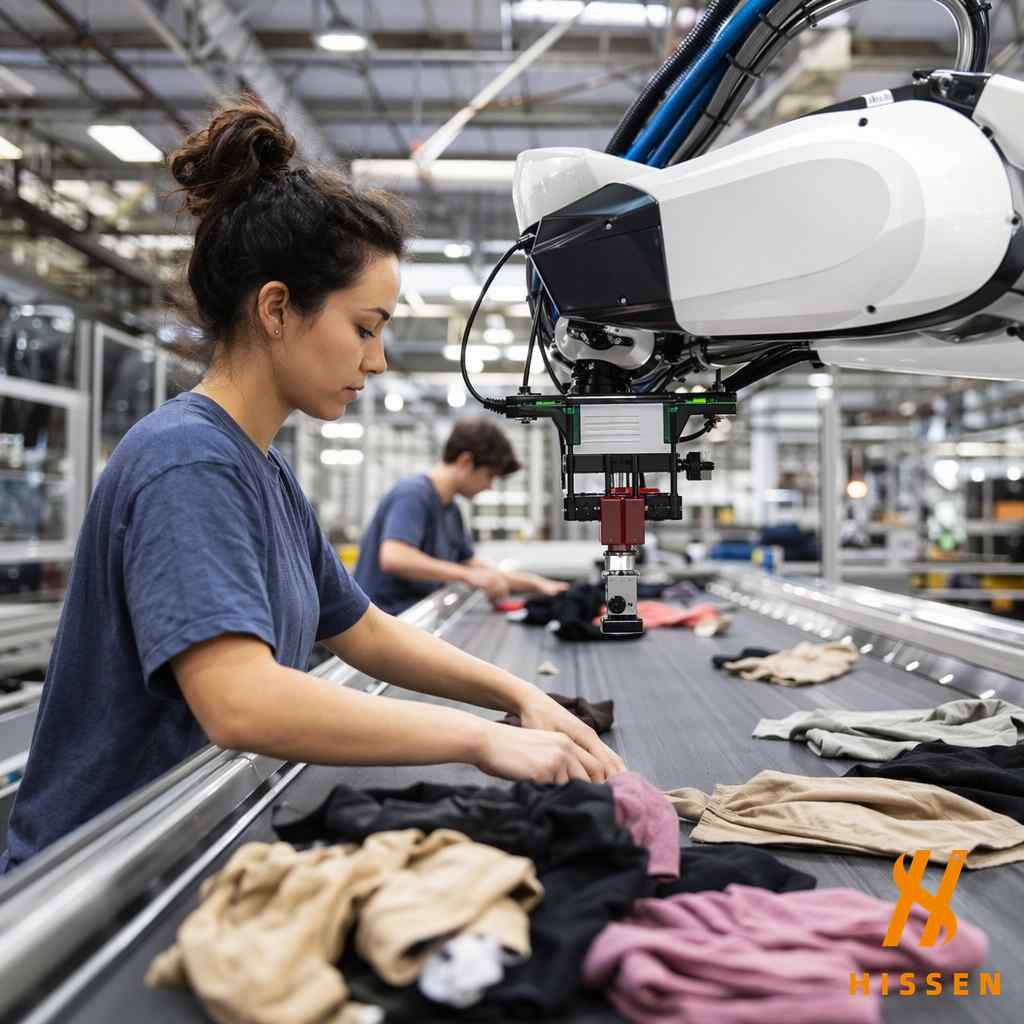
Fleek Sort is a vision-language AI trained on millions of secondhand transactions. It can identify garment type, category, style, condition and suggest pricing from photos. It is already deployed in sorting hubs in Pakistan, India, and Dubai, with UK, European, and US pilots launching.
The company reports keeping 12 million garments in circulation, saving 13 billion liters of water and avoiding 23,000 tonnes of CO₂ emissions. Its $45 million total funding reflects investor confidence that AI will transform secondhand fashion supply chains.
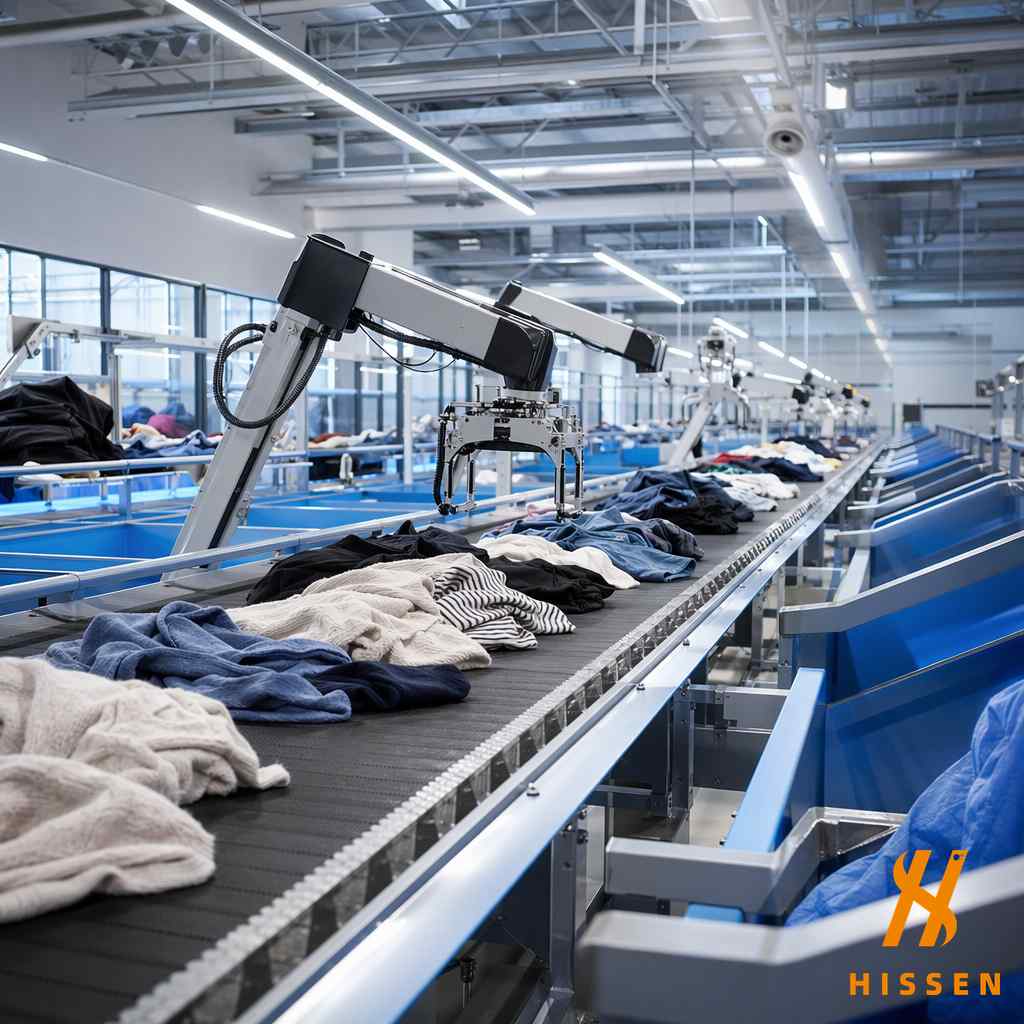
🧠 AI vs Human Sorting: A Practical Comparison
As a Chinese exporter relying on human sorting across 25 production lines, here is our perspective:
| Factor | AI Sorting | Human Sorting |
|---|---|---|
| Speed | Thousands per hour | 50-100 per hour |
| Consistency | High — same standard every time | Varies by training and attention |
| Category recognition | Good for standard items | Excellent — subtle styles |
| Quality grading | Improving — misses some nuance | Experienced eyes catch fabric issues |
| Flexibility | Requires retraining for new categories | Adapts instantly with brief instruction |
AI and human sorting are complementary, not competitive.
📊 Consistent
🔄 Standard categories
🎯 Flexible
🏷️ Any brand
🌍 What This Means for Importers
1. More consistent grading. As AI adoption grows, bale quality inconsistency — the biggest importer frustration — should decrease.
2. Digital transparency. AI-sorted inventory can be cataloged digitally. In the future, importers may see exact bale contents before shipping.
3. Gradual adoption. AI is still expensive. Major facilities in Pakistan, India, Dubai are early adopters. In China, human sorting still makes economic sense for most operations.
4. The supplier gap will widen. Those who invest in technology will outperform those who do not. Choose a supplier moving forward.
🇨🇳 A Chinese Exporter’s View
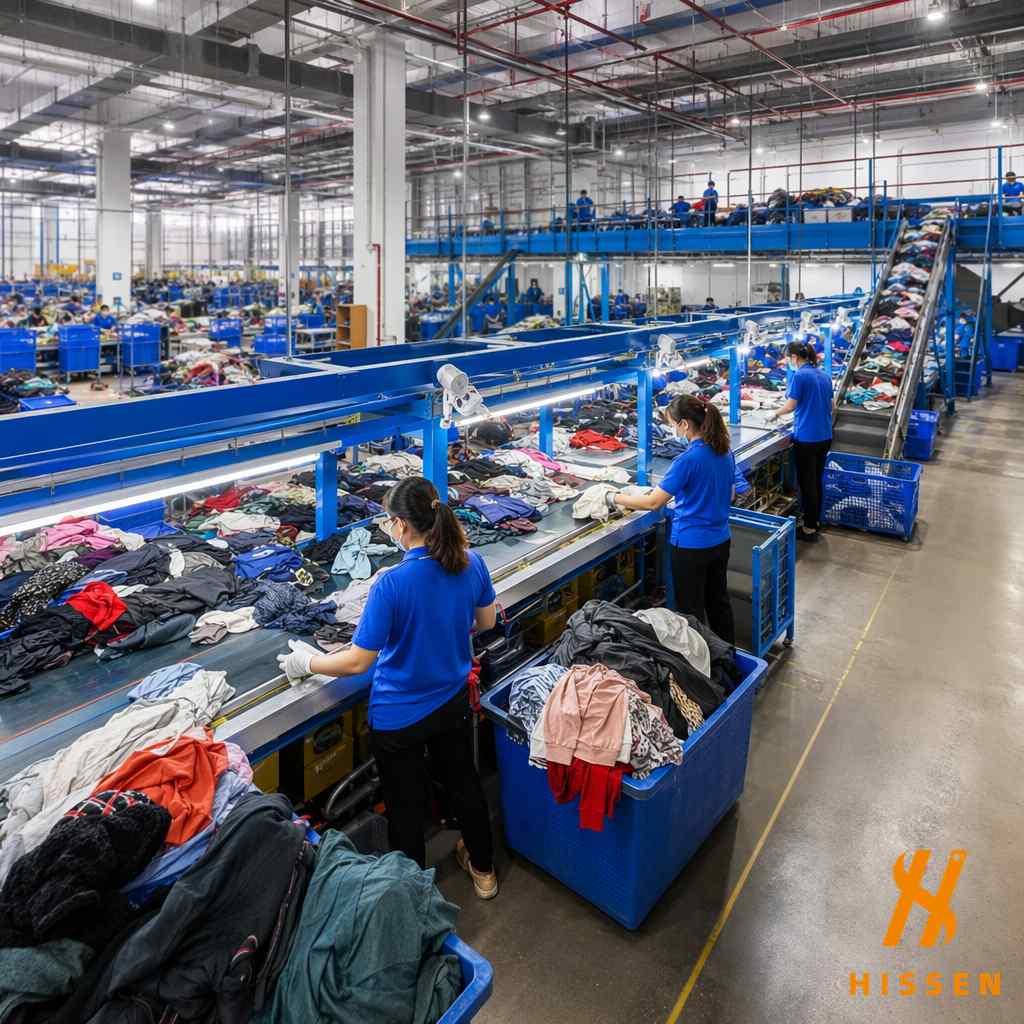
We have tracked AI sorting technology for years. AI sorting is coming, but it will not replace experienced human sorters overnight. The variety of items — different brands, conditions, fabrics, styles — makes accurate AI grading a complex challenge.
What we do in the meantime: maintain high human sorting standards that AI would need to match. Our 25 lines with documented A/B/C grades produce consistent quality importers can rely on. When AI sorting becomes economically viable for our scale, we will adopt it.
📈 The Future: What to Watch
- 🤖 AI-assisted grading will become more common in large facilities
- 📱 Digital bale documentation will give importers unprecedented visibility
- 🏪 B2B marketplaces like Fleek will make supplier comparison easier
- 🇨🇳 Chinese exporters will adopt AI as technology becomes more affordable
- 👥 Human sorters will focus on quality control and nuanced grading
❓ Frequently Asked Questions
Will AI replace human sorting in used clothing?
How does Fleek Sort work?
Should I only buy from AI-sorted suppliers?
Are Chinese exporters adopting AI sorting?
Will AI make used clothing more expensive?
📚 Stay Informed on Industry Innovation
The trade is evolving — AI sorting, digital marketplaces, changing regulations. Informed importers make better decisions.
Related: