Published September 16, 2026 · B2B kitchenware pricing guide
The first question every importer asks us is simple: what is the kitchenware wholesale price per kg? It is the right question to ask — but on its own, the number is almost meaningless. Two suppliers can both quote “USD 2.50 per kg” and deliver completely different value, because price per kg depends on what is inside the carton, the grade of the metal, and how much of your budget disappears before the goods reach your warehouse.
From our position as a China-based exporter selling stock kitchenware by the kilogram from a 20,000 m² warehouse, we have walked hundreds of importers through this calculation. In this guide we will show you the full cost structure behind a kitchenware wholesale price per kg — the pricing levels, what actually drives the number up or down, how to convert price per kg into cost per piece, and the nine landed costs that catch importers off guard.
⏱ 12 min read · For importers, wholesalers & trade buyers
In this guide you will learn:
- The three levels of kitchenware pricing — per kg, per carton, per piece
- 2026 indicative price bands by category and what drives them
- A worked calculation: from price per kg to your real cost per piece
- The nine landed costs importers forget when budgeting a container
- A 20FT vs 40FT container budget planner
- How to compare two per-kg quotes fairly (most buyers get this wrong)
- Five ways to lower your cost per kg without sacrificing quality
💰 How Kitchenware Wholesale Pricing Really Works: Three Levels
Before you negotiate a kitchenware wholesale price, understand that exporters and importers often talk about price at three different levels — and confusing them is where deals go wrong.
| Level | What it means | Who uses it |
|---|---|---|
| 1. Price per kg | The headline quotation — a price for every kilogram loaded into your container | Exporters quote it; importers compare it |
| 2. Price per carton | Each category is packed into a carton of a standard weight, so you can price a carton precisely | Used for the loading plan and packing list |
| 3. Landed cost per piece | What one pot, ladle, or spoon actually costs you after freight, duty, and clearance | The only number that determines your profit |
💡 Key insight: a low price per kg means nothing if the mix is thin or the metal grade is poor. Your real target is the landed cost per piece — and to reach it, you need the per-carton weight breakdown from your supplier.
📊 2026 Indicative Price Bands by Category
The table below shows indicative FOB price bands for stock kitchenware from China in 2026, by category, alongside the typical carton weight we see across the industry.
| Category | Typical carton weight | Indicative price band (USD/kg, FOB) | What drives the price |
|---|---|---|---|
| Cookware (pots, pans, woks, steamers) | ~35 kg | Lower band — heavy items, high metal content | Steel grade, non-stick coating, ratio of large to small pots |
| Mixed kitchenware | ~45 kg | Mid band — blend of large pots, dishes and small items | The balance of categories inside the mix |
| Kitchen knives | ~20 kg | Higher band — more labour and finishing per kg | Blade steel, handle material, variety |
| Knives & forks (flatware) | ~25 kg | Higher band — polished stainless, sold by count | Thickness of the metal, mirror polish, set completeness |
| Kitchen utensils | ~18 kg | Mid band — light items, high piece count per kg | Material, handle design, number of pieces per carton |
⚠️ These bands are indicative only. Final pricing depends on the metal grade (201 vs 304 stainless), coating, the mix ratio you choose, packaging, and order volume. Always confirm with a written quotation that states the category mix and carton weights — never budget from a headline number alone.
Three factors move the kitchenware wholesale price more than anything else:
- 🔩 Metal grade. 304 stainless costs more than 201, but resists rust far better — critical if your market is humid or coastal.
- ⚖️ Mix ratio. Large cooking pots carry more metal per piece than spoons and ladles, so a pot-heavy load prices higher per kg than a utensil-heavy load.
- 📦 Order volume. A full 40-foot container almost always beats a 20-foot container on price per kg, because fixed costs spread across more weight.
🧮 From Price Per KG to Cost Per Piece: A Worked Example
Here is the calculation we walk every new importer through. It uses typical industry carton data, so you can substitute your own quote and loading plan.
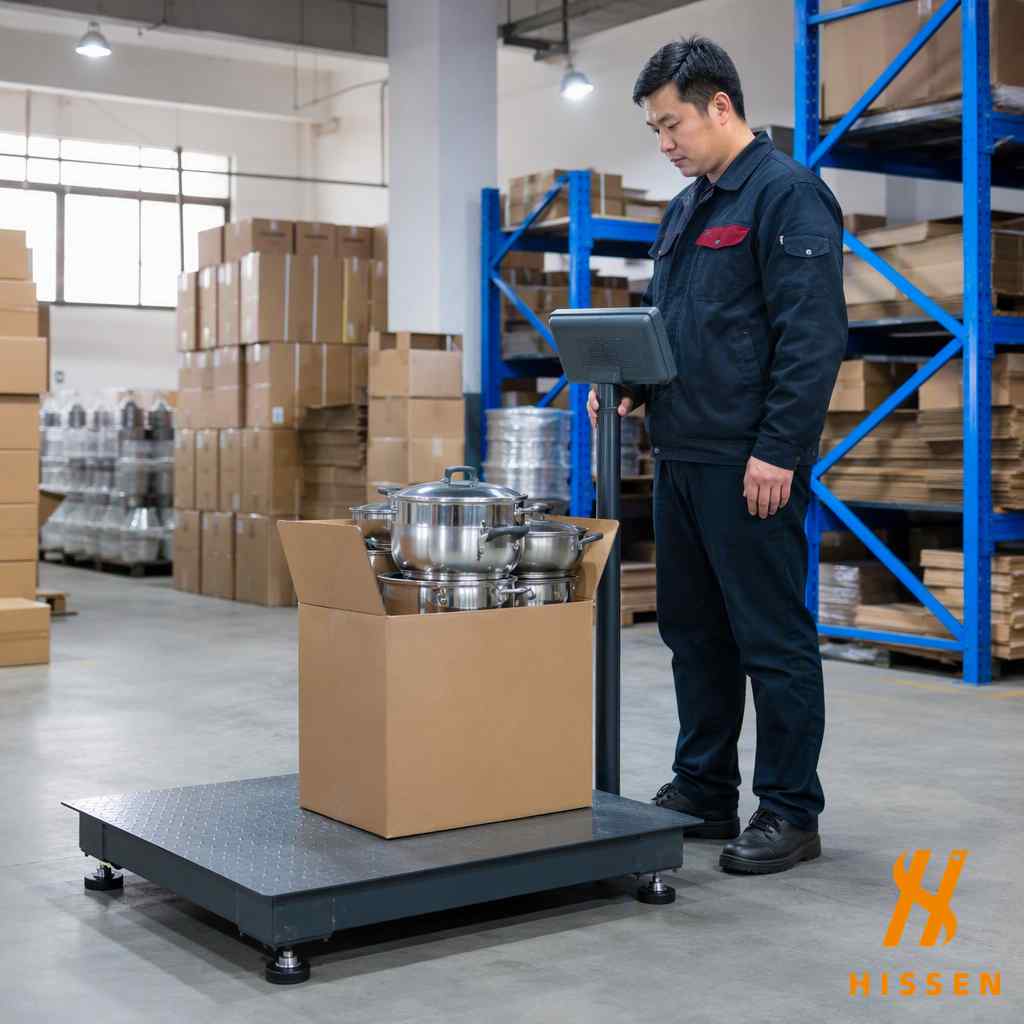
Example A — Cookware carton. A standard cookware carton weighs about 35 kg and contains roughly 26 pieces (a mix of large and small/medium pots).
- Step 1 — Weight per piece: 35 kg ÷ 26 pieces ≈ 1.35 kg per piece
- Step 2 — Cost per piece: at USD 2.50/kg, 35 kg costs USD 87.50 per carton
- Step 3 — Cost per piece: USD 87.50 ÷ 26 ≈ USD 3.37 per pot
Example B — Utensil carton. A kitchen utensil carton weighs about 18 kg, but the items are light — ladles, spoons, and small tools — so a carton may hold 60 to 120 pieces.
- Step 1 — Cost per carton: at USD 2.50/kg, 18 kg costs USD 45.00
- Step 2 — If the carton holds 80 pieces: USD 45.00 ÷ 80 ≈ USD 0.56 per piece
⚡ This is why weight-based buying is so powerful for resellers. The same price per kg produces a USD 3.37 heavy pot and a USD 0.56 light utensil. In your market, both typically resell at a multiple of cost — which means a mixed load spreads your risk across high-value and high-volume items at the same time.
For a full explanation of how the by-kg model works and what goes into each load, see our guide to wholesale kitchenware by kg from China.
🚢 The Full Landed Cost: Nine Costs Importers Forget
A kitchenware wholesale price per kg is only the beginning of your budget. The real cost of a container is built from nine layers. Importers who plan only for the FOB price are the ones who run out of cash at the port.
| # | Cost layer | Notes |
|---|---|---|
| 1 | FOB price | Price per kg × total kilograms loaded |
| 2 | Ocean freight | Quoted per container; varies sharply by route and season |
| 3 | Marine insurance | Small but essential; protects against loss and damage |
| 4 | Import duty | Calculated on CIF value using the correct HS code per category |
| 5 | VAT / sales tax | Often reclaimable, but you must fund it first |
| 6 | Clearing agent fees | Choose an agent experienced with mixed kitchenware containers |
| 7 | Port charges & demurrage risk | The silent killer — caused by wrong paperwork, not by price |
| 8 | Inland transport | Port to your warehouse; budget by distance and load size |
| 9 | Currency / FX cost | Exchange movement between deposit and settlement |
To see how these layers stack up for container imports from China, read our detailed breakdown of shipping costs when importing stock goods from China.
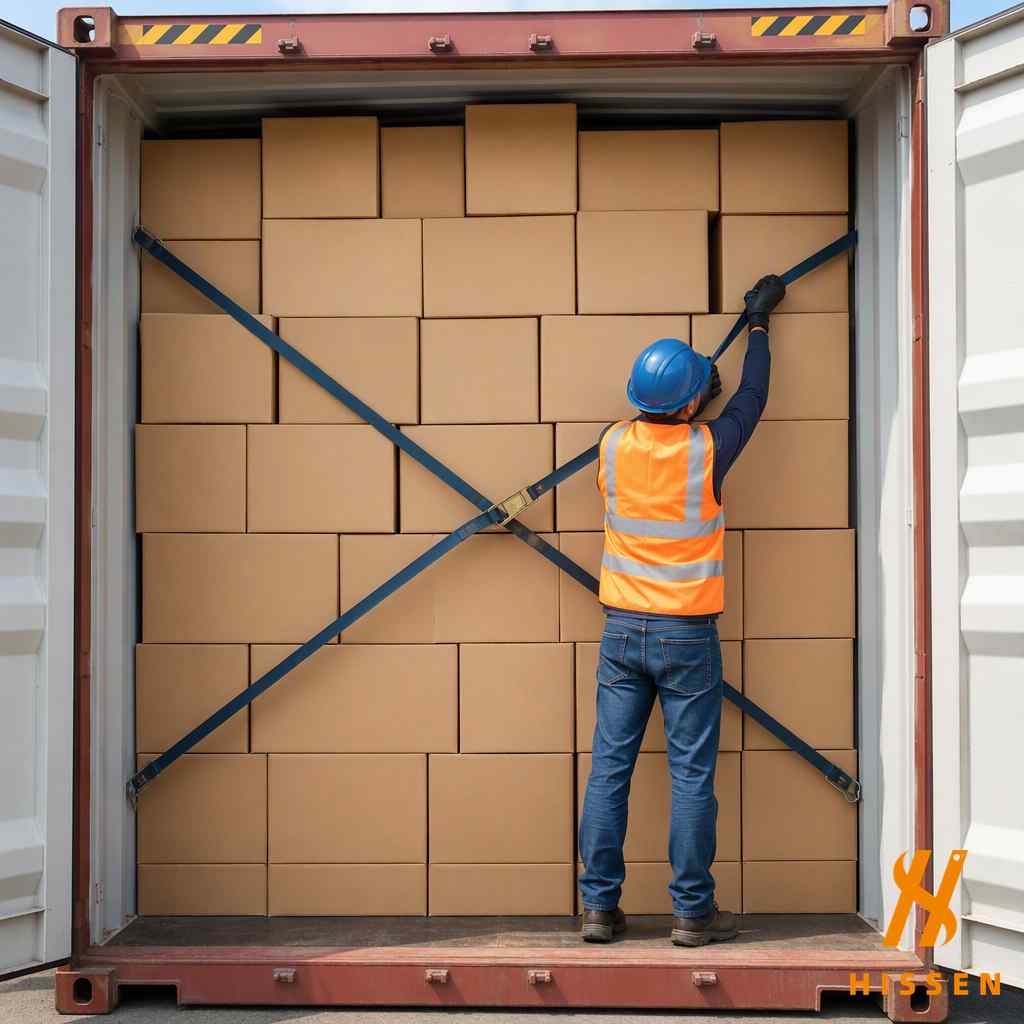
📦 Container Budget Planner: 20FT vs 40FT
Your price per kg improves with volume, but only if the container is filled efficiently. Use this planner as a starting framework, then confirm the exact loading plan with your supplier.
| Item | 20-foot container | 40-foot high cube |
|---|---|---|
| Typical practical kitchenware load | Roughly 8–12 tonnes, depending on carton density | Roughly 18–24 tonnes |
| Freight cost per kg | Higher — fixed costs spread over less weight | Lower — the main reason buyers upgrade |
| Best for | First pilot container; smaller markets; testing a mix | Established buyers with proven sell-through |
| Advantage | Lower total capital at risk | Better price per kg and price per piece |
📌 Practical advice for first-time buyers: start with one 20-foot container. It costs less to fill, it lets you measure which categories actually sell in your market, and it gives you real data before you commit to a 40-foot load. Once you know your sell-through, upgrading to a 40-foot container is the single easiest way to cut your cost per kg.
🔍 How to Compare Two Per-KG Quotes Fairly
Most importers compare quotes incorrectly — they look at the headline price per kg and pick the lower one. Here is the fair comparison method:
- ⚖️ Same category mix. Ask each supplier for the exact category breakdown. A pot-heavy load and a utensil-heavy load cannot be compared on price per kg alone.
- 📦 Same carton weights. Confirm every carton weight matches. One supplier may pack 35 kg cartons while another packs 30 kg — that changes the real price.
- 🔩 Same metal grade. Confirm whether the quote covers 201 or 304 stainless, and whether non-stick coating is included.
- 🚢 Same Incoterm. FOB and CIF are not comparable. A cheap FOB quote plus your own freight may still win — or may not. Convert both to landed cost.
- 📝 Written quotation. Only compare numbers that appear in a written quote with the mix and weights stated. Verbal prices change.
💡 Five Ways to Lower Your Cost Per KG
You do not have to sacrifice quality to improve your kitchenware wholesale price. These five levers work for almost every importer:
- 📦 Upgrade container size. Moving from a 20-foot to a 40-foot container spreads freight and handling across far more weight — often the biggest single saving available to you.
- 🥘 Weight the mix toward cookware. Heavier categories carry more kilograms per carton, which lowers your cost per kg. Balance this against what actually sells in your market.
- 📅 Buy in the off-season. Demand for kitchenware peaks before major holidays. Ordering in quieter months gives you more negotiating room.
- 🧺 Combine with other stock. If you also import used clothing or shoes, filling spare container space with complementary goods spreads the fixed freight cost across more sellable product. See our used clothing category for compatible stock.
- 🤝 Negotiate the mix, not just the price. A supplier who reshapes your load toward faster-selling categories often delivers more profit than a small discount on an unchanged mix.
🇨🇳 Why Importers Compare Hissen Global on Cost and Transparency
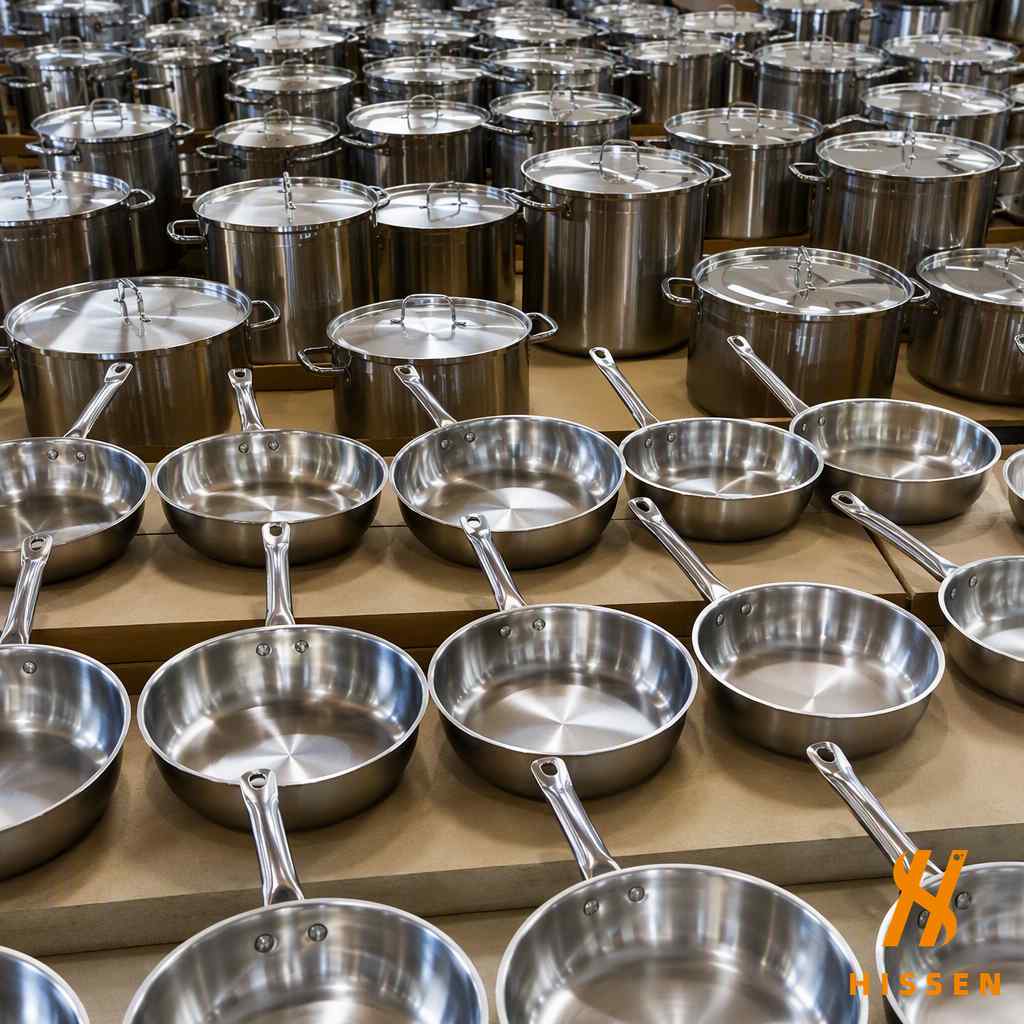
We would rather you compare us properly than take our word for it. Hissen Global is a China-based exporter selling wholesale kitchenware by the kilogram from a 20,000 m² warehouse, with a minimum order of one 20-foot container. Our five-category assortment — cookware, mixed kitchenware, kitchen knives, knives & forks, and kitchen utensils — lets you build a mix that matches your market rather than accepting whatever is available.
What matters for pricing is that you get the numbers in writing: the category mix, the per-carton weights, and a clear quotation you can convert into cost per piece. Before you commit, we show buyers the actual stock on a live video tour. You can review our full range on the shop page or read more about our company.

❓ Frequently Asked Questions
What is the kitchenware wholesale price per kg from China?
Why do two suppliers quote different prices per kg for the same kitchenware?
Is it cheaper to buy kitchenware by kg or by piece?
What is the minimum order for wholesale kitchenware from China?
What hidden costs should I budget for when importing kitchenware?
Is FOB or CIF better when buying kitchenware containers?
💡 Key Takeaways
- Price per kg is a headline, not an answer — landed cost per piece is the number that decides your profit.
- Standard carton weights (cookware ~35 kg, mixed ~45 kg, knives ~20 kg, flatware ~25 kg, utensils ~18 kg) let you convert any per-kg quote into cost per piece.
- The same price per kg yields a USD 3.37 heavy pot and a USD 0.56 light utensil — a mixed load balances high-value and high-volume items.
- Budget for nine cost layers, not one; demurrage from bad paperwork is the most avoidable.
- Upgrading from a 20-foot to a 40-foot container is usually the single biggest saving on cost per kg.
- Compare quotes only when category mix, carton weights, metal grade and Incoterm match.
Planning a kitchenware container and want the real numbers? We invite you to compare before you decide.
Hissen Global is a China-based exporter selling wholesale kitchenware by kg from a 20,000 m² warehouse — cookware, mixed kitchenware, kitchen knives, knives & forks, and kitchen utensils. Minimum order: one 20-foot container. Ask us for the current category mix, per-carton weights, and a written quotation you can convert into landed cost per piece.
📱 WhatsApp: +86 191 2829 4940
Request Today’s Prices & Live Video Tour →
Related: Import Kitchenware to Kenya — PVoC & Duty Guide · Import Kitchenware to Nigeria — Duties & SONCAP Guide · Wholesale Kitchenware by KG — Complete Guide · Import Kitchenware to Chile & Colombia — FTA & Duty Guide · Import Kitchenware to Peru & Ecuador — FTA & Duty Guide · Import Kitchenware to Bolivia & Paraguay — Landlocked Routes & IBNORCA · Browse all product categories · Hissen Global home