Published June 23, 2026 · Market analysis from a Chinese exporter
Plus Size & Maternity Used Clothing: Why These Underserved Categories Represent a Major Opportunity for Importers in Africa, Asia & South America
There is a quiet gap in the global used clothing trade. Walk through any wholesale market in Guangzhou, and you will find bales of ladies fashion, men basics, children wear — but you will have to search hard for dedicated plus size or maternity used clothing bales.
From our perspective as a Chinese exporter serving 110+ countries, this gap does not reflect a lack of demand. It reflects a lack of sorting attention. Plus size and maternity items end up in mixed bales but are rarely sorted into dedicated categories.
For importers who recognize this gap, there is a real opportunity. This article explains why plus size second hand clothing and second hand pregnancy clothes are underserved, what the demand looks like across Africa, Asia, and South America, and how to capture this opportunity.
⏱ 10 min read · For importers exploring underserved categories
In this guide:
- Why plus size and maternity are the most overlooked categories in used clothing
- Real demand data from African, Asian and South American markets
- Sizing differences between Western and local markets — and why it matters
- How Chinese suppliers handle (or fail to handle) these categories
- Practical strategies for importing plus size and maternity bales
- Profit calculations and pricing benchmarks
📊 The Gap: Why Plus Size and Maternity Are Underserved
In the used clothing trade, most suppliers sort by broad categories: ladies tops, men shirts, children wear. Plus size and maternity are not standard sorting categories in most facilities — including many in China, Europe, and the US.
This does not mean the items are not present. Plus size and maternity garments do end up in mixed bales. But because they are not sorted separately, importers who specifically need these categories must:
- ❌ Buy mixed bales and hope for a good ratio of plus size items
- ❌ Accept whatever size mix comes in standard bales
- ❌ Leave money on the table by selling plus size items at the same price as standard sizes
The result: a category that should command premium pricing gets lost in the mix.
💡 From a Chinese exporter: We have seen this gap for years. The standard sorting process in most facilities does not separate by size — it separates by type. A “ladies tops” bale will contain everything from XS to 3XL. Importers who specifically need larger sizes have to sort through standard bales. This is inefficient for everyone.
🌍 Market Demand: Where Plus Size & Maternity Are Needed Most
The Demographic Reality
According to WHO data, average body mass indexes have been rising across developing markets. In West Africa, the average BMI has increased by 1.5-2 points over the past decade. In South Africa, over 40% of women have a BMI classified as overweight or obese. In Brazil, the plus size apparel market is one of the fastest-growing segments in fashion. These are not niche statistics — they represent millions of people who need larger-sized clothing but face limited options in the new-apparel market due to pricing.
Used clothing fills this gap. A plus size dress that costs 0-80 new can be sourced for -3 in a used bale. For importers who can consistently supply larger sizes, the demand is built-in and recurring.
Contrary to what many suppliers assume, demand for plus size and maternity used clothing is strong and growing across developing markets:
| Region | Plus Size Demand | Maternity Demand | Key Insight |
|---|---|---|---|
| 🇳🇬 West Africa (Nigeria, Ghana) | ⭐⭐⭐⭐⭐ Very High | ⭐⭐⭐⭐ High | Plus size is standard in many West African markets. Demand significantly exceeds supply. |
| 🇰🇪 East Africa (Kenya, Tanzania) | ⭐⭐⭐⭐ High | ⭐⭐⭐ Moderate | Growing middle class + body positivity trends drive demand. |
| 🇿🇦 Southern Africa | ⭐⭐⭐⭐ High | ⭐⭐⭐ Moderate | South Africa has a significant plus size market. |
| 🇧🇷 South America (Brazil, Colombia) | ⭐⭐⭐⭐⭐ Very High | ⭐⭐⭐⭐ High | Brazil alone has one of the largest plus size clothing markets globally. |
| 🇸🇪 Southeast Asia (Indonesia, Philippines) | ⭐⭐⭐ Moderate | ⭐⭐⭐ Moderate | Demand growing with rising awareness and body inclusivity trends. |
📏 The Sizing Challenge: Why “Plus Size” from China Is Different
One of the most important things for importers to understand: plus size in China is not the same as plus size in Africa or South America.
Asian sizing typically runs smaller than Western or African sizing. A “plus size” garment from China might be a US size 10-12, while plus size in Nigeria or Brazil starts at US size 14-16 and extends to 24+. This means:
- ✅ Chinese-sourced bales contain items that fit smaller-body populations well
- ⚠️ “Plus size” from Chinese suppliers may still be too small for markets that need US 18+
- ✅ European and US bales tend to have larger size profiles — better for true plus size demand
- 💡 Smart strategy: Chinese bales for standard sizes + European/US bales for true plus size
👗 Category 1: Second Hand Ladies Clothing & the Size Gap
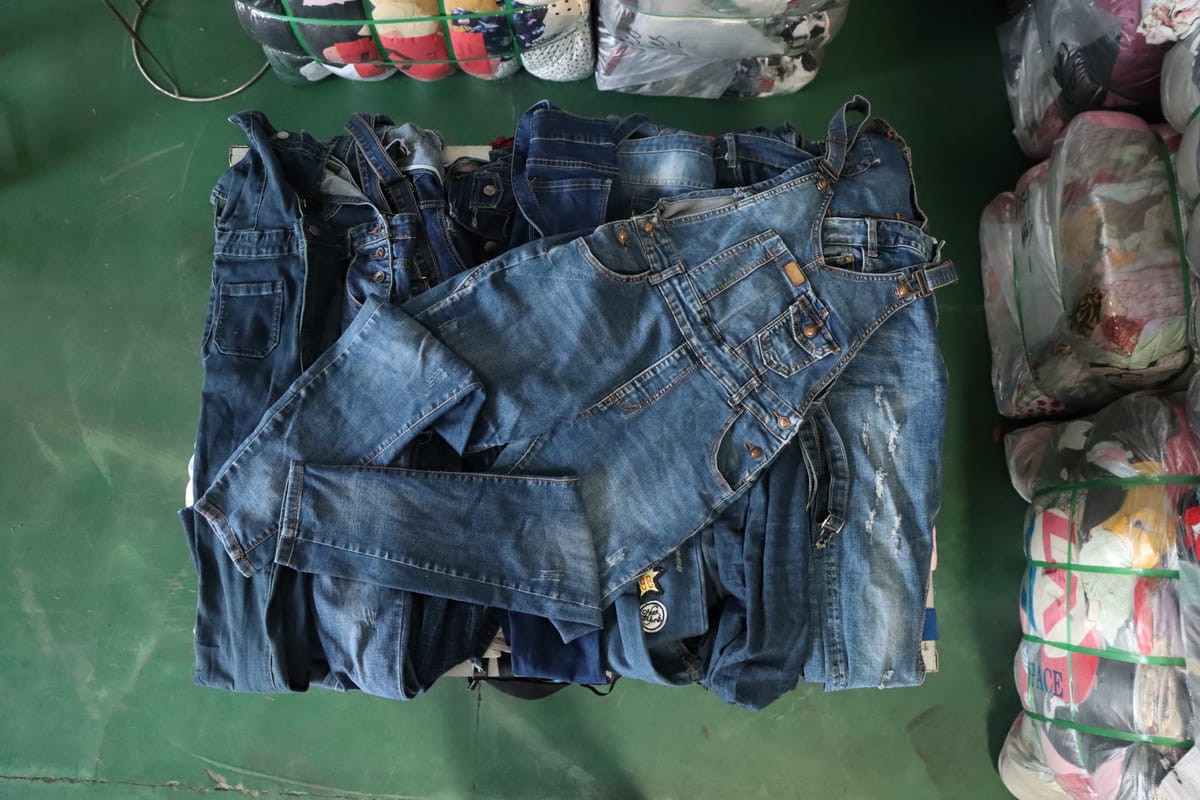
When importers search for second hand ladies clothes, they typically receive mixed-size bales. A standard ladies A Grade bale from China contains sizes S-2XL, with the majority being M-L. For markets that primarily need L-3XL, this creates a mismatch.
What we see as a Chinese exporter: The demand for larger sizes from African and South American buyers has grown noticeably over the past 3-4 years. Yet the sorting process has not adapted. Most facilities still sort by garment type, not by size. This means:
- 📦 Buyers who need plus size must buy larger volumes of mixed bales to extract enough plus size items
- 💰 The plus size items, once separated, sell at a premium — but the buyer paid mixed-bale prices for them
- 📉 The standard-size items end up cross-subsidizing the plus size extraction
For importers who can establish a relationship with a supplier willing to size-sort, there is a clear competitive advantage.
🤰 Category 2: Second Hand Pregnancy Clothes — A Niche with Growing Demand
Second hand pregnancy clothes is one of the most overlooked categories in the trade. Here is why it deserves attention:
- 👶 Maternity wear is expensive new — a quality maternity dress can cost $50-100
- 👗 Maternity items are worn for a short period (6-7 months), so they are typically in excellent condition
- 🌍 Every country has pregnant women — demand is universal
- 🔄 Maternity wear has high turnover — women need new sizes as pregnancy progresses
- 💰 Premium pricing: used maternity dresses that cost $2-3 in a mixed bale can sell for $10-25
The challenge: Like plus size, maternity items are rarely sorted separately in standard facilities. They end up mixed into ladies bales. Importers who want to specialize in maternity wear typically need to either sort it themselves or find a supplier who will sort it for them.
💰 Profit Analysis: Plus Size & Maternity vs Standard Bales
| Factor | Standard Ladies Bale | Plus Size / Maternity |
|---|---|---|
| FOB cost (A Grade) | $2.50/kg | $2.50/kg (same bale source) |
| Wholesale price per item | $2-4 | $4-10 |
| Retail price premium | — | +50-150% |
| Sell-through rate | 85-95% | 90-95% (strong demand) |
| Competition | High | Low-Medium |
| Sorting labor needed | Standard | Extra (size/maternity sorting) |
The premium for plus size and maternity items is driven by supply scarcity, not by higher quality — the items come from the same mixed bales. The extra margin is simply a reward for sorting them separately.
🎯 How to Source Plus Size & Maternity Used Clothing
Based on our experience as a Chinese exporter, here are practical strategies for importers:
- 📦 Start with standard A Grade mixed bales. Order from a Chinese supplier at $2.00-$3.00/kg. Sort the plus size and maternity items out during distribution. This gives you the premium without requiring specialized supply.
- 🔍 Request size data from your supplier. Ask for the size breakdown of their ladies bales. A supplier who can tell you “30% S-M, 50% M-L, 20% XL+” has better sorting control than one who says “mixed sizes.”
- 🌐 Combine origins for size range. Use Chinese bales for standard and medium sizes. Add European or US bales for larger size ranges. This gives you full size coverage.
- 🏷️ Market separately. Do not sell plus size items at the same price as standard. Bundle them as “plus size packs” and “maternity packs” — they will sell at higher per-item prices to the right buyers.
❓
For detailed bale grading and pricing information, see our used clothes bales guide.
For a comprehensive overview of wholesale sourcing options, see our complete wholesale sourcing guide.
Frequently Asked Questions
Is there demand for plus size used clothing in Africa?
Where can I buy plus size used clothing wholesale?
Is maternity used clothing profitable?
What sizes are considered plus size in the used clothing trade?
How can I convince my supplier to sort plus size separately?
1. Mixed Bales
2. Sort by Size
3. Premium Pricing
4. Scale Up
5. Supplier Sorting
📚 Turn Knowledge into Action
The plus size and maternity categories represent one of the most accessible opportunities in the used clothing trade today. The demand exists, the supply is mixed into existing bales, and the extra margin is simply a reward for sorting more carefully.
From our side in Guangzhou, we help importers understand the actual size composition of our bales — because informed buyers make better partners.
Ready to explore?
- 📊 Request size breakdown data for our current ladies A Grade bales
- 📷 Receive photos of actual bale contents showing size labels
- 💬 Get personalized advice on which bale mix fits your market