Ask three importers what they paid for wholesale shoes in bulk last quarter and you will get three different numbers for what sounds like the same product. One paid by the kilogram, one by the pair, one by the container. One bought mixed men’s and women’s, one bought a single category. One took a full load, one took four hundred kilos on a consolidated shipment. None of them was lied to. The price of bulk shoes is not a published figure that everyone reads off the same page; it is the output of about six variables, and every negotiation is really an argument about which of them are fixed.
This guide is about quoting and ordering rather than about where to find suppliers. It covers the variables that actually move a bulk shoe quote, how minimums and mixed-load rules work, how a per-kilogram price is built and what a per-pair price hides, why the size curve decides whether a cheap bale was cheap, what happens with children’s sizing, the sequence of an order from enquiry to loading, the payment structures that are normal on a first bulk order, and how to agree an inspection standard before anything moves.
⏱ 12 min read · For importers ordering shoes by the bale or container
In this guide you will learn:
- The six variables that decide a wholesale shoes in bulk quotation
- How minimum order quantities work by format, from part-bale to 40HQ
- Why a per-kilogram price and a per-pair price can both be honest and still differ by half
- How the size curve, not the grade, decides your sell-through
- Why cheap children’s shoes are the hardest category to price correctly
- The full order sequence, and the two payment structures that are normal
- How to agree an inspection and claim standard before the container is sealed
Bulk Shoe Pricing Is Not a List — It Is a Set of Levers
The first thing to understand about wholesale shoes in bulk is that the supplier does not have a price. They have a cost structure, and the price is what comes out when your order is applied to it. Two buyers can be quoted on the same day, for the same grade, from the same warehouse, and be forty per cent apart, entirely legitimately.
That matters because it changes how you negotiate. If price were a list, the only move would be to argue it down. Because price is an output, most of the useful moves are structural: change the format, change the mix, change the timing, change who carries the freight risk. Those moves usually produce more than haggling does, and they do not depend on the supplier conceding anything.
It also changes how you read a quotation. A number without its variables is not a quotation; it is an opening position. The question to ask is never “is this a good price” but “what exactly is this the price of”.
The Six Things That Move a Bulk Shoe Quote
Almost all of the variation between two quotations for comparable goods comes from six variables. Ask about each one explicitly and the numbers stop being mysterious.
| Variable | What it does to price | The question that surfaces it |
|---|---|---|
| Category mix | Mixed categories cost less per unit than a single category; sneakers and boots cost more than sandals and slippers | What percentage of this load is sneakers, and what is the rest? |
| Grade | The single largest lever; a step down in grade can halve the unit cost | Show me your written definition of this grade, with the defect allowance |
| Size curve | A realistic curve costs more than a flat or skewed one, and sells through far better | What is the size distribution in this load, by count? |
| Format | Loose bale, pressed bale, pallet and container all carry different handling and freight mathematics | Is this price per bale, per kilogram or per container? |
| Incoterm | Moves freight, insurance and risk between you and the supplier | What incoterm is this, and to which port? |
| Order size and frequency | Repeat volume earns better terms than a one-off, even at the same quantity | What would this price be on a standing quarterly order? |
Two of these deserve more than a sentence. The size curve is discussed below because it is the one buyers underestimate most. The incoterm matters because it is the variable most often left unstated, and an unstated incoterm is not a neutral omission — it means the two sides are quietly assuming different things about who pays for the ocean freight.
Minimum Order Quantities and Mixed-Load Rules
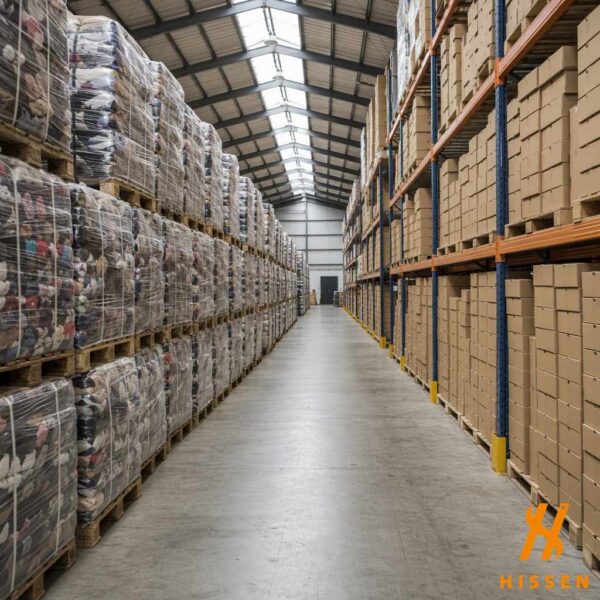
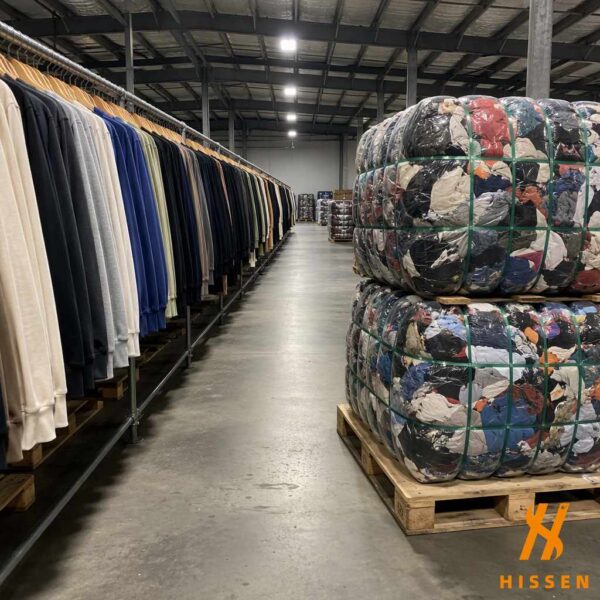
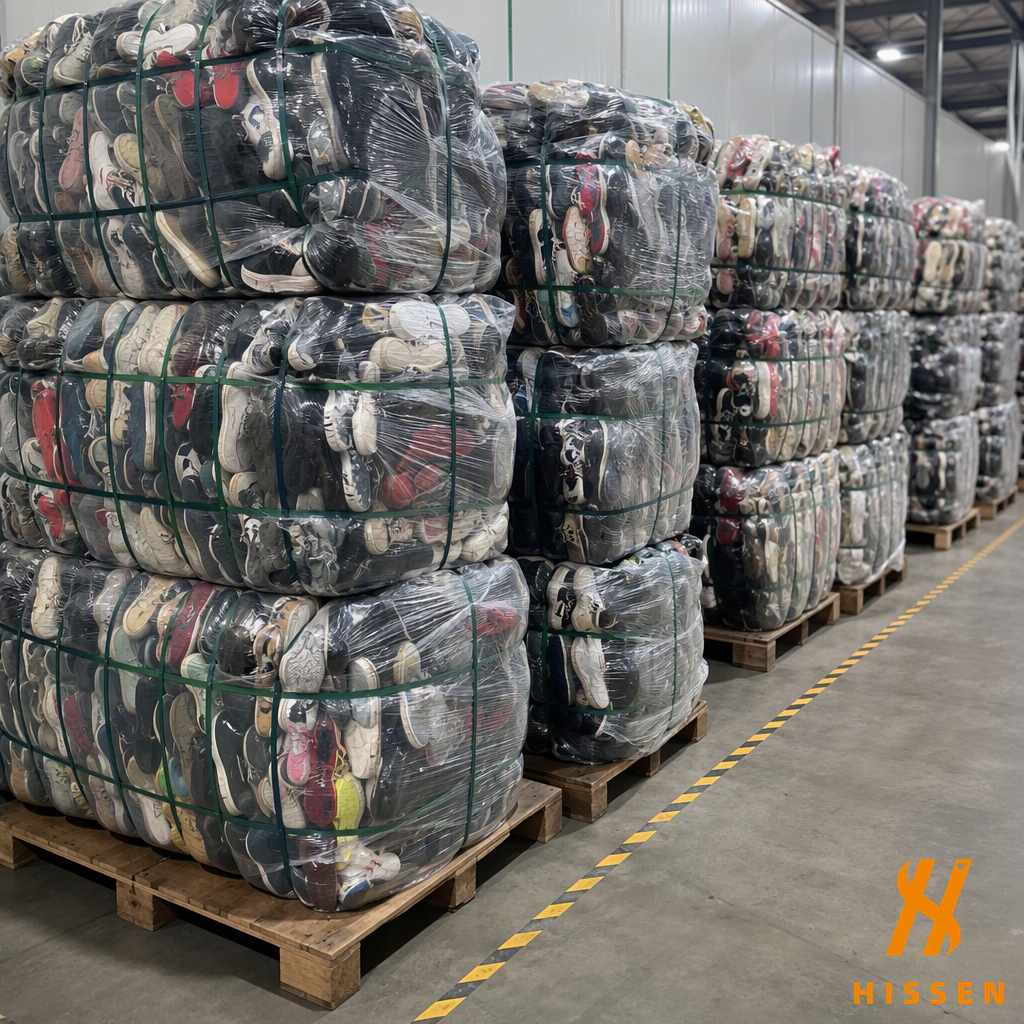
Minimums for wholesale shoes in bulk are set by the format you buy in, not by a company policy you can negotiate away. Handling a bale and loading a container are different operations, and the minimum reflects the smallest operation the supplier can perform without losing money.
| Format | Typical minimum | What it is actually good for |
|---|---|---|
| Part bale or loose sack | One sack, often 20 to 45 kg | Testing a grade, or a market stall |
| Full bale | One pressed bale at its standard weight | A first order with a known specification |
| Pallet | Several bales, strapped and wrapped | A container share, or a small retail chain |
| LCL (shared container) | The equivalent of a few pallets | Buying container volume without container capital |
| 20ft container | A full load of that footprint | Regular distribution at a manageable size |
| 40HQ container | A full load of that footprint | The lowest unit cost per kilogram |
Mixed-load rules are where most of the practical room sits. A supplier will usually let you combine categories in one container, because a container is a container and the goods are all in the same warehouse. What they will not usually do is let one category dominate, because their own inventory is sorted into fixed proportions and a load that empties one category leaves them with an unsellable remainder.
So expect a percentage rule rather than a piece rule: something like a maximum share for any single category, a minimum share for the categories that are slow-moving, and a requirement that the total still fills the container. Ask for the rule in writing at the enquiry stage, because it determines what you can even offer to buy before price becomes relevant.
How a Bulk Shoe Order Is Actually Priced
Three pricing bases circulate in the wholesale shoes in bulk trade, and using the wrong one is how buyers end up comparing things that cannot be compared.
Per kilogram. The most common basis for used and mixed stock. It is transparent, it makes grades directly comparable, and it has one weakness: it says nothing about what is inside the kilogram. A kilogram of sandals and a kilogram of branded sneakers are the same weight and completely different businesses. Per-kilogram pricing only works when the specification is fixed, which is why the grade definition and the category mix have to travel with the number.
Per pair. Common for new goods and for graded single-category stock. It is easy to understand and it hides the size curve, because a pair is a pair whether it is a size 38 or a size 46 — and those two pairs are not worth the same at retail. A per-pair quote on a load with an unrealistic size distribution will look cheap and sell badly.
Per container. How large buyers actually operate. The number covers a defined load at a defined mix, and the unit cost is only knowable after you have the loading list. This is the basis on which a full-load buyer and a bale buyer are genuinely not in the same market: the container price is lower because the supplier’s handling cost is spread across a single movement.
What a real quotation contains. A usable quote has three separate lines — the goods, the freight to your port, and the destination charges you will pay on arrival. Quotations that compress these into one number are not necessarily dishonest, but they transfer the freight risk to you invisibly. Ask for the breakdown, and if the supplier quotes FOB, budget the freight and the destination charges yourself before you decide the deal is good.
The Size Curve Decides Your Sell-Through
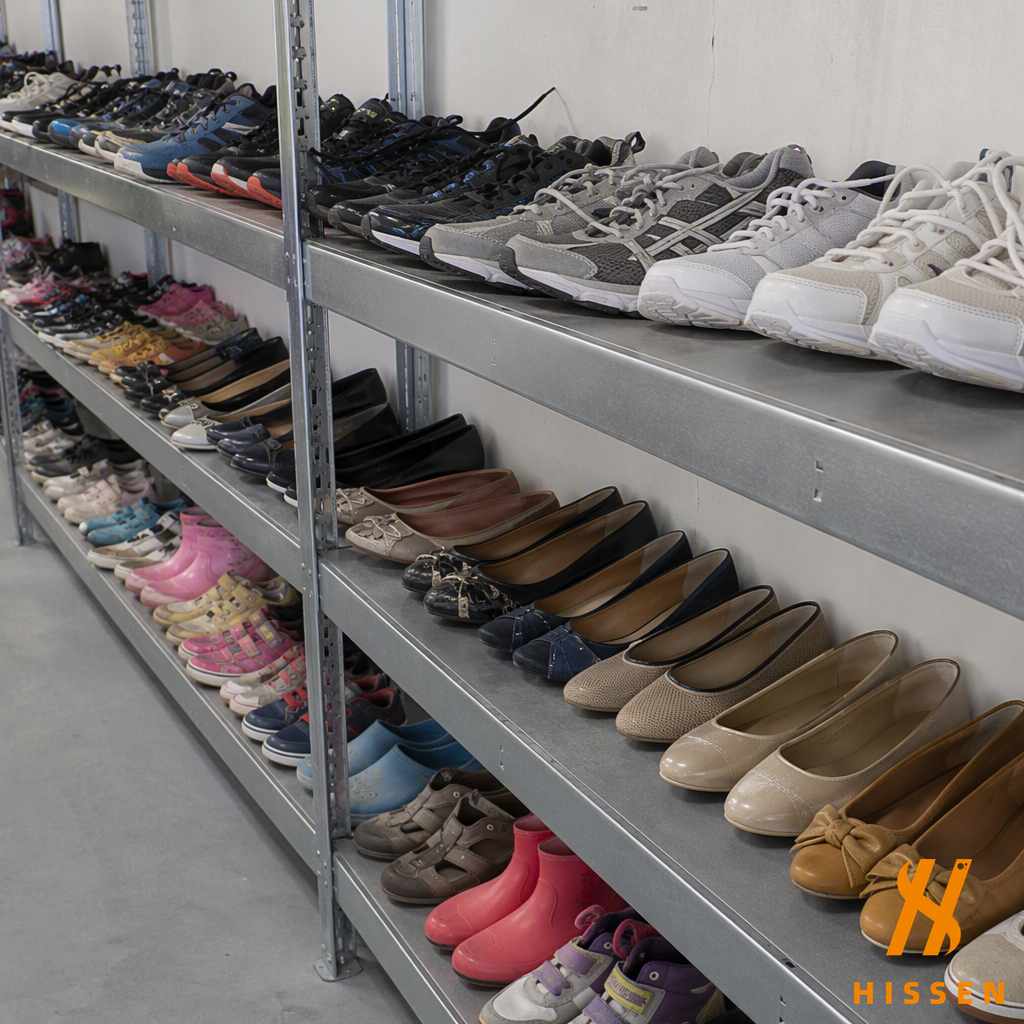
Buyers spend their attention on grade, and grade is only half of what they should be asking about. The other half is the size distribution, and it is the variable most likely to make a correctly graded load unsellable.
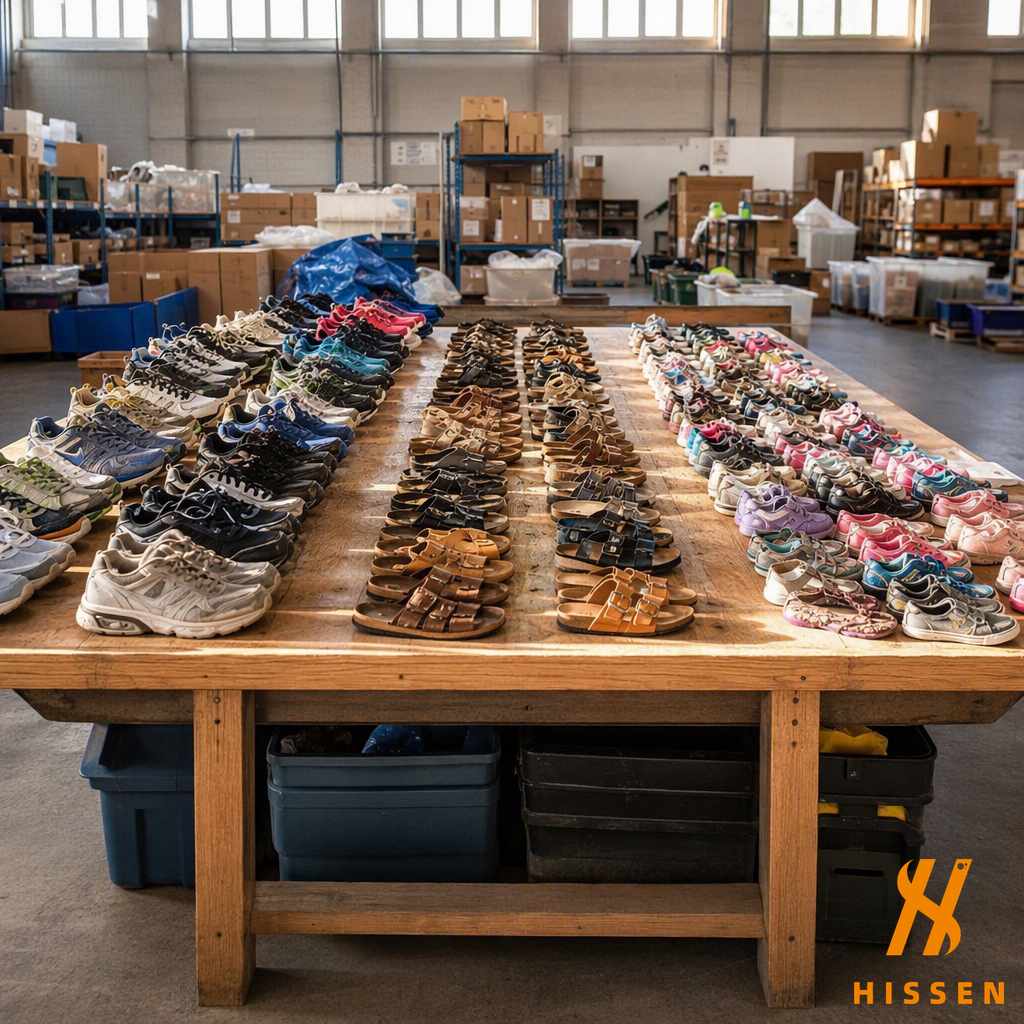
The problem is arithmetic. Retail demand for shoes is not flat across sizes — mid-range sizes sell first and the extremes sit. A load built on a flat distribution, with an equal count in every size, will look complete on paper and will leave you holding the tails. A load built on a realistic curve costs more per unit precisely because the supplier has done the work of matching the distribution to what actually sells.
In the used trade, the skew usually runs the other way: the most common sizes have already been picked over upstream, so an unsorted or lightly sorted load tends to be heavy in the extremes. That is not a defect in the grade; it is a structural feature of the supply, and it is exactly why the curve should be a stated factor in the price rather than an assumption.
What to ask: the size distribution by count, not by description. “Mixed sizes” is not an answer. A count in each size band lets you model your own sell-through before you commit, and it is the single most useful piece of paper you can get from a supplier in this category.
Children’s Shoes: Why the Cheapest Category Is the Hardest to Price
Children’s footwear is the category most often searched for by price, and it is the one where a cheap headline number is least informative. The reason is that child sizing breaks the two standard comparisons at once.
Per pair, children’s shoes are the cheapest thing in the warehouse, and that is true and irrelevant on its own. Per kilogram, the picture inverts: children’s shoes are small and light, so a kilogram contains many more pairs than a kilogram of adult shoes. A load priced per kilogram that looks expensive next to an adult load may actually deliver three times the pair count. Buyers who compare a children’s price against an adult price per kilogram are comparing two different products with the same unit.
There is a second trap in the size curve. Child sizing moves fast — a two-year spread at that age is a different size entirely — so a children’s load with a poor size distribution has almost no resale flexibility, because the customer for a size 22 is a different household from the customer for a size 28, and they do not substitute. Adult stock absorbs a size error; children’s stock does not.
So when you are looking at wholesale shoes in bulk and children’s footwear comes up as the cheap option, the questions are the pair count per kilogram, the size bands by count, and what proportion of the load is still wearable rather than merely intact. That last one matters more in children’s stock than anywhere else, because children wear shoes out from the inside, and a pair that looks intact can be unusable.
A note on intent: most searches for cheap children’s shoes are consumers shopping for a single pair, not importers. If that is you, a bulk supplier is the wrong counterpart — this page is about buying by the sack, bale or container.
The Ordering Sequence, Step by Step
Bulk shoe orders move through a predictable sequence. Knowing it in advance is what stops a deposit from being paid against nothing in particular.
- Enquiry with a specification. Not “what is your price for shoes” but the category, the grade, the format, the quantity and the destination port. A vague enquiry gets a vague number, and vague numbers are not comparable.
- Written specification and quotation. The supplier responds with the grade definition, the category mix, the size curve, the format, the incoterm and the price basis. If any of those is missing, ask before discussing price further.
- Proforma invoice. The document you actually pay against. Check that the specification on the proforma matches the one you agreed, because that is the document a dispute will be settled by.
- Deposit. Usually a percentage of the goods value, released against the proforma.
- Picking and packing. The supplier builds the load to the agreed mix. This is the stage where a buyer who has negotiated the right to inspect gets the most value.
- Inspection before sealing. Your inspector, or a filmed walkthrough, while the goods are still accessible. After the container is sealed, the only evidence available is the outside of the container.
- Balance payment against documents. Released when the shipping documents are presented, not when the goods are loaded.
- Loading and documentation. Bill of lading, packing list, commercial invoice, and the certificates your destination requires. The last of these is where imports fail for reasons that have nothing to do with shoes.
Steps five and six are the ones buyers skip when they are in a hurry, and they are the two that convert a grade disagreement from an argument into a documented fact.
Payment: What Is Normal on a First Bulk Order
There are three structures you will meet, and none of them is unusual. What matters is knowing which one you are in and what it protects.
Deposit and balance by transfer. The default for a first order. A part of the value is paid against the proforma and the rest against a copy of the bill of lading. It protects the supplier against a buyer who never pays and protects the buyer because the balance is not released until the goods are demonstrably on a ship.
Letter of credit. Used for larger orders. The bank releases payment against a specified set of documents rather than against trust, which matters when neither party can cheaply sue the other. It costs money and requires precision — a discrepancy in a document is a payment that does not happen — but for a first large order between strangers it is often the cheapest way to buy confidence.
Documents against payment. The bank hands over the shipping documents only when you pay. It sits between the other two, and it is common where the relationship is established but the order is still large.
What is not normal on a first bulk order is open credit. A supplier who offers it immediately to a buyer they have never shipped to is either pricing the risk into the unit cost or is not the party holding the inventory. Both are worth noticing.
Whichever structure you use, get the payment schedule into the contract rather than into an email thread. The schedule is the one term that is genuinely not negotiable after the fact.
Inspection and Claims: Agree the Standard Before the Load Moves
A claim is only possible if there was a standard to breach. That sounds obvious, and it is the thing most bulk orders get wrong, because the standard is agreed in prose at the quotation stage and then tested against reality six weeks later when the container is open in another country.
Three things need to be settled before the deposit, not after the arrival.
- The grade definition, in writing, with numbers. Not “grade A”, but what percentage of the load is wearable, what the defect allowance is, how many pairs per kilogram are expected, and what the policy is on pairs with missing laces, sole separation or written-off uppers. A definition with numbers can be tested; a definition with adjectives cannot.
- The right to inspect before sealing. Either your own inspector at the facility, or a filmed walkthrough of the actual load with the packing list visible. The second is weaker but far better than nothing, and a supplier with a real facility will offer it without being pushed.
- The claim window and the remedy. How many days after arrival you can raise a claim, what evidence is required, and what the supplier will actually do — credit against the next order, a replacement in the next shipment, or a partial refund. Agree the remedy type in advance, because a claim without an agreed remedy tends to resolve as a discount on the next order, and you should know that going in rather than discovering it.
The practical protection here is unglamorous: photographs of the actual bales, the loading list, and a written definition you can point at. Buyers who have those three things get claims resolved. Buyers who have an email saying “you will be happy” do not.
Sneakers, Sandals and the Category Question
The category you buy in changes the economics more than the grade does, and it is worth being deliberate about it rather than ordering “mixed shoes” because it is the default.
Sneakers carry the highest unit cost and the deepest demand, and they are the category where brand presence matters most — a mixed sneaker load with a meaningful share of recognised brands behaves completely differently from one without. They are also the category where buyers are most often tempted to over-specify and then discover the price they were quoted was for something else. Our guide to buying second hand sneakers wholesale covers the sneaker-specific grading, and the sneaker bale and container guide covers the load planning.
Sandals and slippers are the cheapest per unit and the most seasonal. They are a good category for markets with a long warm season and a bad one for buyers who cannot hold stock across a winter. Their low unit cost makes them look like an easy first order, and their seasonality is what makes them a hard second one.
Single-category loads — an entire container of one product form — are rare and worth taking when they appear, because they remove the mix question entirely and let you price against a known retail proposition. They are also the format where scarcity, not price, is the constraint; our page on single-category shoe containers explains how those allocations are actually released.
Whichever category you choose, the sequence in this guide does not change. What changes is the grade vocabulary, and that is the subject of the broader used shoes wholesale guide, which covers categories and grades in more depth than an ordering page needs to.
Common Ordering Mistakes
Five mistakes account for most of the pain in this category, and all five are avoidable before the deposit.
- Comparing prices across pricing bases. A per-kilogram number and a per-pair number are not comparable, and neither is comparable to a container price. Convert everything to cost per pair at your expected retail mix before you decide anything.
- Accepting a grade definition made of adjectives. “Good quality mixed” cannot be breached, which means it cannot be enforced. Numbers or nothing.
- Ignoring the size curve because the grade looked right. A correctly graded load with a skewed curve is a warehouse full of size 45.
- Treating the incoterm as a detail. FOB and CIF quotations for the same goods can differ by more than the goods are worth, and the difference is all freight and risk allocation.
- Discovering the import requirements after paying. Destination rules for used footwear are not uniform and some markets restrict them heavily. Check what your country requires before the deposit, not before the vessel arrives. Our guide to import rules for used goods covers the main markets.
If you are still choosing between suppliers rather than between quotations, the mechanics of qualifying one are covered in our guide to building a vendor list and in the sourcing channels guide. This page assumes you have a supplier and are trying to buy well from them.
One last note on scope. Everything here applies to footwear bought by weight or by the load. If you are bundling shoes with clothing in the same shipment, the bagging and packing rules are different and the weight-to-volume mathematics changes, which our guide to bales of clothes and the wider used wholesale clothing guide cover separately.
Frequently Asked Questions
How much do wholesale shoes in bulk cost?
There is no single figure, because the price depends on grade, category mix, size curve, format and incoterm, and the spread between the cheapest and most expensive way to buy a comparable grade is large. What you can do is fix the variables: get a written grade definition, a size distribution by count and a stated incoterm, then compare quotations on those terms. Two numbers without those three things attached cannot be compared at all.
What is the minimum order for bulk shoes?
It is set by the format rather than by policy. A part bale or loose sack is the smallest unit, a full pressed bale is the standard first order, and a container is where the unit cost drops. Most suppliers will also let you join a consolidated container to reach container pricing without buying a full load. Ask for the mixed-load percentage rules at the enquiry stage, because they decide what you are allowed to buy.
Are children’s shoes cheaper in bulk?
Cheaper per pair, and not necessarily cheaper per kilogram in the way buyers expect. Children’s footwear is small and light, so a kilogram holds many more pairs than adult stock, which means a higher per-kilogram price can still be the better deal. The real constraint is the size curve: child sizes turn over fast, so a load with a poor distribution has very little resale flexibility.
Should I buy wholesale shoes per kilogram or per pair?
Per kilogram for mixed and used stock, because it makes grades directly comparable and the specification carries the rest. Per pair for graded single-category stock and new goods, where the unit is meaningful to your retail price. Whichever basis you use, convert both quotations to cost per pair at your expected size mix before comparing them, or you will be comparing two different products.
What payment terms are normal for a first bulk shoe order?
A deposit against the proforma invoice and the balance against the shipping documents, or a letter of credit for larger first orders. Open credit on a first order is not normal, and a supplier offering it to a new buyer is either building the risk into the price or not holding the inventory. Put the payment schedule into the signed contract rather than leaving it in an email thread.
How do I handle a claim if the shoes arrive below grade?
Only if you agreed a standard with numbers before the deposit. The grade definition, the size distribution and the defect allowance should all be in writing, and the claim window and remedy — credit against the next order, replacement, or partial refund — should be agreed at the same time. Photographs of the bales and the loading list are the evidence that makes a claim resolvable.
Can I mix categories in one container?
Usually yes, within percentage rules. A supplier will normally allow a combination of categories in a single container and will normally cap the share of any one category, because their inventory is sorted into fixed proportions and an unbalanced load leaves them with unsellable stock. Ask for the rule in writing, then design your mix around it rather than discovering it at the quotation stage.
When should I inspect a bulk shoe order?
Before the container is sealed, always. After sealing, the only thing anyone can inspect is the outside of a container. Either send your own inspector to the facility or require a filmed walkthrough of the load with the packing list visible. This is the step buyers skip when they are behind schedule and regret most often.
A quote is a specification with a number attached
If you cannot write down the grade, the mix, the size curve, the format and the incoterm, you do not have a quotation for wholesale shoes in bulk — you have a price. Prices are easy to get and impossible to compare. Specifications are slower to agree and they are the only thing that can be enforced after the container has been opened in another country.
Ordering wholesale shoes in bulk from China? We invite you to compare before you decide.
Hissen Global is a China-based exporter of graded second-hand shoes and clothing, sorting and pressing at our own facility and shipping to importers and distributors across Africa, Asia, the Middle East and Latin America. We quote against a written grade definition with a size distribution by count, state the incoterm on every wholesale shoes in bulk quotation, and welcome buyer-appointed inspection before the container is sealed.